Transform & Preserve
Step Mashing
Holding grain mash at successive temperature rests so different enzymes convert starch to sugar.
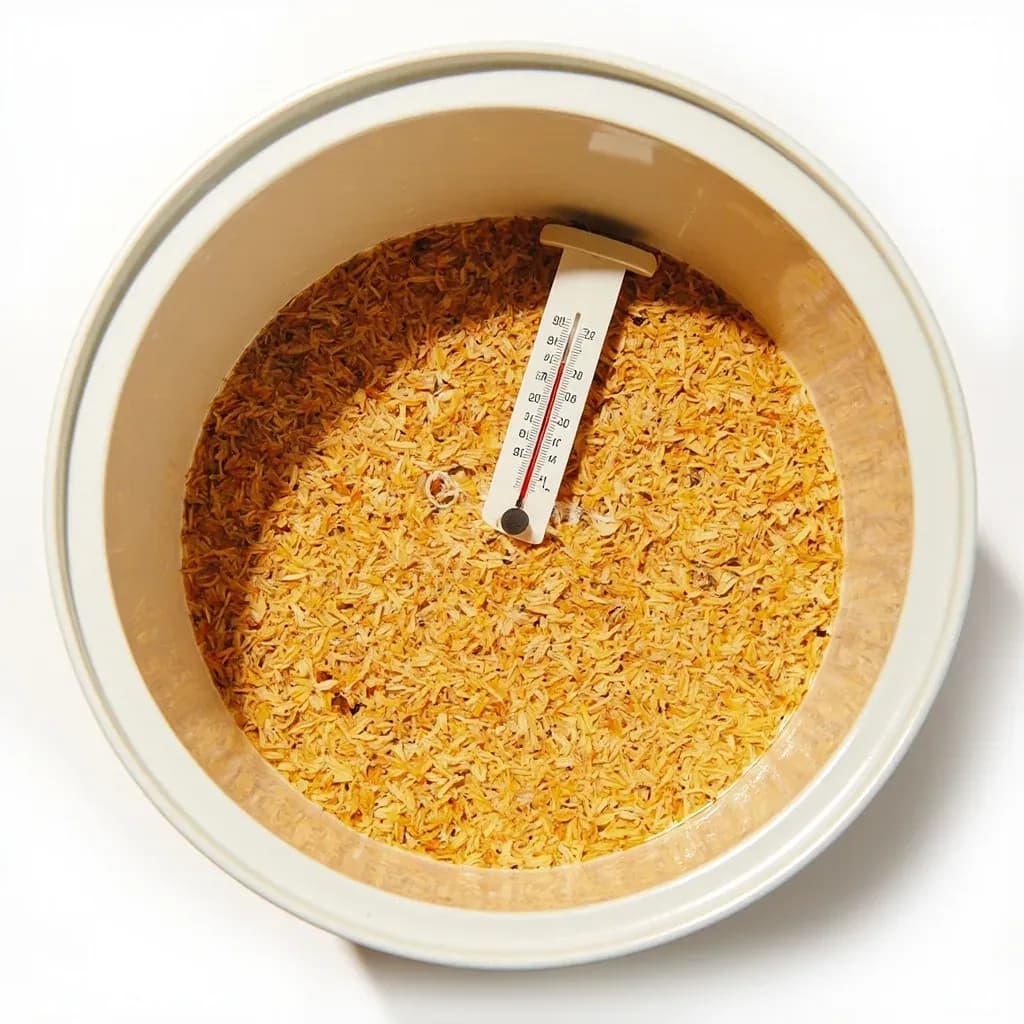
Step mashing is a brewing technique where crushed malted grain is held at a series of rising temperature rests rather than one. Each rest activates a different enzyme set, breaking down proteins and converting starches into fermentable and unfermentable sugars to shape the beer's body and alcohol. It gives brewers fine control over wort fermentability that a single-temperature mash cannot.
Step mashing is the practice of holding a grain mash at a sequence of carefully chosen temperatures, each rest timed to let specific enzymes do their work before the temperature is raised to activate the next set. In all-grain beer brewing, this sequence is the brewer's main lever for shaping fermentability, body, and residual sweetness — the variables that define whether a finished beer reads crisp and dry, rich and dextrinous, or somewhere in between.
The technique rests on a simple fact about malt: it contains two key starch-converting enzymes, beta-amylase and alpha-amylase, each of which works best and survives within a different temperature window. By stepping through those windows, the brewer can encourage maltose production early (for a drier, more fermentable wort) and dextrin production later (for body and mouthfeel). A final mash-out then arrests enzyme activity and locks the sugar profile in place before lautering.
Modern single-infusion mashing has largely replaced step mashing in everyday brewing because it is faster and good enough for most styles, but step mashing still earns its place for lagers, traditional German and Czech ales, under-modified malts, and any grain bill that needs more control than a single rest can offer.
- Difficulty
- Hard
Types & varieties
Raises temperature by adding boiling or near-boiling water; the standard modern method.
Removes a thick portion of the mash, heats it (often to a boil), and returns it to raise the main mash temperature; traditional German and Czech method.
Step mash for raw adjuncts (corn, rice) that require a separate high-temperature rest to gelatinize starches before joining the main mash.
Simplest form with just two rests, typically a beta rest then an alpha rest.
Three rests — the most common modern schedule: beta rest, alpha rest (saccharification), and mash-out.
How to do it
- 1
Calculate and heat strike water
Determine the water-to-grain ratio (typically 2.5–3 L/kg) and heat strike water roughly 5–7°C above the first target rest, accounting for grain temperature.
- 2
Mash in
Dough in the crushed grain with steady stirring to eliminate clumps, bringing the mash to the first rest temperature (often 45–52°C) within a few minutes.
- 3
Acid rest (optional)
Hold around 35–40°C for 10–15 minutes if using under-modified malts or very hard water; this activates phytase to lower mash pH.
- 4
Beta-amylase rest
Raise the mash to roughly 50–55°C and hold 20–30 minutes to encourage maltose formation and a highly fermentable wort.
- 5
Alpha-amylase rest
Continue heating to 65–72°C and hold 45–60 minutes; this is the primary saccharification step where most starch conversion occurs.
- 6
Mash-out (optional but common)
Bring the mash to 76–78°C and hold 10 minutes to halt enzyme activity, fix the sugar profile, and thin the mash for easier lautering.
- 7
Lauter and sparge
Recirculate until the runnings run clear, then sparge with water at 76–78°C to rinse remaining sugars from the grain bed, collecting the sweet wort for the boil.
How the enzyme windows shape the wort
Malt's starch-converting enzymes do not all work at the same temperature, and they do not all survive the same heat. Understanding those windows is what turns step mashing from a chore into a control surface.
- Beta-amylase peaks in activity near 60–65°C, but it is fragile and begins to denature above roughly 65°C, so a cooler rest (45–55°C) is used to let it work productively for longer and accumulate maltose, the most fermentable sugar.
- Alpha-amylase thrives at 65–72°C and chops long starch chains into shorter dextrines. These are less fermentable, which is what gives beer body and residual sweetness.
- A long, low rest (under 55°C) yields a highly fermentable, drier wort — the goal for crisp lagers and pale ales.
- A short, hot rest (above 68°C) yields more dextrines and a fuller-bodied, sweeter-finishing beer — useful for bocks, Märzens, and malt-forward styles.
- Mashing out at 76–78°C stops both enzymes and fixes the sugar profile so it cannot drift further during the long lautering and boil.
Common uses
Tips & pitfalls
- Ramp slowly between rests (1–2°C per minute) to avoid overshooting and denaturing enzymes prematurely.
- Add hot water in small portions while stirring to prevent dough balls and channeling in the grain bed.
- Do not exceed 80°C during any rest or transfer; alpha-amylase is permanently inactivated above this point and starch conversion will stall.
- Measure pH at each rest — the acid rest (if used) should bring the mash into the 5.2–5.6 range for optimal enzyme activity.
- Skip the acid rest with well-modified modern malts; it is more useful for under-modified or heirloom grains.
- Mash out is optional but improves lautering efficiency and helps protect against tannin extraction from the husks.
- Record actual mash temperatures and times — minor deviations meaningfully change fermentability and final beer character.
Good to know
- Origin
- Traditional European brewing, especially German lager and Czech techniques
- Primary use
- All-grain brewing of beer, particularly lagers and traditional ales
- Typical rests
- 2–4 temperature holds between roughly 45°C and 78°C
- Acid rest
- ~35–40°C (95–104°F), optional, lowers mash pH via phytase
- Beta-amylase rest
- ~45–55°C (113–131°F), favors maltose production
- Alpha-amylase rest
- ~65–72°C (149–162°F), favors dextrines
- Mash-out
- ~76–78°C (169–172°F), terminates enzymatic activity
- Enzyme ceiling
- Beta-amylase denatures above ~65°C; alpha-amylase denatures above ~80°C
- Total time
- 60–90 minutes across all rests, plus heating transitions
Also called
Step Mashing · Multi-Step Mash · Temperature-Step Mash
Related

Confit
Cook slowly submerged in fat for silky tenderness and keeping

Cure
Draw out moisture with salt and time to preserve and concentrate

Pickle
Steep in acidic brine for bright, tangy, crunchy preservation

Ferment
Let friendly microbes transform food into tangy, complex flavor

Marinate
Soak in a seasoned mix to flavor and tenderize before cooking

Brine
Soak in salt water so meat stays juicy and seasoned throughout

Dehydrate
Slowly dry out moisture to concentrate flavor and extend shelf life

Cold-Smoke
Perfume cured food with smoke without cooking it through