Prep & Assembly
Stuffing Vegetables
Hollowing out vegetables and filling them with a savory mixture before cooking.
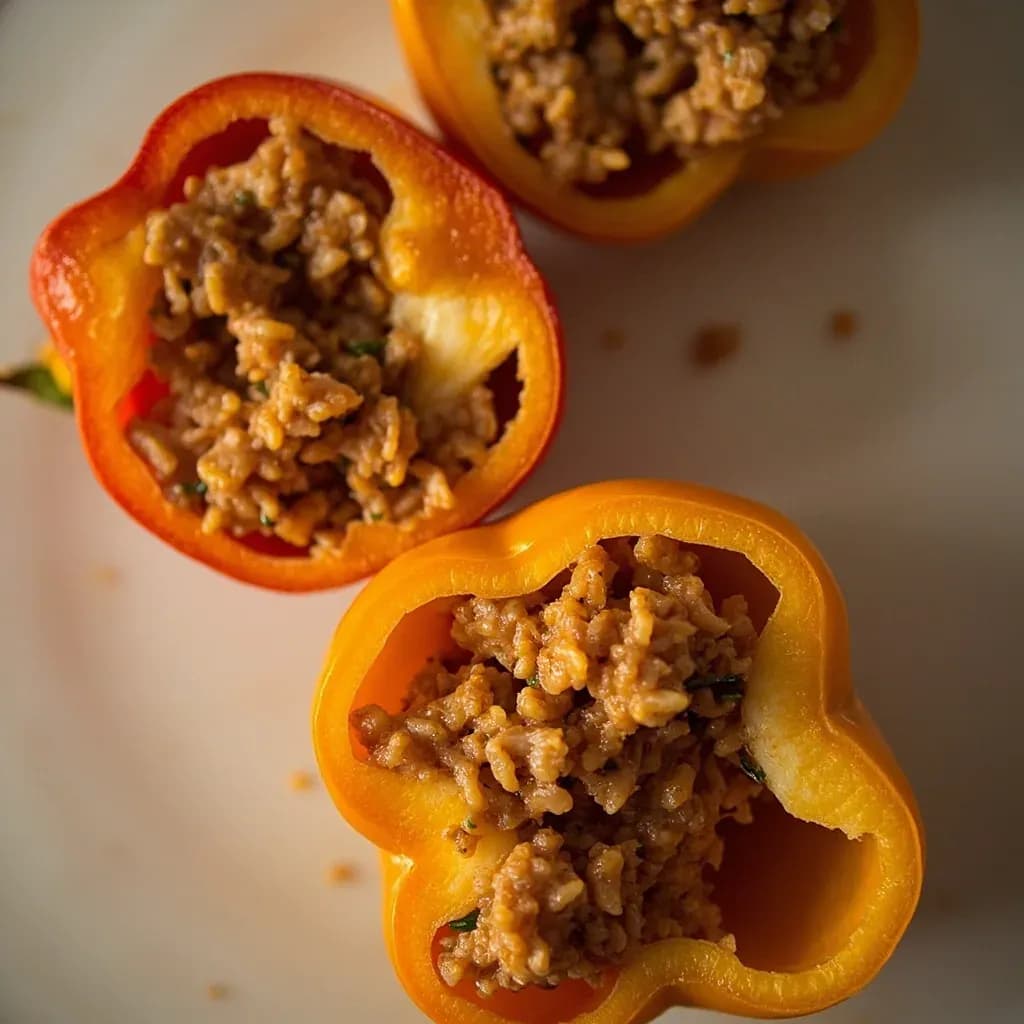
Stuffing vegetables involves hollowing out peppers, zucchini, tomatoes, or eggplant and packing the cavity with a filling of rice, meat, herbs, or cheese before baking or braising. The vegetable becomes an edible vessel that flavors and is flavored by its filling as it cooks. Leaving a thin enough wall keeps the vegetable intact while ensuring it cooks tender alongside the filling.
Stuffing vegetables is one of the oldest and most universal prep techniques in the kitchen: you turn a sturdy vegetable into an edible vessel, pack it with a seasoned filling, and cook it slowly in moist heat so the shell softens while the filling sets and absorbs the vegetable's flavor from the inside. The principle shows up in Roman Apicius, in Levantine mahshi, in Greek gemista, in Mexican chiles rellenos, and in Italian pomodori ripieni — the vessels change, the fillings change, but the method is constant. What makes the technique worth learning is the interplay between shell and filling: the vegetable surrenders moisture to grains or meat while the filling seasons the shell from within, producing a finished dish more savory than either component alone.
Most stuffed vegetables fall into one of three filling families: a grain-and-meat pilaf scented with warm spices (the Middle Eastern template), a breadcrumb-and-herb mixture anchored by cheese or anchovy (the Italian and Provençal version), or a dry spiced masala rubbed into slits in the vegetable (the Indian bharwa approach). The cooking medium matters as much as the filling: a covered bake with stock or tomato juice pooled in the pan is the default, but chiles rellenos are battered and fried, Iraqi faranji mahshi is braised in lemon broth, and stuffed cabbage leaves are simmered in sauce rather than baked dry.
Master one version and the rest follow by substitution. A cook comfortable with Greek gemista can produce Levantine mahshi by swapping oregano for allspice and cinnamon; a stuffed-pepper recipe becomes stuffed-tomato by trimming the bake time and checking the shells earlier. The technique rewards patience over precision — shells need salting, rice needs par-cooking, and the dish must rest before it is cut.
- Difficulty
- Medium
Types & varieties
Turkish and Armenian term; grape leaves are the classic form, with peppers, tomatoes, zucchini, and eggplant common in the broader family
Levantine stuffed vegetables, usually rice and lamb with tomato, mint, and warm spices, cooked in a tomato-broth bath
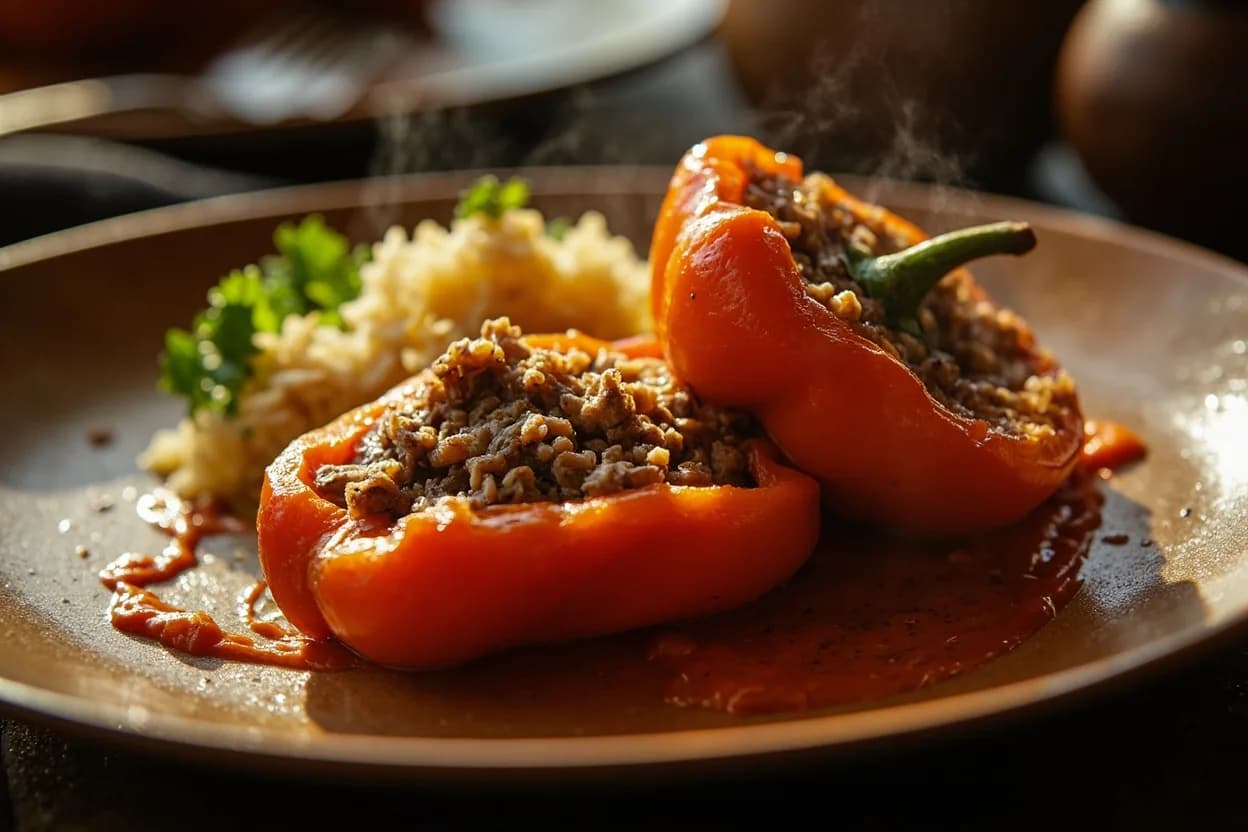
Greek stuffed tomatoes and peppers with rice, parsley, dill, mint, and sometimes pine nuts or minced meat
Iraqi 'foreign-stuffed' vegetables — onion, artichoke, marrow — filled with a lemony meat-and-vegetable hash
Italian stuffed peppers and tomatoes, often with breadcrumb, anchovy, caper, and herb filling
Indian stuffed vegetables — bharwa baingan (eggplant), bharwa shimla mirch (capsicum), bharwa bhindi (okra) — slit and packed with dry spiced powders
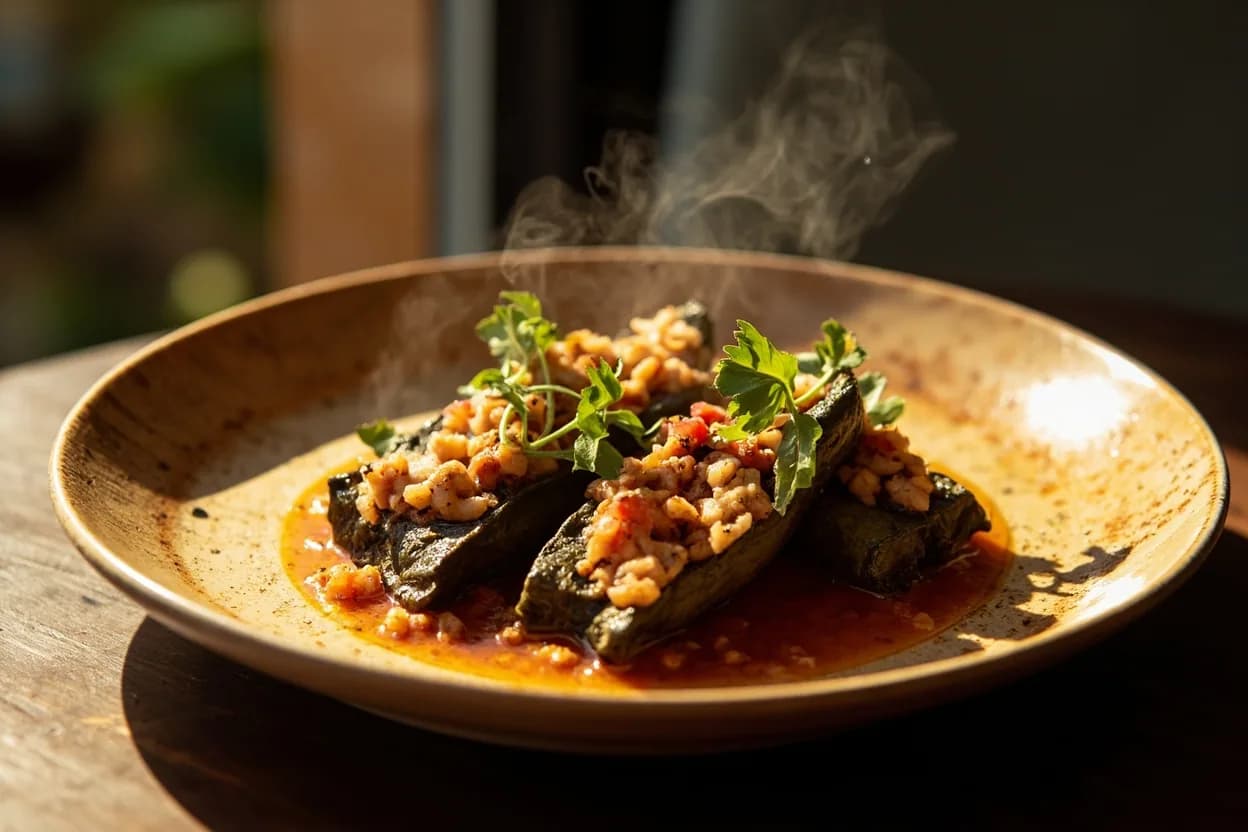
Mexican poblano peppers stuffed with queso fresco or melting cheese, battered and fried (or baked)
Peruvian stuffed rocoto peppers with seasoned beef, onion, olives, and cheese, baked
Blanched cabbage leaves wrapped around a meat-and-rice filling and braised in tomato sauce
Italian stuffed zucchini blossoms, typically with mozzarella and anchovy, briefly fried or baked
How to do it
- 1
1. Choose and prepare the shells
Pick vegetables of similar size so they cook at the same rate. For peppers, slice off the tops (reserve them) and pull out the seed ribs. For tomatoes, cut a thin cap or slice off the top and scoop the seeds and pulp with a spoon, reserving the pulp. For zucchini and eggplant, halve lengthwise (or leave whole) and scoop the flesh with a melon baller, leaving a 1/2-inch (1 cm) wall. Pat everything dry. For cabbage and grape leaves, blanch briefly in salted water until pliable, then shock in cold water.
- 2
2. Treat high-moisture vegetables
Salt the hollowed zucchini, eggplant, and mushroom caps generously inside and out, then let them drain in a colander for 20–30 minutes. Rinse briefly and squeeze dry in a clean towel. This step is the difference between a concentrated, savory filling and a watery puddle in the pan — do not skip it for these vegetables.
- 3
3. Pre-cook dense shells if needed
Roast halved winter squash, whole onions, or large carrots at 400 °F / 200 °C for 15–20 minutes, just until they begin to soften. This gives them a head start so the filling doesn't overcook waiting for the shell to become tender.
- 4
4. Build the filling
Sauté chopped onion (and often garlic) in olive oil or fat until soft and translucent. Add ground meat if using and brown, breaking it up; for a vegetarian filling, skip ahead. Stir in rice or grain that has been par-cooked to about 70% doneness, the reserved vegetable pulp, a generous handful of herbs (parsley, dill, mint, or basil depending on tradition), tomato paste, and the appropriate warm spices — cinnamon and allspice for Middle Eastern versions, cumin and coriander for Indian, oregano and red pepper flakes for southern Italian. Season assertively; the shell absorbs seasoning as it bakes.
- 5
5. Stuff the vegetables
Pack the filling in loosely — it will expand as the grains cook. Fill to just below the rim, leaving a small gap at the top. Replace pepper caps where you have them; they trap steam and look good. Stand peppers and tomatoes upright in an oiled baking dish, packing them snugly so neighbors support each other. Lay halved squash and eggplant cut-side up in a single layer.
- 6
6. Add liquid and bake
Pour 1/2 to 1 cup of stock, tomato juice, or a mix of olive oil and lemon juice around — not over — the vegetables. Cover the dish tightly with a lid or foil and bake at 375 °F / 190 °C for 30–45 minutes, until the shells are fork-tender. Uncover for the final 10–15 minutes to brown the tops and reduce the pan liquid into a sauce.
- 7
7. Rest and serve
Let the dish rest 10–15 minutes before serving. Stuffed vegetables hold heat intensely and the filling needs a moment to set, or it will fall apart when cut. Spoon the pan juices over the top — that liquid is the seasoning the shells absorbed and the moisture the filling released, and it ties the dish together.
Matching the Shell to the Filling
The shell is not just a container — it dictates cooking time, seasoning level, and how much liquid the filling will need. Dense, starchy vegetables like winter squash, carrots, and whole onions behave like roasting vegetables and need a 15–20 minute head start in the oven before stuffing, or a filling that can stand a long bake. Hollow fruits like bell peppers and tomatoes cook through quickly and work best with fillings that need only 30–45 minutes more in the heat. Thin-walled vegetables — grape leaves, cabbage leaves, zucchini blossoms — are wrappers rather than vessels and require only a brief wilting or no pre-cooking at all.
Moisture content is the other axis. Zucchini, eggplant, and portobello caps release a surprising amount of water in the oven; they must be salted and drained, or they will leak liquid into the filling and collapse into a soggy shell. Tomatoes, peppers, and onions release moderate moisture and actually contribute flavor to the pan sauce — reserve the tomato pulp (and pepper trimmings) and fold them into the filling rather than discarding them.
- Dense shells (winter squash, whole onions, large carrots): pre-roast 15–20 minutes before stuffing
- Hollow fruits (peppers, tomatoes): no pre-cook; reserve tomato pulp (and pepper trimmings) for the filling
- Thin wrappers — cabbage and grape leaves: blanch briefly; squash blossoms: stuff raw
- High-moisture vegetables (zucchini, eggplant, mushrooms): salt and drain 20–30 minutes
The Pan Liquid
Almost every baked stuffed-vegetable recipe calls for liquid pooled around, not over, the shells. This liquid does three jobs: it creates steam that finishes cooking the walls evenly, it seasons the vegetables from below, and it reduces into the sauce that ends up on the plate. A 1/2 to 1 cup of stock, tomato juice, or a 50/50 mix of olive oil and lemon juice is the standard amount for a 9x13 dish.
The choice of liquid is one of the most powerful ways to steer the final flavor. Tomato juice gives Levantine mahshi its characteristic tang and color; stock or a tomato-and-stock blend gives Eastern European stuffed cabbage its savory depth (often with sauerkraut juice as well); a lemon-and-olive-oil bath gives Italian peperoni ripieni a clean, bright finish. A dry bake without liquid will leave the bottoms tough and the filling dry, so don't skip it even if the recipe doesn't mention it explicitly — the shells need steam.
- Pool liquid around, never over the shells — pouring on top washes out the filling
- 1/2 to 1 cup for a standard 9x13 dish is the right range
- Tomato juice = Levantine and Greek tradition; stock or tomato = Eastern European; lemon + olive oil = Italian
- The liquid reduces during the uncovered final 10–15 minutes and becomes the finishing sauce
Common uses
Tips & pitfalls
- Reserve the scooped flesh — especially tomato pulp — and fold it into the filling; it deepens flavor and cuts waste.
- Salt and drain zucchini, eggplant, and portobello caps for 20–30 minutes before stuffing, or the filling will turn watery and the shells will collapse.
- Pre-roast dense vegetables (winter squash, whole onions, large carrots) for 15–20 minutes before stuffing so they finish at the same time as the filling.
- Under-fill by 10–15% — grains and rice expand during baking and an overstuffed shell will split.
- Cook raw rice to about 70% doneness before stuffing; rice that goes in raw inside a baked pepper often ends up underdone at the core.
- Stand peppers and tomatoes upright, packed snugly in the pan so neighbors support one another and nothing topples.
- Cover the dish for most of the bake and uncover only in the last 10–15 minutes — this browns the tops without drying the shells.
- If filling starts to leak during baking, repack the pan snugly and add 1/2 cup of stock or tomato sauce to the dish; it acts as a glue and bastes the shells as it reduces.
- For stuffed vegetables served cold, season the filling slightly more aggressively than you would for a hot dish, because chilling dulls salt and acid.
Good to know
- Type
- Composite prep technique (prep + cook)
- Origin
- Ancient; documented in Apicius (1st–2nd c. CE) and throughout medieval Middle Eastern and Mediterranean cookery
- Common shells
- Bell peppers, tomatoes, zucchini, eggplant, onions, portobello mushrooms, cabbage and grape leaves, winter squash
- Filling bases
- Rice, bulgur, or ground meat (lamb, beef) with herbs, onion, tomato, warm spices; breadcrumb-cheese and dry-spice-masala fillings are also common
- Cooking methods
- Baking/roasting, braising in broth, steaming, occasionally frying (battered chiles rellenos)
- Bake temperature
- 350–400 °F / 175–200 °C, dish usually covered for most of the cook
- Active / total time
- 30–45 minutes active; 1–2.5 hours including baking
- Key equipment
- Chef's or paring knife, melon baller or small spoon for hollowing, lidded baking dish or foil
Also called
Stuffing Vegetables · Punjenje · Hollowing and Filling
Dishes that rely on it
Related

Whisk
Beat ingredients smooth and aerated with a looping wire motion

Sift
Pass dry ingredients through mesh to aerate and remove lumps

Strain
Pour through mesh to separate solids from liquid for a smooth result

Filter
Pass liquid through fine material to clarify out the smallest particles

Rice
Press cooked potatoes through small holes for fluffy, lump-free texture

Mash
Crush soft cooked food into a rustic, creamy purée

Grind
Crush food into a coarse to fine texture, from spices to meat

Grate
Shred food into fine bits against a sharp-toothed surface