Water & Steam
Boiling the Soy Slurry
Boiling ground-soybean slurry during soy milk and tofu making to cook out beany flavor and aid extraction.
Boiling the soy slurry heats the blended soybean-and-water mixture to a full boil during soy milk production, which denatures enzymes, removes raw beany off-flavors, and improves protein extraction before straining. Careful attention is needed because the slurry foams up and scorches easily. The cooked slurry is then strained into soy milk, the base for tofu and other soy products.
Boiling the soy slurry is the wet-heat step at the heart of nearly every soy-milk and tofu workflow: taking the ground-and-watered soybean purée (either strained of its okara or not) and bringing it to a genuine rolling boil for 10–15 minutes before any coagulation, sweetening, or further concentration. It is not a formality. The same heat that cooks the milk is what disables lipoxygenase, the enzyme that releases the grassy, paint-like, "beany" aroma the moment soybean cells are broken during grinding, and it is also what inactivates Kunitz and Bowman–Birk trypsin inhibitors and soybean lectin — compounds that, left alive, irritate the gut and blunt protein digestion. Skipping the boil, or substituting a polite simmer, is both a flavor and a food-safety failure: raw soy milk is not potable.
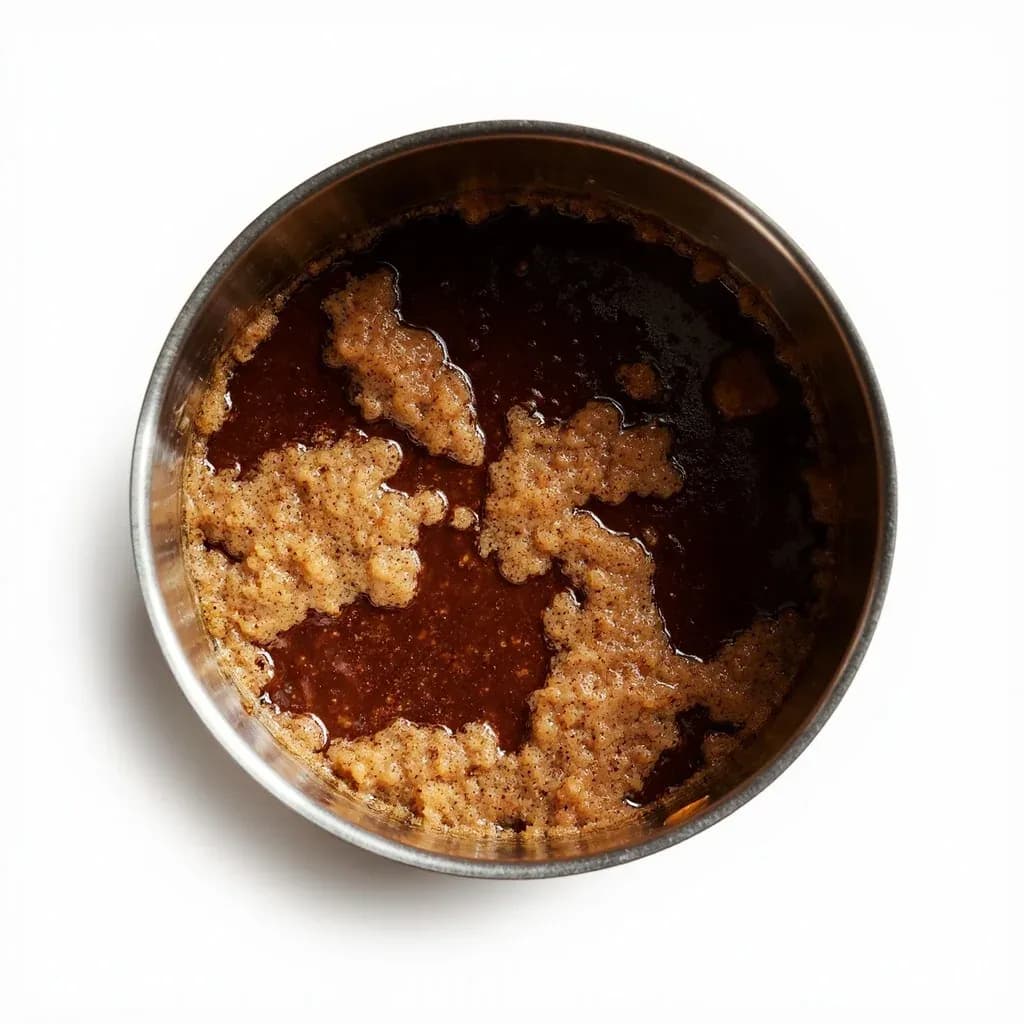
In practice the technique behaves like no other liquid cook. As the temperature climbs past 70 °C (158 °F), a thick, pale foam of saponins and denaturing surface proteins surges upward and will climb the pot in seconds if the cook looks away. The milk scorches easily on a thin base because dissolved proteins denature and bind to the hot metal, and the rolling boil must be held — not approached, not flirted with — for the full hold time to denature the troublesome proteins uniformly. Different downstream products want slightly different endpoints: silken-tofu makers often cap the heat at 95–98 °C to keep proteins maximally soluble for a delicate set, while Chinese firm-tofu traditions want the full vigorous boil for a stronger, more elastic curd.
The single biggest decision before the boil is whether okara stays in. Boiling the whole slurry, then straining, gives higher yield, more fiber, and a coarser, more rustic body — the village Chinese method. Straining first and boiling clean milk gives whiter color, cleaner flavor, and a tighter set — the Japanese and most modern approach. Either way, the technique itself is the same: a heavy pot, no lid, constant stirring, and a controlled ten-to-fifteen-minute rolling boil.
- Difficulty
- Medium
Types & varieties
Standard home and Japanese method: okara is filtered out first, then the milk is brought to a rolling boil with constant stirring.
Traditional Chinese village method where the whole slurry is boiled and strained afterward; higher yield and softer body, but coarser mouthfeel.
Industrial method: live steam is injected directly into the milk to heat and partially concentrate it in one step.
Industrial method using plate or scraped-surface heat exchangers; avoids direct fire and reduces scorching.
Modern home shortcut; heats rapidly and inactivates enzymes effectively, but superheating and scorch control are harder and foam is aggressive.
Reaches above 100 °C, inactivating trypsin inhibitors and urease more quickly; alters flavor and color toward a darker, more cooked profile.
How to do it
- 1
Soak and grind (prep before the boil)
Soak 200 g dried soybeans in plenty of cold water for 8–12 hours until fully plump. Drain, rinse, and grind with 1.6–2 L fresh cold water in batches until a smooth, creamy slurry forms. Strain through cheesecloth or a fine nylon bag to remove okara for a clean milk, or skip straining for a more rustic, higher-yield Chinese-style boil.
- 2
Set up the pot
Transfer slurry or strained milk to a heavy-bottomed stainless or enamel pot filled no more than two-thirds full. Have a long-handled wooden spoon or silicone spatula, a fine skimmer, and a teaspoon of neutral oil at the ready. Do not put a lid on the pot.
- 3
Heat to first steam
Bring to medium-high heat, stirring slowly and continuously in a figure-eight to distribute heat and keep solids from settling and burning on the bottom. As the temperature climbs past 70 °C (158 °F), expect a thick, pale foam to rise.
- 4
Control the foam
When foam threatens to climb, reduce heat slightly, drizzle a teaspoon of neutral oil across the surface, and skim. Stay at the pot — this stage can go from calm to boil-over in under a minute. Never cover the pot, and never lift it off the burner.
- 5
Reach and hold a true rolling boil
Once large, breaking bubbles dominate the surface (around 100 °C / 212 °F), maintain a vigorous rolling boil and keep stirring, especially around the pot's base and corners where scorching starts. Hold this state for a full 10–15 minutes.
- 6
Watch for scorch and confirm doneness
Smell and watch: properly boiled soy milk smells clean and "cooked," with no raw, beany, or grassy note. If the base darkens or smells acrid, move immediately to a clean pot — burnt milk will taint the whole batch. After 10–15 minutes of rolling boil, lipoxygenase is deactivated and trypsin inhibitors are reduced to safe levels.
- 7
Remove from heat and rest
Take the pot off the burner and let the milk rest 2–3 minutes. Skim any residual foam. For tofu-making, cool to the temperature your coagulant requires (usually 70–80 °C for nigari, 75–85 °C for gypsum). For drinking milk, sweeten to taste and serve warm, or chill quickly for storage.
- 8
Clean the pot
Rinse the pot with cold water before washing. Hot soy-milk protein film sets onto metal as it cools and becomes much harder to remove; a cold rinse first lifts it cleanly.
Why the rolling boil matters: the science in plain terms
Two distinct problems are solved by the same pot of bubbling milk. The first is flavor. Lipoxygenase lives inside intact soybean cells and stays quiet until grinding breaks those cells open; once exposed to oxygen, it oxidizes the bean's polyunsaturated lipids into volatile compounds that read as grassy, paint-like, or "beany." Lipoxygenase is heat-labile and is essentially destroyed within the first few minutes at 100 °C — which is why properly boiled soy milk smells cooked and clean rather than raw.
The second is safety and digestibility. Raw soy contains Kunitz and Bowman–Birk trypsin inhibitors, which block the pancreatic enzyme trypsin and reduce protein digestion, plus soybean lectin, which can irritate the gut lining. These proteins are tougher than lipoxygenase: they need a sustained 100 °C for a meaningful hold — on the order of 10–15 minutes — to drop to safe levels. A gentle simmer around 90–95 °C will cook the milk enough to drink for flavor, but will not reliably inactivate the inhibitors. Food-safety authorities have issued repeated warnings about raw soy milk for exactly this reason, and recommend a rolling boil rather than a simmer.
- Lipoxygenase is inactivated within the first few minutes at 100 °C — this is the "de-beaning."
- Trypsin inhibitors and lectin need 10–15 minutes of sustained rolling boil to drop to safe levels.
- Boiling also denatures the storage proteins (glycinin and β-conglycinin) so they will set cleanly with nigari or gypsum.
Okara in or okara out?
A choice the cook makes before the pot even goes on the burner changes the character of the final product more than any other variable in the boil.
- Strain first, then boil: cleaner, whiter milk; tighter curd; standard for Japanese-style tofu, yuba, and most drinking milk.
- Boil the whole slurry, then strain: roughly 10–20% more yield, more fiber, slightly more body and a coarser mouthfeel; traditional for many Chinese firm and pudding-style tofus.
- Either way the boil itself is the same — only the timing of the strain changes.
Foam control: the real skill
The pale foam that erupts between 70 °C and the boil is not just steam. It is a stable matrix of soybean saponins and denaturing surface proteins, and it will climb a pot and run onto the burner in under a minute if ignored. Foam control is what separates a confident tofu maker from someone scrubbing a stovetop.
- Never cover the pot — trapped steam inflates the foam into a tower.
- Stir in a steady figure-eight from the first steam; do not walk away during the 80–95 °C window.
- If foam threatens to climb, drizzle a teaspoon of neutral food-grade oil across the surface or skim with a flat skimmer; reduce heat slightly but keep the boil going.
- A small pinch of salt near the end of the boil also helps settle the foam.
- Never lift the pot off the burner to "calm it down" — a delayed surge is almost guaranteed.
Common uses
Tips & pitfalls
- Use a heavy-bottomed stainless or enamel pot — thin aluminum scorches and can lend a metallic taste to the milk.
- Do not cover the pot; trapped steam builds foam and causes a violent boil-over (yake or fuyū in Japanese).
- Stir constantly from the moment the first steam rises, especially through the 80–95 °C window when foam surges.
- Skim or sprinkle a teaspoon of food-grade oil on the surface to knock down foam if it threatens to climb the pot — do not just turn off the heat.
- Aim for a full rolling boil with large, breaking bubbles, not a gentle simmer; a simmer is not enough to inactivate trypsin inhibitors and lectins reliably.
- Hold the rolling boil for 10–15 minutes; under 5 minutes is a real food-safety risk for raw soy milk.
- If scorching happens, immediately transfer the milk to a clean pot — burnt milk will taint the whole batch.
- A small pinch of salt near the end of the boil marginally raises surface tension and helps settle the foam.
- For tofu, cool the milk to 70–80 °C before adding coagulant; for drinking, sweeten and serve at drinking temperature.
- Rinse the pot with cold water before washing — hot soy protein film sets and becomes much harder to remove.
Good to know
- Also known as
- Cooking the soy milk; the "cook-out" step
- Stage in workflow
- After grinding soaked soybeans with water (and usually straining okara); before coagulation, sweetening, or further concentration
- Target temperature
- 100 °C / 212 °F (rolling boil); some silken-tofu methods hold at 95–98 °C
- Typical hold time at boil
- 10–15 minutes of a true rolling boil after foam subsides
- Bean-to-water ratio (slurry)
- Roughly 1:5 to 1:10 by weight; 1:8–1:10 is a common sweet spot for home tofu
- Yield guideline
- 100 g dried soybeans → roughly 600–900 ml soy milk plus 100–150 g wet okara
- Equipment
- Heavy-bottomed stainless or enamel stockpot, long-handled wooden spoon, fine skimmer, optional defoaming oil, optional thermometer
- Food-safety note
- Raw soy milk is not potable; the boil is required to inactivate trypsin inhibitors, lectins, and residual pathogens
Also called
Boiling Soy Slurry · Cooking Soy Milk
Related

Boil
Cook in vigorously bubbling liquid at full rolling heat

Simmer
Hold liquid at a gentle shimmer for tender, unhurried cooking

Poach
Cook gently in barely-trembling liquid for silky, tender results

Steam
Cook in rising vapor to keep color, nutrients, and shape intact

Blanch
Plunge briefly in boiling water, then shock cold to lock color

Braise
Sear, then cook slow in a little liquid until fall-apart tender

Stew
Simmer bite-sized pieces fully submerged into a rich, unified pot

Sous-Vide
Seal and cook in precise warm water for edge-to-edge doneness