Prep & Assembly
Tamarind Pulp Extraction
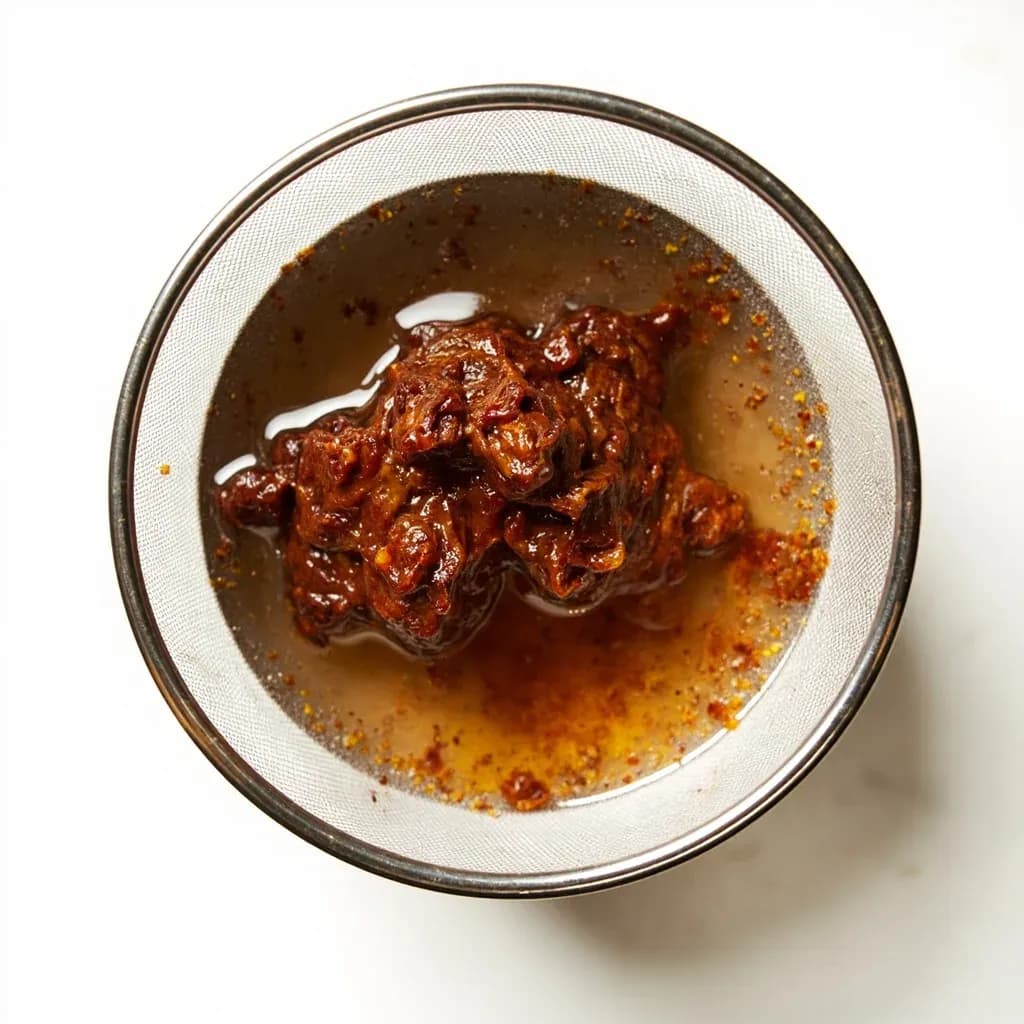
Soaking tamarind pulp in water and straining out the seeds and fibers for a tangy juice.
Tamarind pulp extraction soaks the sticky pod pulp in warm water, then squeezes and strains it to separate the sour juice from seeds and fibers. The resulting tamarind water or concentrate provides the signature tartness in dishes like pad thai, sambar, and Malaysian air asam. Soaking time and water amount control how concentrated and sour the extract is. Pressing the pulp firmly through a sieve maximizes yield.
Tamarind pulp extraction is the cold, no-cook prep step that turns the sticky, seed-studded pulp of the tamarind pod into the tart juice or smooth puree that defines a wide swath of South and Southeast Asian cookery. The fruit's signature sourness comes mostly from tartaric acid — a relatively rare acid in the kitchen that reads as cleaner and more rounded than lemon or vinegar, with a faintly caramel undertone. Extracting it yourself, rather than reaching for a jar of concentrate, gives you control over three things commercial pastes standardize away: how strong the sourness is, how clear or pulpy the liquid looks, and whether the deeper, almost date-like fruitiness of the flesh comes through. In practice the technique is little more than soak, mash, and press — but the choices you make at each step change the result in ways a good cook learns to feel.
The character of the finished extract is shaped almost entirely by three variables: water temperature, the pulp-to-water ratio, and how hard you push the softened mass through the sieve. Hotter water speeds the work and pulls more color, but a true boil drags bitter compounds out of the fibers and muddies the flavor. A 1-to-2 ratio of packed pulp to water gives a syrupy, intense press good for chutneys and finishing; a 1-to-3 ratio gives a thinner, more neutral juice that disappears into long-simmered dals and soups. And whether you strain through cheesecloth for clarity or work the pulp through a bare sieve with a wooden spoon determines whether your final product is a clean liquid or a textured puree.
The technique matters because tamarind does work that no other common acid does quite as well. It softens chiles, balances the sweetness of palm sugar, and brightens lentil- and legume-based dishes without the sharp, evaporating edge of citrus. Once you have a jar in the fridge, it becomes one of the most versatile ingredients in a savory kitchen — usable in a few teaspoons in a dal, a quarter cup in a pad thai, or a slow reduction into a sticky chutney.
- Difficulty
- Easy
Types & varieties
Dark brown, sticky, very sour compressed pulp with fibrous strands and occasional seed fragments. The workhorse form for Indian extraction.
Lighter in color, less fibrous, and noticeably sweeter. Often sold as a soft paste; yields a milder, more rounded extract.
Brittle brown shells encasing sticky pulp. Must be cracked and seeded before soaking and need the longest soak time.
A smooth, dark commercial paste that bypasses extraction entirely; used roughly 1:1 as a substitute for homemade extract, thinned with a little water when a loose juice is called for.
How to do it
- 1
Break the tamarind into small pieces
If using a compressed block, pull or cut it into rough 2–3 cm chunks. If using whole dried pods, crack the brittle shell, peel it away, and pick out as many of the hard brown seeds as you can at this stage. Smaller pieces soak faster and more evenly; a whole block dropped into water will leave a stubborn dry core in the middle.
- 2
Cover with hot, not boiling, water
Place the tamarind in a non-reactive bowl — glass, stainless steel, or ceramic — and pour over water that has just come off the boil, roughly 80–90 °C. A common ratio is 1 cup packed tamarind to 2 cups water for a strong extract, or 1:3 for a lighter one. The pieces should be fully submerged, with a couple of centimeters of water above them.
- 3
Soak until soft and pliable
Let the tamarind soak for 15–30 minutes (30–60 minutes for whole pods). The pulp should turn from hard and brittle to soft, dark, and squishy, and the water will look thick and brown. Press a piece between your fingers — if it yields easily and the flesh separates from the fibers, it is ready.
- 4
Mash and squeeze by hand or with a masher
Using clean hands, squeeze and rub the softened tamarind against the side of the bowl for 1–2 minutes to break the pulp away from the seeds and stringy fibers. A potato masher works too, but hands give the best control and the fullest yield. The mixture should look like a thick, lumpy sludge.
- 5
Strain through a fine-mesh sieve
Set a fine-mesh sieve over a bowl and tip the tamarind mixture in. Using the back of a spoon or a flexible spatula, press and stir the pulp against the mesh, working it through to leave behind a tangle of fibrous strands and any intact seeds. For a smoother, more refined extract, line the sieve with a layer of cheesecloth first.
- 6
Optional: take a second press
Return the strained fibers and seeds to the bowl, add another 1 cup of warm water, and repeat the mashing and straining. This second pressing is milder and is excellent for balancing acidity in long-simmered dishes like sambar.
- 7
Rest, then use or store
Let the extract settle for 5 minutes so any fine sediment sinks to the bottom. Pour off the clear extract from the top for a clean juice, or stir it back in for a fuller-bodied puree. Use immediately, refrigerate in a sealed glass jar for up to 2–3 weeks, or freeze in ice-cube trays and transfer the cubes to a freezer bag for ready portions that hold for several months.
The three variables that define the extract
Once you have the basic method down, the craft lives in three adjustments. Each one is worth learning to feel, because the dish usually tells you which side of the spectrum you need.
- Water temperature: hot but not boiling (80–90 °C) extracts cleanly and quickly. Anything close to a rolling boil pulls bitterness from the fibers and darkens the liquid toward a muddy brown.
- Pulp-to-water ratio: a tight 1:2 ratio yields a thick, syrupy press suited to chutneys and finishing drizzles; a generous 1:3 gives a thinner, more neutral juice that disappears into long-simmered dals and soups without dominating.
- Pressing force: a gentle push through cheesecloth gives a clear, refined juice; vigorous working of the pulp through a bare fine-mesh sieve gives a fiber-flecked, full-bodied puree with more of the fruit's natural pectin.
First press vs. second press
Indian and Sri Lankan cooks often treat the two pressings as different ingredients rather than two batches of the same thing. Understanding the distinction is what separates a balanced dal from a flat one.
- First press: thick, dark, intensely sour, and full-flavored. Use it where tamarind is the star — chutneys, finishing drizzles, Pad Thai, and imli-based sauces.
- Second press: dilute and gentler, with background sourness rather than foreground acidity. Add it early in long-cooked dals like sambar, rasam, or amti so it mellows into the dish.
Regional practice
The same technique produces noticeably different results in different hands. A few regional habits worth knowing.
- In Thai cooking, the extract is usually strained to a clear juice. Fish sauce and palm sugar are doing much of the balancing in the final dish, so a clean acid reads better than a pulpy one.
- In South Indian cooking, the first press is typically reserved for chutneys and finishing, while the second, lighter press is folded into sambar, rasam, and other long-simmered lentil dishes for background sourness.
- In Mexican kitchens, tamarind is most often used as a sweet-sour agua fresca rather than a savory cooking acid, so the extraction leans dilute and is typically sweetened before drinking.
Common uses
Tips & pitfalls
- Use hot but not boiling water. A true boil extracts bitter compounds from the fibers and darkens the liquid unnecessarily without adding flavor.
- Break the block into 2–3 cm pieces before soaking. Whole blocks leave a hard, undissolved core and waste time and water.
- Press firmly. Most of the flavor sits in the residue that resists release — give the sieve real pressure with the back of a spoon or the heel of your hand.
- Re-soak the leftover fibers in a second batch of warm water for a lighter 'second press' that is ideal for dals and long-simmered dishes.
- For a clear juice, line the sieve with cheesecloth; for a full-bodied, fiber-flecked puree, work the pulp through the bare sieve with a wooden spoon.
- Stir a small pinch of salt into the soaking water — it helps draw color and flavor out of the pulp.
- Store the finished extract in glass, not plastic. Tamarind's tartaric acid is strong enough to pick up off-flavors from plastic containers and will pit aluminum bowls if left in contact for long.
- Freeze the extract in ice-cube trays and pop the cubes into a freezer bag. One cube is a useful single portion for a curry or stir-fry.
Good to know
- Primary form used
- Compressed seedless tamarind blocks, whole dried pods, or Thai-style soft paste
- Standard ratio
- 1 part packed pulp to 2–3 parts hot water by volume
- Water temperature
- Hot but not boiling, roughly 80–90 °C (175–195 °F)
- Soak time
- 15–30 minutes for blocks; 30–60 minutes for whole dried pods
- Yield
- About 1 cup of packed block yields 2–3 cups of strained extract
- Active time
- 5–8 minutes hands-on, plus soaking
- Dominant acid
- Tartaric acid, present at 8–14% of the pulp by weight
- Shelf life of extract
- 2–3 weeks refrigerated in a sealed glass jar; up to 6 months frozen in ice-cube trays
- Botanical source
- Tamarindus indica, native to tropical Africa and widely cultivated in India, Thailand, and Mexico
Also called
Tamarind Pulp Extraction · Tamarind Juice Extraction (Air Asam)
Dishes that rely on it
Related

Whisk
Beat ingredients smooth and aerated with a looping wire motion

Sift
Pass dry ingredients through mesh to aerate and remove lumps

Strain
Pour through mesh to separate solids from liquid for a smooth result

Filter
Pass liquid through fine material to clarify out the smallest particles

Rice
Press cooked potatoes through small holes for fluffy, lump-free texture

Mash
Crush soft cooked food into a rustic, creamy purée

Grind
Crush food into a coarse to fine texture, from spices to meat

Grate
Shred food into fine bits against a sharp-toothed surface