Heat & Fire
Three-Flip Comal Bake (Inflado)
Cooking a tortilla on a comal with three precise flips so it puffs up with internal steam.
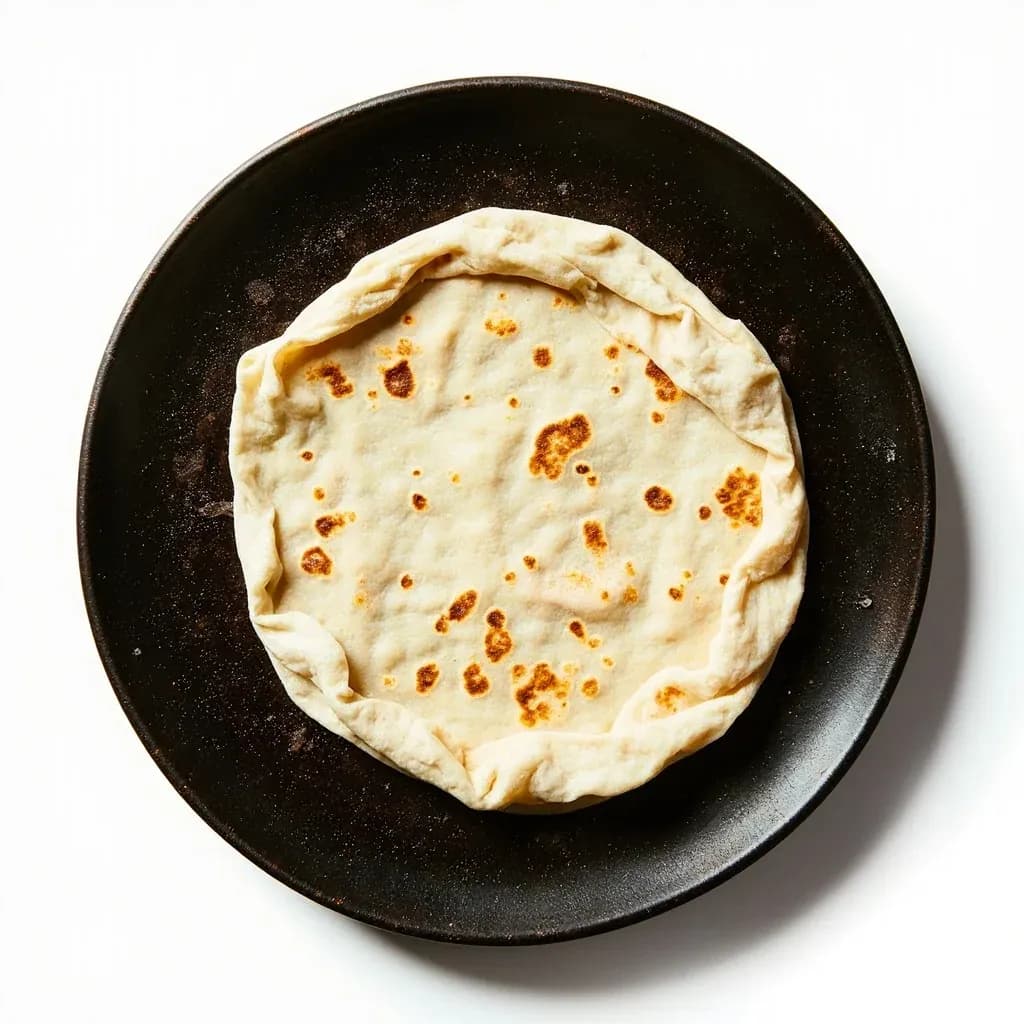
This Mexican technique cooks a fresh tortilla on a hot comal griddle using a sequence of three flips with precise timing. The brief first sides set the surfaces, and the final flip traps internal steam so the tortilla balloons (inflado) into a puffed, fully cooked round. The puff signals a well-pressed, properly hydrated masa and a perfectly cooked tortilla.
The three-flip comal bake, known across Mexico as inflado (or tortilla inflada), is the technique that turns a flat disc of masa into a hollow, steam-filled balloon in under two minutes. It looks like a trick, but it is really an exercise in heat management and edge integrity: the comal must be hot enough to flash interior moisture into vapor before the surface dries out, and the tortilla must be pressed thin and even with unbroken edges so the steam has nowhere to go but up. When both conditions hold, the trapped vapor inflates the tortilla like a cushion, and a single quick flip back to the first side finishes the bake without deflating it.
The technique is one of the oldest tests of a cook's relationship with masa. Pre-Hispanic kitchens in the Valley of Oaxaca were using clay comales and nixtamalized corn by at least 1500 BCE, and the inflado is still the simplest way to judge whether masa is fresh enough, whether a comal is seasoned well, and whether the heat is right. A tortilla that puffs fully signals good nixtamalization, even hydration, and correct temperature all at once. A flat tortilla usually points to old masa, a cracked edge, or a comal that is either too cold or too aggressive.
Beyond its diagnostic value, the inflado is a finished dish in its own right. Puffed tortillas are torn open and filled with beans, cheese, or chiles; opened flat and fried as tostadas; cut into strips for chilaquiles or tortilla soup; or served alongside stews in place of bread. The interior of a properly puffed tortilla stays tender and steamy long after it leaves the comal, which is why cooks stash them in a cloth-lined tortillero as they come off the fire.
- Difficulty
- Medium
Types & varieties
The classic form; nixtamalized masa that puffs fully and evenly when fresh and well hydrated.
Less traditional but workable on a comal; puffs with a softer, bread-like interior rather than the chewy nixtamalized-corn texture.
Cooked on a clay comal over a wood fire, often picking up a faint smoky char at the edges.
Made from blue nixtamalized masa; puffs similarly to white corn but with a nuttier, earthier flavor.
A large Oaxacan format cooked on the comal, opened after puffing and topped rather than filled.
How to do it
- 1
Heat the comal
Set the comal over medium heat and let it come up to temperature for several minutes. Test by flicking a few drops of water on the surface; they should dance and skitter before evaporating in 2–3 seconds. The surface sits in the 180–200°C / 350–400°F range. Too hot and the tortilla chars before any steam can build; too cool and the tortilla dries out and hardens without inflating.
- 2
Press the tortilla
Form a ball of fresh masa — about 30–40 g for a standard tortilla — and press it between two sheets of plastic in a tortilla press, or under a heavy plate if pressing by hand. Aim for an even 3–4 mm thickness across the disc. Peel the tortilla off the plastic carefully so the rim is smooth and uncracked; a sealed edge is what will trap the steam in the next minute.
- 3
First side on the comal
Lay the tortilla flat on the dry comal. Leave it alone until the surface looks dry and pale and the edges begin to lift just slightly off the surface, roughly 30–45 seconds. Do not slide or shift it; let the bottom set so it releases cleanly on the flip.
- 4
First flip
Slide a thin spatula (or your fingertips, with practice) under the tortilla and flip it in one confident motion. The cooked side should show a few light golden freckles, not dark char. Adjust the heat now if the surface is coloring too fast.
- 5
Watch for the bubbles
On the second side, small bubbles will begin to rise under the surface within about 20–30 seconds. This is the moment the masa's internal moisture is flashing to steam. The tortilla will start to lift and curl at the rim.
- 6
Seal the edges and encourage the puff
When you see the first bubbles, press the rim of the tortilla gently with the pads of your fingertips, or with a folded dry cloth, for a second or two — just enough to crimp the edge against the comal. This seals the steam in. The tortilla should balloon fully within 5–10 seconds. If the center puffs but the edges stay flat, a quick squeeze at the uninflated edge will usually push the trapped steam through and inflate the whole disc.
- 7
Second flip (optional)
If the first side still looks pale or the puff is only partial, flip the tortilla back to the first side for a final 10–15 seconds. This is the 'third flip' that finishes the bake, evening out the color on both sides without driving off the trapped steam.
- 8
Remove and hold
Lift the puffed tortilla off the comal and slide it directly into a cloth-lined tortillero, a covered basket, or a bowl with a clean towel over it. The trapped steam will keep the interior tender and pliable for several minutes — long enough to fill a batch.
The physics of the puff
The inflado is not magic — it is steam pressure held inside a sealed starch-and-protein membrane. Nixtamalization, the overnight treatment of dried corn with calcium hydroxide (cal), does two things that make the puff possible. It gelatinizes the outer layer of each starch granule so the masa holds water in a gel rather than leaking it, and it frees bound proteins from the pericarp so they form a thin elastic network around that gel. When the tortilla hits a hot comal, that bound water flashes to vapor faster than it can diffuse through the surface. If the edges are smooth and unbroken, the only exit for the vapor is to lift the top of the tortilla off the bottom, balloon-style.
- Freshness of masa is the single biggest variable: nixtamal loses elasticity as it sits, so the steam escapes instead of stretching the tortilla.
- Edge integrity matters more than thickness. A perfectly even tortilla with cracked rims will not puff; an uneven tortilla with sealed rims often will.
- Comal temperature sets the race between steam generation and surface drying. Too hot and the surface seals and chars before much vapor has built; too cool and the vapor leaks out as fast as it forms.
- A brief return flip to the first side at the end is mostly cosmetic — it sets color without driving out the trapped steam — which is why the 'three-flip' framing survives in teaching kitchens.
Choosing and seasoning the comal
A clay comal is the traditional choice and gives the gentlest, most forgiving heat — clay radiates rather than sears, so the tortilla has a longer window to puff before the surface darkens. Cast iron and carbon steel comales run hotter and more responsively, which is an asset on a gas range but unforgiving if the flame is too high. A new clay comal should be cured slowly over low heat with a thin film of oil rubbed into the surface, then gradually brought up to working temperature; a new steel comal needs the same seasoning routine you would give a skillet.
- Wipe the comal between tortillas with a dry cloth — water dropped on a hot comal drops the surface temperature sharply and stalls the next puff.
- Never soap a clay comal; it absorbs the soap and will flavor the tortillas for weeks. Scrape and wipe only.
- A comal that is smoking is too hot. Back off the heat before laying the next tortilla.
Common uses
Tips & pitfalls
- Use masa within a few hours of grinding; old masa has lost the elasticity nixtamalization gave it and will not puff no matter what you do.
- Aim for 3–4 mm of uniform thickness — tortillas that are too thick dry out before steam builds, and tortillas that are too thin have no interior to inflate.
- Press cleanly. Cracked edges are escape hatches for steam; a smooth, unbroken rim is what holds the puff.
- If a tortilla does not puff on its own after the second flip, give the edges a quick squeeze and flip it back to the first side for 10 seconds — the trapped heat usually finishes the job.
- Avoid high heat. A comal that is scorching will char the surface and seal it before steam has a chance to form.
- Avoid low heat. A comal that is under-temperature dries the tortilla flat and stiff before any vapor can build inside.
- Do not press the center of the tortilla to 'help' it puff — the trapped steam is doing the work, and pressing the middle just lets it escape.
- Wipe the comal between tortillas with a dry cloth, not a wet one; water on a hot comal drops the surface temperature sharply and the next tortilla will not puff as well.
Good to know
- Also known as
- Inflado, tortilla inflada, balloon tortilla
- Primary equipment
- Comal — traditionally clay, also cast iron or carbon steel
- Heat source
- Direct stovetop, wood fire, or gas flame; medium-hot surface
- Working temperature
- Comal hot enough that a drop of water dances and evaporates in 2–3 seconds (about 180–200°C / 350–400°F)
- Cook time per tortilla
- Roughly 60–90 seconds total
- Masa requirement
- Freshly nixtamalized masa for best puff; reconstituted masa harina puffs less reliably
- Ideal thickness
- Roughly 3–4 mm, uniform across the disc
- Difficulty
- Moderate; requires good timing and a well-seasoned comal
- Origin
- Pre-Hispanic Mesoamerica; comal and nixtamalized tortilla documented in the Valley of Oaxaca by at least 1500 BCE
- Yield indicator
- A full, even puff signals fresh nixtamalization, even hydration, and correct comal temperature
Also called
Inflado · Three-Flip Tortilla · Comal Puffing · Three-Flip Comal Bake
Related

Sear
Blast the surface hot for a deep-browned, savory crust

Sauté
Cook quickly in a little fat over lively heat, tossing as you go

Stir-Fry
Toss bite-sized pieces over roaring heat for fast, smoky cooking

Pan-Fry
Crisp food in a shallow layer of hot fat, turning once or twice

Deep-Fry
Submerge in hot oil for an all-over crackling crust

Roast
Cook uncovered in dry oven heat for browned edges and tender centers

Bake
Cook with steady, surrounding oven heat — the soul of bread and pastry

Broil
Hit food from directly above with fierce overhead heat