Heat & Fire
Toasting Insects with Chile and Lime
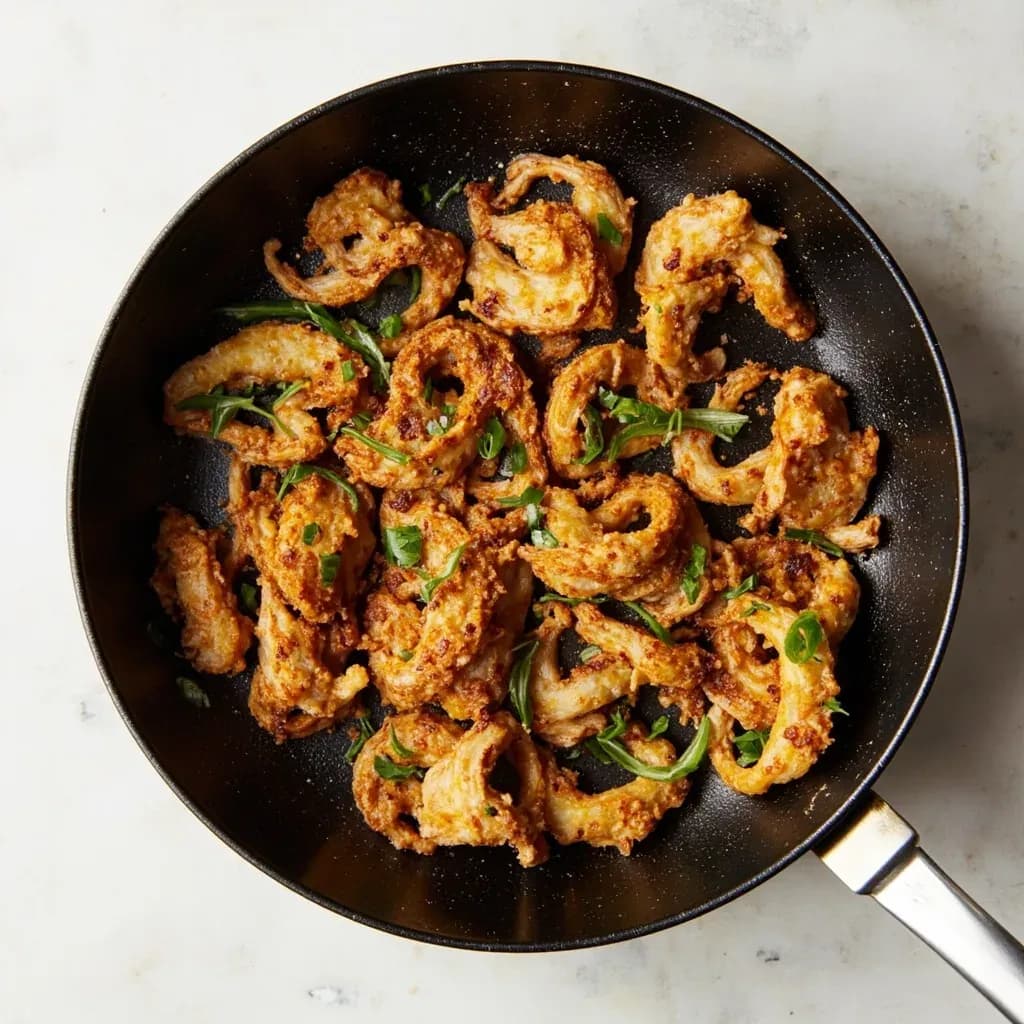
Dry-toasting edible insects on a comal with chile, lime, and salt for a crisp, savory snack.
This Oaxacan technique dry-toasts edible insects such as chapulines (grasshoppers) on a hot comal, tossing them with chile, lime, and salt until crisp and fragrant. The dry heat drives off moisture so they turn crunchy and concentrates a roasted, savory flavor. The toasted insects are eaten on their own or folded into tacos and tlayudas.
Toasting insects with chile and lime is the Oaxacan method for turning dried or freshly caught edible insects — most often chapulines (Sphenarium purpurascens, the Mexican yellow grasshopper) — into a crisp, deeply seasoned botana. The cook works a thin layer of insects on a hot comal, blooming ground dried chile and minced garlic in the small amount of fat the insects themselves release, then finishes the batch off the heat with fresh lime juice and salt. The technique is fast, requires no oil, and produces a finished product that is nutty, smoky, and faintly grassy, with the bright acid note of lime cutting through the toasted-chile warmth.
What makes the method work is control of moisture and heat. The comal must be hot enough to drive off residual water and crisp the exoskeleton, but not so fierce that the chile and garlic scorch in seconds. The lime is deliberately added only at the end, after the comal is off the flame, because citrus juice on a hot surface would release the moisture that the toasting step is trying to remove. Treated properly, a batch will keep its snap for a week or more; mistreated, it will turn leathery and stale within hours.
Despite the association with the tlayuda, this is a standalone technique in Oaxacan cooking. Chapulines toasted this way are eaten as a bar snack with mezcal, sprinkled over tlayudas, memelas, and guacamole, tucked into tacos, and stirred into masa for quesadillas fritas and molotes. The same approach — shorter times, gentler heat — extends to other seasonal insects, most notably chicatanas, the winged leaf-cutter ants that appear in late spring and early summer.
- Difficulty
- Easy
Types & varieties
The standard Oaxacan preparation: dry-toasted grasshoppers with guajillo, garlic, salt, and lime.
A hotter, brighter version in which chile de árbol dominates the heat profile, common in the Isthmus of Tehuantepec.
Finished with toasted sesame seeds tossed in at the end for a nutty, aromatic lift.
A regional variant that finishes with a pinch of fresh or dried herb for a greener, more herbal note.
The same technique applied to giant winged leaf-cutter ants (Atta mexicana) during their brief May–July nuptial flight; toasted more gently because they scorch quickly.
Pre-charred over an open flame or in a smoker before the comal step, giving a deeper, campfire-like flavor.
How to do it
- 1
Heat the comal
Place a clay, cast-iron, or carbon-steel comal over medium to medium-high heat and let it warm for 2 to 3 minutes until evenly hot. A properly heated surface should make a few drops of water sizzle and bead on contact.
- 2
Dry-toast the chapulines
Add the cleaned, pre-toasted (or fresh) chapulines in a thin, even layer. Toast, stirring and tossing constantly with a wooden spatula, for 3 to 4 minutes until they darken a shade, smell nutty and popcorn-like, and any residual moisture is driven off. Spread them out again between tosses; piled insects will steam rather than toast.
- 3
Add the chile, garlic, and salt
Sprinkle the ground guajillo (or guajillo-árbol blend), the finely minced garlic, and a modest pinch of salt evenly over the chapulines. Keep the comal on the heat and stir continuously for 60 to 90 seconds so the chile blooms in the insects' own fat and the garlic perfumes the batch without browning to a bitter black.
- 4
Pull off the heat and finish with lime
Slide the comal off the burner, or transfer the chapulines to a warm bowl. Squeeze fresh lime juice over them, toss, and taste. Adjust salt and lime to taste, and serve immediately while still hot and crisp.
- 5
Optional rest and re-crisp
If not serving right away, spread the finished chapulines on a tray or in a wide bowl in a thin layer so steam escapes. Before serving, return them to a hot dry comal for 30 to 60 seconds to bring back the snap.
Why the lime waits until the end
The single most important rule of the technique is also the one most home cooks break. Acid meeting a hot comal flashes into steam; that steam rehydrates the very chitin you have spent three minutes drying out. The result is a batch that looks crisp on the plate but goes leathery in a closed container within an hour. Pulling the comal off the heat — or transferring the chapulines to a warm bowl — before squeezing the lime preserves the snap and also keeps the citrus note bright rather than cooked.
Sourcing and the difference fresh makes
Most chapulines sold outside Oaxaca are pre-toasted and partially dried, then re-toasted on the comal for a few minutes to crisp and season. Fresh-caught chapulines, gathered from the milpa after the first rains, lose roughly half their weight as moisture cooks off and need a longer initial toast before the chile and garlic are added. Both work with the same method; the difference is mostly timing and patience in the first stage. A fully toasted batch smells nutty and popcorn-like — if the kitchen smells grassy or vegetal, the insects need more time on the comal before any seasoning goes in.
Common pitfalls and how to avoid them
Four mistakes account for most failures: piling the chapulines too thick so they steam, adding the lime too early, scorching the garlic, and sealing the batch while it is still warm. Work in a thin, even layer, keep the spatula moving, and treat the chile-and-garlic step as a 60-to-90-second perfume rather than a true sauté. If a batch softens after sitting, return it to a hot dry comal for 30 to 60 seconds to re-crisp before serving.
Common uses
Tips & pitfalls
- Add the lime only after the comal is off the heat. Acid on a hot surface releases moisture and will make the insects soggy, especially if they are then stored.
- Start with pre-toasted dried chapulines from a market whenever possible; the comal step is really about crisping the shell and blooming the seasoning, not cooking the insect through.
- Toast the chile and garlic for 60 to 90 seconds, no longer. Burnt garlic turns the whole batch bitter and is the most common failure.
- Spread the chapulines in a thin, even layer rather than piling them; piled insects steam instead of toast and never crisp properly.
- Do not add oil. The insects release enough of their own fat to carry the chile and garlic; oil makes them greasy rather than crisp.
- Salt modestly during toasting and adjust at the end; the chitin carries salt to the surface, so underseasoning slightly during the cook leaves room for a clean final adjustment.
- If a batch softens after sitting, return it to a hot dry comal for 30 to 60 seconds to re-crisp before serving.
- Never seal a warm batch in a closed container. Steam trapped with the chitin will undo the toasting in under an hour; a cloth bag or loose bowl is correct.
Good to know
- Origin
- Oaxaca, Mexico — the central valleys, with strong presence in markets such as Mercado de Abastos in Oaxaca City.
- Primary insect
- Chapulines, almost always Sphenarium purpurascens, the Mexican yellow grasshopper.
- Equipment
- A comal — clay is traditional, cast iron or carbon steel work well — plus a wooden spatula or scraper for tossing.
- Heat level
- Medium to medium-high; hot enough to crisp the chitin, controlled enough to keep the chile and garlic from scorching.
- Typical chile
- Ground dried guajillo, often blended with a smaller amount of chile de árbol for heat; pasilla or costeño are occasional substitutes.
- Seasoning
- Finely minced garlic, sea or kosher salt, and fresh lime juice added off the heat at the end.
- Season
- Fresh chapulines are gathered from the milpa after the first rains, roughly May through November; pre-toasted dried chapulines are sold year-round.
- Yield
- About 4 heaping cups of finished chapulines per 1 lb (450 g) of pre-toasted dried chapulines; fresh ones lose roughly 50–60% of their weight on toasting.
- Active time
- Roughly 8 to 12 minutes from a hot comal to a serving bowl.
- Difficulty
- Easy; the work is mostly attentive stirring over a controlled fire.
- Storage
- Room temperature in a cloth bag or loosely covered bowl for 1–2 weeks; never sealed while still warm or the batch will steam and soften.
Also called
toasting-insects · Toasting Chapulines · Comal-Toasted Insects
Related

Sear
Blast the surface hot for a deep-browned, savory crust

Sauté
Cook quickly in a little fat over lively heat, tossing as you go

Stir-Fry
Toss bite-sized pieces over roaring heat for fast, smoky cooking

Pan-Fry
Crisp food in a shallow layer of hot fat, turning once or twice

Deep-Fry
Submerge in hot oil for an all-over crackling crust

Roast
Cook uncovered in dry oven heat for browned edges and tender centers

Bake
Cook with steady, surrounding oven heat — the soul of bread and pastry

Broil
Hit food from directly above with fierce overhead heat