Heat & Fire
Torch Finishing (Aburi)
Japanese searing of sushi or fish surface with a torch to render fat and add smoky char.
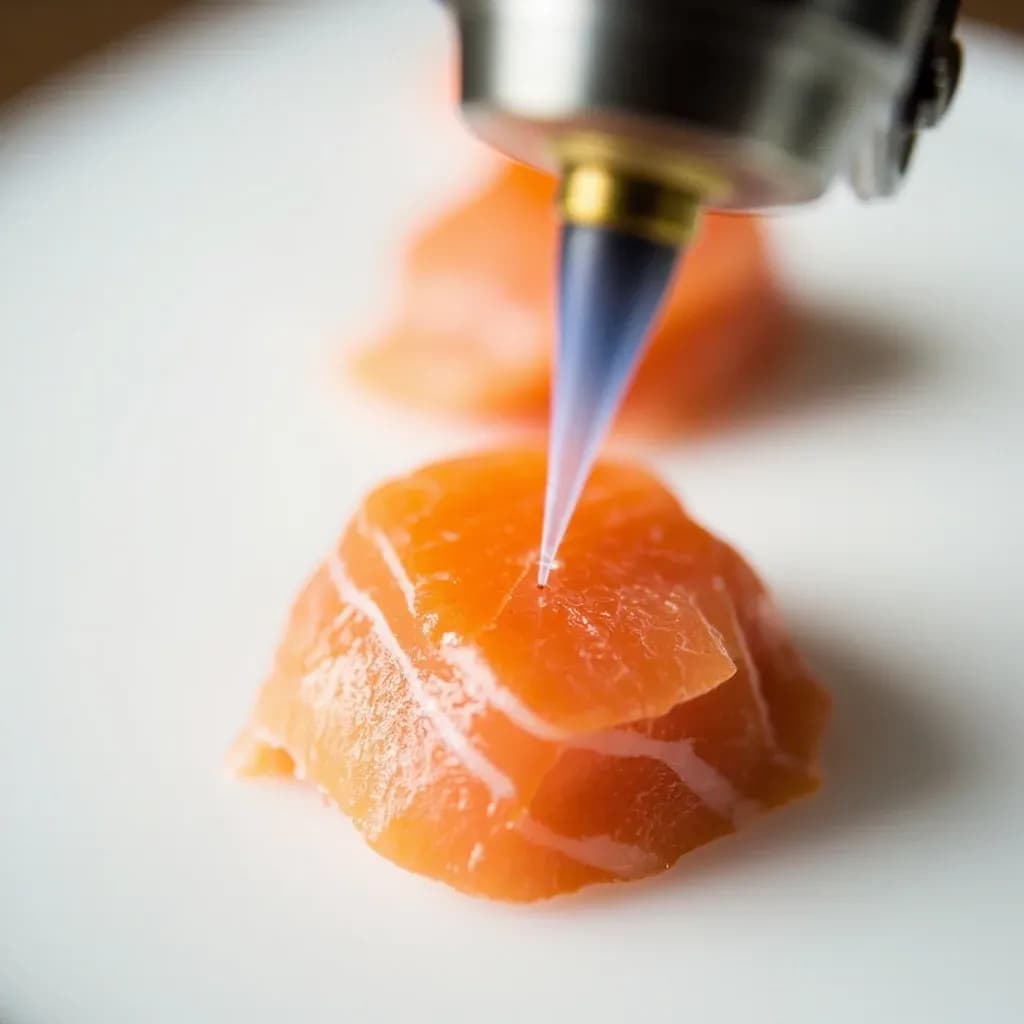
Aburi is the Japanese technique of lightly searing the surface of sushi, sashimi, or fish with a torch just before serving. The quick flame renders surface fat, lightly chars the skin, and brings out aroma while leaving the interior raw and cool. It transforms fatty cuts like salmon belly or seared otoro with a smoky, melting contrast.
Aburi (炙り, literally 'seared' or 'flame-touched') is the Japanese practice of briefly searing the surface of sushi- or sashimi-grade fish — almost always over an open flame — to render a thin band of fat and add a faint layer of smoke without cooking the flesh through. In its traditional form the fish is waved over glowing binchotan charcoal for a second or two; in modern sushi bars and home kitchens the binchotan has largely been replaced by a butane or MAPP gas torch, which gives the cook finer control over heat, distance, and timing.
The technique is fundamentally a finishing move, not a cooking method. The fish must already be safe to eat raw before the flame ever touches it. The target is a 1–2 mm cooked band on the surface while the interior stays translucent and cool — a contrast that gives aburi its signature texture: a faint crackle of caramelized protein and pooled, fragrant oil giving way to silken, almost raw flesh underneath.
The choice of protein matters more than the choice of tool. Aburi works best on fatty fish whose surface lipids render visibly under heat — salmon, hamachi, toro, engawa, scallop — because the bloom of oil is part of the visual and flavor payoff. Lean fish like squid or tai can be torched, but they tend to toughen and bleach rather than glisten, so they ask for a much lighter pass.
- Difficulty
- Medium
Types & varieties
Seared salmon nigiri — the classic and most accessible aburi; fat renders dramatically under flame.
Seared tuna, usually akami or chu-toro; lightly kissed, never cooked through.
Seared yellowtail, often finished with ponzu, grated daikon, or a dab of yuzu kosho.
Seared scallop; surface sugars caramelize very fast — needs a constantly moving flame.
Eel variants; traditionally grilled, with a final torch pass after tare for a lacquered char.
Seared wagyu or thinly sliced beef over rice — a sushi-bar extension of the technique.
A North American innovation (salmon with melted mozzarella, scallop with mayo) — widespread but considered fusion, not washoku.
The traditional form: fish briefly waved over glowing binchotan for a gentler, smokier result than gas.
How to do it
- 1
Select and slice the protein
Use sushi-grade, well-chilled fish. Slice to roughly 3–4 mm thickness for nigiri; for tataki, sear a thicker block (2–3 cm) on the surface and slice after. Keep on ice until torching.
- 2
Dry the surface
Pat the sear-side of the fish dry with a clean paper towel. Surface moisture is the single most common reason a torch pass steams instead of sears.
- 3
Form the base (if making nigiri)
Shape seasoned sushi rice into a small oblong, lightly brushed with nikiri soy or a thin swipe of wasabi. Set it aside — never torch the rice.
- 4
Ignite and tune the torch
Light a butane or MAPP culinary torch and adjust to a clean, focused blue flame with no yellow tip. A yellow flame deposits soot and an acrid flavor.
- 5
Sear the fish surface
Hold the torch 5–10 cm from the fish. Move it in small, continuous passes. Watch for fat to bead and the surface to turn opaque-golden. Total time: 5–15 seconds.
- 6
Check the doneness band
The cooked layer should be 1–2 mm deep. Lift an edge — the interior must still look raw and translucent. A deeper cooked band means you've gone too far.
- 7
Apply finishing sauce
Brush the seared surface with ponzu, nikiri, sweet soy, eel tare, or a dot of yuzu kosho — only after the torch is off. Sugar-based sauces scorch and turn bitter if torched first.
- 8
Assemble and serve immediately
For nigiri, place the seared fish atop the rice; do not torch the assembled piece. Serve within a minute or two — aburi is best at warm-fish-over-room-temperature-rice contrast.
Charcoal vs. Gas Torch
Traditional Japanese cooks reach for binchotan because its radiant heat is gentler and more diffuse than a torch flame, and because the smoke it produces is clean and faintly sweet. A binchotan pass takes only a moment — the fish is held on a bamboo skewer or chopsticks and waved a few centimeters above the coals, often less than a second per side. The result is a lighter char and a softer smoke note.
A butane culinary torch is sharper and more controllable: you can aim the flame at one edge, paint a stripe across the surface, or just kiss a corner. MAPP gas torches run hotter still (~2,000 °C vs. ~1,400 °C for butane) and are the right call for thicker or denser proteins — toro, scallop, beef — where you want the surface to render before the flesh underneath warms up. The trade-off is that gas flames are easier to overdo; a stationary torch held even slightly too close will scorch fatty fish in under a second.
- Binchotan: gentler, smokier, traditional — best for thin slices of fatty fish and a quieter char.
- Butane torch: precise, widely available, ideal for home cooks and small à-la-minute work.
- MAPP torch: hottest, best for thicker cuts (toro, scallop, beef) where heat must penetrate the surface fast.
- Tune for a clean blue flame — a yellow tip deposits soot on the fish and tastes acrid.
The Vancouver-Style Aburi Boom
Aburi existed quietly in Japan for decades — binchotan over a hand-formed nigiri at a neighborhood sushi-ya — but it became a global phenomenon only after chefs in Vancouver, BC began spotlighting the technique in the late 1990s and early 2000s. Restaurants around the Tojo's and Maki Sushi circle built menus around single-bite, heavily torched nigiri, often finished with non-traditional toppings like melted mozzarella or a slick of mayonnaise. The style spread rapidly across North America and then back to Japan as a recognizably 'Canadian-aburi' presentation.
These fusion versions — salmon with cheese, scallop with kewpie mayo — are now standard on many sushi menus worldwide, but they sit outside classical washoku. Purists treat them as a separate tradition; for the cook, the lesson is that aburi is a forgiving canvas. Once you can land a clean 1–2 mm sear without cooking the fish through, almost any sauce, salt, or aromatic works on top.
Common uses
Tips & pitfalls
- Pat the fish dry with a paper towel first — surface moisture kills the sear and steams the fish instead.
- Keep the torch moving in small circles; a stationary flame scorches fatty fish in under a second.
- Angle the flame to graze the surface, not blast straight on — you want a 1–2 mm cooked band, not a cooked-through piece.
- Always apply sauce AFTER torching. Sweet or sugar-based sauces scorch and turn bitter under direct flame.
- Reach for MAPP rather than butane on thicker cuts (toro, scallop, beef) — butane struggles to render denser flesh before the surface burns.
- Shield the rice by holding the fish with chopsticks or torching it off the nigiri and placing it on the rice afterward.
- Season the rice slightly under-salty for aburi service — the seared fish is more intensely flavored and the rice needs to balance it.
- Common mistake: holding the torch too close 'for more control.' Pull it back — control comes from movement, not proximity.
- Common mistake: torching the underside of the fish while it sits on the rice — the rice hardens, dries out, and tastes toasted.
- Common mistake: torching previously frozen fish without drying it thoroughly — ice crystals prevent proper Maillard browning.
Good to know
- Japanese name
- 炙り (aburi) — literally 'seared' or 'flame-touched'
- Origin
- Japan; long-standing in sushi tradition, originally done over binchotan charcoal
- Traditional fuel
- Binchotan (white) charcoal; fish briefly waved over the glowing coals
- Modern fuel
- Culinary butane or MAPP gas torch; MAPP burns hotter (~2,000 °C)
- Typical torch distance
- 5–10 cm (2–4 in) from the surface
- Typical sear time
- 5–15 seconds per face, just until the surface colors and fat beads
- Target internal state
- Exterior seared, interior still raw/near-raw — a 1–2 mm cooked band
- Best proteins
- Fatty fish — salmon, hamachi, toro, engawa, scallop; also beef and unagi
- Sushi rice note
- Always torch the fish, not the rice; rice should stay at body temperature, not hot
- North American popularization
- Japanese-Canadian sushi bars in Vancouver (late 1990s–2000s) are widely credited with the aburi-sushi boom
Also called
Aburi · Torch Finishing · Seared Sushi
Related

Sear
Blast the surface hot for a deep-browned, savory crust

Sauté
Cook quickly in a little fat over lively heat, tossing as you go

Stir-Fry
Toss bite-sized pieces over roaring heat for fast, smoky cooking

Pan-Fry
Crisp food in a shallow layer of hot fat, turning once or twice

Deep-Fry
Submerge in hot oil for an all-over crackling crust

Roast
Cook uncovered in dry oven heat for browned edges and tender centers

Bake
Cook with steady, surrounding oven heat — the soul of bread and pastry

Broil
Hit food from directly above with fierce overhead heat