Transform & Preserve
Vacuum Distillation
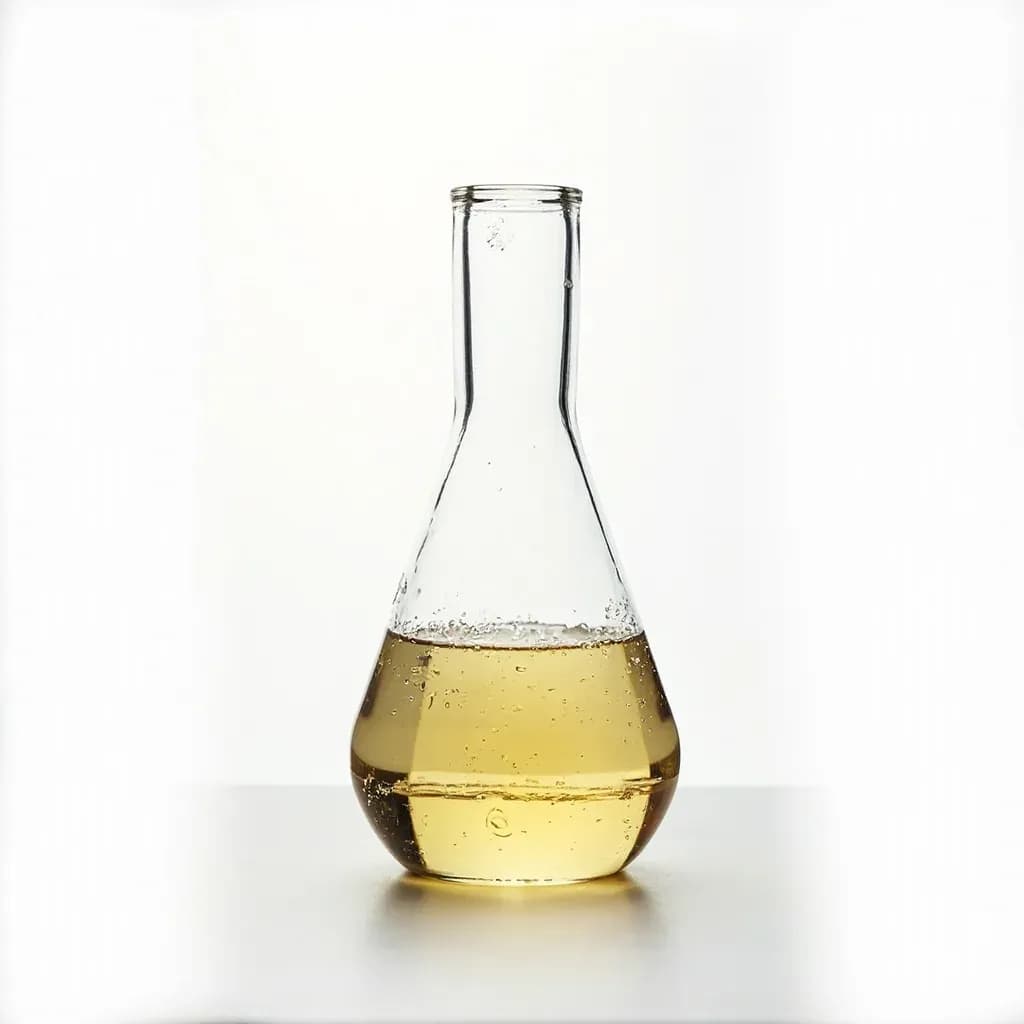
Distilling under reduced pressure so aromas extract at low, flavor-preserving temperatures.
Vacuum distillation lowers the pressure in a still so liquids boil at much cooler temperatures, letting cooks capture delicate aromatics without the cooked, scorched notes of high heat. Modern kitchens use rotary evaporators to make crystal-clear flavored spirits, hydrosols, and concentrated essences. The gentle conditions preserve volatile compounds that would otherwise be destroyed.
Vacuum distillation is the culinary application of a simple physical principle: drop the pressure inside a still and a liquid's boiling point falls with it. On a kitchen rotovap, the charge sits at 20–50 mbar — between roughly 1/20th and 1/50th of atmospheric pressure — so water and ethanol vaporize at bath temperatures of 30–50 °C instead of 100 °C. That 50–70 °C gap is exactly where almost all of a fresh ingredient's top-note aromatics live, and ordinary boiling drives them off long before the cook can capture them.
The technique behaves as both a clarifier and a concentrator. As the spinning flask throws a thin, constantly renewed film of liquid against the heated wall, water and the lightest volatiles flash off and recondense in a chilled receiver, leaving behind color, tannins, pectins, sugars, and the heavy, non-volatile flavor compounds. The distillate is therefore a transparent, intensely aromatic extract of the original — the 'essence' of an ingredient without its body, which makes the technique less a way to invent a new flavor than a way to isolate what was already there.
In restaurant kitchens the technique is almost always rotary evaporation. The borosilicate glassware looks intimidating, but the work itself is mechanical: filter the charge, fill the flask halfway, spin, heat gently, pull vacuum slowly, recover the condensate. The real skill is reading the boil, choosing the right end point, and not scorching the residue onto the flask.
- Difficulty
- Hard
Types & varieties
The kitchen workhorse. A spinning flask throws a thin film of liquid inside a heated bath under vacuum; condensate collects in a separate receiving flask.
A mechanical wiper spreads the liquid into a thin film on a heated, jacketed column under vacuum. Used for viscous, sugar-rich, or fatty liquids that would scorch in a rotovap.
Liquid flows by gravity as a thin film down a vertical, heated, evacuated column. Industrial scale; rare in restaurants but standard at flavor houses.
Steam is pulled through plant material under reduced pressure, recovering essential oils at well below 100 °C. Common in small-batch essential-oil and hydrosol production.
A heated pot inside a sealed, evacuated chamber; used by some craft distillers to make low-temperature 'cold' spirits.
How to do it
- 1
Set up and inspect the rotovap
Check the bump trap, condenser, and receiving flask; glassware should be residue-free and dry, or rinsed with a little of the liquid you intend to run. Connect the chiller (0–5 °C), vacuum pump, and cold trap, and verify all ground-glass joints are greased and seated.
- 2
Prepare the charge
Filter, decant, or centrifuge the liquid to remove solids and large particulates — they will scorch onto the spinning flask. Cold-charge works best; if the liquid is syrupy or fatty, dilute it with water or a splash of ethanol so it actually boils under vacuum.
- 3
Load the evaporation flask
Pour the charge in, never exceeding about half the flask's working volume. Secure the flask on the vapor duct with a Keck clip.
- 4
Engage rotation and the bath
Start rotation at roughly 100–150 rpm. Lower the flask into the pre-heated water bath, typically 35–45 °C for most culinary liquids.
- 5
Pull vacuum gradually
Open the stopcock to the pump in stages over 30–60 seconds, watching the condenser. The liquid should boil gently and steadily, not in violent bursts. If it bumps, vent briefly, lower the bath temperature, or drop in a boiling chip.
- 6
Watch the condensate
Volatile aromatics will start dripping into the receiving flask within a minute or two. Adjust pressure or bath temperature to keep a steady, rolling boil — not a lazy simmer, not a hard boil.
- 7
Stop at the right moment
When the distillate flow slows to a drip, or the receiver hits your target volume (often 20–40% of the charge), close the stopcock to the pump before raising the flask out of the bath.
- 8
Break the vacuum slowly
Open the stopcock to admit air gradually. A sudden inrush aerosolizes the residue and coats the condenser. Only then raise the flask from the bath and stop the rotation.
- 9
Recover and store
Decant the distillate into a labeled, sealed glass bottle and refrigerate. Flush the residue from the evaporation flask while it is still warm; sticky or sugary residue is much harder to remove once it cools and dries.
- 10
Reset for the next run
Empty and rinse the bump trap, condenser coil, and receiving flask. Wipe the vapor duct seal, defrost or refill the cold trap, and log pressure, bath temperature, RPM, charge, and distillate volume for repeatability.
The flavor logic: what comes off, and when
Vacuum distillation does not capture an ingredient whole; it sorts it by volatility. Understanding that order is the difference between a clean, expressive distillate and a flat, slightly soapy one.
- The first vapors to cross the condenser are the lightest, most ephemeral compounds: citrus terpenes (limonene, pinene), fresh herbal aldehydes, and the fruity esters of a young ferment. Pull the vacuum too fast and you can lose them straight to the pump.
- The middle of the run carries the body of the charge — the floral and green notes, the varietal character of a wine, the savory depth of a stock or tomato water.
- The last liquid to leave the flask is mostly water with a little residual ethanol. Stopping the run there, rather than running to bone-dry, is what keeps the distillate from tasting cooked.
- Volatile acids like acetic acid come across only if you push the run. Distill a red-wine vinegar at 40 °C and 30 mbar and the distillate reads as 'essence of wine' — fruity esters with most of the sharpness left behind. Crank the bath toward 60 °C or pull harder vacuum and the acetic acid starts coming over too, which quickly takes over the flavor.
- Fats and oils barely move under rotovap conditions, which is why a clarified butter or olive-oil distillate captures the aromatics dissolved in the fat while leaving the triglycerides behind.
Common uses
Tips & pitfalls
- Pre-filter or centrifuge the charge — particulates scorch onto the flask wall and taint the next run.
- Never fill the evaporation flask more than halfway; the spinning liquid climbs the neck and can be sucked straight into the receiving flask.
- Start at atmospheric pressure, set the rotation, lower the flask into the bath, then pull vacuum gradually. Ramping the vacuum too fast is the single biggest cause of bumping.
- Use a bump trap or a few boiling chips; they stop sudden boil-overs from contaminating the condenser.
- Match bath temperature to what you are protecting: 30–35 °C for fresh herbs and citrus, 40–50 °C for wines and ferments, higher only for sturdy liquids like vinegar.
- Keep the condenser cold — a recirculating chiller at 0–5 °C is far more reliable than a single-pass tap, which warms up fast on long runs and lets volatiles escape.
- Put a cold trap in line before the pump; it protects the pump's diaphragms from solvent and water vapor, and pump repair costs far exceed the cost of the trap.
- Release vacuum slowly after the run. A sudden air rush will aerosolize residue all over the condenser, and the smell will haunt every distillate you make for weeks.
Good to know
- Core principle
- Reducing pressure inside the still lowers the boiling point of the liquid, so water, ethanol, and volatile aromatics vaporize at 30–50 °C bath temperature instead of 100 °C.
- Typical operating pressure
- 5–100 mbar for culinary work; most kitchen runs sit at 20–50 mbar on a rotary evaporator.
- Bath temperature
- 30–50 °C for delicate aromatics; up to ~60 °C for tougher, less heat-sensitive liquids like vinegar.
- Rotation speed
- Roughly 100–280 rpm on a bench rotovap; higher speeds spread a thinner film and reduce bumping.
- Standard equipment
- Rotary evaporator (rotovap), heated water or oil bath, condenser with a recirculating chiller, vacuum pump, receiving flask, and a bump trap.
- Cold trap
- A dry-ice/acetone or refrigerated trap between the condenser and pump protects the pump from vapors and solvent carry-over.
- Flask fill limit
- Never more than about half the evaporation flask's volume; the spinning liquid climbs the neck and can be sucked into the receiver if overfilled.
- Throughput
- A 1 L charge of juice or wine typically concentrates in 20–45 minutes depending on pressure, bath temperature, and rotation speed.
- Difficulty
- Moderate. Setup and pump handling are the real learning curve, not the chemistry.
- Kitchen adoption
- Late 1990s–2000s, via the modernist cuisine movement — chefs such as Heston Blumenthal, Ferran Adrià, Grant Achatz, and Wylie Dufresne brought the technique into restaurant kitchens.
- Cost of entry
- Used lab-grade rotovaps start around $2,500–$5,000; new Buchi or Heidolph units run $8,000–$25,000+, with a chiller and pump adding several thousand more.
Also called
Rotovap Distillation · Low-Temperature Distillation
Related

Confit
Cook slowly submerged in fat for silky tenderness and keeping

Cure
Draw out moisture with salt and time to preserve and concentrate

Pickle
Steep in acidic brine for bright, tangy, crunchy preservation

Ferment
Let friendly microbes transform food into tangy, complex flavor

Marinate
Soak in a seasoned mix to flavor and tenderize before cooking

Brine
Soak in salt water so meat stays juicy and seasoned throughout

Dehydrate
Slowly dry out moisture to concentrate flavor and extend shelf life

Cold-Smoke
Perfume cured food with smoke without cooking it through