Transform & Preserve
Western Steeping
The Western single-infusion approach to steeping tea or herbs in a larger volume of water.
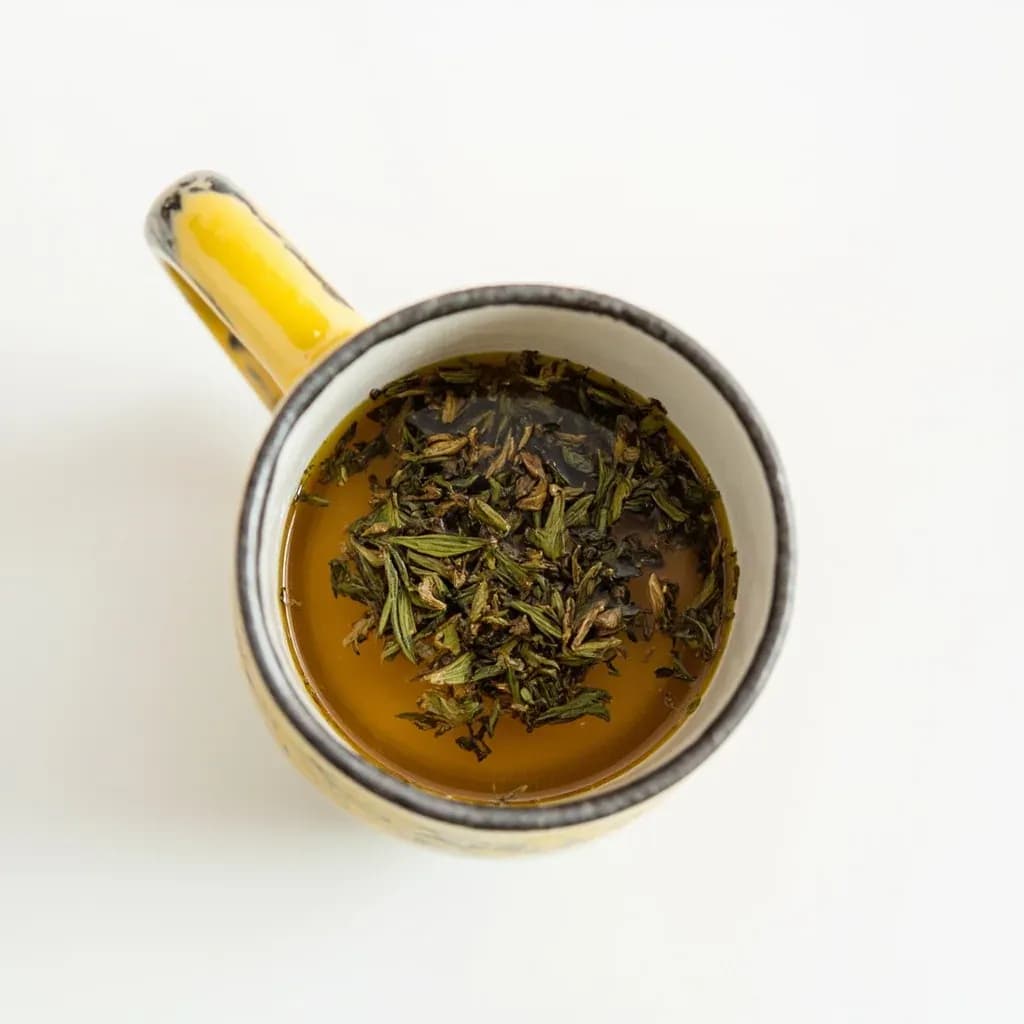
Western steeping infuses tea leaves or herbs once in a relatively large volume of water for a few minutes, contrasting with the gongfu style of many short steeps in a small vessel. The single longer infusion extracts a full-bodied cup in one pass and is the familiar mugs-and-teapots method. Adjusting leaf quantity, water temperature, and time tunes strength and bitterness.
Western Steeping is the everyday single-infusion method most tea drinkers in Europe, the Americas, and Australia use without thinking about it: a generous measure of leaf, a full cup of hot water, a few minutes of contact, and one pot. It earned the "Western" label because tea specialists needed a way to contrast it with the East Asian traditions (Gongfu cha, Japanese kyusu brewing) that get far more from a smaller quantity of leaf through repeated short infusions.
What defines the method is its forgiving ratio — roughly 2–3 g of leaf per 200–240 ml of water, steeped once for 2–7 minutes depending on the type of tea, and then poured off. That high water-to-leaf ratio and single contact time produce a milder, more uniform cup than Gongfu, where a small pot of densely packed leaves is infused six to twelve times in quick succession to build a layered, evolving flavor round by round. Western Steeping is also the natural home for herbal tisanes, rooibos, and iced tea, where the goal is a single balanced pot rather than a concentrated, evolving brew.
The practical virtue of the method is that it works at almost any scale — a single covered mug, a 1 L teapot for the table, or a 4 L stockpot for a party — and it tolerates small slips in timing or measurement. The craft is in matching water temperature to the leaf, covering the vessel, and stopping the steep on time, because once the leaves have given what they will, every extra minute in contact extracts only tannin and bitterness.
- Difficulty
- Easy
Types & varieties
The default: heated water, 3–5 minute contact, single infusion in a pot or covered mug.
One large pot (500 ml–1 L) steeped once and decanted into individual cups — the classic household form for serving several people at once.
A single-serving infuser or tea bag in a covered mug; the everyday default for most Western drinkers.
A standard Western steep brewed at double strength, then poured over ice to chill and dilute in one step.
Tea steeped in cold or room-temperature water for 6–12 hours; noticeably smoother, less astringent, and roughly half the caffeine of an equivalent hot brew.
Loose tea in a sealed clear-glass jar left in direct sun for 2–4 hours; convenient but has documented food-safety concerns (warm 40–55 °C water can support bacterial growth).
Same method applied to dried or fresh herbs (mint, chamomile, lemon verbena, lavender); usually requires the longest contact time, 5–7 minutes or more covered.
How to do it
- 1
Measure and heat the water
Pour 200–240 ml (6–8 oz) of fresh cold water per serving into a kettle and heat to the right temperature for the tea: full boil for black, pu'er, and most herbals; 85–95 °C for oolong; 70–80 °C for green; 65–75 °C for white.
- 2
Preheat the vessel
Rinse the teapot or mug with a little of the hot water, swirl, and pour it out. A cold ceramic or glass vessel drops the water temperature sharply in the first minute and lengthens the time needed for a full extraction.
- 3
Measure the leaf
Add about 2–3 g (roughly 1 rounded tsp) of loose tea per cup to the pot, infuser, or filter. Heavier whole-leaf styles (rolled oolongs, large white buds) can take a touch more; finely broken black teas a touch less.
- 4
Pour and cover
Pour the heated water over the leaves and put the lid on (or a saucer over the mug). Covering holds the temperature steady and keeps the aromatic top notes in the cup rather than drifting into the room.
- 5
Steep to time
Wait the appropriate interval — 2–3 min for green, 3–4 min for oolong, 3–5 min for black, 4–7+ min for most herbal tisanes. Set a timer and taste at the early edge of the window; stop the steep when the cup suits you.
- 6
Separate leaves from liquor
Lift out the infuser, or strain through a small fine-mesh sieve into each cup or a serving pot. Leaves left sitting in the brewed liquor keep extracting tannin and will turn the cup bitter within minutes.
- 7
Serve promptly
Pour and drink at once. Black tea takes milk, sugar, lemon, or honey to taste; well-made green, white, and oolong are best unadorned, so the leaf character can come through.
How it differs from Gongfu and Japanese steeping
The three methods can be read as a matrix of three variables: leaf mass relative to water, contact time per infusion, and number of infusions. Western Steeping sits at low leaf mass, long contact time, and one infusion. Gongfu cha inverts all three: high leaf mass in a small gaiwan or Yixing pot, very short steeps of 5–30 seconds, repeated 6–12 times so the cup evolves from round to round. Japanese kyusu brewing falls in between, using a small side-handled pot, 60–90 second infusions, and 1–3 rounds. Most specialty tea vendors recommend Gongfu or kyusu for oolong, aged pu'er, and whole-leaf green and white teas, where the layered extraction reveals nuance; Western Steeping is the right call for everyday black tea, broken-leaf grades, herbal tisanes, rooibos, and any practical context — a large pot, a single mug, a group serving — where repeated small pours aren't workable. Cold-brew is a useful middle ground: it keeps Western proportions and a single infusion but uses hours rather than minutes, which extracts fewer tannins and catechins and noticeably more of the sweeter, rounder aromatic compounds.
The variables that actually matter
Three numbers do almost all the work in a Western steep: water temperature, leaf quantity, and contact time. Get any one badly wrong and the cup is ruined; the rest is largely noise.
- Water temperature controls which compounds extract fastest. Tannins and catechins come out readily at full boil; the delicate amino acids and floral aromatics in green and white tea are best preserved at 70–80 °C.
- Leaf quantity sets the ceiling. Once you've used enough leaf, adding more gives body; using too little leaves the cup thin no matter how long you steep.
- Contact time is the sharpest tool. The first 30–60 seconds release the bright, volatile top notes; the next few minutes pull body and sweetness; everything after that is mostly tannin and bitterness.
- Leaf size changes the math. Fannings in a tea bag extract in under two minutes; a rolled oolong pearl or a large white bud may need a full five and a slightly higher dose.
Common uses
Tips & pitfalls
- Use fresh, cold filtered water; reboiled or oxygen-stale water mutes the cup and flattens the aromatics.
- Preheat the pot or mug with a splash of the hot water and discard it before adding leaves — a cold vessel drops the brew temperature 10 °C or more in the first minute.
- Cover the vessel while steeping to hold heat in and trap volatile top-note aromatics that would otherwise escape as steam.
- Use a timer. Black tea pushed past 5 minutes extracts harsh tannins and turns the cup astringent; green and white teas go grassy and bitter even faster.
- Adjust strength by adding or removing leaf, not by extending time — a longer steep adds bitterness, not body.
- Match water temperature to the leaf. Boiling water on green or white tea scorches the leaf and produces a thin, bitter, vegetal cup.
- Loose leaf gives a cleaner, more aromatic result than most tea bags, which use small fannings that over-extract quickly.
- Remove the infuser or strain as soon as the timer ends; residual contact with the brewed liquor keeps extracting tannin.
Good to know
- Origin
- European household tea-drinking tradition, codified in Britain and the Netherlands from the 17th–19th centuries; the "Western" label was coined in contrast to East Asian infusion methods such as Gongfu cha and Japanese kyusu brewing.
- Water-to-leaf ratio
- Roughly 200–240 ml (6–8 oz) of water per 2–3 g (about 1 tsp) of loose tea per serving.
- Steeping time
- 2–3 min for green tea; 3–4 min for oolong; 3–5 min for black and pu'er; 4–7+ min for most herbal tisanes; 6–12 hr for cold-brew.
- Water temperature
- ~100 °C / 212 °F for black, pu'er, and most herbals; 85–95 °C / 185–203 °F for oolong; 70–80 °C / 158–176 °F for green; 65–75 °C / 149–167 °F for white.
- Infusions per batch
- One — the spent leaves are discarded, unlike the 6–12 short, repeated infusions of Gongfu.
- Yield
- Approximately one 240 ml cup per teaspoon of leaf; a 1 L teapot typically serves 4–5.
- Equipment
- Kettle, teapot or covered mug, measuring spoon or small scale, infuser basket or fine strainer, lid or saucer.
- Difficulty
- Easy; forgiving of small variations in measurement.
Also called
Western Steeping · Single-Infusion Steeping
Related

Confit
Cook slowly submerged in fat for silky tenderness and keeping

Cure
Draw out moisture with salt and time to preserve and concentrate

Pickle
Steep in acidic brine for bright, tangy, crunchy preservation

Ferment
Let friendly microbes transform food into tangy, complex flavor

Marinate
Soak in a seasoned mix to flavor and tenderize before cooking

Brine
Soak in salt water so meat stays juicy and seasoned throughout

Dehydrate
Slowly dry out moisture to concentrate flavor and extend shelf life

Cold-Smoke
Perfume cured food with smoke without cooking it through