South Asia
Andhra Pradesh
Also: Telugu cuisine, Andhra cuisine
India's most incendiary regional table, built on Guntur chili heat, tamarind acidity, and a rice-pulse axis that stretches from the Krishna delta to the Rayalaseema scrublands.
Andhra Pradesh cuisine is the cooking of Telugu-speaking South India — a tradition that systematically deploys more dried red chili per capita than virtually any other in the world. It is defined by the rice-pulses-tamarind triad, by gongura (red sorrel) as a uniquely regional souring agent, and by the uncompromising use of Guntur and Byadagi chilies in quantities that read as aggressive to outsiders but are calibrated within a sophisticated sour-spicy-bitter balancing logic.
The flavour base
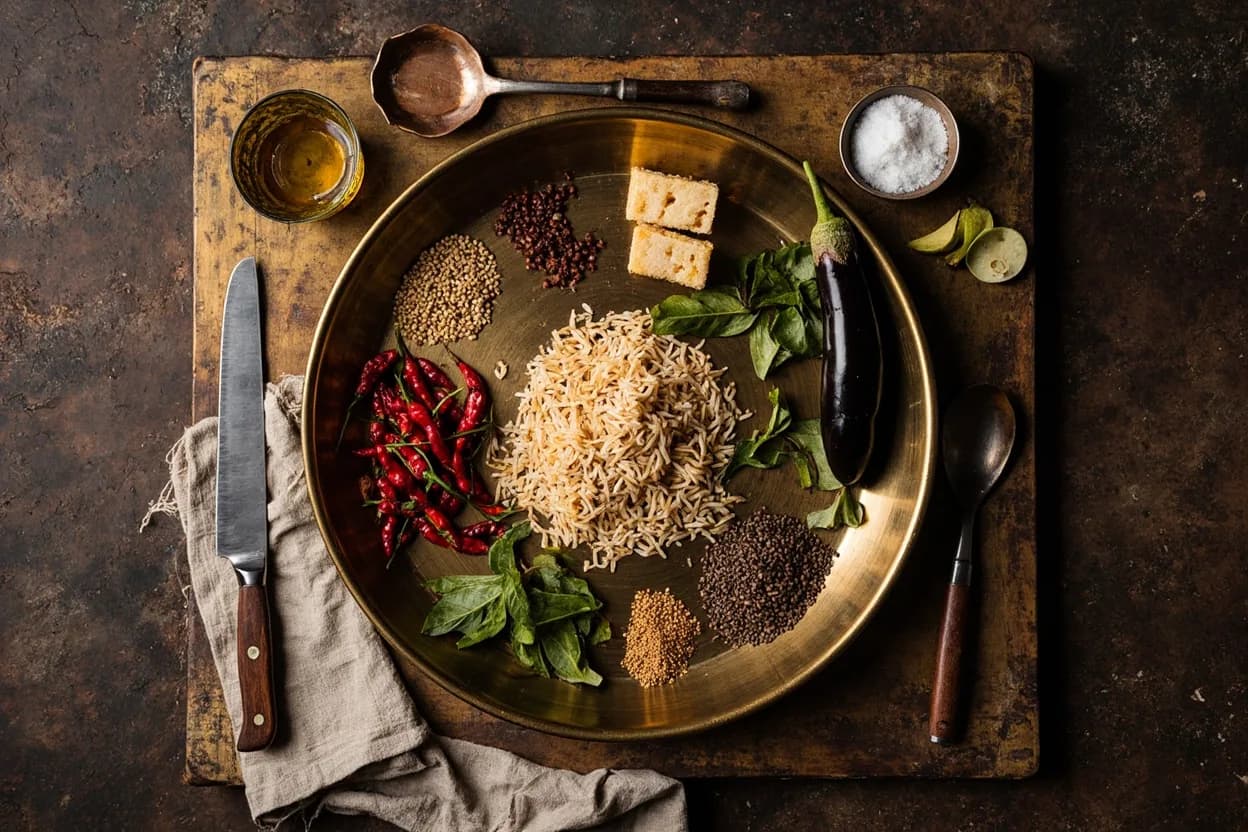
The foundational flavor grammar is tamarind for sourness, Guntur dried red chili for heat and color, roasted lentil powder for body, and a mustard-curry leaf-dried red chili tarka that opens almost every dish. Gongura (sorrel) replaces tamarind in many meat and pickle preparations, providing a sharper, more vegetal acidity.
Pantry staples
Key ingredients
Signature techniques
Signature dishes
Andhra Pradesh on the table
At the table
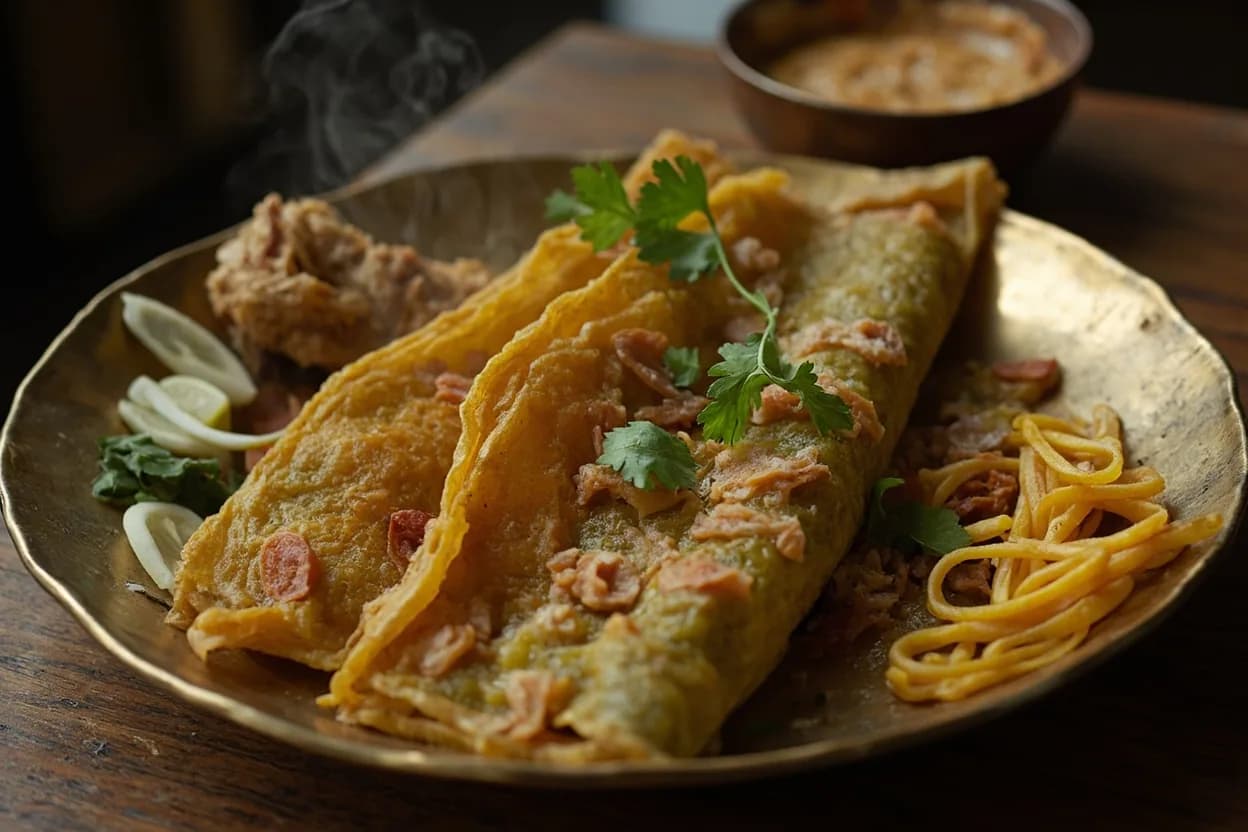
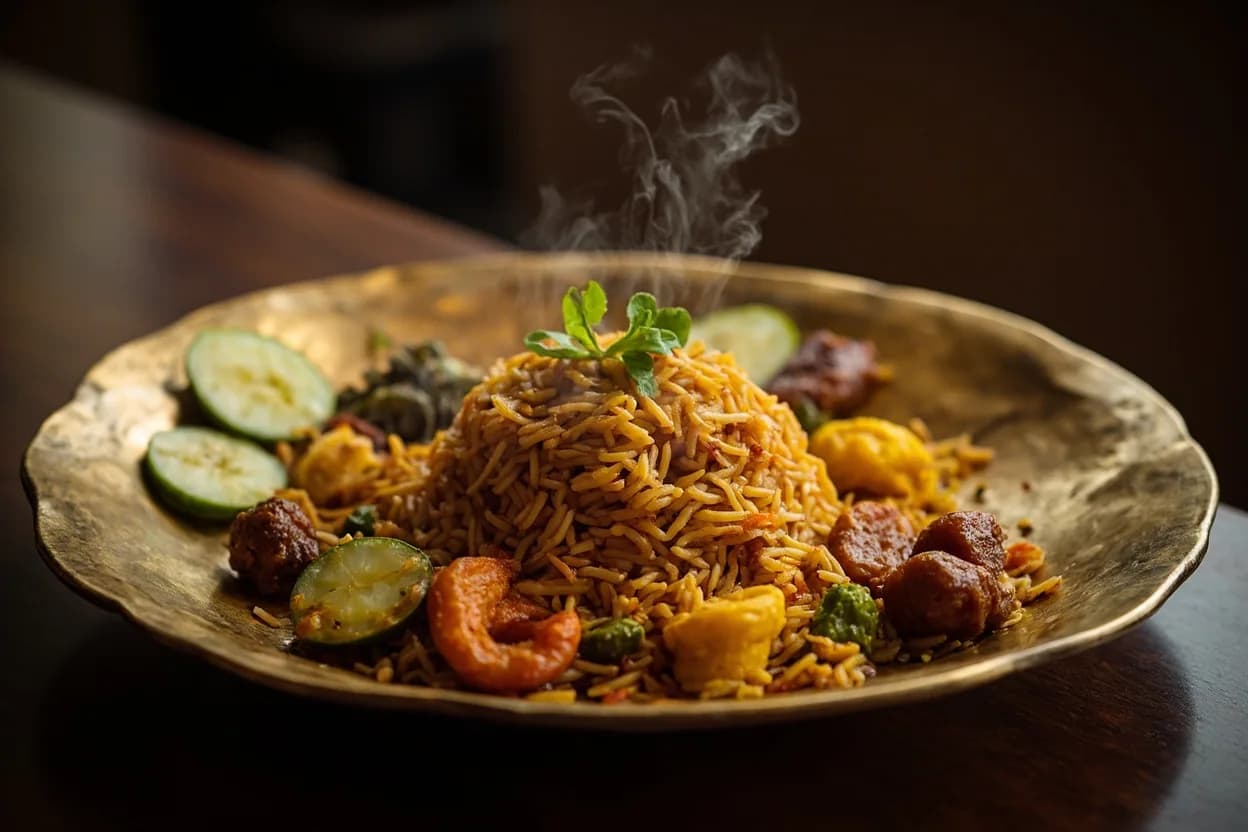
A full Andhra meal is served on a plantain leaf in strict sequence: rice occupies the center, with pappu (dal) and ghee eaten first, then rice with sambar or pulusu, then rice with a dry curry (vepudu) and rasam, and finally curd rice to cool the palate. Pickles — especially avakaya (raw mango) and gongura — sit at the top-right corner and are eaten in small amounts throughout. The meal is eaten with the right hand and the rhythm is watery-sour to dry-spicy to cool.
History & context
Telugu culinary identity traces to the Kakatiyas (12th–14th century), whose irrigated Krishna-Godavari delta created a rice-surplus culture. The Vijayanagara Empire (14th–17th century) was the great cultural consolidator, establishing temple-food traditions and the ceremonial banana-leaf feast. The arrival of the chili from Portugal via Goa in the 16th century transformed the cuisine irreversibly — Guntur district became the world's largest chili market, and the ingredient was naturalized into a pre-existing sour-pungent flavor vocabulary that had previously relied on long pepper and black pepper. Partition of Telangana in 2014 formalized a cultural distinction that culinary tradition had always acknowledged.
Regional variations
- Coastal Andhra (Krishna and Godavari deltas)
Seafood-heavy with crab, prawn, and pomfret; coconut appears more frequently than in the interior; milder on average.
- Rayalaseema
The most austere and fiery sub-tradition; limited water, more lentil and millet dependence; known for nati kodi (country chicken) curries and sesame-forward preparations.
- Uttarandhra (Vizag belt)
Tribal and coastal influence; bamboo shoot preparations, more palm-based ingredients, fish dominant.
Related cuisines
- Telangana
Shared Telugu heritage but distinguishable by Telangana's heavier use of sorghum, sajja roti, and goat offal; post-2014 administrative split formalized a culinary distinction already understood locally.
Neighboring Dravidian tradition; shares rice-dal-tamarind logic but is milder, with a heavier coconut and curry leaf signature.
- Karnataka
Western neighbor sharing some border ingredients like byadagi chili and jackfruit, though Karnataka's profile is sweeter and less acidic.
References
- 1.Ulavacharu: Telugu Cuisine — Sanjay Thumma (Vahchef)
- 2.The Andhra Cookbook — Phulwari Subbulakshmi
- 3.Dakshin: Vegetarian Cuisine from South India — Chandra Padmanabhan
- 4.India: The Cookbook — Pushpesh Pant
Confidence: high
Notes
Gongura as regional marker
Red sorrel (Hibiscus sabdariffa var.) is so central to Telugu identity that it is sometimes called the state leaf. It functions as both souring agent and vegetable; gongura mutton is perhaps the clearest regional signature dish in all of South India — essentially unimitated outside Andhra.
Avakaya — the pickled identity
Raw mango avakaya pickle, made each April-May from unripe Banganapalli mangoes, Guntur chili powder, mustard seeds, and sesame oil, is so deeply embedded in Andhra domestic life that households stockpile annual batches. It appears on the banana leaf alongside every meal, serving as a condiment, appetite trigger, and cultural signal simultaneously.