East Africa
Ethiopian Fasting (Tsom) Vegan Tradition
Also: Ye'tsom Megeb, Habesha Fasting Food, Ethiopian Orthodox Fasting Cuisine, Tsom
A rigorous and abundant plant-based culinary system born from Ethiopian Orthodox Christian fasting practice, covering up to 200 days of the year.
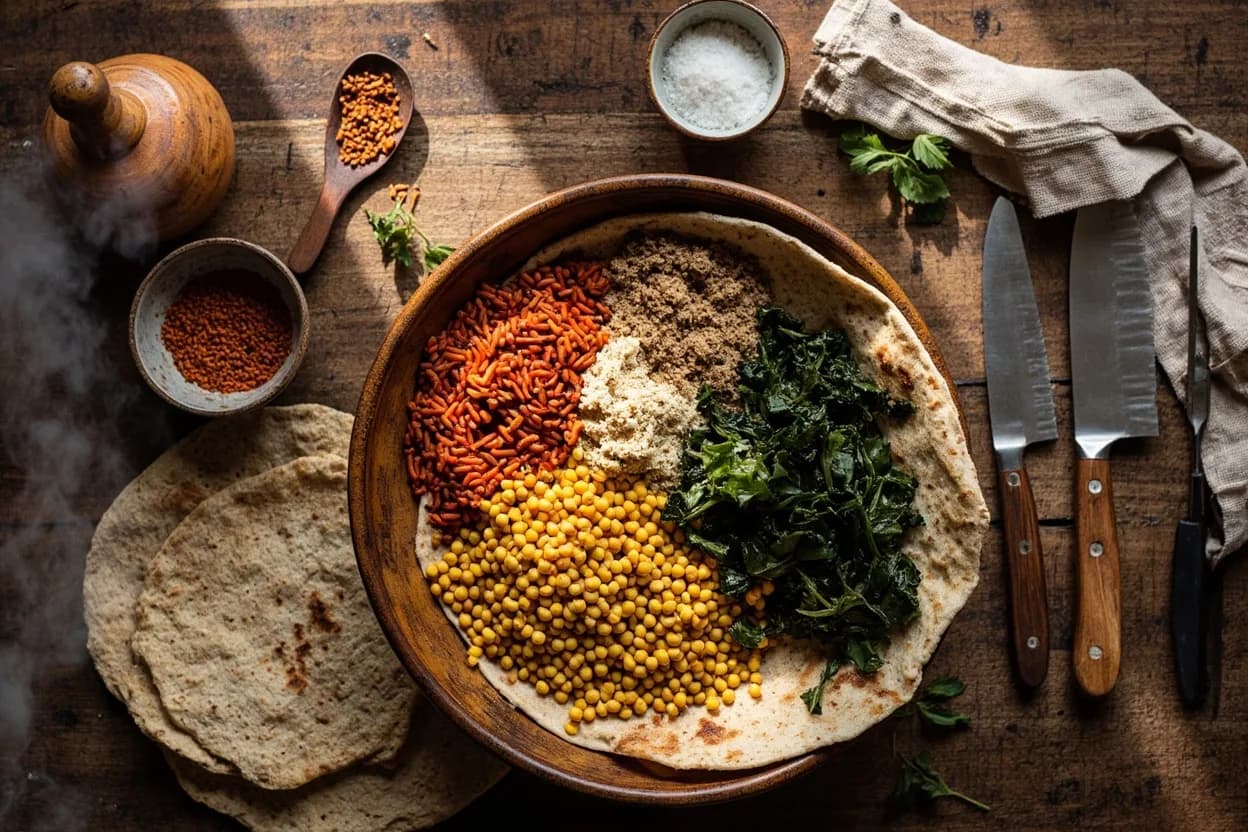
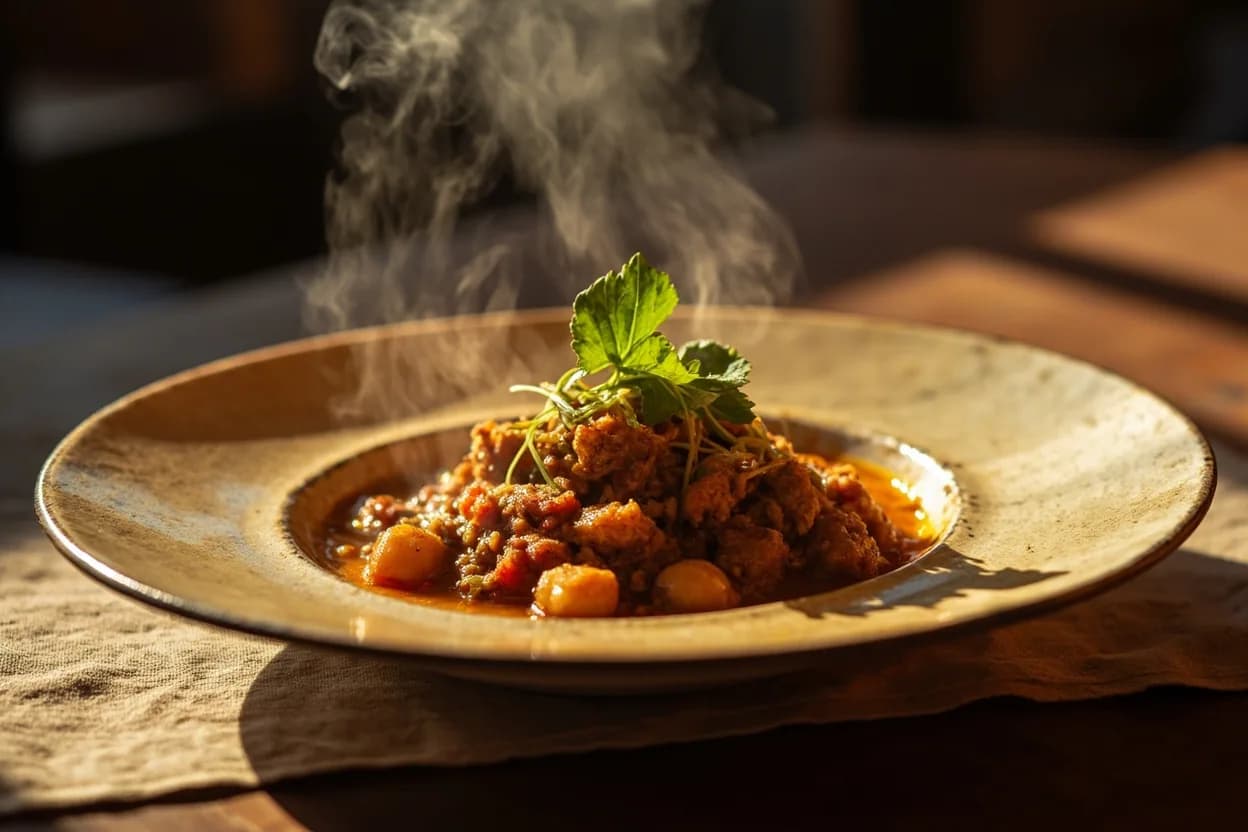
Ye'tsom megeb — fasting food — is the plant-forward dimension of Habesha cuisine mandated by the Ethiopian Orthodox Tewahedo Church calendar. Unlike the concept of 'fasting' in Western usage, tsom does not mean eating little; it means abstaining from all animal products (meat, dairy, eggs) from dawn until mid-afternoon, and often altogether. The result is a fully realized vegan cuisine of extraordinary depth, built around spiced lentil wots, split-pea dishes, mushroom tibs, gomen (Ethiopian collard greens), and an elaborate array of vegetable stews, all served atop injera — the sourdough flatbread that is both plate and utensil.
The flavour base
Berbere-spiced tomato and onion base for red wots; niter kibbeh replaced by ye'tsom kibbeh (vegan spiced oil made with coconut or sunflower oil infused with onion, garlic, turmeric, and fenugreek); mitmita for dry heat; awaze paste for pungent punch
Pantry staples
Key ingredients
Signature techniques
Signature dishes
Ethiopian Fasting (Tsom) Vegan Tradition on the table


At the table
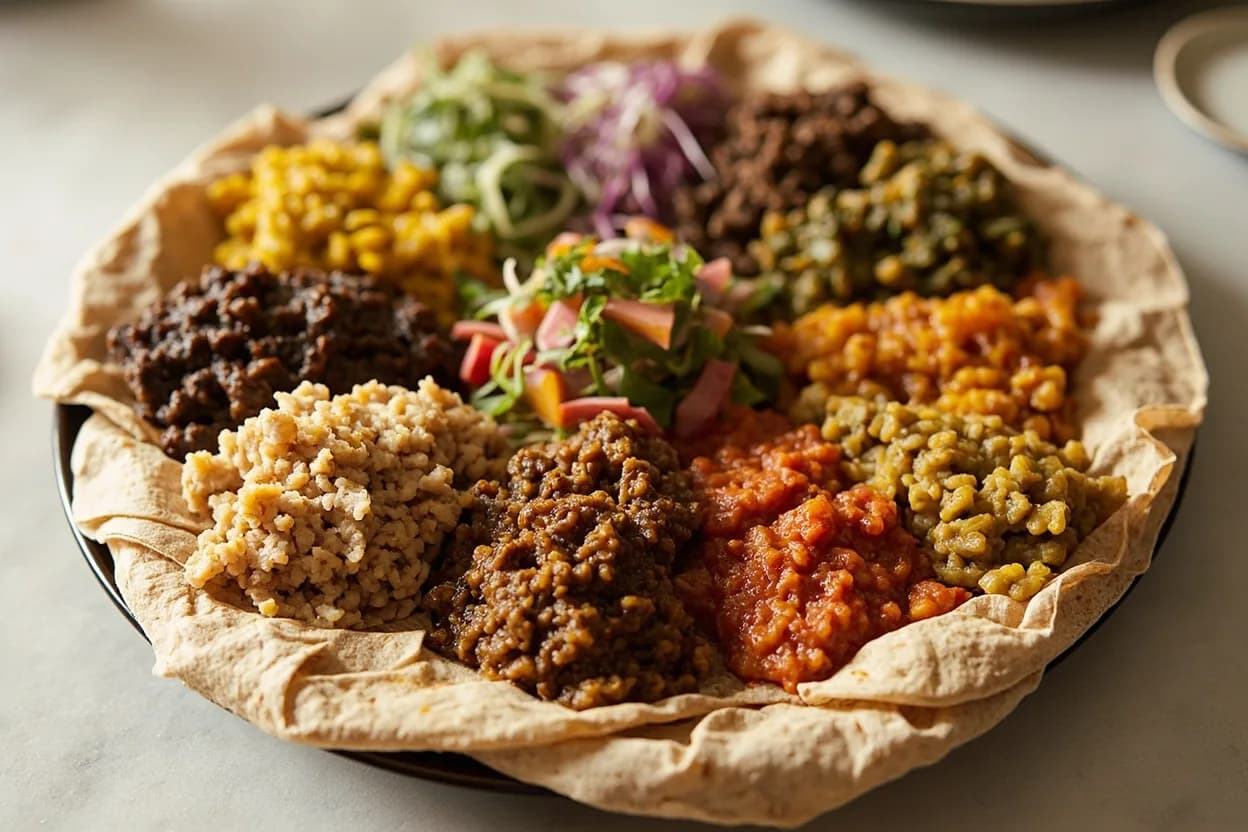
A fasting beyaynetu (combination plate) is served on a communal injera-lined mesob (basket tray). Multiple wots and alicha dishes are arranged around the injera — guests tear pieces of injera to scoop each dish communally. No utensils. Meals are social and generous in portion despite being fully plant-based. Coffee ceremony (buna) follows major meals. During major fasting seasons (Lent/Hudade, Apostles' Fast), restaurant menus across Ethiopia shift entirely to tsom offerings.
History & context
The Ethiopian Orthodox Tewahedo Church, among the oldest Christian institutions in the world, codified a fasting calendar of extraordinary rigor: the Apostles' Fast, the Lenten fast (Hudade/Abiy Tsom, 55+ days), Advent, and dozens of Wednesday and Friday fasts accumulate to 180–200 fasting days for devout observers. This is not ascetic privation but liturgical rhythm — and it has produced one of the world's most sophisticated plant-based culinary traditions entirely without modern 'vegan' framing. Ethiopian cooks developed multiple techniques (wet wots, dry alichas, fried tibs, shiro-based stews) to create protein-rich, deeply satisfying meals without animal products. This cuisine predates modern veganism by over a millennium and has been continuously refined within church, monastery, and home kitchen alike.
Regional variations
- Tigray
Heavier use of tsebhi birsen (lentil stew) and zigni variants adapted for fasting; injera is sometimes made with a higher proportion of barley or sorghum
- Amhara highlands
Firfir and fit-fit (injera soaked in wot) are central fasting street foods; shiro dominates as the workhorse fasting dish
- Gondar
Known for doro wot outside fasting, but during tsom produces elaborate seven-wot fasting platters for festive days
- Addis Ababa urban
Restaurant culture has formalized the 'tsom beyaynetu' as a distinct menu category; mushroom tibs gained prominence as a meat substitute for urban professionals
Related cuisines
Shares the injera-and-wot foundation and an Orthodox fasting tradition; zigni and tsebhi differ in spice balance
- Ethiopian (general)
Tsom cuisine is a sub-system of broader Habesha cooking; non-fasting Ethiopian food uses kibbeh (clarified butter) and meat extensively
- Coptic Egyptian Fasting Cuisine
Another ancient African Christian fasting tradition producing plant-based dishes, though using different ingredients and techniques
Canonical recipes
The dishes that define Ethiopian Fasting (Tsom) Vegan Tradition, documented in the Canon.


References
- 1.Exotic Ethiopian Cooking — Daniel Mesfin (1990)
- 2.The Ethiopian Orthodox Tewahedo Church — Historical and Doctrinal Overview, Hiruie Ermias
- 3.Eating Identity: Ethiopian Food and Fasting, African Studies Quarterly, Vol. 7
- 4.Meseret Alemu, 'Ye'tsom Megeb: Fasting Food of the Habesha', culinary documentation
Confidence: high
Notes
Ye'tsom kibbeh
The vegan counterpart to niter kibbeh (Ethiopia's spiced clarified butter) is made by sautéing onion, garlic, ginger, turmeric, fenugreek, and korarima in neutral oil until the aromatics are deeply golden, then straining. This fat is the finishing medium for most fasting wots and gives them the characteristic richness that makes Ethiopian fasting food so satisfying.
Protein completeness without planning
The tsom diet achieves nutritional completeness through the combination of injera (teff provides amino acids including lysine), lentils, chickpea-based shiro, and a variety of legumes — all developed over centuries of monastic practice without modern nutritional science as a guide.