East Africa
Ethiopian (Habesha)
Also: Habesha cuisine, Ethiopian cuisine, Abyssinian cuisine
Ethiopia's ancient communal tradition of scooping spiced stews and legume dishes from a shared injera platter.
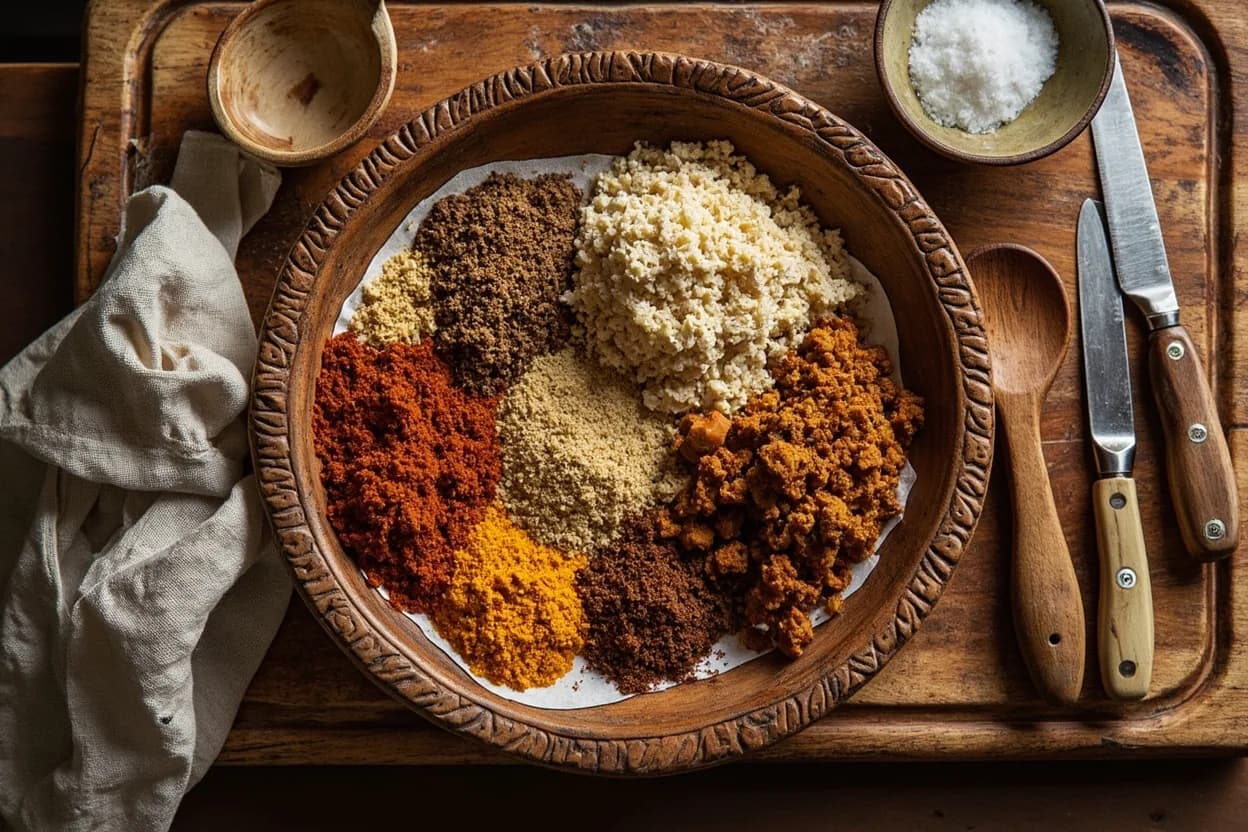
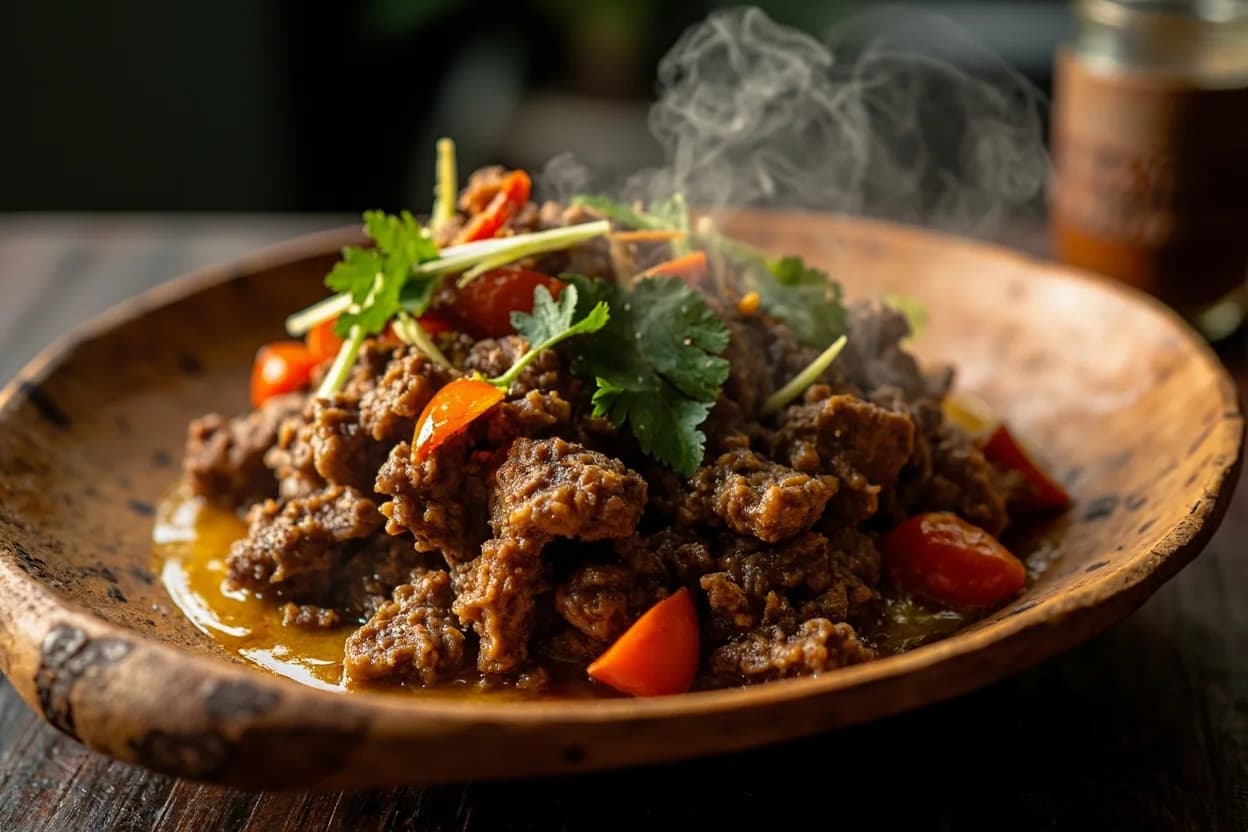
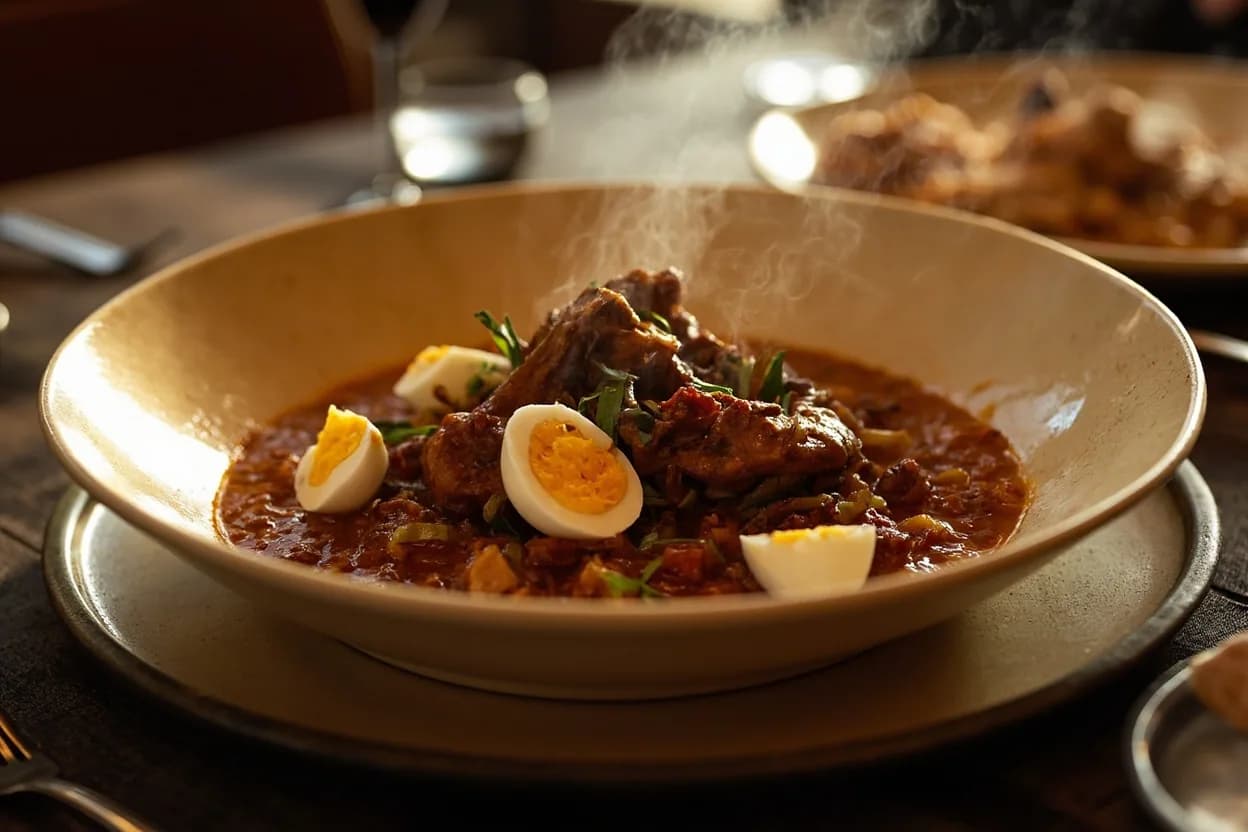
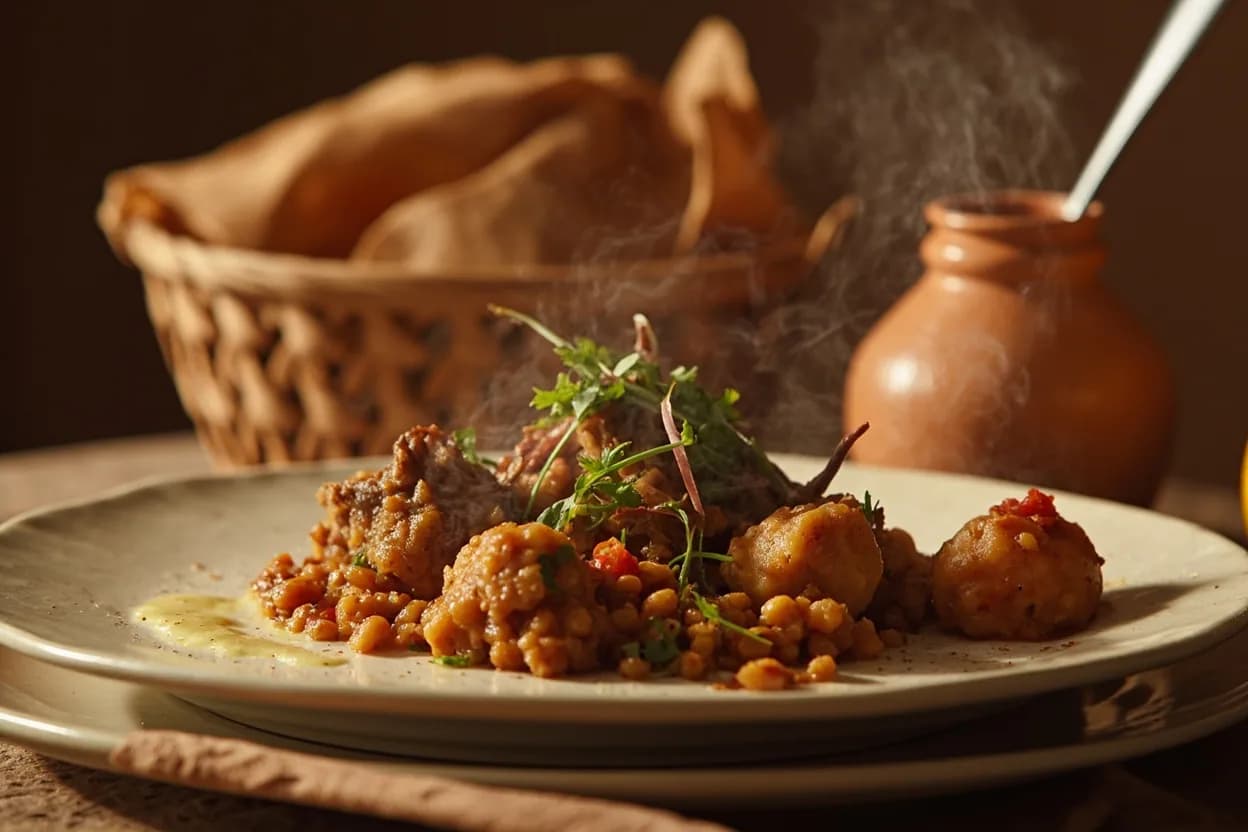
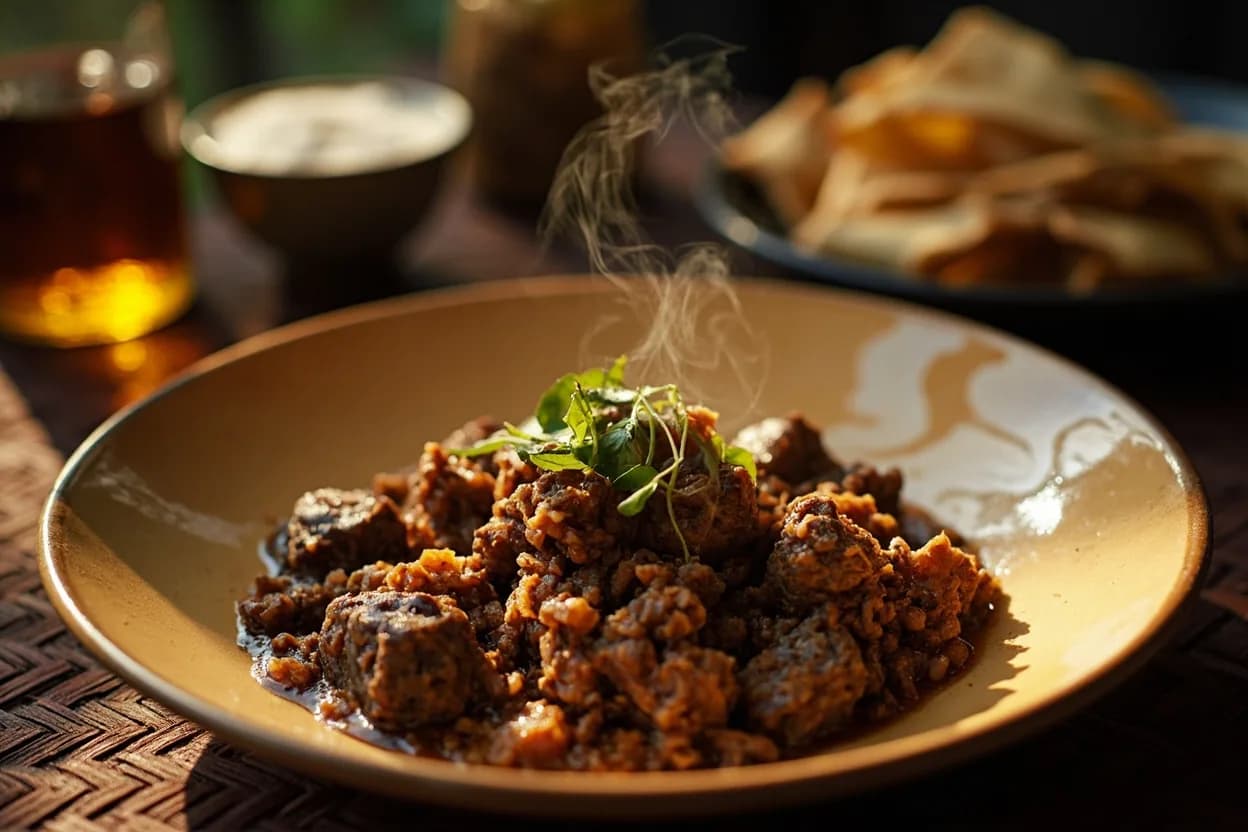
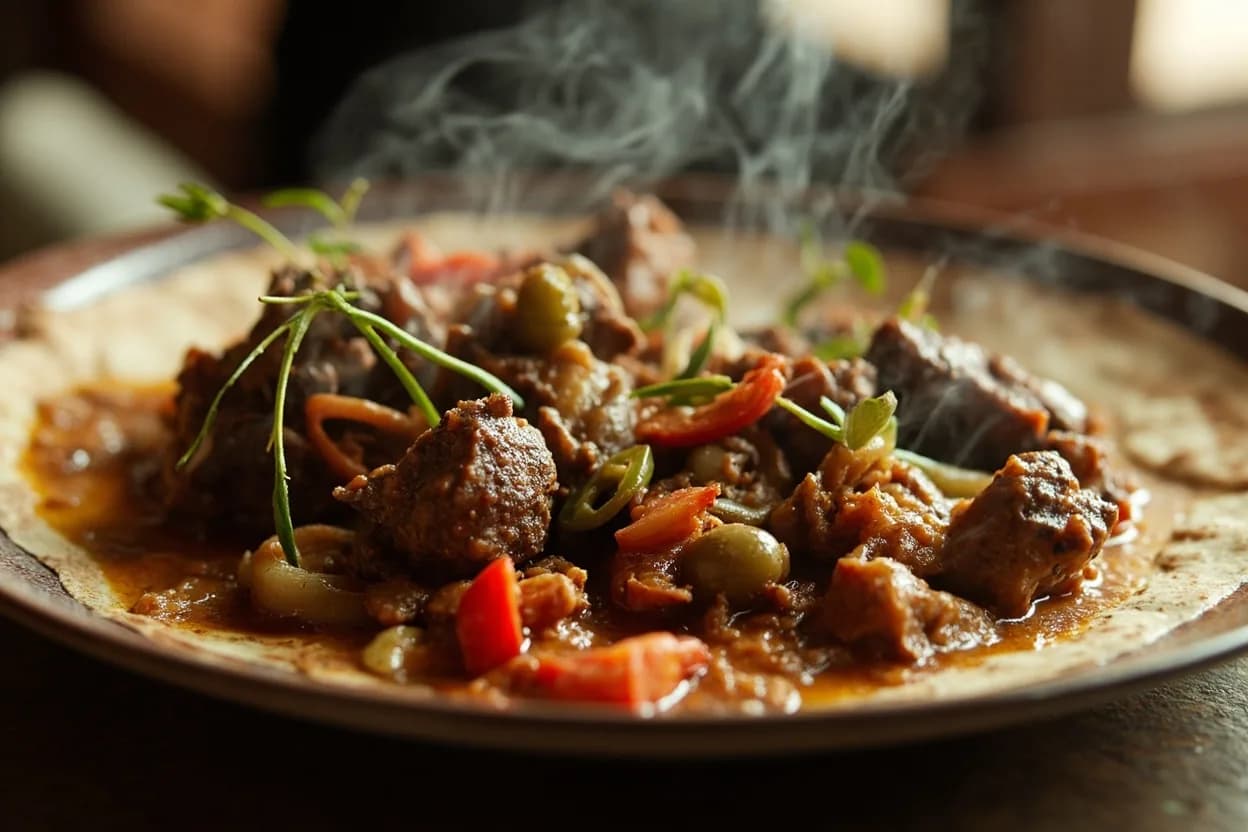
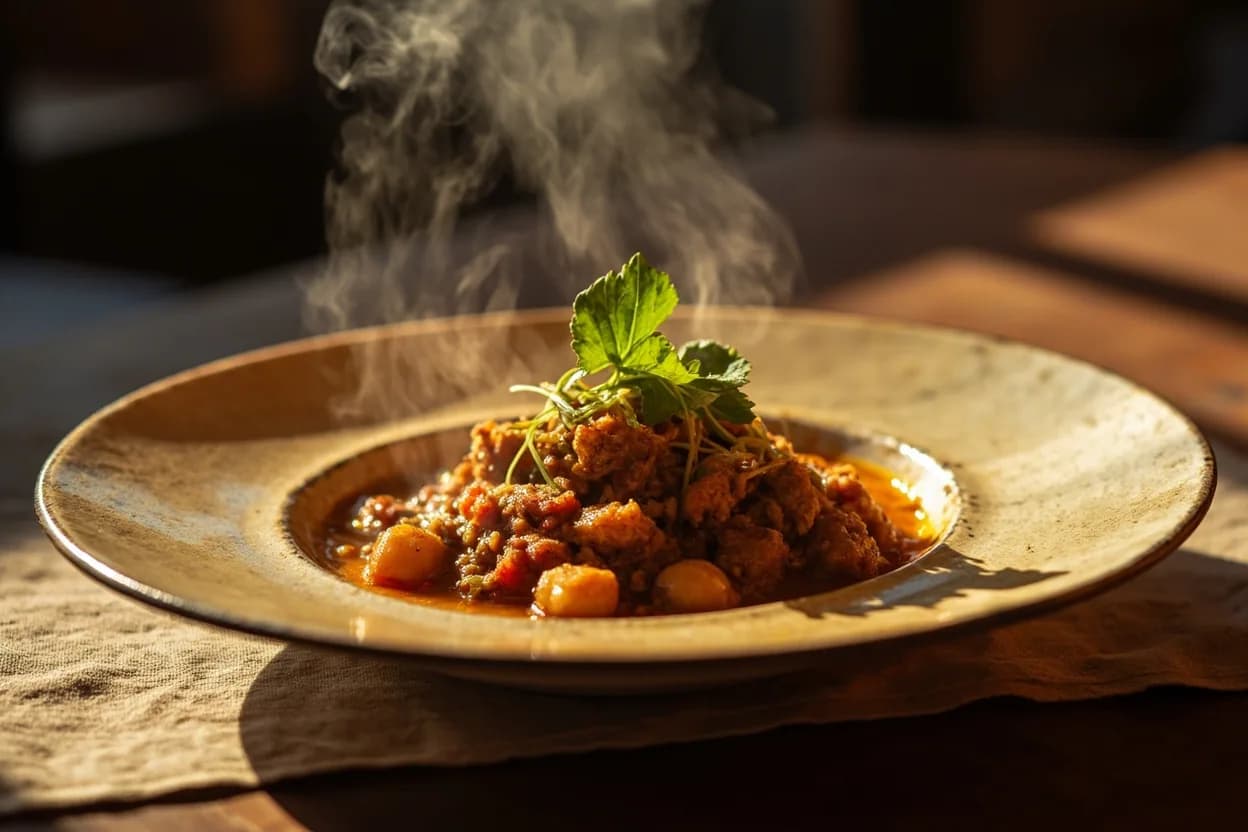
Ethiopian Habesha cuisine is one of the world's oldest continuous culinary traditions, rooted in the Ethiopian Orthodox Christian calendar which mandates fasting from meat and dairy on roughly 200 days per year. The result is an extraordinarily sophisticated vegetable and legume repertoire alongside rich meat stews. Meals are served communally on a large injera flatbread that functions simultaneously as platter, utensil, and edible accompaniment — diners tear pieces to scoop wots (stews) and tibs (sautéed meats) directly from the shared spread. Berbere, a complex chili-spice blend, and niter kibbeh, spiced clarified butter, form the backbone of the cuisine.
The flavour base
Berbere-spiced niter kibbeh (spiced clarified butter) forms the foundational fat and heat; aromatics of onion, garlic, and ginger are cooked down slowly into a base called 'tikil' before berbere and niter kibbeh are added to build the wot's body.
Pantry staples
Key ingredients
Signature techniques
Signature dishes
Ethiopian (Habesha) on the table

At the table
A traditional meal is served as a gursha — a communal spread on one large injera-lined platter, with multiple wots and salads arranged around it. Diners eat from the shared platter without separate plates; a host feeding a guest a large bite by hand (gursha) is a gesture of honor. Coffee (buna) ceremony — three rounds of roasted, ground coffee — follows important meals.
History & context
Ethiopian cuisine traces roots to the ancient Aksumite Empire (1st–7th centuries CE), one of Africa's great civilizations and an early adopter of Christianity. The Orthodox Christian fasting calendar fundamentally shaped the cuisine, generating the world's most elaborate meat-free cooking tradition outside India. The Queen of Sheba's legend is claimed by Ethiopian culture; the Blue Nile highlands have sustained continuous agriculture for over 5,000 years. Teff, a grain domesticated in the Ethiopian highlands around 4000 BCE, remains the nutritional and culinary cornerstone. Trade along the ancient incense routes brought Indian and Arabian spices that were absorbed and transformed into uniquely Ethiopian blends like berbere and mitmita.
Regional variations
- Addis Ababa urban
Restaurant culture has codified the national canon; kitfo and tibs are especially prominent; tej honey wine remains a staple accompaniment.
- Amhara highlands
The heartland of doro wat and lamb wot; niter kibbeh is richer and more heavily spiced than coastal variants.
- Oromo regions
Distinct herb profiles and greater use of ayib fresh cheese; borde and cheka fermented cereal beverages are traditional.
- Gurage
Famous for kitfo preparation and enset (false banana) staple foods; enset bread (kocho) replaces injera as the starch base.
Related cuisines
Northern variant sharing injera and wot tradition but with distinct zigni berbere stew and tsebhi derho preparations.
Closely related sister cuisine shaped by shared Habesha heritage, with Italian colonial additions and its own zigni traditions.
Ancient trade connections across the Red Sea produced shared use of fenugreek, black cumin, and spiced clarified butter.
Canonical recipes
The dishes that define Ethiopian (Habesha), documented in the Canon.
References
- 1.Exotic Ethiopian Cooking — Daniel J. Mesfin
- 2.The Soul of a People: Ethiopian Cooking — Marcus Samuelsson
- 3.Extending the Table — Joetta Handrich Schlabach
- 4.Oxford Companion to Food — Alan Davidson
Confidence: high
Notes
The fasting tradition
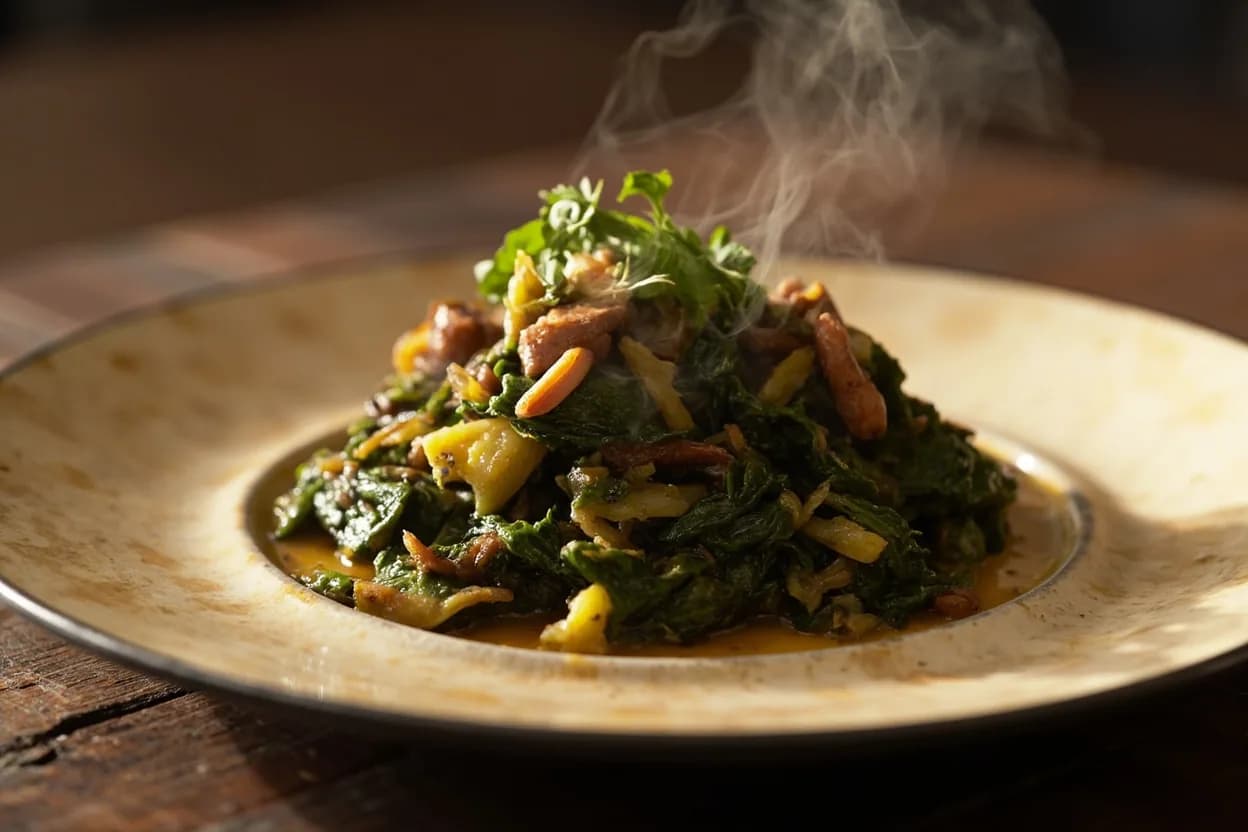
Ethiopian Orthodox Christians observe fasts (tsom) on Wednesdays, Fridays, and during major liturgical seasons — sometimes exceeding 200 days annually. During fasts, all animal products are prohibited. This has produced an unparalleled vegetarian repertoire: misir, shiro, gomen, fosolia (green beans), and tikel gomen (spiced cabbage) are fasting staples that stand as nutritional equals to meat dishes.
Injera as technology
Injera is both bread and plate. The sourdough fermentation (using ersho starter) requires 48–72 hours and produces a spongy, slightly sour flatbread with a distinctive bubble-pocked surface that traps sauces. Teff's high calcium and iron content makes it one of the most nutritious grains on earth.