East Africa
Eritrean
Also: Habesha Eritrean cuisine, Tigrinya Eritrean cuisine
A Horn of Africa cuisine rooted in ancient Habesha tradition and distinctively layered by Italian colonial café culture and Red Sea coastal flavors.
Eritrean cuisine shares its deep foundations with Ethiopian Habesha cooking — injera, wot, berbere, niter kibbeh — but carries a unique character shaped by 60 years of Italian colonial rule (1890–1941) and the country's coastal position on the Red Sea. Asmara, the capital, retains a functioning Italian café culture where cappuccino, pasta, and bread coexist with zigni stew and injera. The Muslim population in the lowlands and coastal areas adds a distinct strand: Arabic-influenced spiced rice, goat dishes, and leavened flatbreads that diverge sharply from the highland Tigrinya cooking. The result is a cuisine of genuine pluralism — ancient Christian fasting traditions alongside pastoralist nomad food, Italian espresso bars alongside fermented teff flatbread.
The flavour base
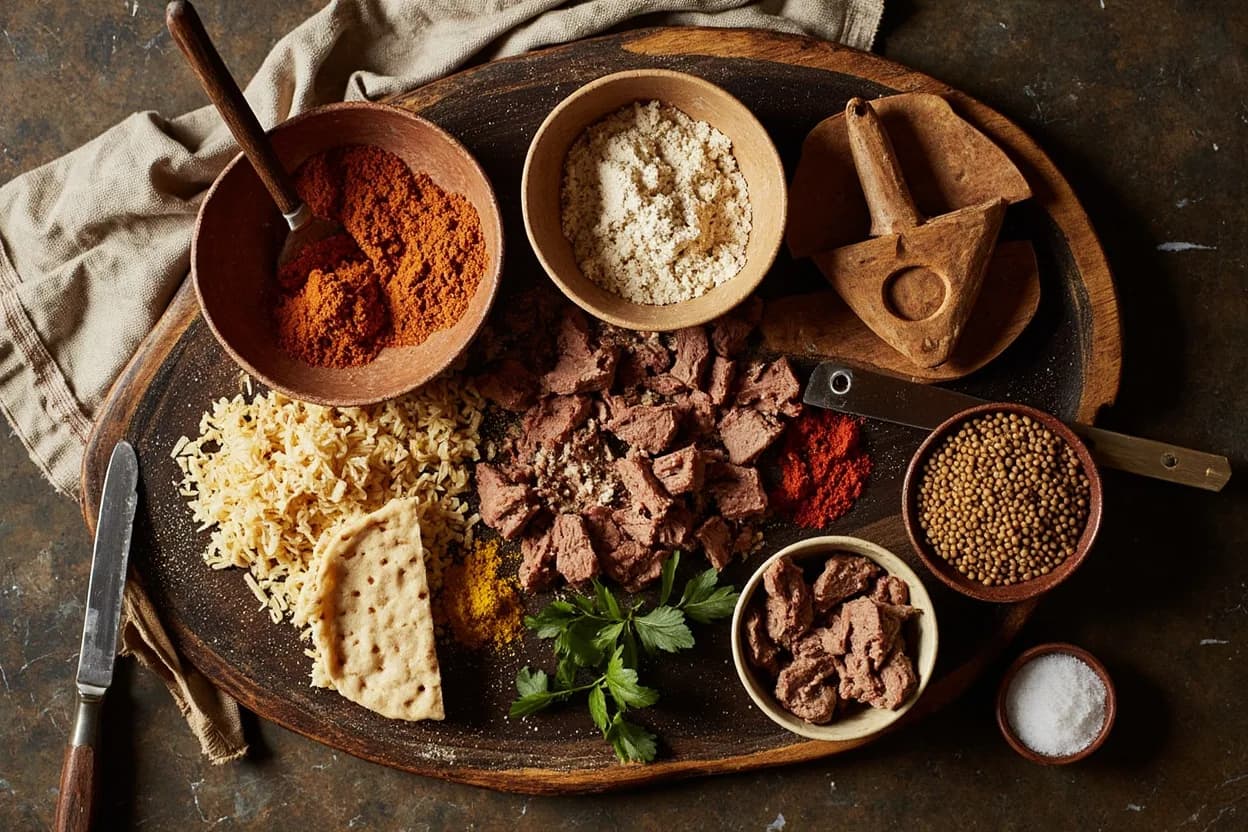
For highland dishes: berbere-simmered niter kibbeh base, identical in structure to Tigrayan tsebhi. For coastal lowland dishes: an Arabic-influenced base of onion, tomato, garlic, and cumin. Italian tomato-based sauces appear in hybrid dishes like pasta zigni.
Pantry staples
Key ingredients
Signature techniques
Signature dishes
Eritrean on the table
At the table
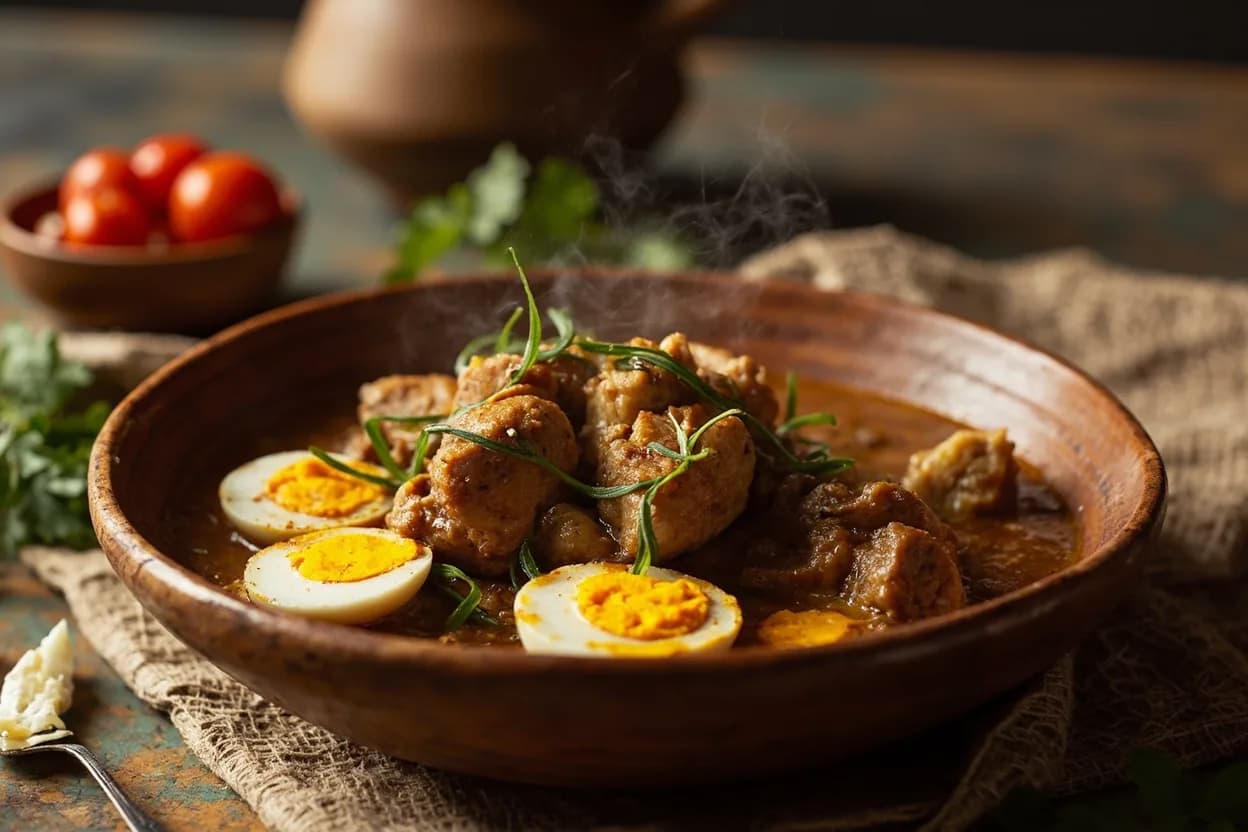
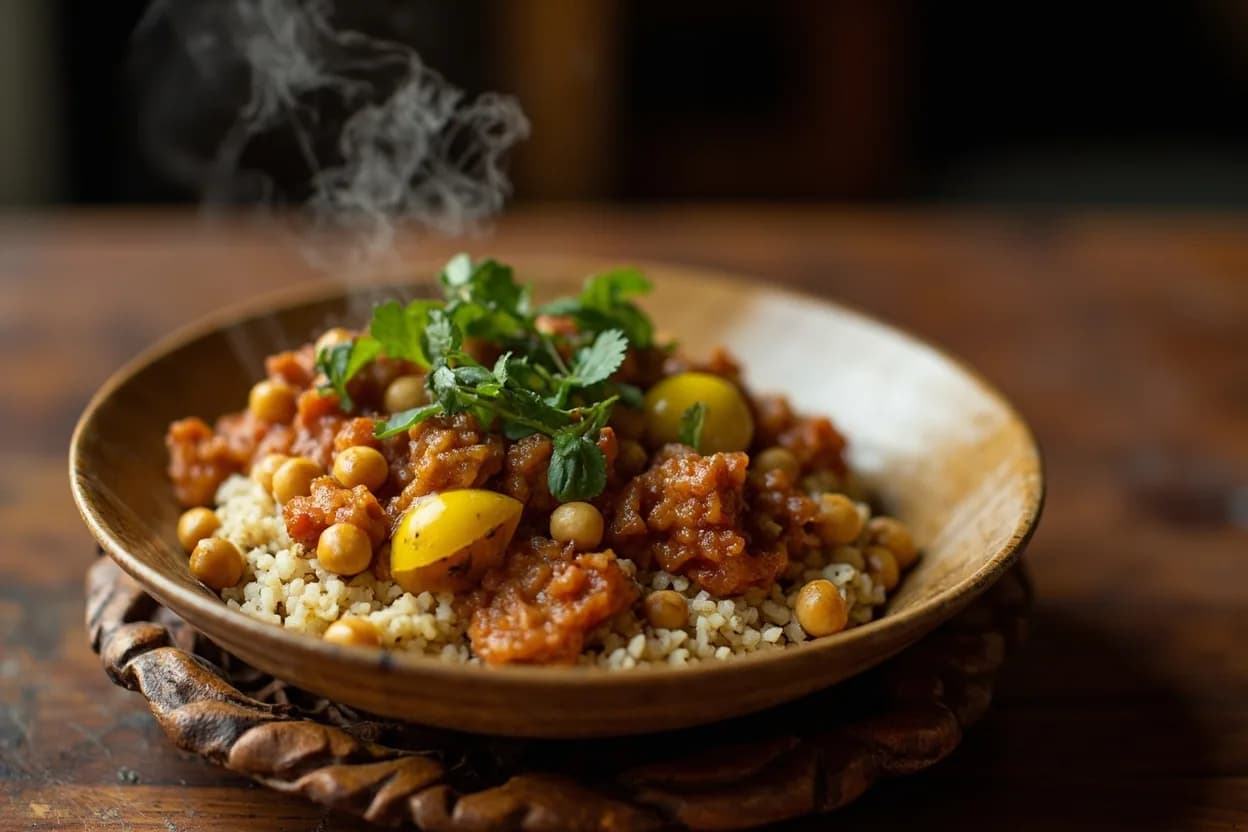
Highland meals follow the injera-and-wot communal platter model. Coastal and lowland Muslim communities structure meals more around shared rice or flatbread with individual portions of meat and broth. In Asmara, breakfast at a macchiato bar (café) is a genuine daily institution — espresso and bread at a café counter is a mainstream morning meal, not a tourist affectation.
History & context
The territory of modern Eritrea was part of the Aksumite Empire and shares the ancient Habesha culinary heritage. The Ottoman Empire controlled the Red Sea coast from the 16th century, introducing Arabic food culture to the lowlands. Italian colonization from 1890 introduced pasta, espresso culture, and brick-oven bread-baking to Asmara, creating a lasting culinary hybrid. During the 30-year independence war (1961–1991), food scarcity shaped cooking toward preservation and frugality. Independence in 1991 consolidated a distinct Eritrean national identity that explicitly distinguishes its cuisine from Ethiopian, even where dishes are nearly identical.
Regional variations
- Asmara highland
The Tigrinya heartland; injera, zigni, shiro, and Italian café culture coexist; pasta zigni is a genuine local dish, not a curiosity.
- Massawa coastal
Red Sea port city with strong Arabic and Indian Ocean influence; ful medames, spiced rice, and grilled fish are prominent.
- Saho and Afar lowlands
Nomadic pastoralist cuisine built around camel milk, goat meat, and sorghum flatbread; strongly Arabic-inflected spicing.
- Kunama region
Distinct ethnic minority with own grain-based cooking traditions; sorghum and millet porridges more common than teff injera.
Related cuisines
Near-identical highland cooking tradition; zigni and tsebhi are the same dish with minor spelling and spice variation across the border.
Shared ancient roots in Aksumite culture; the injera-wot-berbere framework is common to both, though Eritrean identity pointedly differentiates itself.
Red Sea trade connections produced shared spice use and the ful medames tradition in coastal Eritrea.
Canonical recipes
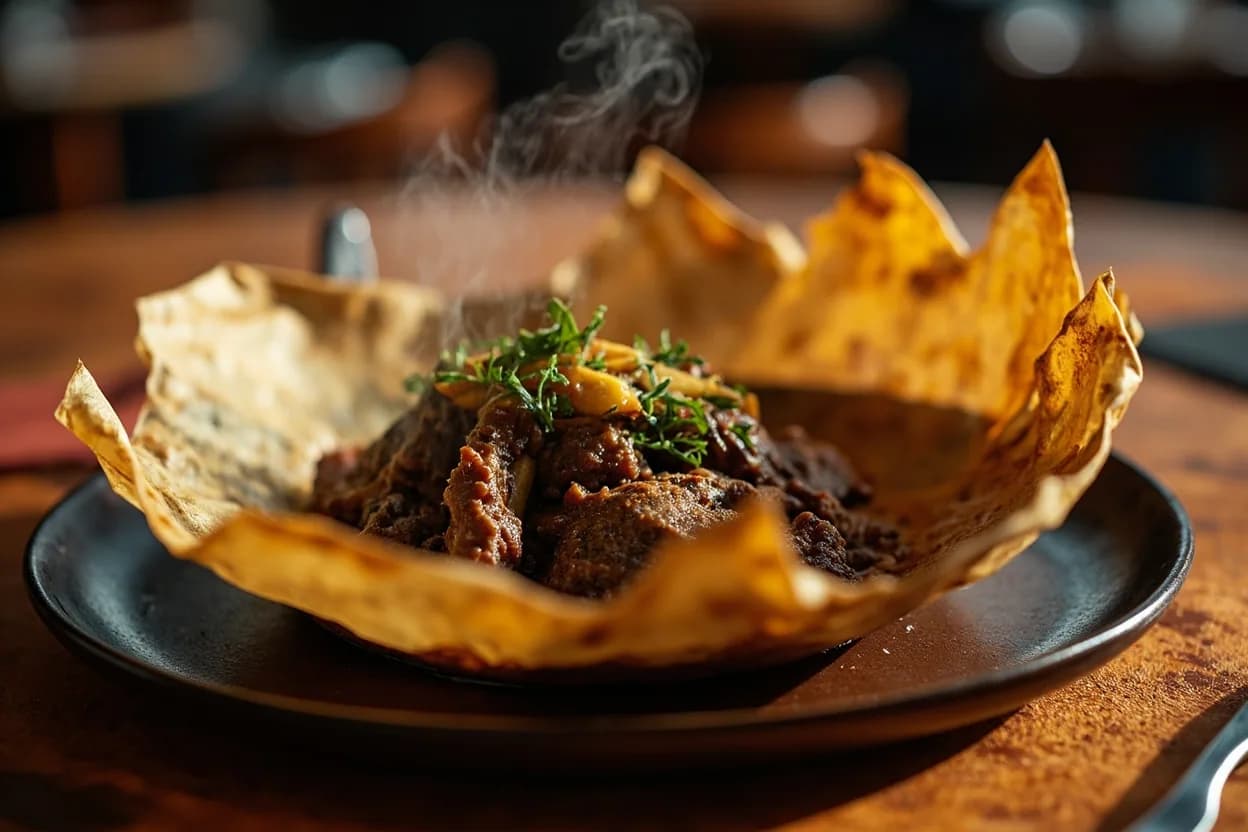
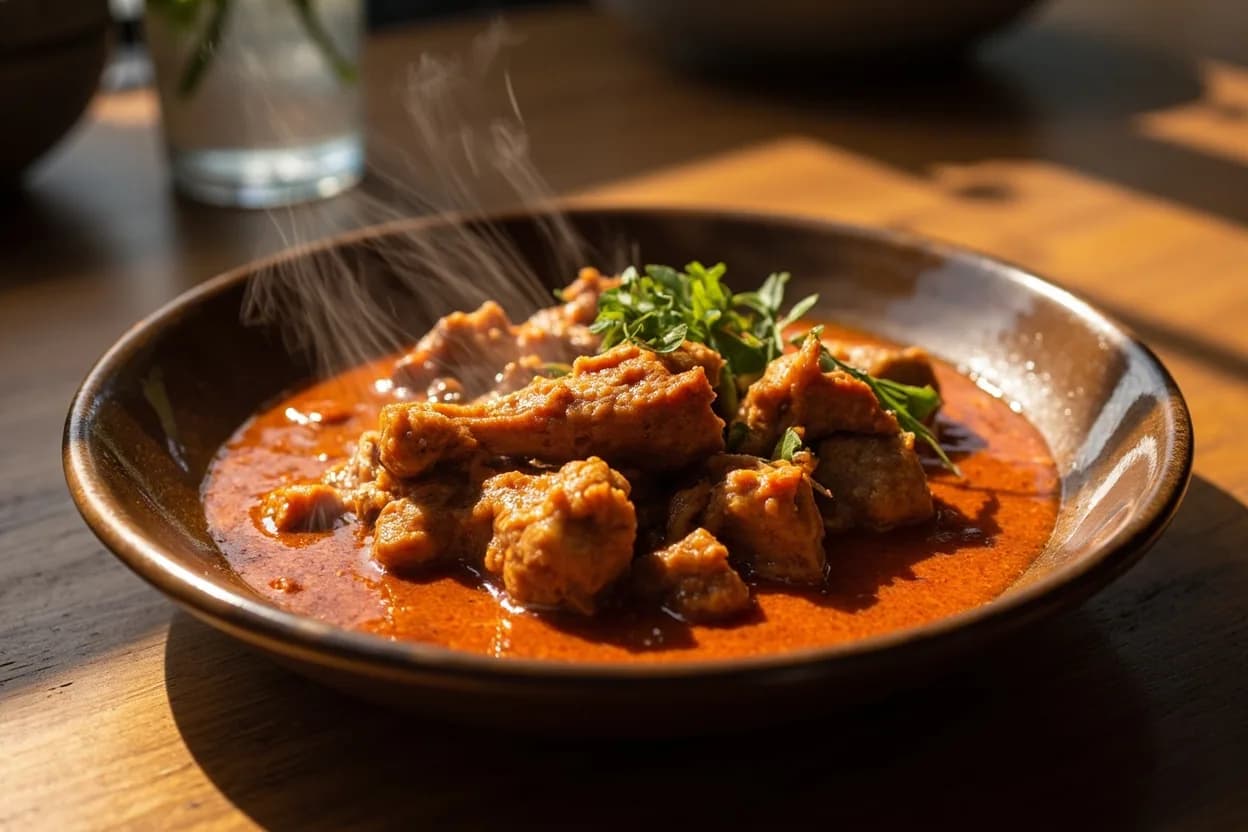
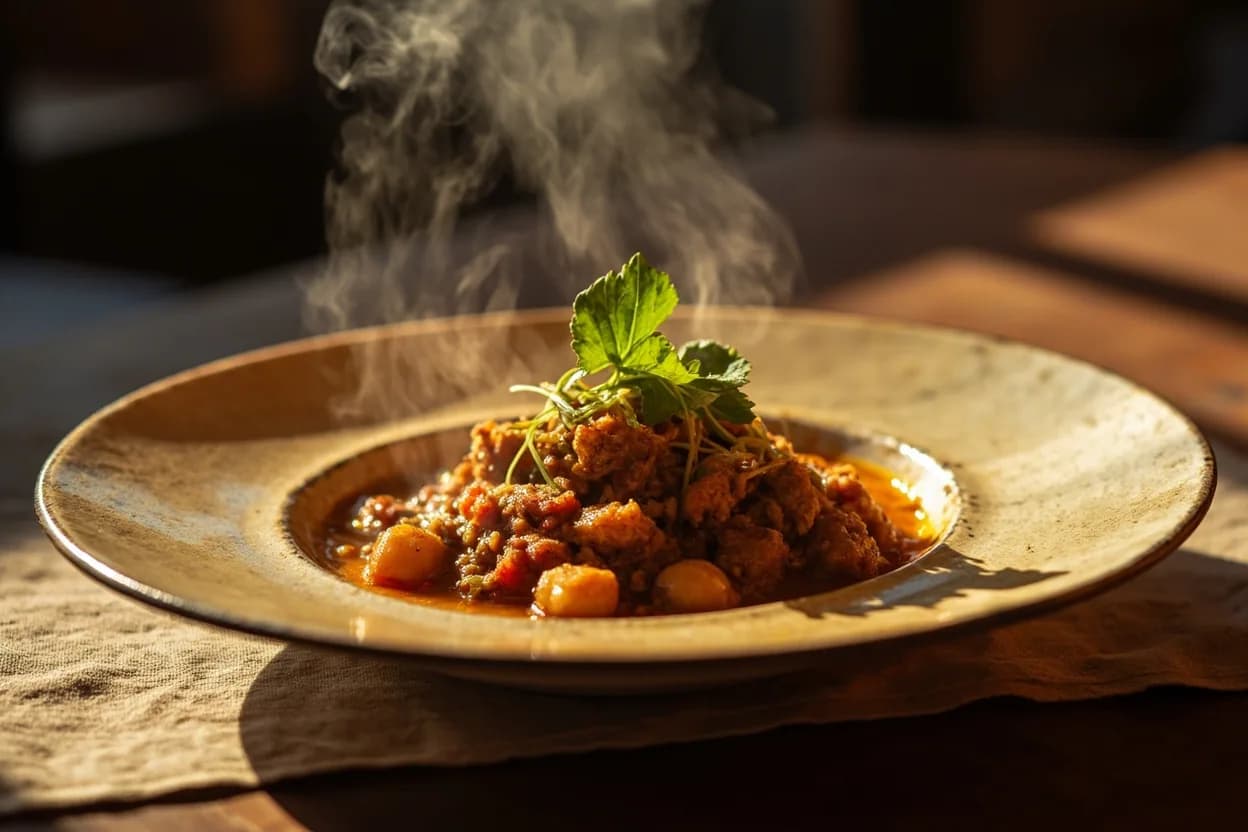
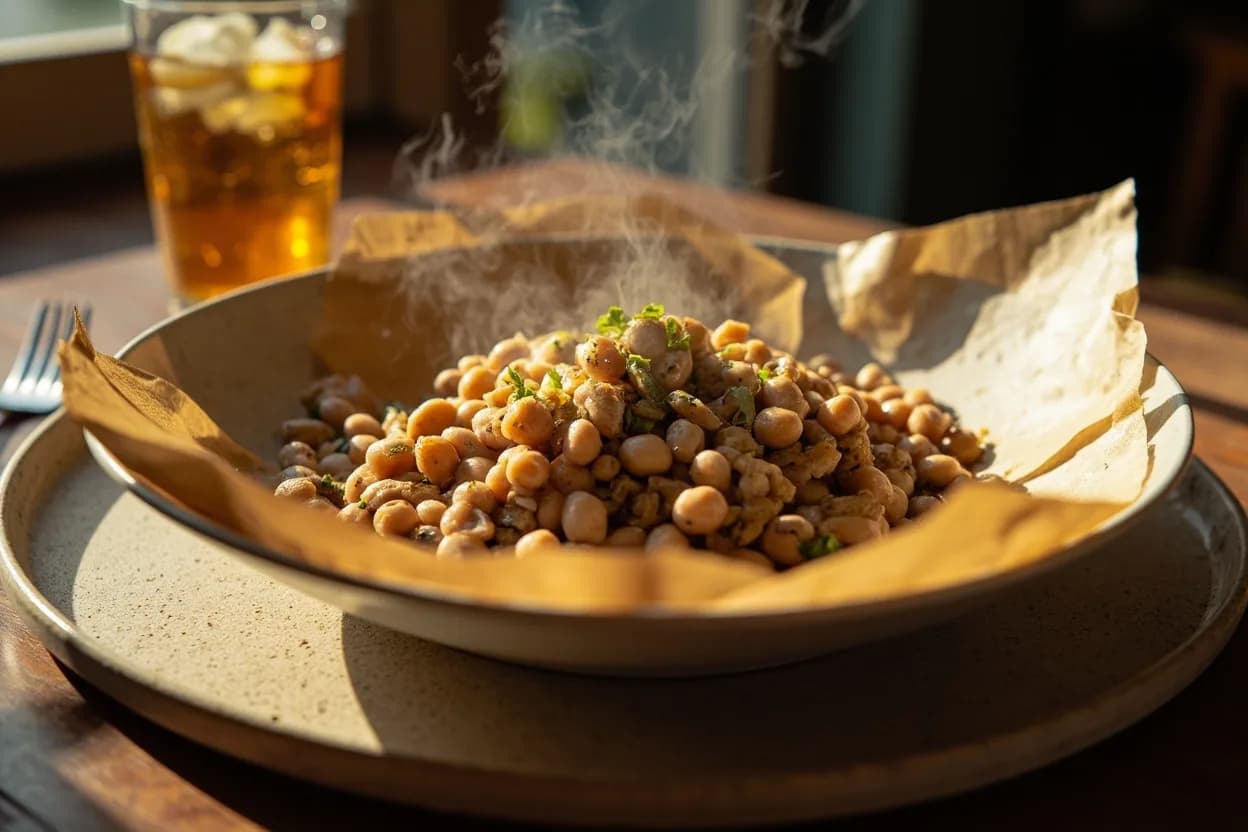
The dishes that define Eritrean, documented in the Canon.
References
- 1.The Africa Cookbook — Jessica B. Harris
- 2.Flavors of Africa — Evi Aki
- 3.A Taste of Africa — Dorinda Hafner
- 4.Culinaria Africa — Franz-Josef Krüger
Confidence: medium
Notes
The Italian café legacy
Asmara's Italian-era architecture is UNESCO-listed, and its macchiato bars and pastry shops are a living culinary inheritance. Eritreans drink their espresso with sugar, eat Italian bread at breakfast, and serve pasta as a distinct course — not as a replacement for injera but alongside it. This creates a genuine culinary bilingualism that is unique on the continent.
Fata: the rehabilitative dish
Fata is a warming dish of torn injera or bread layered with spiced broth, lentils or ful medames, and sometimes yogurt. It functions as both everyday food and a restorative meal served to the sick or those recovering from fasting. Its layered construction — soggy bread absorbing rich broth — evokes Italian ribollita and Middle Eastern fattet, suggesting convergent evolution from similar food cultures.