East Asia
Japanese Buddhist Cuisine (Shojin Ryori)
Also: shojin ryori, temple food, Zen vegan cuisine, 精進料理
The spare, deeply meditative vegan temple cuisine of Japanese Zen Buddhism, transforming tofu, sesame, mountain vegetables, and wheat gluten into meals of extraordinary precision and spiritual intention.
Shojin ryori is the strictly plant-based ritual cuisine developed by Japanese Buddhist monks beginning in the 13th century, when Dogen Zenji returned from China and codified cooking as a spiritual practice equal to seated meditation. 'Shojin' translates as 'devotion' or 'diligent practice.' Every aspect of preparation — knife work, seasoning, arrangement, the absence of waste — is understood as part of the monastic path. The cuisine excludes meat, fish, and the five pungent roots (ninniku/garlic, negi/leeks, rakkyo/Chinese chives, tamanegi/onion, and asatsuki/wild rocambole) believed to agitate the mind. Within these constraints, it has produced a body of cooking technique — deep-frying, simmering, sesame grinding, tofu pressing — of remarkable sophistication.
The flavour base
Kombu dashi (no bonito) serves as the foundational liquid, supplemented by dried shiitake mushroom water which contributes deep glutamate and guanylate umami. Sesame (ground to nerigoma) adds fat and richness. Miso and light soy provide salt; rice vinegar brings acidity. The flavor grammar is circular: umami from fungi and seaweed, fat from sesame and fried tofu, sweetness from mirin and root vegetables.
Pantry staples
Key ingredients
Signature techniques
Signature dishes
Japanese Buddhist Cuisine (Shojin Ryori) on the table
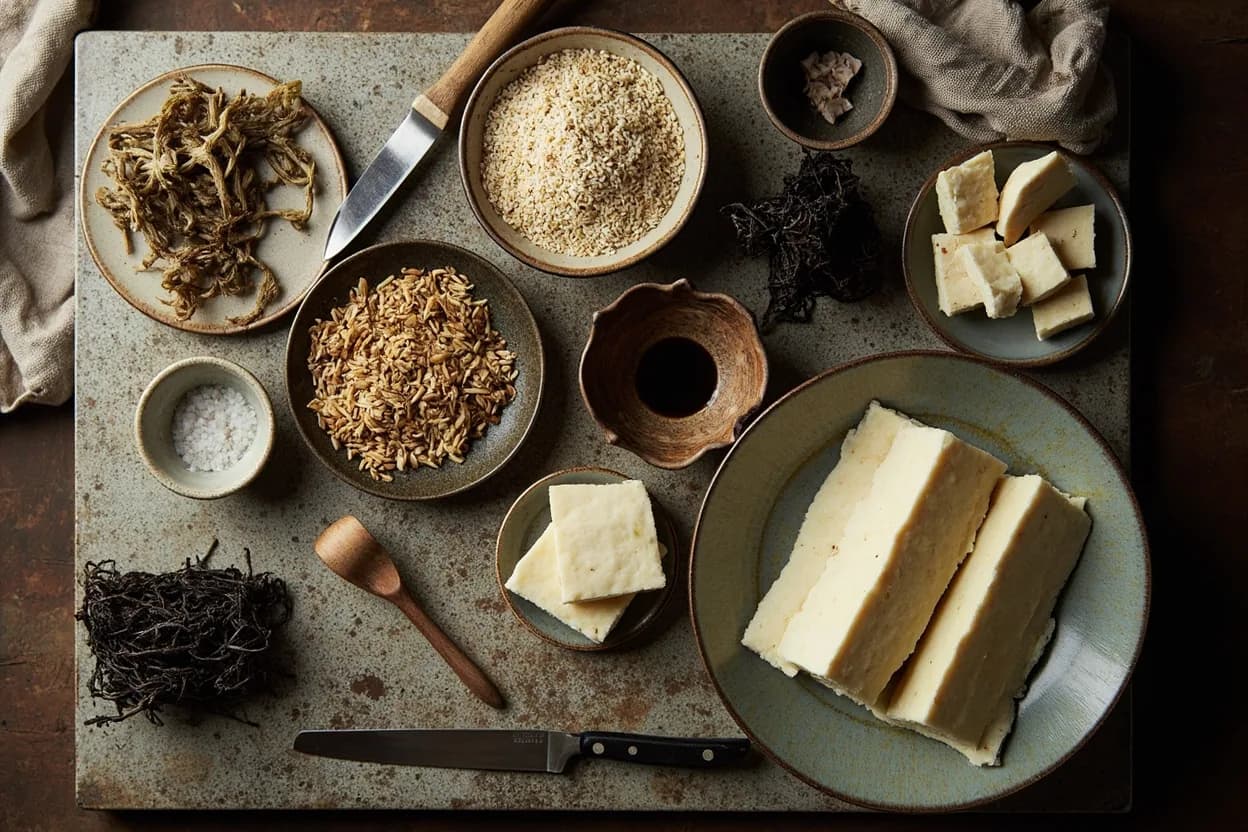
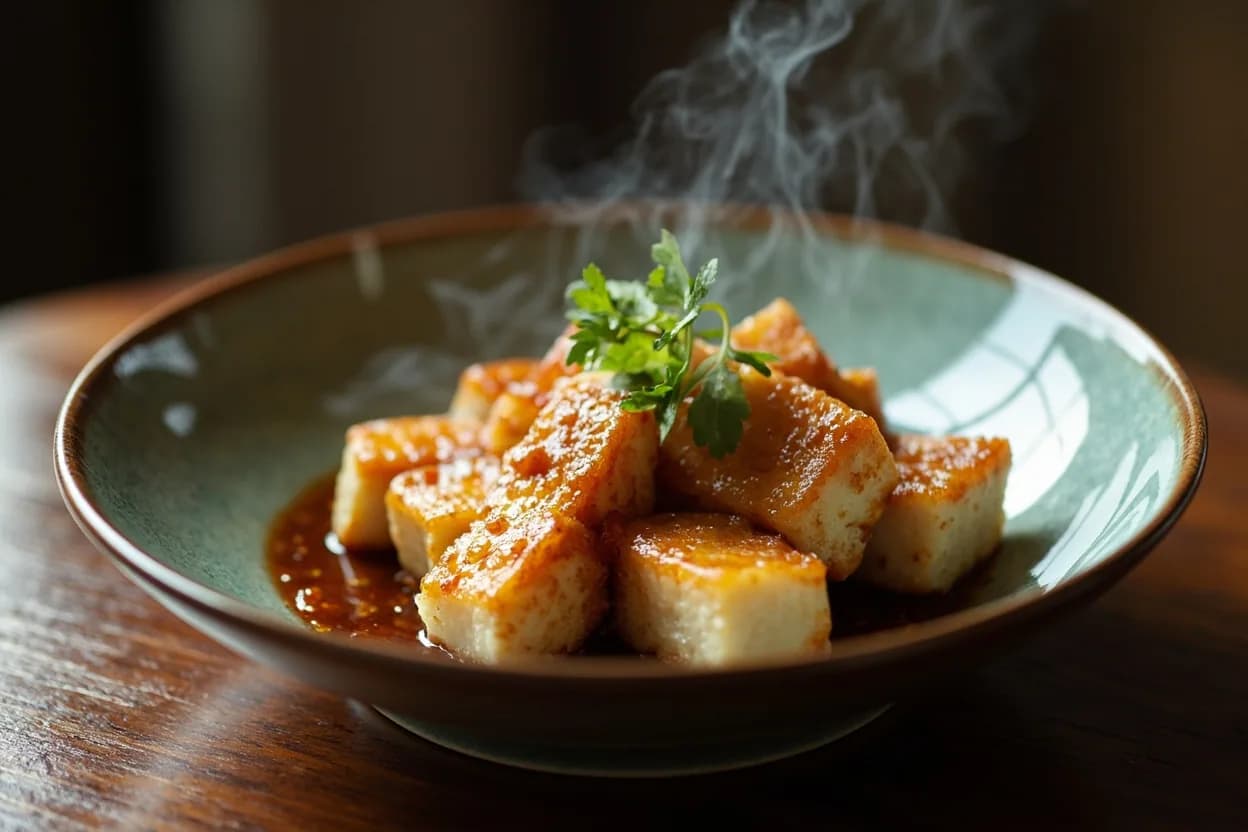
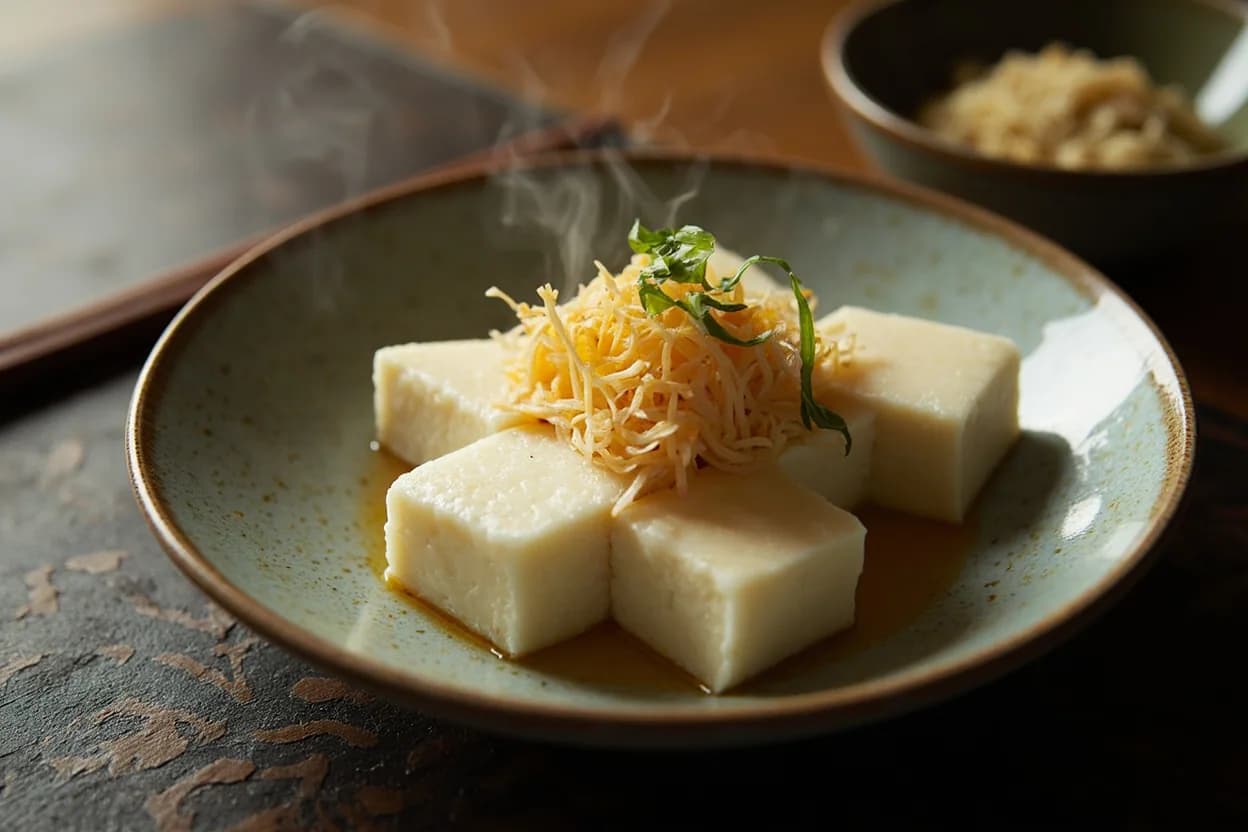
At the table
Shojin ryori follows the ichiju sansai (one soup, three dishes) structure at its simplest, expanding to ichiju gosai or the full kaiseki-inspired honzen format for ceremonial occasions. In temple settings (particularly at Eiheiji, Tofukuji, and Koyasan), monks eat communally in silence facing their bowls, performing ritualized preparation and consumption as meditation (oryoki). For lay guests and temple inns (shukubo), the meal is served as a multi-course progression: seasonal appetizer, soup, dressed salad, simmered dish, deep-fried course, rice, pickles, and fruit. Nothing is wasted; scraps are used in stocks or compost.
History & context
Shojin ryori's intellectual foundations lie in the Chinese Buddhist dietary code imported via Tang-dynasty monks. In Japan it crystallized after Dogen Zenji (1200–1253) founded Soto Zen and wrote the Tenzo Kyokun (Instructions for the Cook), establishing the temple cook (tenzo) as a senior spiritual officer. Kamakura-era Zen monasteries (Kenchin-ji, Engaku-ji) became laboratories for plant-based technique. Tofu — possibly introduced by Chinese monks — became central by the Muromachi period. The cuisine's influence extended beyond temples: shojin technique underpins much of classical Japanese cooking (the kombu dashi base, the aemono category, the precise vegetable cutting aesthetic). Dogen's Tenzo Kyokun remains in print and is studied by cooks and food philosophers globally.
Regional variations
- Eiheiji (Fukui)
The Soto Zen headquarters maintains the most austere expression — minimal sweetness, heavy emphasis on local mountain vegetables, and absolute prohibition of waste.
- Koyasan (Wakayama)
Shingon Buddhist variant served at mountain shukubo (temple lodgings); slightly more elaborate presentation, sesame tofu (gomadofu) is a near-universal feature.
- Kyoto temple restaurants
Slightly relaxed interpretations served to paying guests at restaurants adjacent to major Kyoto temples (Daitoku-ji, Ryoan-ji); presentation is more kaiseki-influenced, portions more generous.
Related cuisines
- Kyoto Kaiseki
Secular kaiseki absorbed shojin technique wholesale — its dashi structure, vegetable aesthetics, and ichiju sansai framework all derive from temple cooking.
- Korean Buddhist Temple Food (Sachal Eumsik)
Near-parallel tradition: also excludes the five pungent roots, also uses fermented soy and wild mountain vegetables, but with distinctive Korean fermentation and spice vocabulary.
- Chinese Vegetarian Buddhist Cuisine (Zhai Cai)
Direct ancestor tradition from Tang-dynasty monasteries; uses similar exclusion rules but with Chinese pantry staples (black vinegar, five-spice, mock meats from seitan and yuba).
References
- 1.Tenzo Kyokun (Instructions for the Cook) — Dogen Zenji, trans. Thomas Wright
- 2.Japanese Farm Food — Nancy Singleton Hachisu
- 3.The Enlightened Kitchen — Mari Fujii
- 4.Preserving the Japanese Way — Nancy Singleton Hachisu
- 5.On Eating — Dogen Zenji commentary, various translations
Confidence: high
Notes
The five pungent roots
The exclusion of garlic, onion, leeks, Chinese chives, and wild rocambole is not purely dietary — Buddhist teaching holds that these alliums, when eaten cooked, arouse lethargy, and when eaten raw, arouse anger, both of which obstruct the quality of mind necessary for meditation. This constraint has driven centuries of creative substitution: mild turnip greens, myoga ginger buds, and yuzu zest serve the aromatic role that alliums play in secular cooking.
Gomadofu as masterwork
Sesame tofu (gomadofu) is considered the signature preparation of shojin ryori — not because it is difficult in concept but because its execution reveals the cook's skill. It requires grinding sesame to a perfectly smooth paste, incorporating kuzu starch without lumps, and cooking the mixture over precisely controlled heat until it sets to a silky, trembling texture. Served cold with a drop of wasabi and a brush of tamari, it distills the cuisine's philosophy: minimal ingredients, maximum attention, no disguise.