Produce
Konjac
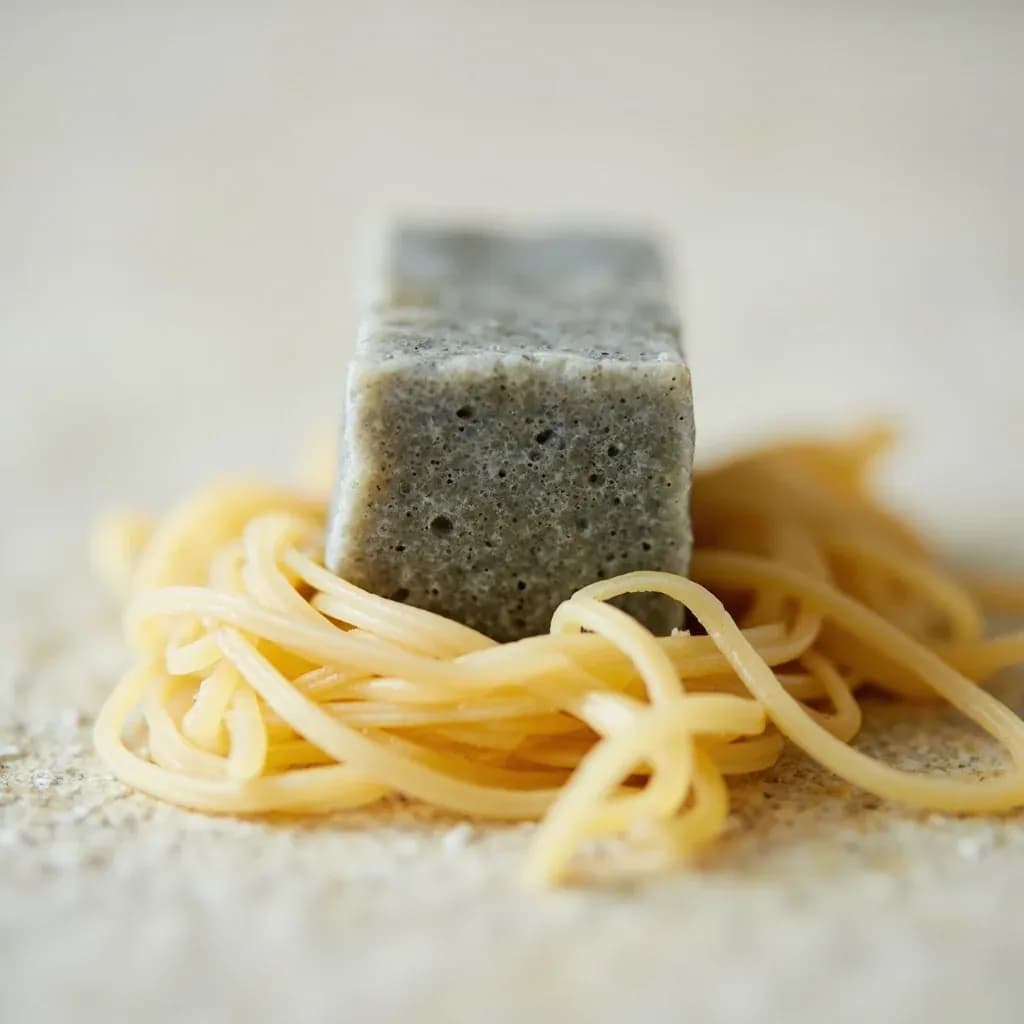
Gelatinous tuber made into firm konnyaku blocks and shirataki noodles.
Konjac is a starchy Asian tuber whose flour gels into a firm, jiggly, nearly calorie-free product. It is shaped into konnyaku blocks for simmered Japanese dishes like oden and cut into shirataki noodles used in stir-fries and hot pots. With almost no flavor of its own, konjac absorbs surrounding seasonings and adds a springy, chewy texture.
Konjac (Amorphophallus konjac) is a tuber from the Araceae family cultivated primarily in Japan, China, Korea, and Indonesia. The tuber is processed into konjac flour, which contains glucomannan—a highly water-absorbing soluble fiber that creates the characteristic firm, gelatinous texture when hydrated with calcium hydroxide. This neutral-flavored ingredient has been a staple in East Asian cuisines for centuries, valued as much for its unique springy mouthfeel as for its negligible caloric content. The corms are harvested in late autumn through winter when they reach maximum size after dormancy, then cleaned, ground, and processed into the familiar blocks and noodles. Commercial products are fully refined and safe to handle.
In the kitchen, konjac behaves unlike most other ingredients. Glucomannan swells up to 20 times its volume in cold water, making it an extraordinarily efficient thickener and bulking agent. The gel is elastic and springy with a slight rubbery quality that some find challenging initially. The gel is stable across a neutral pH range but dissolves in acidic conditions below approximately pH 4—making it unsuitable for long-simmered acidic dishes. The neutral flavor means konjac readily absorbs and adopts the seasoning of its cooking medium, making it a versatile vehicle for bold sauces and aromatics. Because it congeals rather than melts, konjac maintains its structure even when reheated, unlike gelatin-based gels.
The most common forms are white or grey-white konnyaku blocks and translucent shirataki noodles, though red/tiger konjac (aka-konnyaku) made with whole tuber including the reddish-brown skin adds visual interest and a slightly earthier flavor to traditional dishes. Unopened packages keep 1–2 years, but once opened, konjac must be submerged in water and refrigerated, with daily water changes, and used within one week.
- Measured in
- g
- Storage
- Fridge
Types & varieties
Standard pale grey-white blocks and noodles; neutral flavor, most common in Japan
Contains whole tuber starch including reddish-brown skin flecks; slightly earthier flavor, traditional in some regions
Thin, translucent noodle strands made from konjac flour; very low calorie, used as a pasta substitute
Purified starch extracted from the tuber; used as a thickener, emulsifier, and fiber supplement
Common uses
Tips & pitfalls
- Always rinse shirataki noodles thoroughly under cold water for 2–3 minutes before cooking to remove the natural fishy or sour smell from the processing water.
- Blanch shirataki noodles in boiling water for 2–3 minutes before adding to a dish; this further reduces odor and improves texture.
- Konnyaku blocks are slippery and springy—use a sharp knife and score the surface slightly before cutting to prevent slipping.
- Do not overcook konjac products; they become rubbery and can make the entire dish gluey if held at a boil too long.
- Add konjac toward the end of cooking in soups and stir-fries to preserve textural integrity—the gel structure breaks down with prolonged heat.
- Store unused shirataki noodles submerged in water in the refrigerator; change water daily to keep them fresh for up to one week.
- If using glucomannan powder as a thickener, sprinkle it slowly into liquid while whisking vigorously to prevent clumping—it expands rapidly and needs thorough dispersion regardless of temperature.
- Cut konnyaku into smaller pieces or score the surface before simmering to help it absorb seasonings and prevent the rubbery center that can occur with thick pieces.
Nutrition
Nutrition
No USDA FoodData Central match for Konjac yet. We surface a per-100 g profile once a generic whole-food entry is matched and verified.
In the shops
Matched grocery products
No matched grocery products for Konjac yet.
Good to know
- Scientific name
- Amorphophallus konjac (family Araceae)
- Origin
- East and Southeast Asia; cultivated primarily in Japan, China, Korea, and Indonesia
- Plant part used
- Tuber (corm); processed into konjac flour (purified glucomannan)
- Primary form
- Hydrated gel (konnyaku) or noodles (shirataki)
- Caloric content
- Negligible calories; primarily soluble fiber (glucomannan)
- Texture
- Firm, gelatinous, elastic; rubbery when chewed
- Harvest season
- Late autumn through winter (corms are largest after dormancy)
- Shelf life (processed)
- Unopened packages keep 1–2 years; once opened, refrigerate in water and use within 1 week
Substitutes
- Mung bean starch noodles (cellophane/glass noodles) — Similar translucent appearance but softer, more delicate texture; not a direct textural match but works in soups and stir-fries
- Tofu skin (yuba) strands — For vegetarian gelling applications where gelatinous texture is desired; different mouthfeel but similar binding properties
- Agar-based gels — For Western-style gel applications; sets firmer and breaks more cleanly than konjac gel
- Shirataki rice (konjac rice) — Grain-sized konjac pieces sold as low-carb rice substitute; direct replacement in grain dishes
Pairs with
Also called
Konjac (for shirataki) · Konnyaku · Devil's Tongue · Shirataki
Appears in these dishes
Related

Tomato
Juicy, sun-sweet fruit for sauces, salads, and slow-cooked depth

Yellow Onion
The aromatic backbone of soups, sofritos, and braises

Garlic
Pungent cloves that perfume nearly every savory dish

Lemon
Bright, acidic citrus that wakes up almost any dish

Potato
Humble, hearty staple — roast, mash, fry, or boil

Carrot
Sweet, crunchy root — raw, roasted, or the base of a sofrito

Cucumber
Cool, crisp, and watery — for salads, pickles, and tzatziki

Lettuce
Crisp leaves for salads, wraps, and a fresh crunch