Western Europe
Normand
Also: Cuisine normande, Norman cuisine, Normandy cuisine
Normandy's rain-washed table of apple orchards and sea cliffs — crème fraîche, Camembert, Calvados, and the finest shellfish coast in France.
Normand cuisine is the cooking of the Normandy region along France's English Channel coast, spanning the former departments of Seine-Maritime, Eure, Calvados, Manche, and Orne. It is one of France's most dairy-rich regional traditions: the famous bocage landscape — hedgerow-divided pasture — produces some of Europe's richest milk, feeding a culture of cream, butter, and cheese that defines the table at every level. The sea provides the counterweight: oysters from Utah Beach, sole from the Seine Bay, mussels from the Mont-Saint-Michel bay, and scallops (coquilles Saint-Jacques) from the Baie de Seine are all world-class. The third pillar is the apple — grown for eating, for cidre, and for Calvados apple brandy.
The flavour base
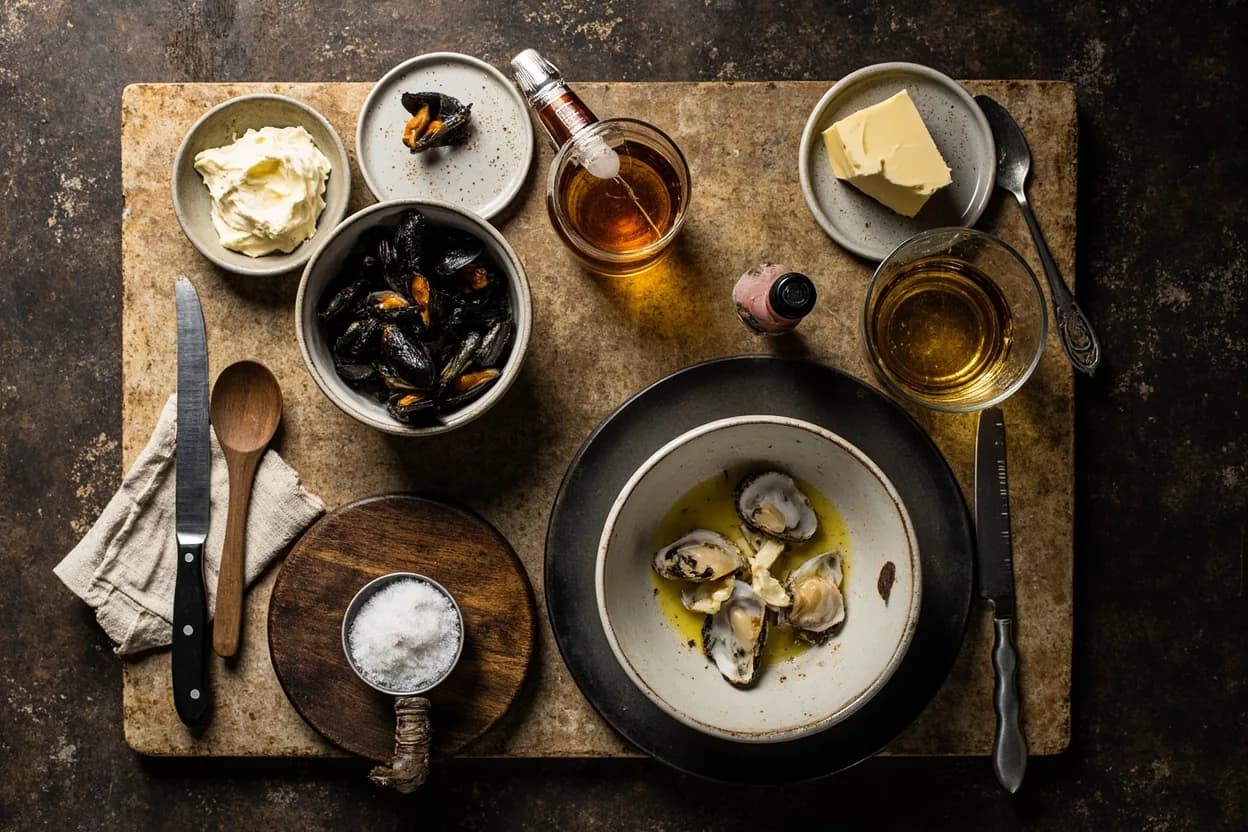
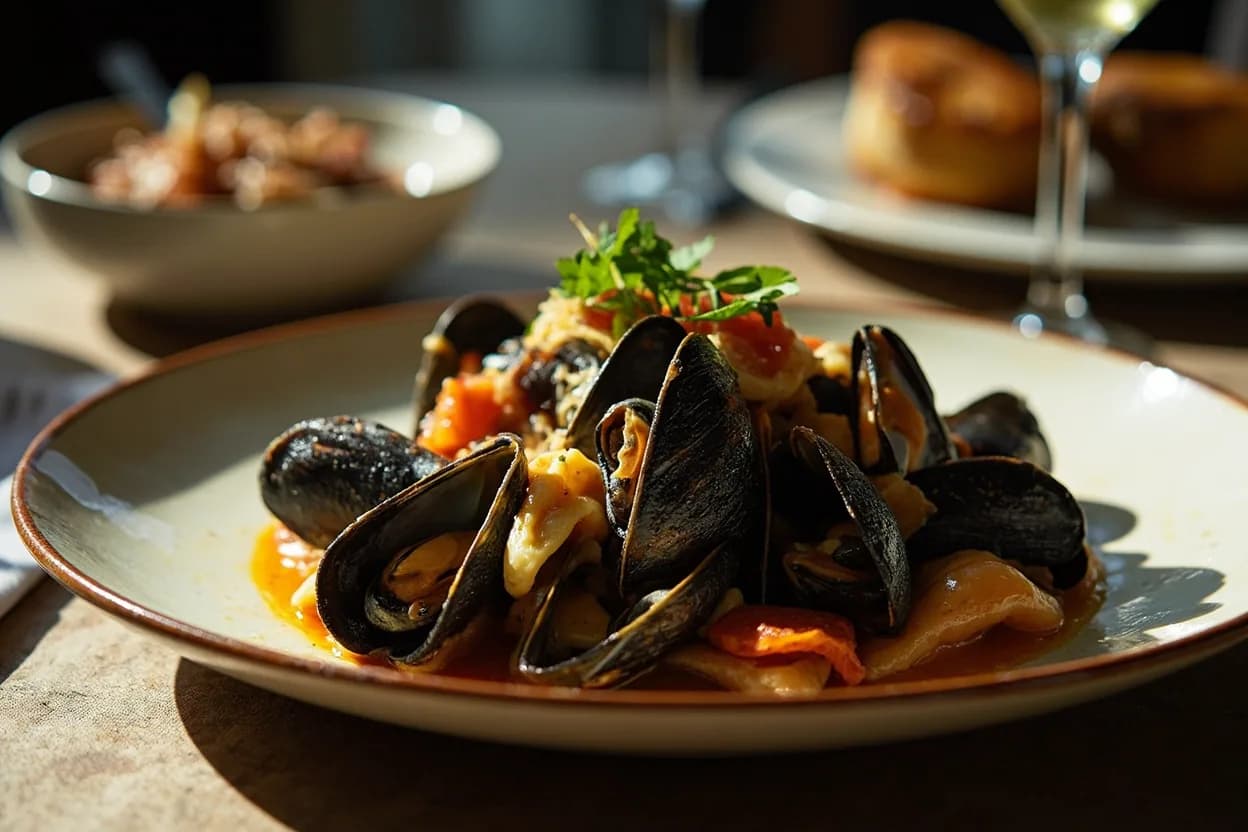
Crème fraîche and salted Normandy butter form the foundation of most sauces and braises. The 'trou normand' tradition of a mid-meal Calvados sorbet reveals how deeply apple brandy is woven into the meal itself. Mussels are almost always paired with crème fraîche, shallots, and dry cidre rather than wine.
Pantry staples
Key ingredients
Signature techniques
Signature dishes
Normand on the table
At the table
Norman meals favor generous portions and dairy-rich sauces. A seafood plateau or fish starter leads to a cream-sauced main. The famous 'trou normand' (a glass of Calvados or a Calvados sorbet served mid-meal) is said to stimulate appetite for the continuing courses — a habit born of the region's prodigious food output. Cheese (Camembert, Livarot, or Pont-l'Évêque) is always present before dessert. Cidre replaces wine at many tables, especially in the Manche and Calvados departments.
History & context
Normandy's agricultural richness derives from the lush, rain-fed bocage landscape shaped by the last Ice Age. Viking settlement from the early 10th century (the duchy of Normandy was granted to Rollo in 911) brought Norse food habits — particularly an affinity for salt, preserved fish, and fermented dairy — that fused with Carolingian Frankish cooking. The Norman Conquest of England in 1066 created a two-century culinary corridor between Normandy and the English court; many Old French culinary terms entered English at this moment. The dairy industry was formalized in the 17th–18th centuries as the bocage became systematically managed cattle pasture. Marie Harel is credited in local legend with creating Camembert in the 1790s. The 20th century saw sole normande elevated to a Paris restaurant classic by Prosper Montagné and others, cementing the region's prestige despite its distance from the capital.
Regional variations
- Calvados (Pays d'Auge)
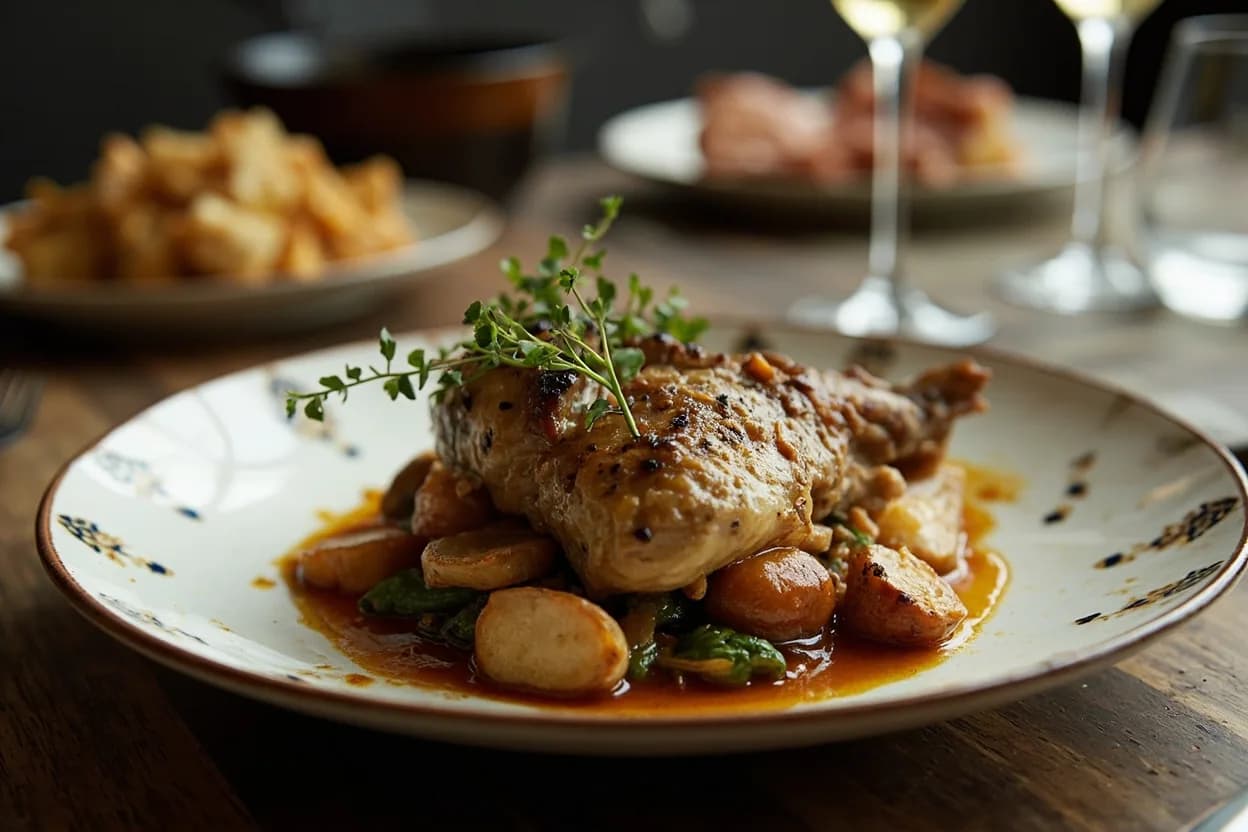
The cream and Calvados heartland; Camembert, Livarot, and Pont-l'Évêque all originate here; poulet Vallée d'Auge is the dish most associated with this sub-region.
- Manche (Cotentin, Mont-Saint-Michel)
Mussel and oyster country; pré-salé lamb (grazed on salt marshes) is a local delicacy; Mont-Saint-Michel bay mussels are among France's finest.
- Seine-Maritime (Rouen, Dieppe)
Urban Norman cooking; canard à la Rouennaise (rare-pressed duck) is Rouen's signature; Dieppe sole and marmite dieppoise (cream seafood stew) from the coast.
- Orne (southern Normandy)
More rural and inland; stronger pork and charcuterie tradition; apple orchards dominate; less seafood but excellent cidre and poiré (perry).
Related cuisines
Western neighbour; shares the cidre culture and outstanding shellfish, but Brittany uses buckwheat and salted butter where Normandy uses cream and unsalted.
- Picard
Eastern neighbour; similarly dairy-forward but with less apple emphasis; shares the leek and cream grammar.
- English (traditional)
The Norman Conquest transplanted Norman culinary vocabulary to England; roast meats, cream sauces, and certain pastry techniques share common Norman ancestors.
Canonical recipes
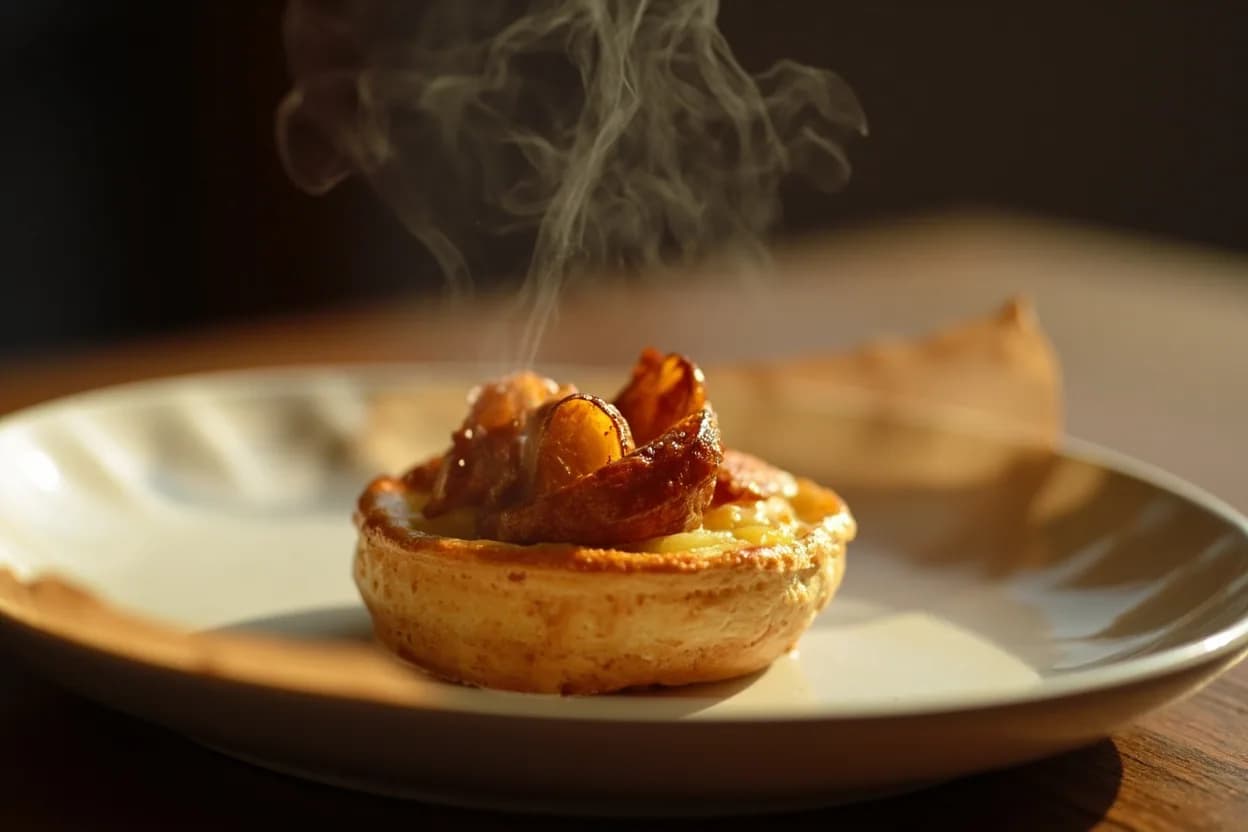
The dishes that define Normand, documented in the Canon.
References
- 1.French Provincial Cooking — Elizabeth David (1960)
- 2.The Food of France — Waverley Root (1958)
- 3.Mastering the Art of French Cooking, Vol. 1 — Julia Child, Louisette Bertholle, Simone Beck (1961)
- 4.Culinaria France — André Dominé, ed. (1998)
- 5.AOC Camembert de Normandie specification, INAO
Confidence: high
Notes
Camembert AOP vs. industrial
Only Camembert de Normandie with the AOP designation is made from raw (unpasteurized) milk by hand-ladling the curds — a slow, fragile process. Most supermarket 'Camembert' is industrially produced pasteurized-milk cheese and bears little resemblance to the farmhouse original. The AOP herd must be Normand-breed cattle grazing Norman pasture.
The butter border
Normandy (with Brittany) sits within France's salted-butter belt. Elsewhere in France, unsalted beurre doux is the norm; in Normandy, beurre demi-sel (half-salted) and beurre salé (fully salted) are default. This shapes pastry, the way bread is eaten, and the finish of cream sauces — a tablespoon of Norman butter added off-heat carries a faint seasoning that a Parisian cook would add separately.