Citrus & Floral
Makrut Lime Leaf
Also: kaffir lime leaf, bai makrut, daun limau purut, double lime leaf
The double-lobed aromatic leaf of Southeast Asia — piercingly floral, citrus-forward, and irreplaceable in Thai cooking.
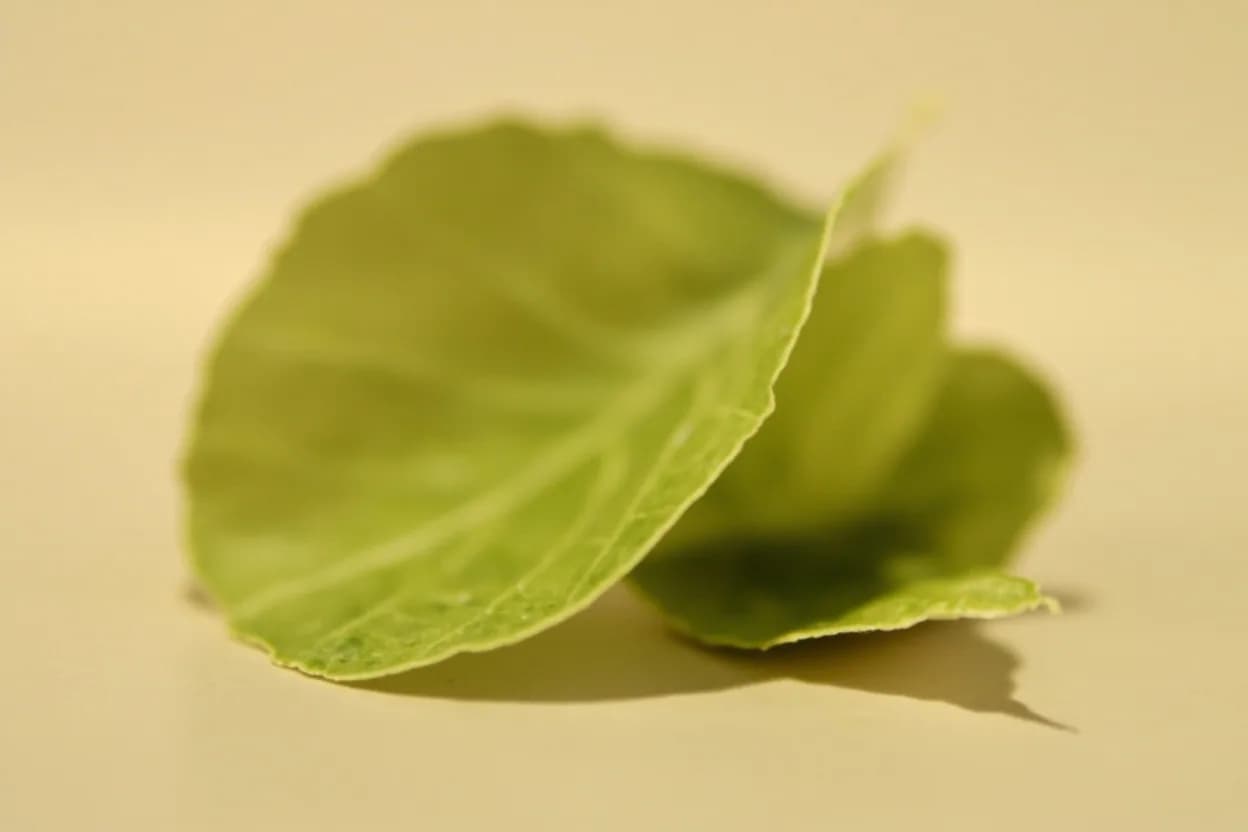
The makrut lime tree (Citrus hystrix) produces two distinct culinary products: its bumpy-skinned fruit (used mainly for its zest) and its distinctively double-lobed leaves, where each leaf consists of two lobes joined tip-to-stem, giving the appearance of two leaves connected end-to-end. The leaves are the more widely used product. Their flavor is an intensely aromatic, piercingly floral citrus — dominated by citronellal, linalool, and other volatile terpenes — with a slight menthol-adjacent freshness that standard lime cannot approximate. Unlike most leaves used as aromatics, makrut lime leaves contribute no significant bitterness. The thick central rib is always removed before eating; the leaf blade is either left whole (for infusion) or chiffonaded into very thin ribbons (for direct consumption in salads and curries).
In photos
Flavour profile
Classic pairings
- Coconut milkThai
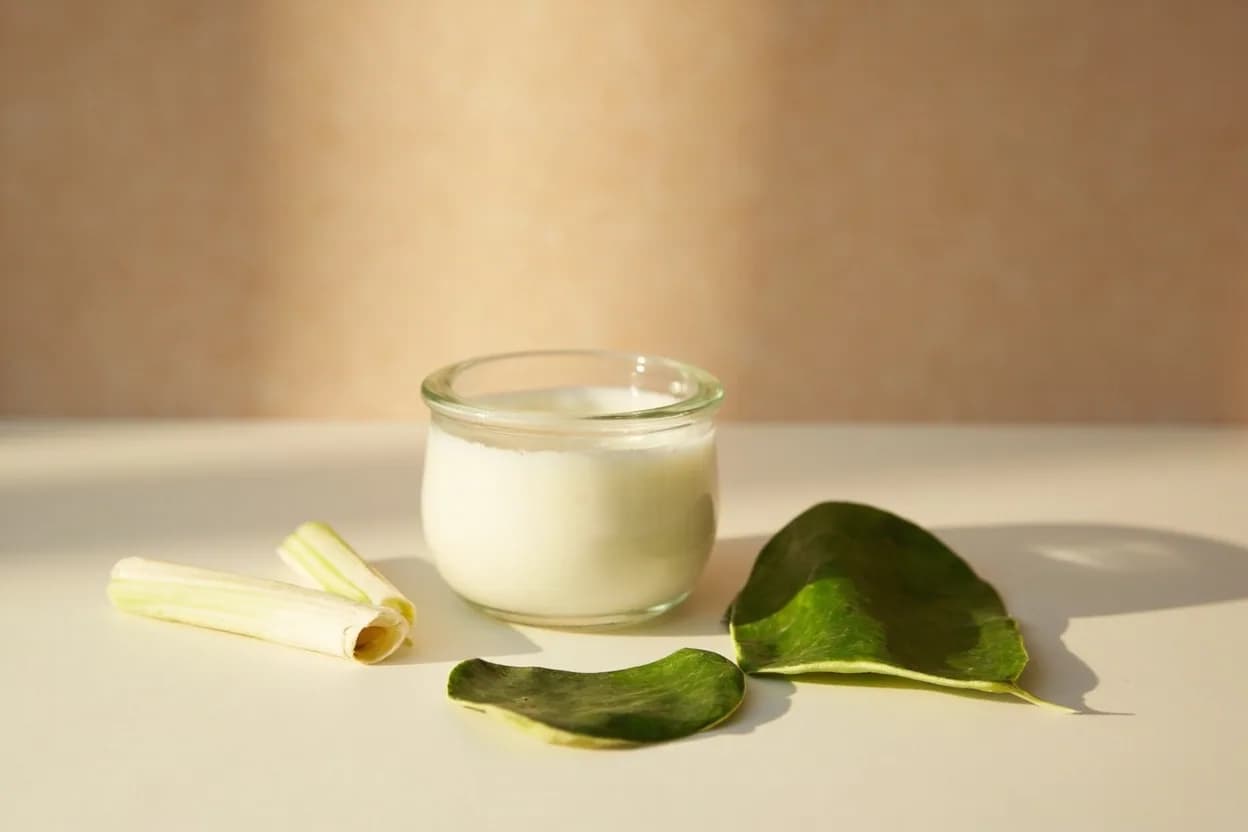
The single most important pairing in Thai cooking — makrut lime leaves simmered in coconut milk anchor the aromatic base of virtually every Thai curry; fat carries and amplifies the citrus volatile oils.
- GalangalThai
Together with lemongrass and galangal, makrut lime leaves form the aromatic holy trinity of Thai soup bases (tom kha, tom yum); the three aromatics create a layered citrus-ginger-floral chord.
- LemongrassThai / Southeast Asian
Always used in tandem — lemongrass provides the bright citral top note while makrut lime leaf adds deeper, more floral, more complex citrus body; they are rarely separated in Thai cooking.
- ChickenThai / Indonesian
In Thai green and massaman curries, and in Indonesian and Malay dishes, makrut lime leaves infused in the sauce perfume the mild chicken flesh with floral citrus that it cannot provide on its own.
- Kaffir lime / makrut lime zestThai
The zest of the bumpy fruit is used alongside the leaves in curry pastes (e.g., Thai green curry paste) — both contain the same aromatic compounds, creating a concentration of the flavor signature.
- Fresh red chiliThai
Thai salads and stir-fries pair chiffonaded makrut lime leaf with sliced fresh chili — the floral citrus cools and perfumes the heat, preventing chili from reading as merely hot.
- Fish sauceThai
The fermented umami depth of fish sauce and the floral freshness of makrut lime leaf are the defining salt-and-aroma axis of Thai cooking — together they build a savory-floral profile unique to the cuisine.
Adventurous pairings
- Gin (infused)
Two to three leaves steeped overnight in gin create a distinctly Thai-inflected spirit — the floral citrus reads like a more complex, less harsh lime botanical, excellent in a Southeast Asian gin and tonic.
- Crème brûlée / panna cotta
Leaves steeped in warm cream then removed before setting infuse the custard with piercingly aromatic citrus without any sourness — more complex than lemon verbena and less soapy than lavender.
- Lamb
The floral citrus of makrut lime leaves cuts through lamb's lanolin richness effectively; leaves added to a Malay-style lamb rendang or grilled lamb marinade create unusual but compelling aromatic balance.
- Mango
Chiffonaded makrut lime leaf over a green mango salad (som tam green mango variant) accentuates the fruit's own floral esters; the pairing works in mango sorbet as a cream infusion too.
Leaves steeped in warm chicken stock before making a Thai-influenced risotto creates an unexpected but coherent dish — the creamy Arborio base acts like coconut milk as a vehicle for the volatile oils.
- White chocolate
White chocolate's dairy-sweet vanilla base acts as a blank canvas for makrut lime leaf's floral character when infused in warm cream — a ganache or bon bon application with Southeast Asian sensibility.
Tread carefully
- Whole leaves left in finished dishes for eatingavoid
Unlike bay leaf, makrut lime leaves are sometimes eaten when chiffonaded thin, but whole or roughly torn leaves are chewy and unpleasant to bite into — always remove whole leaves or cut them very fine.
- Blending into smooth pureesavoid
Even chiffonaded, the leaf's fibrous structure does not blend smoothly — whole-leaf curry pastes are strained; chopping too coarsely results in stringy flecks in otherwise smooth sauces.
- Overly sweet desserts without dairy or fatavoid
In purely sugar-and-water applications (clear syrups, hard candies), the leaf's volatile aromatics dissipate quickly and the result is thin and fleeting — fat-based infusions are far more stable.
How to use it
- Remove the central rib by folding the leaf lengthwise and pulling — the blade then chiffonades cleanly into very fine ribbons for direct use in salads
- Simmer 4-6 whole leaves in coconut milk for 10 minutes (with galangal and lemongrass) then strain to create an aromatic base
- Blend into curry paste whole (ribs and all) when using a stone mortar or powerful blender — the paste will be strained or the fiber is undetectable at fine grind
- Fry whole leaves in hot oil for 20-30 seconds until crisp — they become an aromatic garnish with concentrated flavor
- Steep in warm cream, oil, or spirits for 30 minutes at below-boiling temperature to extract volatile oils without bitterness
- Freeze fresh leaves in an airtight bag — they retain aroma well for up to 3 months and are often superior to dried
Appears in
Related flavours
The closest companion in Thai cooking — always used together; lemongrass provides lemony citral notes while makrut adds deeper floral complexity
The third pillar of Thai aromatic bases; its ginger-pine character provides savory depth that makrut lime leaf's florals play against
Shares aromatic space in many Thai dishes — basil's anise-clove notes contrast rather than echo makrut's citrus florals, creating layered complexity
- Lime juice
Lime juice and makrut lime leaf are not duplicates — juice provides acid while leaves provide aroma; Thai sauces routinely use both
References
- 1.Thai Food — David Thompson (Ten Speed Press, 2002)
- 2.Hot Sour Salty Sweet: A Culinary Journey Through Southeast Asia — Jeffrey Alford & Naomi Duguid (Artisan, 2000)
- 3.On Food and Cooking: The Science and Lore of the Kitchen — Harold McGee (Scribner, 2004)
- 4.The Flavor Bible — Karen Page & Andrew Dornenburg (Little Brown, 2008)
Confidence: high
Notes
Name note
The historic English name 'kaffir lime leaf' contains a severe racial slur in South African English and is increasingly replaced by 'makrut lime leaf' — the preferred term used by the tree's native Thai-speaking cultivators (bai makrut) and now standard in culinary publishing.
Dried vs. fresh
Dried makrut lime leaves lose a significant portion of their volatile aromatic compounds and should be used in roughly double the quantity of fresh, and only in long-simmered preparations where the residual character can be extracted slowly. For salads and garnishes, fresh or frozen leaves are non-negotiable; dried leaves have no application here.