Produce
Beefsteak Tomato
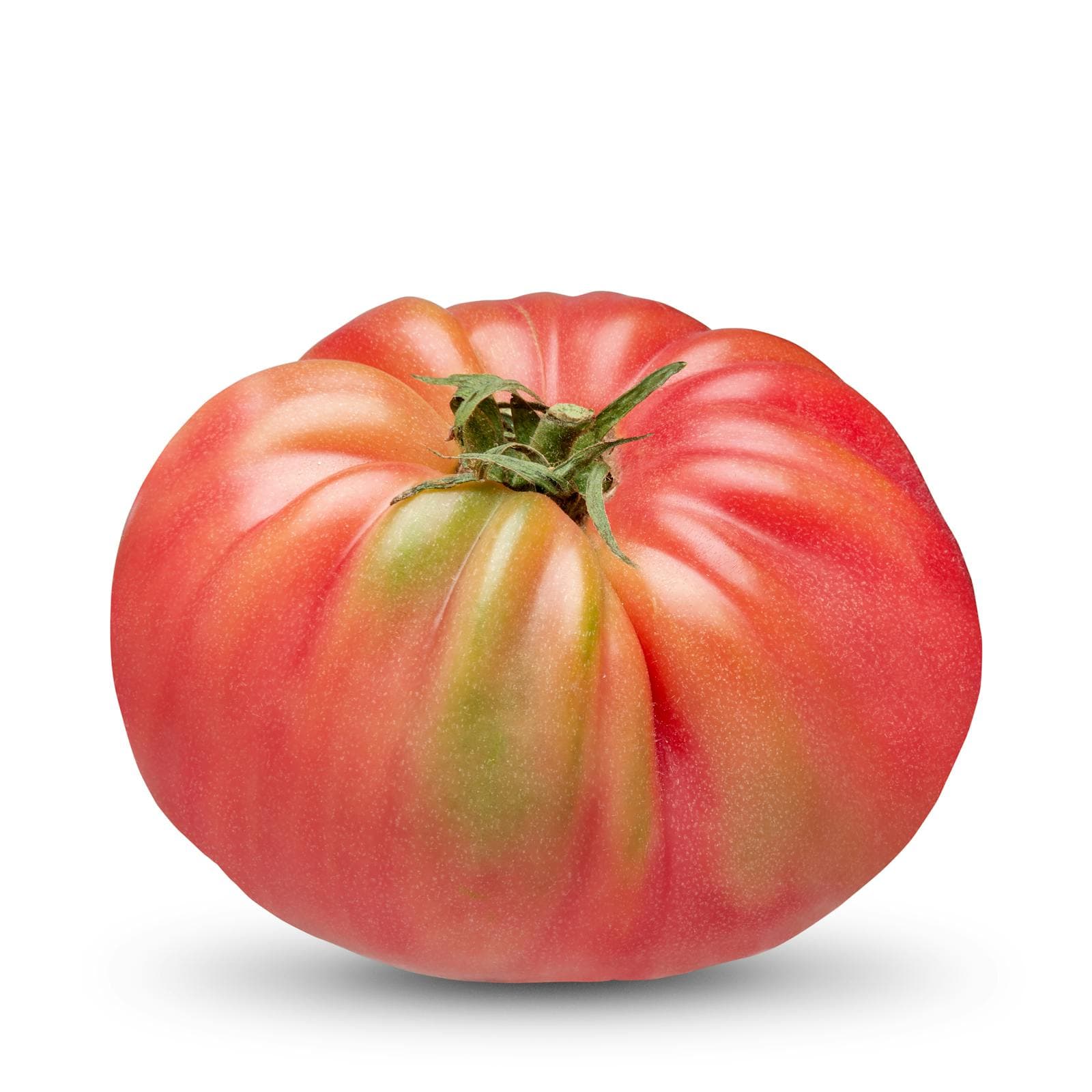
Large, meaty tomato with broad slices and few seeds; holds its shape stacked in sandwiches and burgers, or roasted, where smaller varieties go to mush.
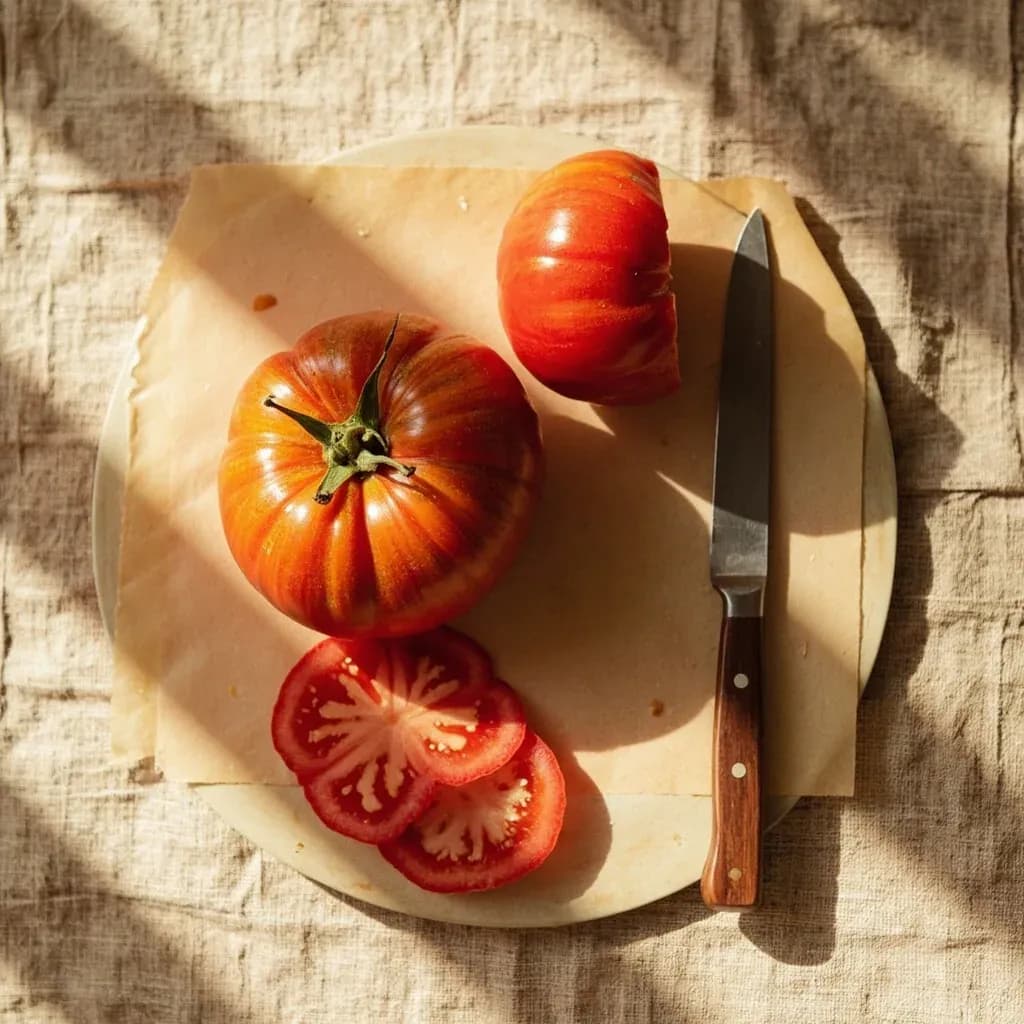
Beefsteak is the varietal-group name for the largest slicing tomatoes — fruits that routinely reach a pound and, in show cultivars like 'Delicious,' can clear three. The name is a kitchen analogy: a crosswise cut through the fruit produces a slab meant to resemble a thick cut of beef laid over bread or plated beside a steak. What defines the group anatomically is dense, meaty flesh with comparatively little gel and small seed cavities, and it is precisely that trait which lets a half-inch slice bear the weight of a burger bun, a slab of mozzarella, or a fork without collapsing the way a cherry or salad tomato would.
- Measured in
- each
- Storage
- Room
Find it in
Suits
Types & varieties
Amish heirloom, pink-fruited, potato-leaf foliage; the benchmark for heirloom beefsteak flavor.
Dusky purple-pink shoulders over greenish gel; attributed to Cherokee tradition in Tennessee; rich, smoky-sweet.
Pink, 1–2 lb fruits developed in 1930s West Virginia by M.C. 'Radiator Charlie' Byles; mild, balanced sweet/acid.
Dark mahogany-purple shoulders from the Crimean peninsula; intense, slightly saline flavor.
Large pink, lobed heirloom from Virginia/North Carolina; ancestor of many 'mammoth' beefsteak lines.
Yellow-orange with red marbling; large ribbed fruits, low acid, fruity and sweet.
Solid orange, beefsteak-shaped; sweet, mild, almost tropical flavor.
Green-when-ripe, large; tangy and almost citrusy.
Round red commercial hybrid; reliable, disease-resistant, balanced flavor — the supermarket workhorse.
Burpee hybrid, AARS winner; red, uniform slicing tomato, productive and early for its size class.
Large red hybrid bred for size and crack resistance.
Show cultivar; held the world record at 7 lb 12 oz (3.5 kg) from 1986; mild flavor but enormous fruits.
Heirloom vs. hybrid beefsteaks
The heirlooms (Brandywine, Cherokee Purple, Black Krim, Pineapple, Aunt Ruby's German Green) descend from 19th-century American lines like Mikado and Acme, selected over generations for flavor. They tend to have thin, easily bruised skin, irregular lobes, and short shelf life, and they are what a grower brings to a farmers' market. The commercial F1 hybrids (Big Beef, Better Boy, Beefmaster, Whopper, Supersteak) were bred from the same genetic pool for shipping tolerance, crack resistance, and uniformity — they are firmer, prettier on a display, and far easier to find in winter, but their flavor is generally milder. For a cook, the practical rule is to use peak-season heirlooms raw and save hybrids (or off-season hothouse fruit) for cooking, where roasting and stuffing forgive a less aromatic fruit.
Choosing and storing
A ripe beefsteak should feel heavy for its size and yield slightly to gentle pressure, with a faint green stem still attached and a tomatoey, almost grassy-sweet smell at the stem end. Heirlooms bruise easily — handle by the shoulders rather than the lobes, and transport in single layers. Never refrigerate a fully ripe fruit; cold destroys the volatile compounds responsible for aroma and turns the dense flesh mealy within hours. Store stem-up on the counter, away from direct sun, at 60–70 °F (15–21 °C). Beefsteaks continue to ripen after picking, but flavor plateaus once the fruit is fully colored and slightly soft; once it goes past that point, cook it rather than eat it raw.
Common uses
Tips & pitfalls
- Salt slices and rest them on a rack or paper towels for 10–15 minutes before assembling sandwiches — this draws out excess water and concentrates flavor without the slice going limp.
- Cut equatorially (through the middle, not pole-to-pole) to maximize usable surface area and minimize the seed cavity in each slice.
- Never refrigerate a fully ripe beefsteak. Cold destroys volatile aromatics and turns the dense flesh mealy within hours; room temperature, stem-up, is correct.
- Choose fruits that feel heavy for their size, yield slightly to gentle pressure, and smell tomatoey and grassy-sweet at the stem end.
- Heirlooms have thin, easily bruised skins — handle by the shoulders, not the lobes, and transport in single layers.
- When roasting, salt the cut sides and roast cut-side up at 400–450 °F (200–230 °C); the meaty flesh will caramelize rather than steam and collapse into mush.
- Core with a paring knife in a shallow cone, or scoop with a teaspoon — the green stem core is bitter and fibrous.
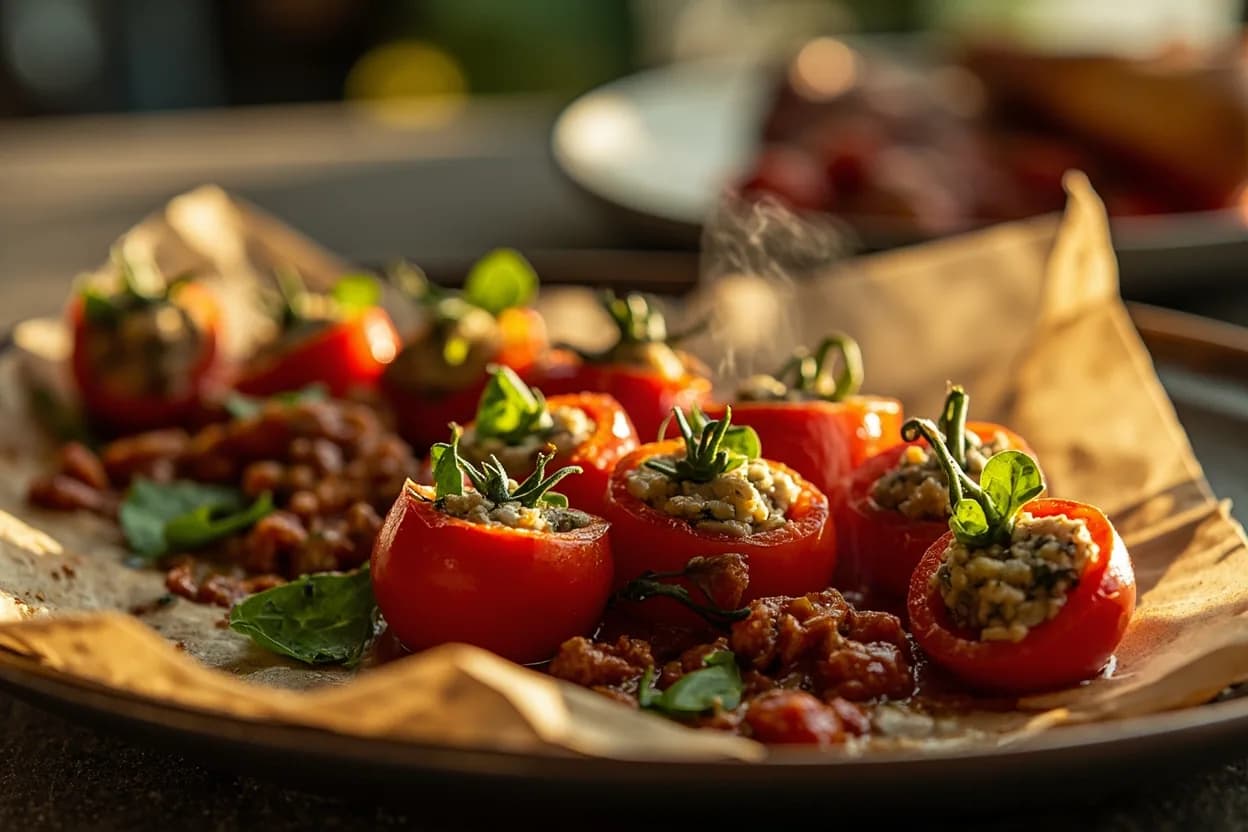
- For stuffed tomatoes, choose slightly underripe specimens so the shell holds its shape through baking.
- If a slice is underwhelming on flavor (typical of off-season or hothouse fruit), a pinch of sugar and a few drops of sherry or aged balsamic will mimic peak-season taste.
- Save seed only from open-pollinated heirlooms; F1 hybrids like Big Beef and Better Boy will not breed true.
Nutrition
Energy
63 kJ · per 100 g
Where the calories come from
Protein
1g
2% DV
Carbs
3g
1% DV
Fat
0.3g
0% DV
Fiber
0.7g
3% DV
Sodium
23mg
1% DV
Source · USDA FoodData Central · approx. Tomatoes, yellow, raw
View on FDC →In the shops
Matched grocery products
 €2.62
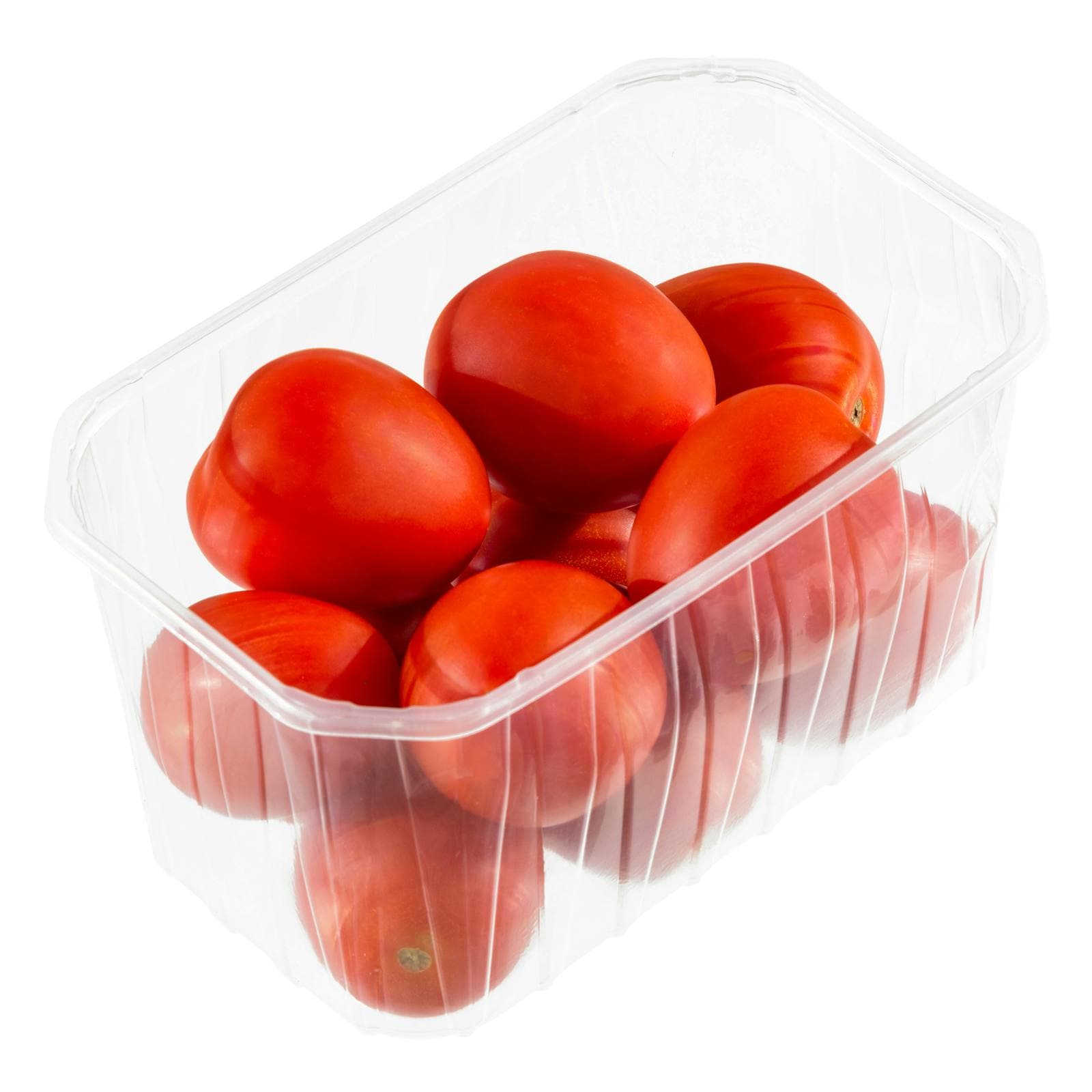
€2.62Pear Tomatoes
1.14 kg · Mercadona
 €1.49
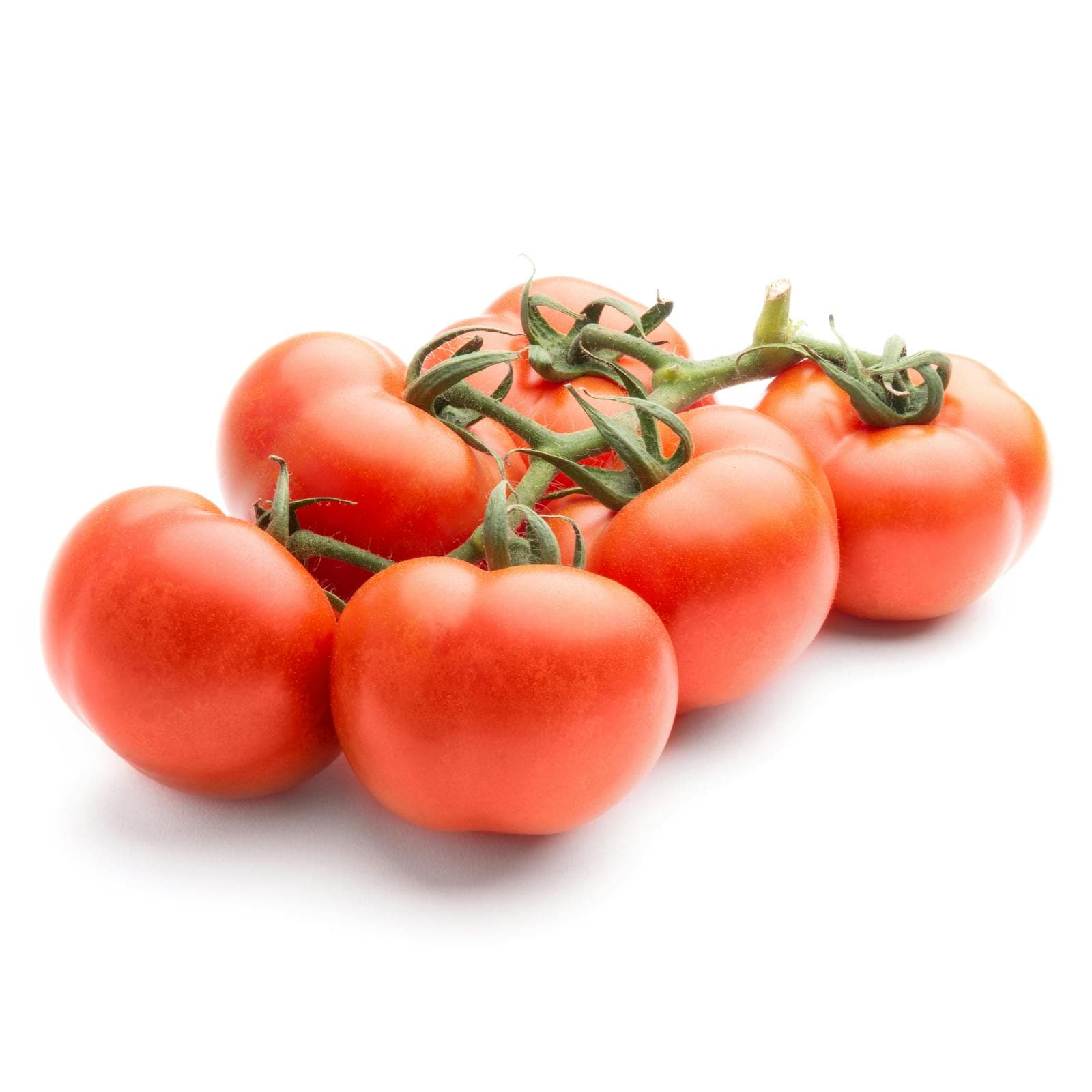
€1.49Truss Tomatoes
550 g · Mercadona
 €2.60
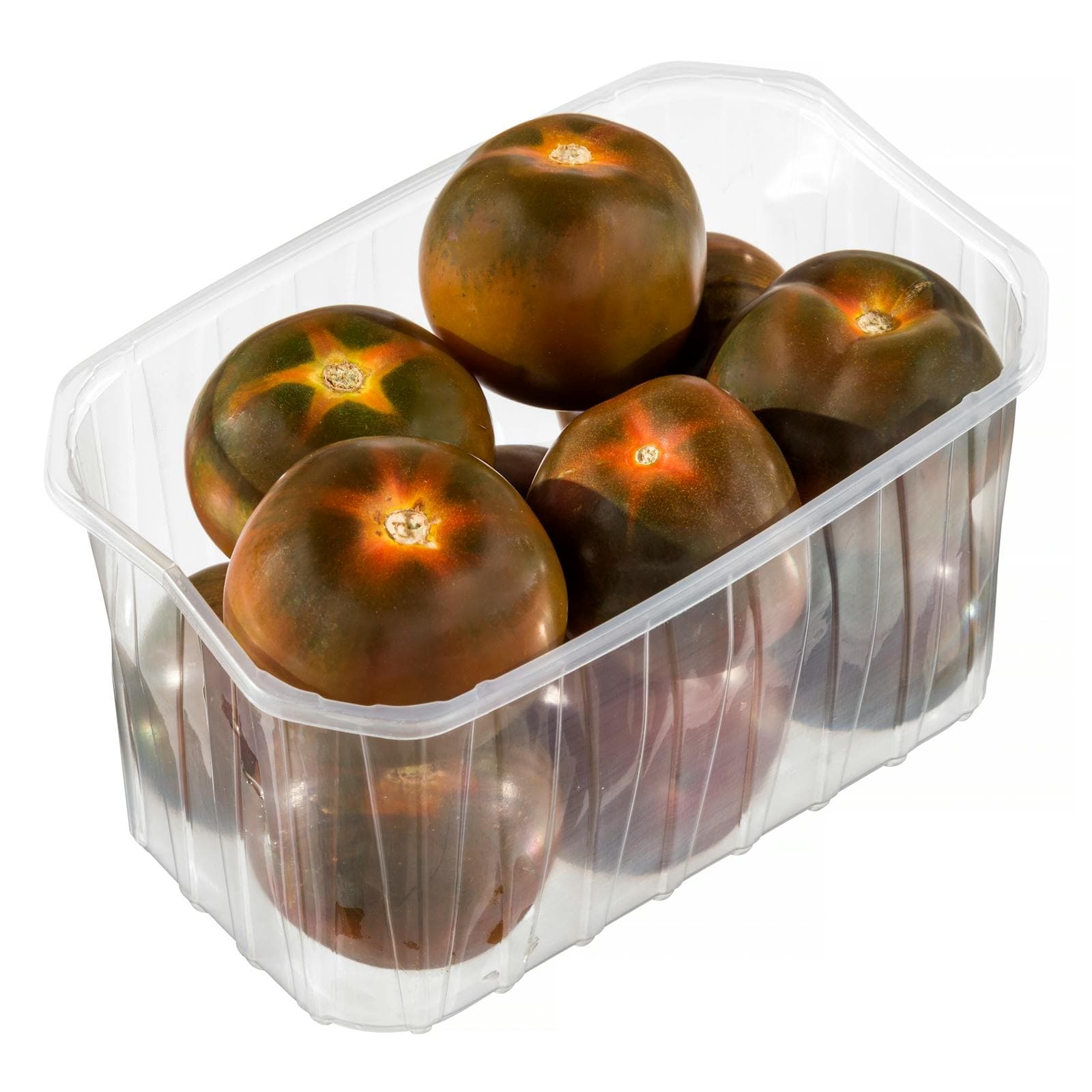
€2.60Black Tomatoes
1 kg · Mercadona
 €0.29
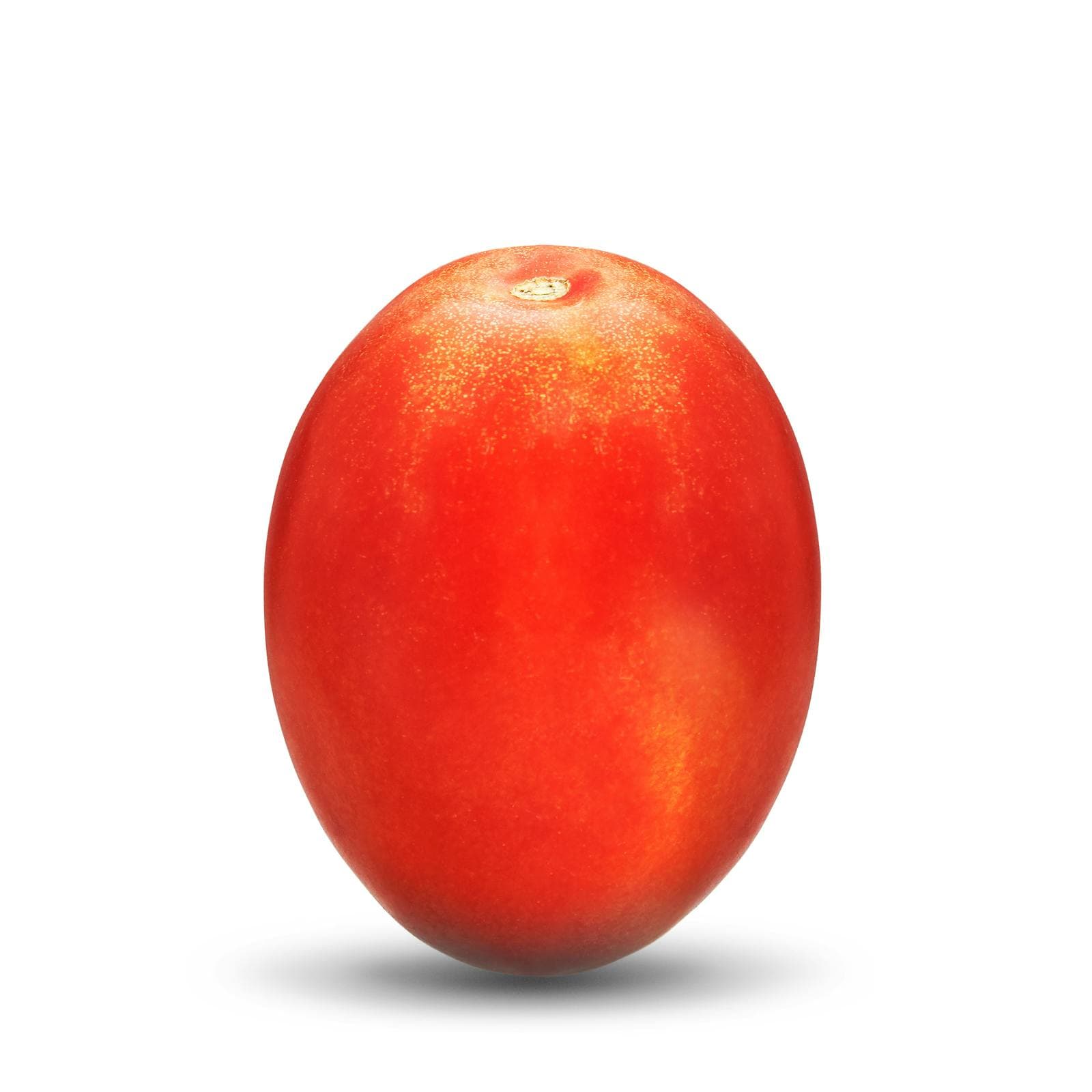
€0.29Plum Tomato
130 g · Mercadona
 €1.07
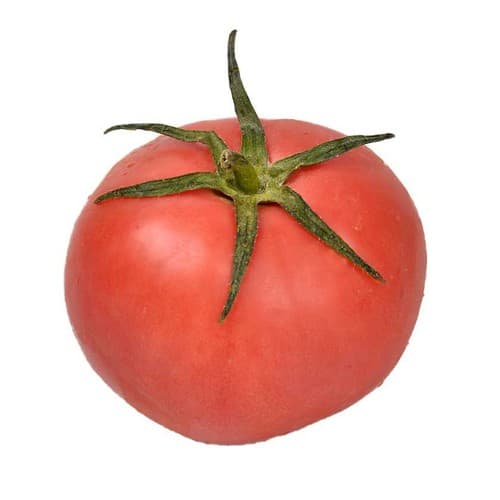
€1.07Pink Tomato
ud · Bonpreu
 €1.16
€1.16Pink Tomato
340 g · Mercadona
Good to know
- Type
- Fruit (botanically a berry), used as a vegetable; Solanum lycopersicum, beefsteak varietal group
- Typical size
- Individual fruits commonly 6–16 oz (170–450 g); specimens over 1 lb (450 g) are routine, and 2–3 lb (0.9–1.4 kg) specimens occur in show cultivars
- Color range
- Red, pink, orange, yellow, deep purple-brown ('black'), green-when-ripe, and bicolored such as yellow with red marbling
- Flesh-to-juice ratio
- Dense, meaty locules with little gel and small seed cavities — the defining trait versus slicing or paste types
- Flavor profile
- Mild to sweet, often less acidic than smaller tomatoes; heirlooms such as Brandywine and Cherokee Purple are markedly more complex than commercial red beefsteaks
- Storage
- Keep stem-up at room temperature, 60–70 °F (15–21 °C); refrigeration destroys volatile aromatics and turns flesh mealy within hours
- Season (field-grown)
- Mid to late summer in temperate climates; long, warm seasons such as the Mid-Atlantic and Mediterranean produce the most flavorful fruit
- Nutrition (per ~30 g slice)
- Roughly 5 kcal, ~1 g carbohydrate, modest vitamin C and K, potassium, and lycopene (lycopene levels rise as the fruit ripens)
Substitutes
- Heirloom slicing tomatoes (any large variety) — Closest 1:1 swap; flavor will differ but the slab-and-stack function is identical.
- Oxheart tomatoes — Meaty with a small seed cavity; substitute in most raw-slicing and stuffing applications.
- Roma / Plum tomatoes — Work for cooked applications (sauces, roasting) where the meaty quality matters more than slice size; not suitable for sandwiches.
- Green Zebra (large strains) — Acceptable slicing substitute with brighter acidity; use when you want more bite than a classic beefsteak.
- Beef tomato (British term) — In the UK 'beef tomato' refers to the same varietal group; the terms are interchangeable.
Pairs with
Also called
beef tomato · slicing tomato