Seeds
Black Sesame Seed
Unhulled black sesame with a deeper, nuttier, slightly bitter flavor than white; toasted for furikake and crusts, or ground into a dark paste for sweets.
Black sesame seeds are unhulled seeds of Sesamum indicum—the same species as white sesame, but with the dark outer coat left intact. That hull is where the seed earns its name: it carries the deep black pigment, an earthy bitterness, and a disproportionate share of the seed's calcium, iron, and antioxidant content. Stripped of the hull, the seed inside is pale and mild; left whole, it tastes flat and slightly soapy until heat transforms it.
In the kitchen, black sesame behaves more like a spice than a neutral seed. Two to four minutes in a dry pan over low heat drives off the raw quality and releases a nutty, toasty aroma, though the window between fragrant and burnt is narrow because the dark hull hides scorch. Once toasted, the seeds go three ways: whole as a garnish on rice, noodles, and tofu; ground with sugar into the dense paste that fills Chinese tang yuan and mooncakes; or pressed cold into the dark, aromatic finishing oil used as a final flourish across East Asian cooking.
Storage deserves more attention here than with most seeds. The unhulled seed's exposed surface and high oil content make it prone to rancidity—faster than hulled white sesame—so buy in small quantities, keep it airtight, and refrigerate or freeze anything you won't use within a month or two. Light is the other enemy; UV breaks down the oils and the seeds turn stale in clear jars on a sunny shelf.
- Measured in
- g
- Storage
- Store Airtight In A Cool, Dark Place; Refrigerate For Long Keeping.
Allergens
Find it in
Suits
Types & varieties
The most common type in East Asian markets; used for toasted powders, sweet pastes, and as a traditional medicine ingredient.
Often slightly smaller and intensely aromatic; widely used in Ayurvedic preparations, South Indian sweets, and temple offerings.
Sourced mainly from China and Myanmar; sold whole, pre-toasted, or as neri goma paste for sweets and dressings.
Common in both savory applications (garnish, dipping sauces) and sweet ones, including the cinnamon-ginger punch sujeonggwa.
Used in sweet custards, sticky rice, and beverages; often paired with mango and coconut milk.
Hulled versus unhulled: not all black sesame is the same
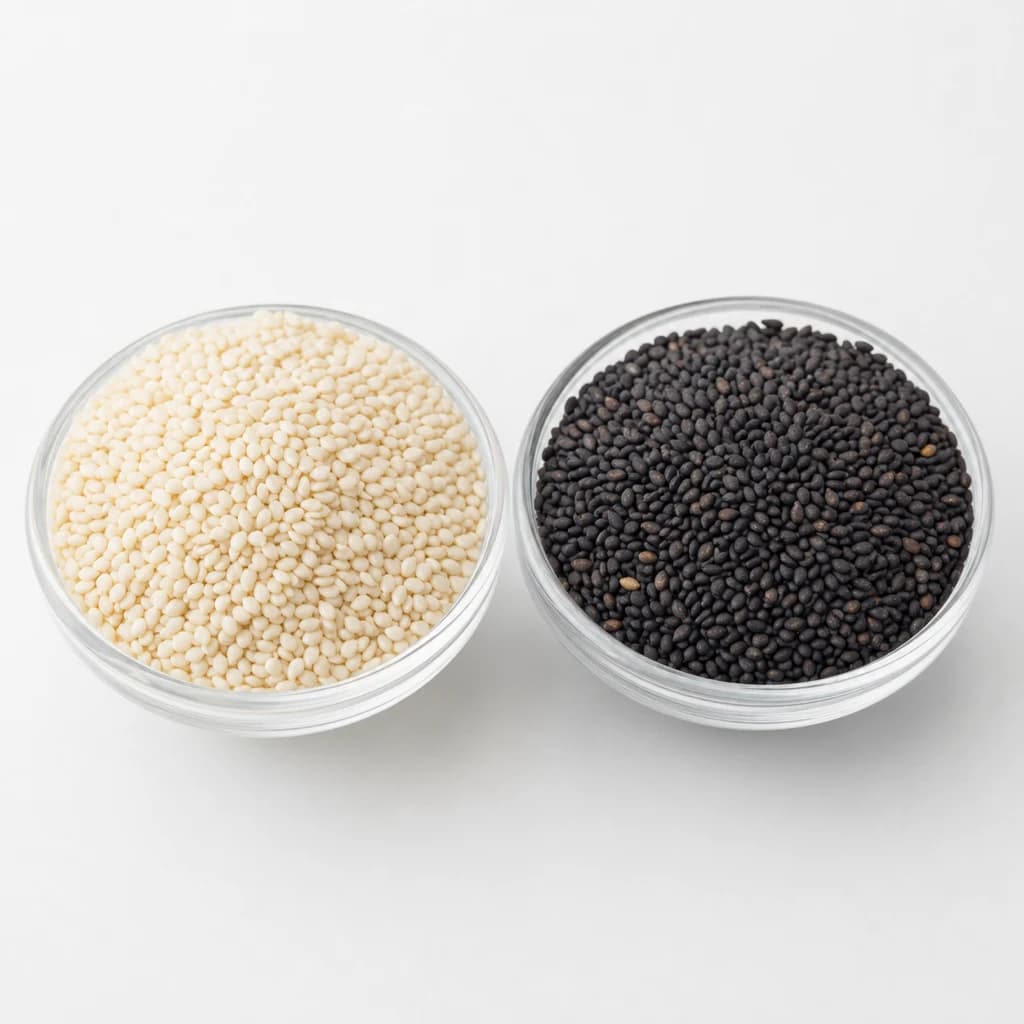
Walk down an Asian market aisle and you'll find two different products called 'black sesame.' The default is unhulled seed—essentially white sesame with the dark outer coat left on. The hull supplies the bitter, earthy flavor and most of the seed's antioxidant load, but it also makes the seed more fragile and prone to rancidity. Pricier and less common is hulled black sesame, sold as premium whole seeds or as kuro neri goma paste. With the hull removed, the seed inside is paler and creamier, the flavor cleaner and milder, and the paste takes on an inky, almost lacquered color that unhulled paste cannot match. Reach for unhulled seeds for savory depth and rustic paste; choose hulled when you want velvety texture and dramatic visual contrast in desserts.
Common uses
Tips & pitfalls
- Toast in a dry skillet over low heat rather than the oven—uneven oven heat scorches the small seeds before the centers warm through.
- Pull the pan off the heat the moment the seeds smell toasty and a few start to pop; black seeds hide their burn point and go from perfect to bitter in seconds.
- Toast a thin layer—no more than a single seed deep—so every seed browns evenly and steam can escape.
- Toast seeds separately from salt or sugar; salt draws out moisture and sugar burns long before the seeds are fragrant.
- Grind toasted seeds with sugar at roughly 1:1 to 2:1 by weight for a balanced Chinese-style paste, adding a splash of neutral oil for smoother texture.
- Blend the paste while still warm if you want the darkest possible color—it darkens further as it cools.
- Buy smaller quantities more often; the oil-rich unhulled seeds oxidize faster than hulled white ones.
- If you need visual contrast on pale foods like white rice or cream desserts, use untoasted seeds; toasted seeds blend in once sprinkled.
Nutrition
Energy
372 kJ · per 100 g
Where the calories come from
Protein
4.1g
8% DV
Carbs
17.3g
6% DV
Fat
0.5g
1% DV
Sodium
1mg
0% DV
Source · USDA FoodData Central · approx. Seeds, lotus seeds, raw
View on FDC →In the shops
Matched grocery products
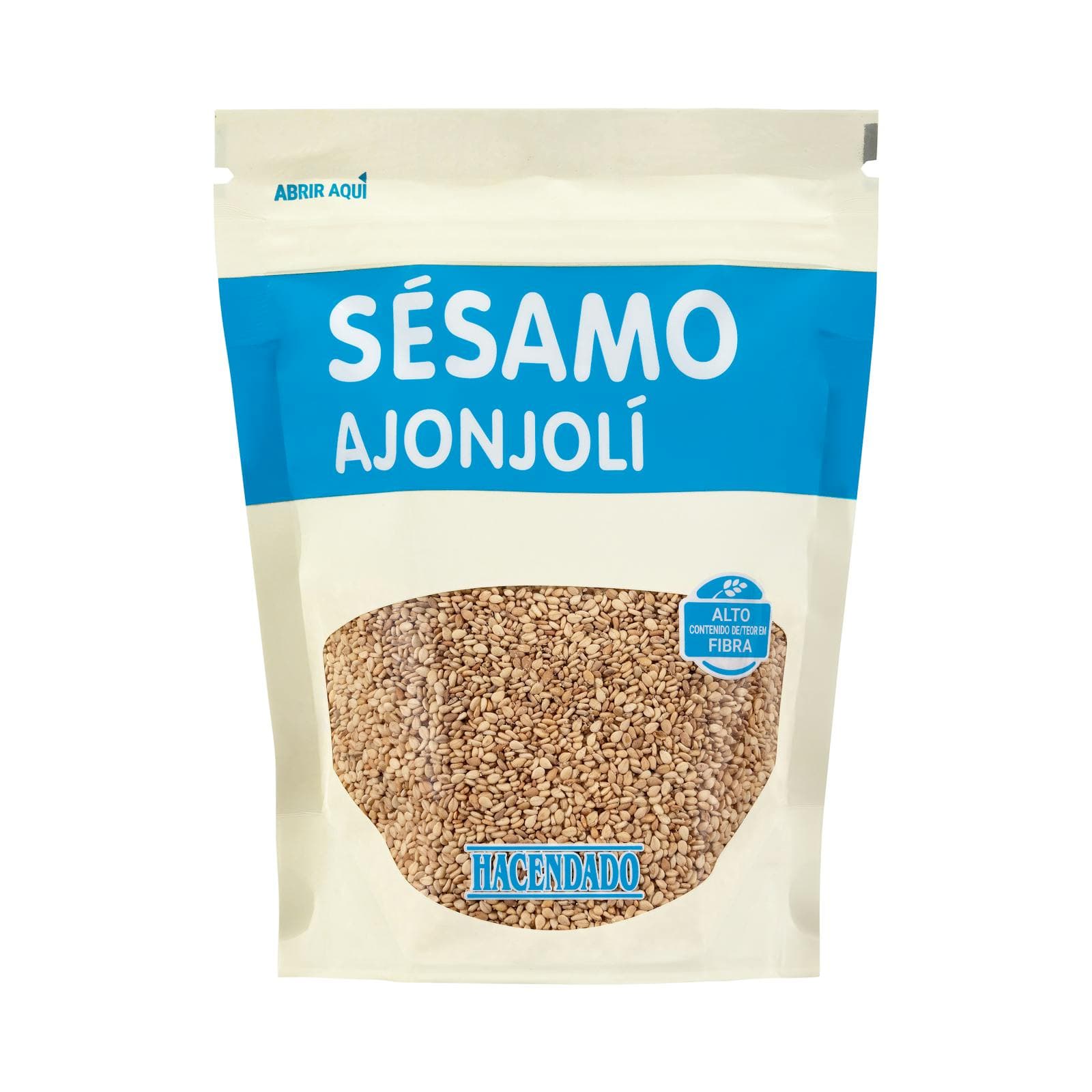 €1.50
€1.50Toasted Sesame Seeds
Hacendado · 150 g · Mercadona
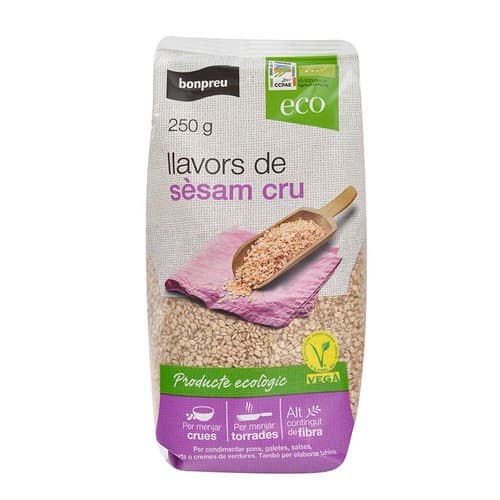 €1.95
€1.95Organic Raw Sesame Seeds
BONPREU · kg · Bonpreu
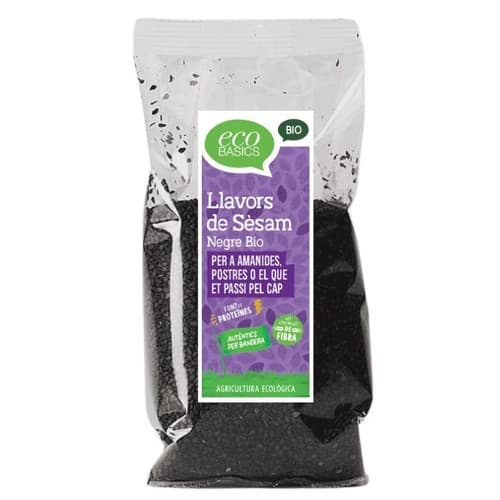 €2.55
€2.55Organic Black Sesame Seeds
ECOBASICS · kg · Bonpreu
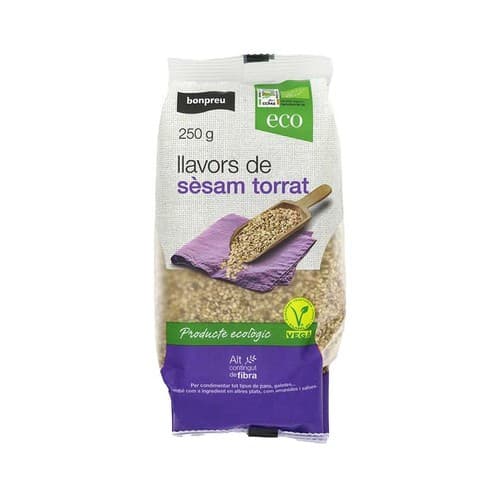 €2.75
€2.75Organic Roasted Sesame Seeds
BONPREU · kg · Bonpreu
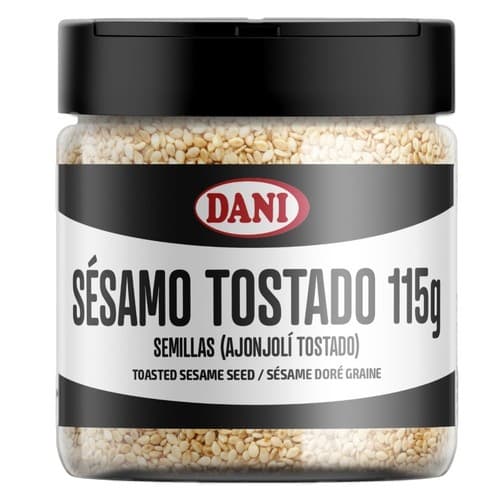 €1.99
€1.99Toasted Sesame
DANI · kg · Bonpreu
Good to know
- Botanical name
- Sesamum indicum
- Forms sold
- Whole dried seeds, ground powder, paste (jiang / neri goma), cold-pressed oil, and roasted salt blends (gomashio)
- Flavor profile
- Nuttier, earthier, and more bitter than white sesame; aroma intensifies sharply with dry toasting
- Toasting
- 2–4 minutes in a dry pan over low heat, shaking often; burn point sits close to fragrance point
- Yield after toasting
- ~100 g raw seeds yields ~80 g toasted; seeds darken and shrink slightly
- Major producers
- China, India, Myanmar, Ethiopia, Nigeria, Sudan
- Nutrition note
- Higher in calcium, iron, and fiber than hulled white sesame because the hull is retained; hull holds most antioxidant content
- Storage & shelf life
- Airtight, cool, and dark; refrigerate beyond 1–2 months; freeze up to 6 months; whole toasted seeds keep 1–2 months at room temp, paste 1–2 weeks refrigerated
Substitutes
- White sesame (hulled) — Works in savory uses but loses the bitter, earthy note and the dramatic black color; toast the same way.
- Black tahini — Already-ground paste from hulled black seeds; appropriate when the recipe calls for paste rather than whole seeds.
- Nigella seeds — Visually similar—small and dark—but the flavor is oniony and sharp; acceptable only as a visual garnish, not as a flavor substitute.
- Poppy seeds — Provide crunch and dark specks on baked goods but lack nutty depth; best as a visual replacement on rolls and crusts.
Pairs with
Also called
black sesame · kuro goma · black til