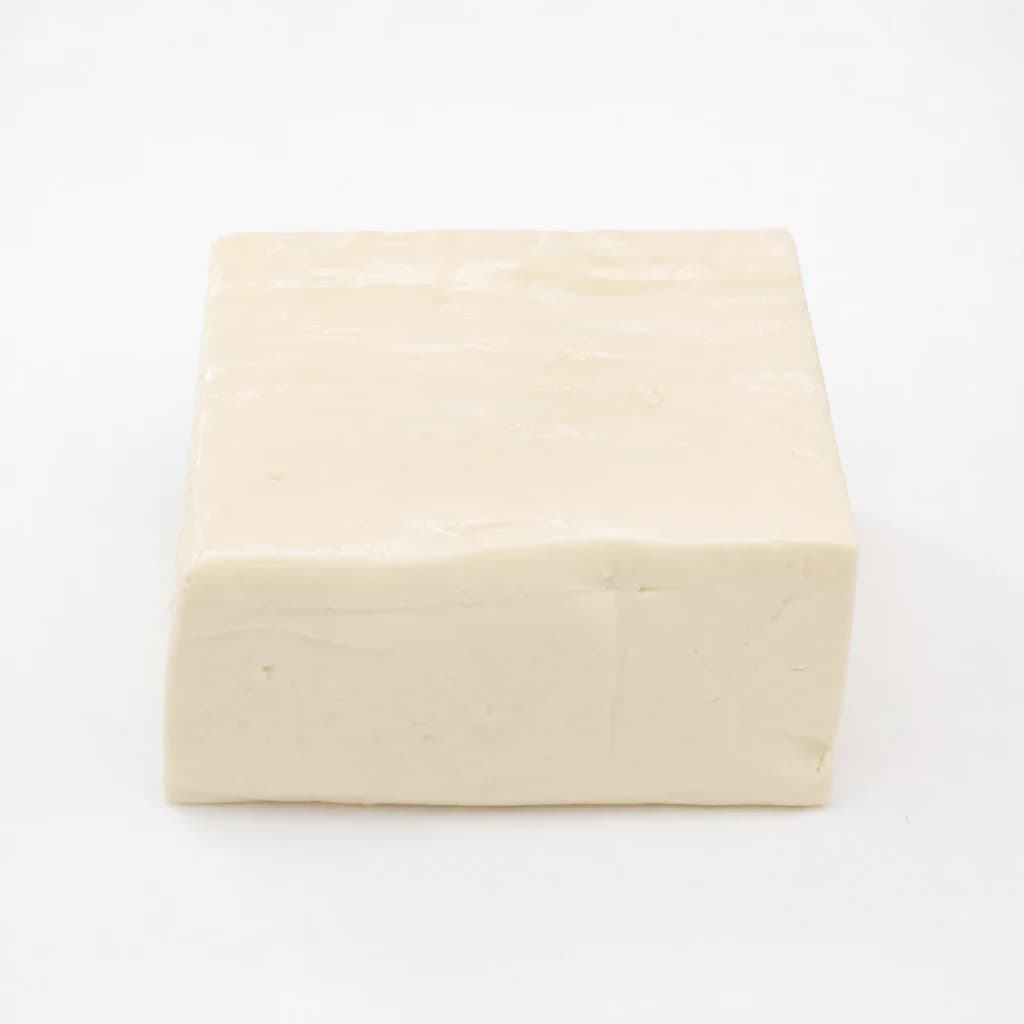
Natural form
A block of soft tofu removed from its package, showing its pale ivory, custard-like surface.
Shows the reader the exact appearance, color, and fragile surface texture of soft tofu as purchased.
Proteins
Soft Tofu
Silky, custard-soft bean curd for soups, stews, and gentle steamed dishes.
Soft tofu is a delicate, high-moisture bean curd with a silky, custard-like texture. It is spooned into soups and stews like Korean sundubu jjigae, steamed with savory toppings, or blended into smooth sauces and desserts. Its fragility means it is added gently near the end of cooking.
Soft tofu occupies a unique position in the tofu spectrum: it holds a rough shape when handled carefully but collapses readily under pressure, its custard-like interior giving way to a silky, yielding bite. Unlike firmer tofu varieties that are pressed to expel whey, soft tofu is coagulated gently and drained only lightly, retaining 85–90% water content. The result is a texture that readily absorbs sauces and broths while providing a delicate, yielding body—qualities that make it indispensable across Japanese, Korean, and Chinese cuisines.
The distinction between soft tofu and silken tofu is technical but practically important. 'Silken' (kinugoshi) refers to tofu set directly in its packaging with minimal coagulant, producing a gel-like structure found in tetra-packs. 'Soft' or 'momen-dofu' is drained after coagulation, giving it slightly more body while remaining delicate. Korean dubu and Chinese nan-dofu occupy similar territory. Freshness is paramount: soft tofu should smell clean, faintly sweet, and purely of soy. Old tofu tastes flat and can turn sour, so always check the sell-by date, ensure the soaking water is clear, and buy from sources with high turnover. For raw or lightly cooked applications, fresh tofu from an Asian grocery or specialty shop markedly outperforms mass-market versions.
Soft tofu's high water content demands respectful handling. It cannot be pressed like firm tofu without disintegrating, and it falls apart in aggressive stir-fries unless prepared specially. But when treated gently—added whole to simmering broths, steamed with aromatics, or briefly simmered in sauces—soft tofu transforms any dish with its velvety presence and remarkable ability to carry flavor.
- Measured in
- g
- Storage
- Fridge
Allergens
Types & varieties
Coagulated directly in its package; extremely smooth, custard-like; often sold in tetra-packs. Ideal for dressings, desserts, and soups where a velvety texture is paramount.
Drained after coagulation, giving a slightly firmer body while remaining delicate. Standard for miso soup, nimono, and yudofu.
Comparable to Japanese momen; the backbone of sundubu jjigae and dubu-jorim. Often sold in thick rounds.
Very high water content; fragile. Predominantly used in Sichuan mapo-doufu and gentle soup preparations.
Pressed silken with a slightly denser custard texture; popular in Hawaiian and Pacific cuisines for both savory and sweet applications.
Common uses
Tips & pitfalls
- Always store soft tofu submerged in fresh cold water in the refrigerator; this extends shelf life and prevents drying and off-flavors. Change the soaking water daily if storing beyond 2 days.
- Do not press soft tofu with weights—unlike firm tofu, this will crush it entirely. To drain excess surface water, gently set it on a tilted plate or pat with a clean cloth for 30 seconds only.
- Cut soft tofu with a wet knife using a gentle sawing motion to minimize tearing and crumbling; a dull or dry knife will crush the edges.
- When adding to soups or stews, slide the tofu in gently and avoid vigorous stirring; let the liquid do the work of moving it.
- For deep-frying, soft tofu will disintegrate unless you freeze it first (which changes texture to spongy) or coat it carefully in starch and breadcrumbs.
- If your soft tofu has a pronounced bitterness or sharp taste, it is likely past peak freshness; fresh soft tofu should taste clean, mildly sweet, and bean-forward.
- To achieve a silky smooth surface in steamed dishes, gently pour off any liquid that accumulates on the surface before steaming finishes.
Nutrition
Energy
393 kJ · per 100 g
Where the calories come from
Protein
3.5g
7% DV
Carbs
16g
6% DV
Fat
1.8g
2% DV
Fiber
0.2g
1% DV
Sugars
1.2g
of which
Sodium
35mg
2% DV
Source · USDA FoodData Central · approx. Tofu yogurt
View on FDC →In the shops
Matched grocery products
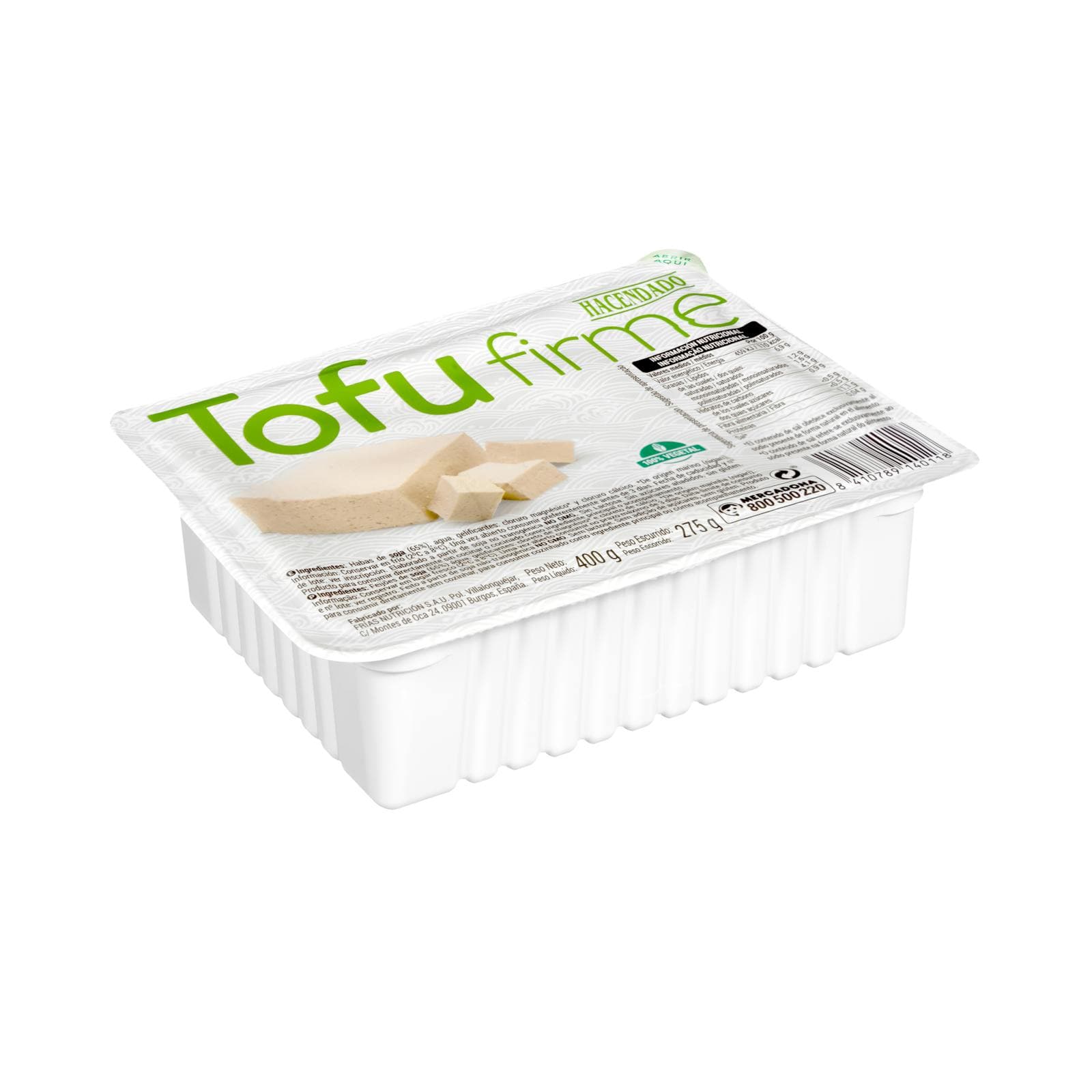 €1.90
€1.90Firm Tofu
Hacendado · 400 g · Mercadona
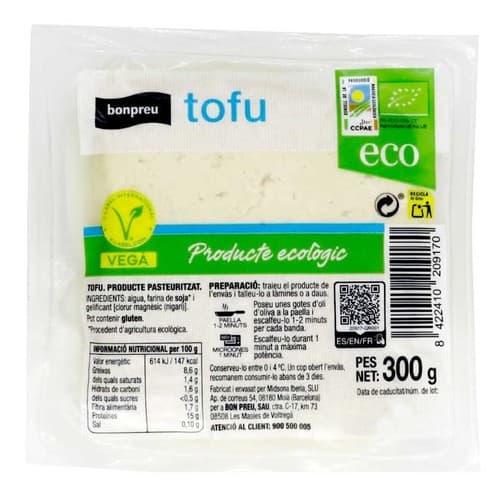 €2.45
€2.45Bonpreu Organic Tofu
BONPREU · kg · Bonpreu
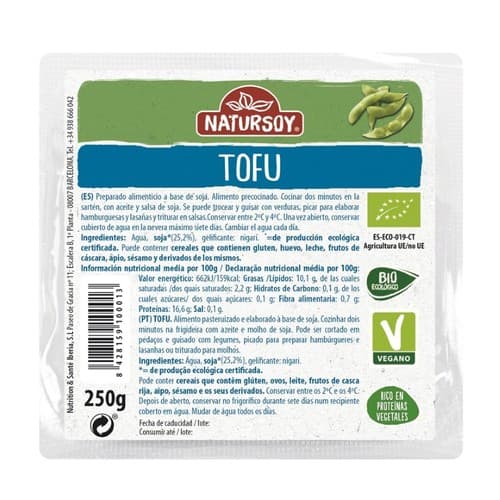 €2.99
€2.99Natursoy Fresh Organic Tofu
NATURSOY · kg · Bonpreu
Good to know
- Also called
- Silken tofu (though technically a subset), Japanese momen-dofu, Japanese nama-dofu, Chinese nan-dofu
- Primary coagulant
- Magnesium chloride (nigari) or calcium sulfate (gypsum), used in minimal amounts
- Protein content
- Approximately 5–7g per 100g serving
- Typical firmness
- Wobbles when shaken; holds its shape with gentle handling only
- Water content
- Roughly 85–90% (higher than firm or extra-firm tofu)
- Primary formats
- Tub or block, submerged in water; also vacuum-sealed packaged versions
- Refrigerated shelf life
- 5–7 days in original packaging; up to 10 days if stored in cold water (change daily)
- Freezer suitability
- Freezes well; texture becomes porous and spongy (ideal for certain stir-fry applications)
Substitutes
- Silken tofu (kinugoshi) — The closest substitute, especially for dressings, desserts, and soups. May be slightly smoother depending on brand.
- Medium-firm tofu — Closer in texture than firm; use when soft tofu is unavailable. Will hold shape better but lacks the custard quality.
- Firm tofu, pressed — Press firmly for 30 minutes; still not as delicate but acceptable for stir-fries and braises. Not suitable for soups or raw applications.
- Egg tofu — Made with egg added to soy milk; has a similar custard-like texture but distinct flavor. Good for savory applications where the egg taste is welcome.
Pairs with
Also called
Silken Tofu · Soft Bean Curd
Appears in these dishes
Related
Egg
The kitchen's everything ingredient — bind, leaven, enrich, or fry
Chicken Breast
Lean, quick-cooking white meat for everyday dinners

Ground Beef
Versatile minced beef for burgers, ragù, tacos, and meatballs
Pork Loin
Lean, tender roasting cut that stays juicy with care
Salmon
Rich, rosy fish that roasts, grills, or cures beautifully

Egg White
Pure protein that whips to airy peaks for meringue and more
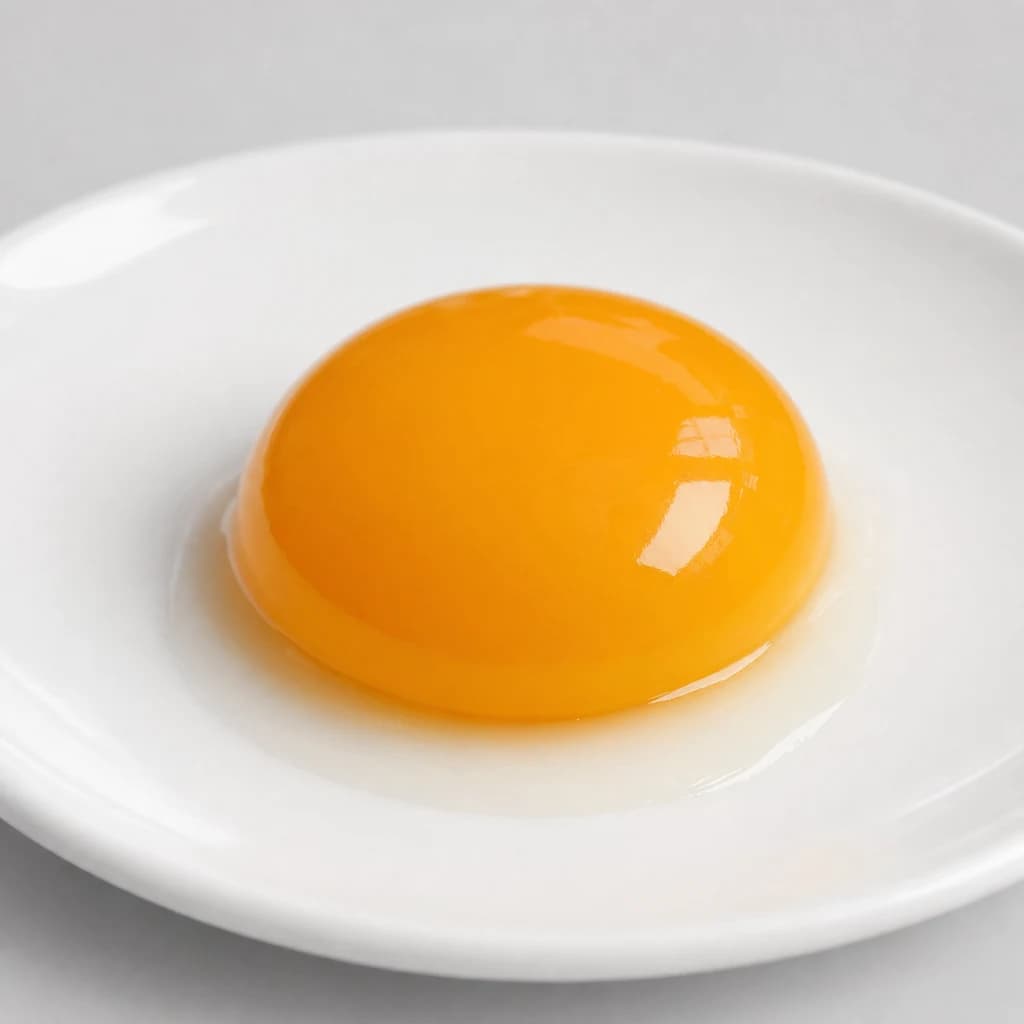
Egg Yolk
Rich, golden yolk for custards, mayonnaise, and pasta

Quail Egg
Tiny, speckled eggs for garnishing and elegant bites