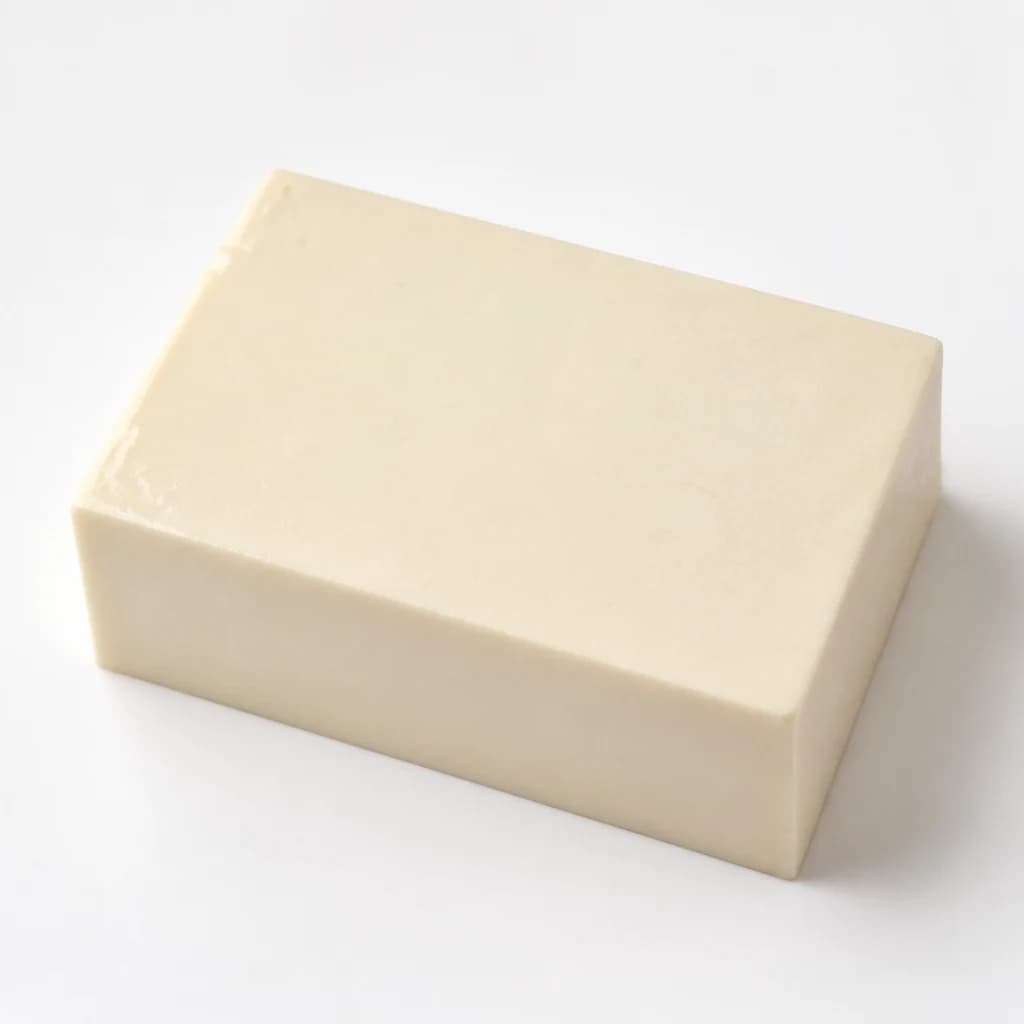
Natural form
Silken tofu block fresh from its water-filled container, showing smooth ivory surface.
Establishes the ingredient's characteristic smooth, pale, custard-like appearance and block form so readers can identify it at a store.
Proteins
Silken Tofu
Soft, custard-like soybean curd — spooned into soups, steamed, or blended into smooth dishes and desserts.
Silken tofu is undrained, unpressed soybean curd with a smooth, custard-like texture so delicate it can be spooned. It is added gently to miso soup and hot pots, steamed with savory toppings, or blended into creamy sauces and desserts. Its fragile texture makes it best for dishes where little or no stirring is required.
Silken tofu is an unpressed soybean curd distinguished by its exceptionally high water content—typically 80–90%—and its smooth, custard-like texture that cuts cleanly yet yields softly at the touch. Unlike regular tofu, the soy milk is coagulated and served without pressing, washing, or shaping the curds, which preserves a fine, silken surface and a delicate, almost creamy interior. This minimal processing also means silken tofu carries a cleaner, more neutral soybean flavor, making it a versatile canvas for both savory and sweet preparations. Its fragility is both its character and its challenge: it holds its shape in gentle liquids but shatters under vigorous boiling or rough handling.
The name "silken" refers to the smooth surface of the unpressed curd, not to any silk-threading process. Japan refined the modern silken tofu method during the Edo period (1603–1868), developing nigari (magnesium chloride extracted from seawater) as the coagulant—a choice that produces a cleaner, sweeter flavor than gypsum-coagulated versions. Chinese douhua follows similar principles but is typically made and consumed the same day, served either with sweet ginger syrup or savory toppings. The tofu you find in aseptic cartons at room temperature or in refrigerated tubs is all based on these traditional methods, though fresh-made versions at Asian markets offer a noticeably different eating experience.
Silken tofu occupies a specific culinary niche: it provides the neutral bulk of tofu while delivering a smoothness that approaches dairy or egg custards, which is why it excels in blended sauces, desserts, and delicate soups. It cannot substitute for regular tofu in applications requiring structural integrity, and regular tofu—even well-drained—cannot replicate its silky result in smooth purées or puddings. Understanding this fundamental difference will guide your choices and prevent frustration in the kitchen.
- Measured in
- g
- Storage
- Fridge
Allergens
Types & varieties
Most delicate; flows slightly when package is tilted; ideal for soups, sauces, and desserts. Standard Japanese grocery store variety.
Denser than soft silken; holds shape better while retaining smooth interior. Good for simmering and pan-frying.
Extra-soft Japanese silken; very high water content; used for delicate soups and sweet applications.
Japanese medium-firm tofu; between silken and regular; holds shape well enough for grilling or deep-frying.
Extremely soft; often served with sweet syrup or savory toppings; typically made fresh at point of sale.
A firmer silken style found in some markets; maintains edges better for braising or frying while staying smooth inside.
Common uses
Tips & pitfalls
- Always drain silken tofu before using: wrap in paper towels or a clean kitchen cloth, set on a plate, and weight with a small plate for 15–30 minutes. For very soft silken, use a light touch or skip weighting.
- Cut with a wet knife to minimize tearing — the smoother the cut, the better the tofu holds in soups and braises.
- Do not boil vigorously after adding silken tofu; a hard boil will shatter it. Maintain a gentle simmer or serve cold.
- For crispy fried silken tofu, use firm silken only, pat extremely dry, and fry in a heavy pan with ¼ inch of oil at 350°F (175°C) for 2–3 minutes per side.
- When blending into sauces, blend alone first until completely smooth before adding other ingredients for the best texture.
- Submerge cut tofu in cold water immediately if not cooking right away — this prevents the surface from drying and developing off-flavors.
- Store silken tofu submerged in fresh water in the refrigerator; change the water daily to extend shelf life and maintain neutral flavor.
- The most common mistake is substituting regular pressed tofu for silken in smooth applications — the result will be grainy and dense rather than creamy.
Nutrition
Energy
393 kJ · per 100 g
Where the calories come from
Protein
3.5g
7% DV
Carbs
16g
6% DV
Fat
1.8g
2% DV
Fiber
0.2g
1% DV
Sugars
1.2g
of which
Sodium
35mg
2% DV
Source · USDA FoodData Central · approx. Tofu yogurt
View on FDC →In the shops
Matched grocery products
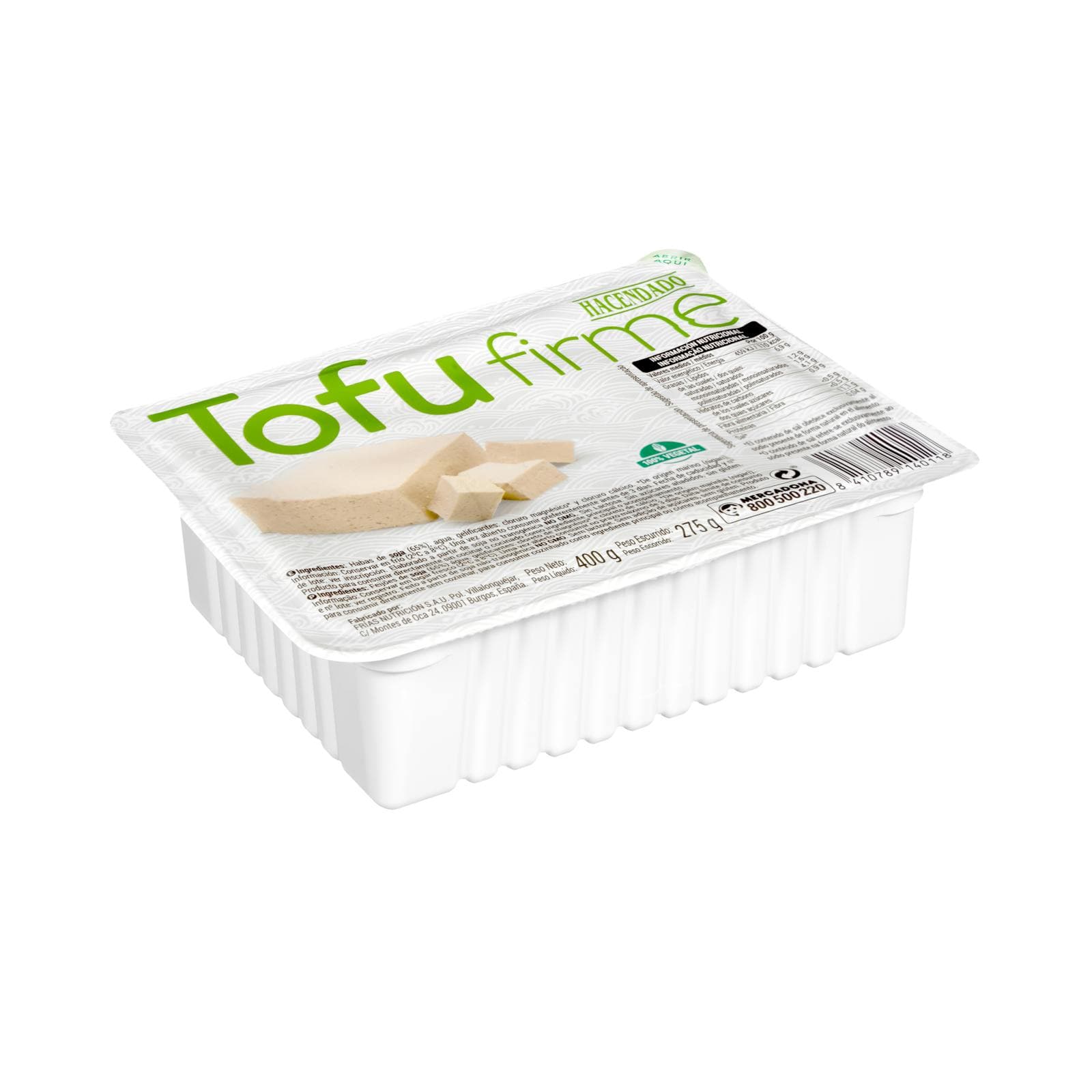 €1.90
€1.90Firm Tofu
Hacendado · 400 g · Mercadona
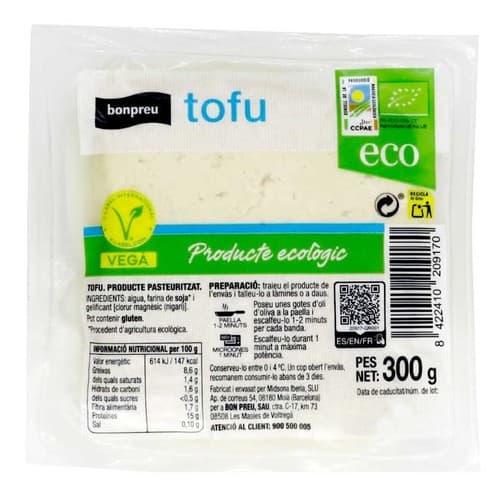 €2.45
€2.45Bonpreu Organic Tofu
BONPREU · kg · Bonpreu
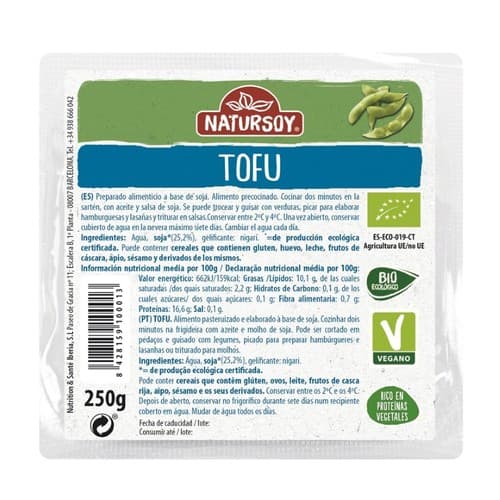 €2.99
€2.99Natursoy Fresh Organic Tofu
NATURSOY · kg · Bonpreu
Good to know
- Also called
- Kinugoshi tofu (Japan), douhua (China), soft tofu, Japanese tofu
- Coagulant
- Nigari (magnesium chloride) or gypsum (calcium sulfate) — the type affects texture and flavor
- Water content
- Approximately 80–90%, higher than regular tofu due to unpressed processing
- Protein
- About 5–6 g per 100 g serving
- Origin
- Japan, Edo period (1603–1868) — the nigari-coagulation method was developed there
- Texture
- Custard-like, smooth, cuts cleanly with a knife; holds its shape in broth but breaks easily under pressure
- Packaging
- Aseptic cartons (shelf-stable until opened) or tubs in the refrigerated section
- Refrigerated shelf life
- 5–7 days after opening, stored submerged in fresh water (change daily)
- Dietary notes
- Gluten-free, dairy-free, vegan, low in saturated fat, high in isoflavones
Substitutes
- Soft regular tofu (blended) — Drain and blend firm regular tofu with water until smooth — closest texture match; use 1:1 but expect slightly less silky result.
- Greek yogurt or labneh — Similar creamy tang for cold applications like sauces and dips; not suitable for cooking as it breaks under heat.
- Ricotta cheese — Comparable smooth-creamy texture for savory applications; flavor is more pronounced and not dairy-free.
- Cooked polenta (fine grind) — Similar custard-like consistency for desserts; flavor profile differs significantly.
- Coconut cream — Good richness match for blended dessert applications; adds coconut flavor and does not hold shape.
Pairs with
Also called
Silken Tofu (嫩豆腐) · Soft Tofu
Appears in these dishes
Related
Egg
The kitchen's everything ingredient — bind, leaven, enrich, or fry
Chicken Breast
Lean, quick-cooking white meat for everyday dinners

Ground Beef
Versatile minced beef for burgers, ragù, tacos, and meatballs
Pork Loin
Lean, tender roasting cut that stays juicy with care
Salmon
Rich, rosy fish that roasts, grills, or cures beautifully

Egg White
Pure protein that whips to airy peaks for meringue and more
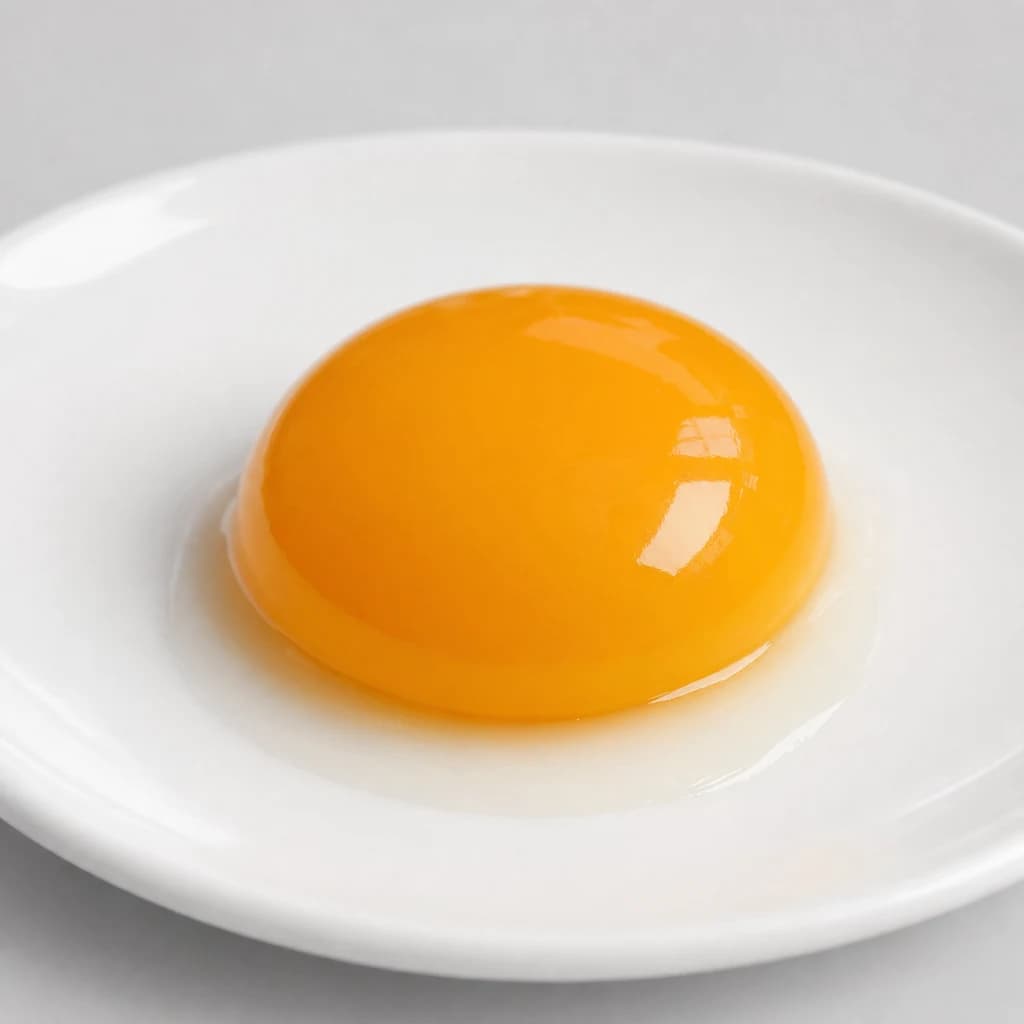
Egg Yolk
Rich, golden yolk for custards, mayonnaise, and pasta

Quail Egg
Tiny, speckled eggs for garnishing and elegant bites