Spices
Cascabel Chile
Round, rattling Mexican dried chile with mild heat and a nutty, smoky-woody flavor. Toast and blend into table salsas and adobos; its earthiness deepens rather than scorches.
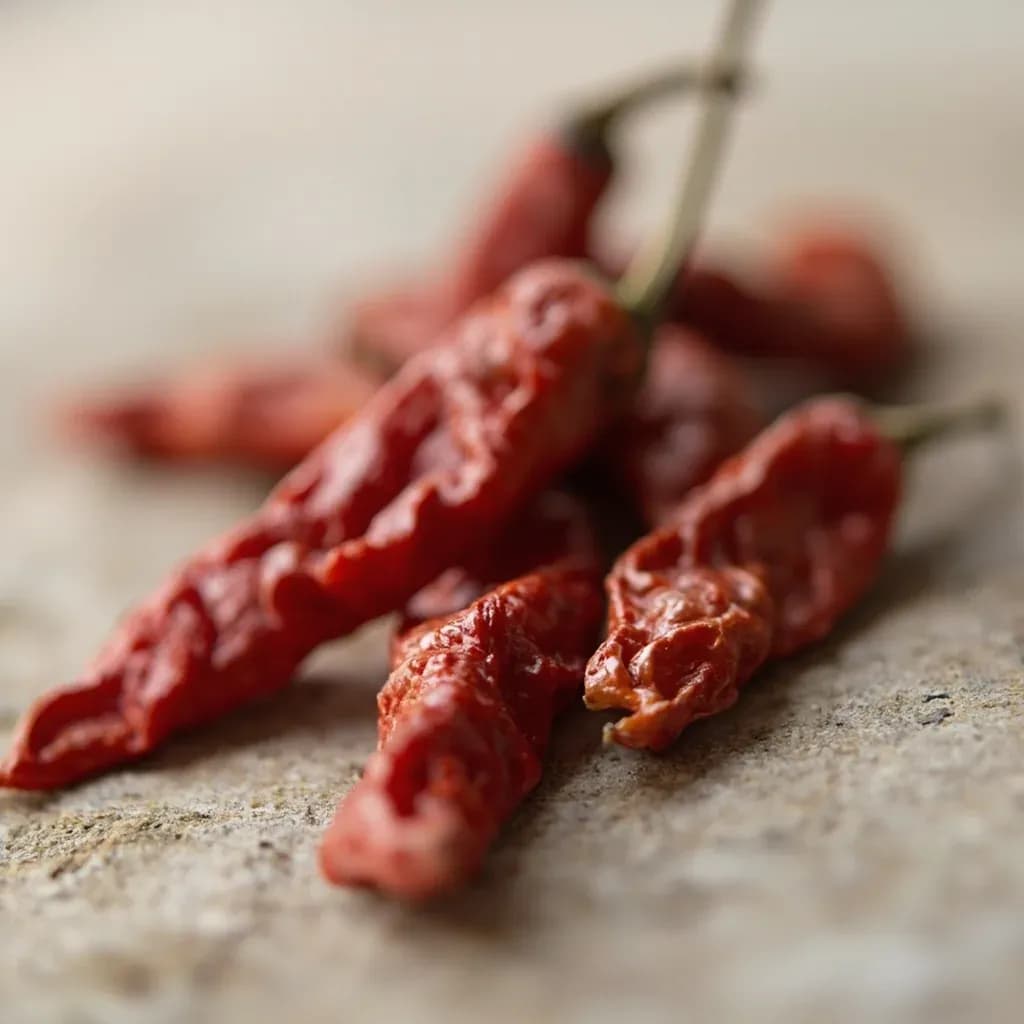
Cascabel is the dried form of a small, almost perfectly round Mexican chile (Capsicum annuum), known fresh as guajón or bola. The name — Spanish for "little bell" or "rattle" — comes from the loose seeds that shift inside the leathery, mahogany-colored pod when it's shaken. In cooking, it acts as a backbone chile: it rarely headlines a dish, but it gives salsas, adobos, moles, and soups a quiet, smoky, woody depth and a deep red-brown color without much heat. At roughly 2,500–8,000 Scoville units, it sits in the mild-to-medium-low range, so a cook can use several pods in a sauce without the dish becoming punishingly hot. Its flavor is nutty, tannic, and earthy, with notes of dried tobacco and faint woodsmoke — closer to toasted nuts and forest floor than to fruit or fire. That profile makes it especially valuable in long-cooked sauces, where the chile's tannins and aromatics have time to round out, and in table salsas where its color and bass-note flavor carry the dish. The defining practical test: cascabel is round and small, guajillo is long and tapered.
- Measured in
- piece
- Storage
- Store In An Airtight Container In A Cool, Dark Place
Find it in
Suits
Types & varieties
The classic round, mahogany pod found in most Mexican markets
Smaller, slightly more pungent variant common in Jalisco
Larger, plumper pod with milder heat and a sweeter edge
Regional designation prized for thinner skin and a cleaner nutty flavor
Toasting and Rehydrating Cascabel
Toasting coaxes cascabel's nutty, smoky notes to the surface; undertoasted pods taste dusty and vegetal, overtoasted ones turn acrid and bitter. Heat a dry comal or heavy skillet over medium. Lay 3–4 pods flat, press gently with a spatula so the skin makes full contact, and hold them there for 10–15 seconds per side. You'll smell them bloom — a toasted-nut, woodsmoke aroma — and the skin will feel slightly oily. Don't walk away: they scorch in seconds. Transfer toasted pods to a bowl and cover with water just off the boil. Soak 15–20 minutes, until the flesh is pliable enough to bend without cracking. Drain, reserving the soaking liquid, which carries real flavor and color. Slit the pods lengthwise and scrape out seeds and veins for a milder, cleaner sauce, or leave some in for body and a heat bump.
Cascabel vs. Guajillo
These two chiles are the most commonly confused in Mexican cooking because they share a similar mahogany-red color and sit in roughly the same Scoville range. The quick test is shape: cascabel is round, almost spherical, 2–3 cm across; guajillo is long and tapered, about 10–15 cm, with a pointed tip. Flavor-wise, cascabel is nuttier, smokier, and more tannic, while guajillo leans tangier and more berry-like. A 1:1 substitution works, but the resulting sauce will be brighter and less woodsy. In complex moles, the two are often used together for that reason — guajillo for fruit and color, cascabel for smoke and gravity.
Building a Cascabel Adobo
A classic cascabel adobo starts with 6–8 toasted and rehydrated pods blended with 4–6 garlic cloves, a small white onion (roughly chopped and briefly seared), 1 tsp Mexican oregano, ½ tsp toasted ground cumin, 1 tbsp apple cider vinegar, and enough of the reserved chile soaking liquid to make a thick, pourable purée. Salt to taste. This base marinades pork shoulder, chicken thighs, or beef short ribs for at least 4 hours, ideally overnight; it also works as a finishing sauce for grilled meats or as the base for enfrijoladas. A pinch of sugar or a final squeeze of lime balances the tannic, dusty finish.
Common uses
Tips & pitfalls
- Toast in a dry comal or skillet over medium heat for only 10–15 seconds per side — they scorch quickly and turn acrid.
- Press the pod flat with a spatula during toasting so it makes full contact and toasts evenly.
- Slit open and shake out seeds and veins if you want a milder, cleaner sauce; keep some seeds if you want more heat and viscosity.
- Rehydrate in hot (not boiling) water so the flesh softens without leaching color.
- Reserve the soaking liquid — it carries real flavor and body for sauces.
- Buy pods that are pliable and leathery, not brittle or cracked; brittleness means age and lost aromatics.
- Store whole pods, never pre-ground; grind only what you need for the moment.
- In moles and complex sauces, pair cascabel with a fruitier chile (guajillo or pasilla) — cascabel alone can read too earthy.
- A pinch of sugar or a splash of vinegar at the end of cooking brightens cascabel's dusty, tannic finish.
Nutrition
Nutrition
No USDA FoodData Central match for Cascabel Chile yet. We surface a per-100 g profile once a generic whole-food entry is matched and verified.
In the shops
Matched grocery products
No matched grocery products for Cascabel Chile yet.
Good to know
- Species
- Capsicum annuum
- Heat
- Approximately 2,500–8,000 SHU (mild to medium-low)
- Origin
- Central Mexico — Jalisco, Aguascalientes, Zacatecas, Guanajuato
- Fresh name
- Guajón or bola when fresh; "cascabel" refers only to the dried form
- Size & color
- Round pod 2–3 cm across, deep red-brown to mahogany, slightly translucent when held to light
- Rehydration
- 15–20 minutes in hot (just-below-boiling) water
- Typical ratio
- 3–4 pods per 2 cups of finished salsa or sauce
- Storage
- Whole pods in an airtight container, cool and dark, 6–12 months; ground powder loses potency in weeks
Substitutes
- Guajillo — Closest substitute — similar heat and red color; slightly more tangy and berry-like, less smoky. Use 1:1.
- Pasilla — Deeper, raisiny, slightly more bitter; works in moles and braises. Use slightly less, as it can dominate.
- Mulato — Sweeter and smokier than cascabel; best in mole poblano where its raisin-chocolate notes sing.
- New Mexico / Anaheim — Milder, brighter, less complex — fine in a pinch for stews; won't replicate the woody depth.
- Morita chipotle — Use only when you specifically want more smoke and a heat bump; very different flavor profile.
- Guajillo + smoked paprika — Best emergency combo — guajillo for fruit and color, smoked paprika to fake the earthy smoke.
Pairs with
Also called
chile cascabel · rattle chile · chile bola