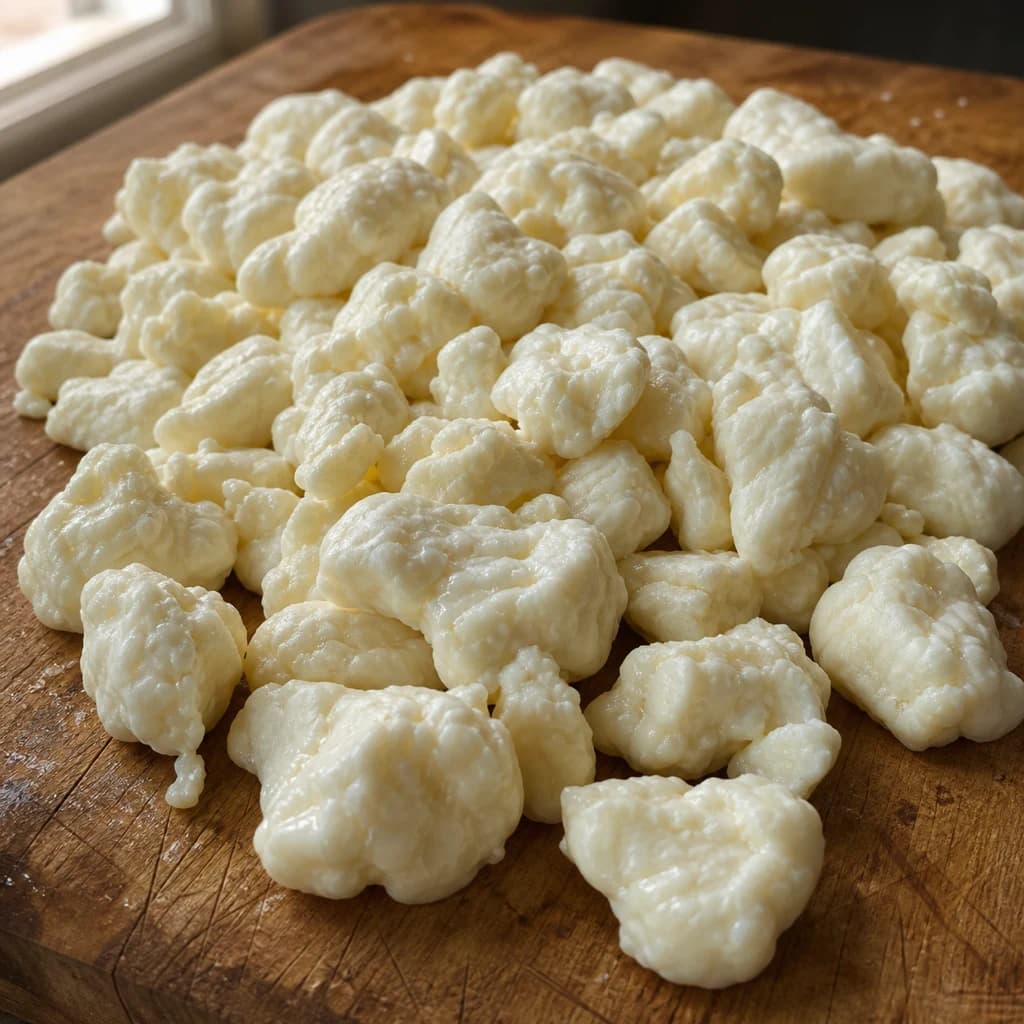
Natural form
Fresh cheese curds piled loosely, showing their irregular lumpy shape and pale yellow color.
Shows the reader exactly what raw cheese curds look and feel like before any preparation.
Dairy & Eggs
Cheese Curds
Fresh, springy young cheddar pieces that squeak when bitten; the base of poutine.
Cheese curds are the fresh, unaged pieces of curdled milk produced early in cheddar-making, before pressing into blocks. They are mild, salty, and springy with a distinctive squeak against the teeth when very fresh, and are eaten by the handful, battered and fried, or piled with gravy in poutine. Their squeak fades within a day or two, so they are best eaten fresh.
Cheese curds represent the earliest stage of cheddar production—young, fresh cheese that has been cooked and pressed but not aged or cheddared. This minimal processing preserves a high moisture content (76-80%) and a mild, buttery, slightly tangy flavor profile entirely unlike the sharp, dense character of aged cheddar. The curds are cut into small irregular pieces ranging from pea-sized to walnut-sized, giving them a granular, springy texture distinct from any other cheese. The defining characteristic is the squeak: when you bite into a fresh curd and chew, the surface momentarily bonds to tooth enamel before releasing, producing a distinctive sound that indicates proper moisture and protein structure. This squeak fades within days of production as the curd loses moisture through respiration and the proteins tighten.
Freshness is paramount. Within 48 hours of opening, quality deteriorates noticeably; within 3-5 days of production, the squeak begins to disappear entirely. This perishability is why cheese curds are traditionally consumed close to their origin, and why finding truly fresh curds outside Quebec or Wisconsin requires sourcing from suppliers with rapid inventory turnover. The pH of fresh curds (5.1-5.4) contributes to their mildness; as they age and pH drops further, flavor intensifies but the prized squeaky texture vanishes.
In cooking, their high moisture content makes them exceptional melters—fresher curds melt fastest, while older curds (lower moisture) hold their shape better in applications requiring texture retention. They contribute richness without dominating dishes, making them versatile across sweet and savory preparations. In Quebec, cheese curds carry cultural significance that extends beyond their culinary role, and an Indication Géographique Protégée (IGP) application seeks to restrict the name to curds produced in the province under traditional methods—reflecting their status as a regional specialty comparable to Champagne or Roquefort.
- Measured in
- g
- Storage
- Fridge
Allergens
Types & varieties
Traditional uncolored curds from Quebec; often made with raw or lightly pasteurized milk; strict appellation rules under Quebec's IGP certification system
Colored with annatto; same flavor profile as white; the standard variety in Ontario and most of the United States
Jalapeño, garlic and herb, bacon, pizza-style; flavoring mixed into curd before packaging; best used within a few days of purchase
Made from 2% milk; firmer texture, less rich flavor, and noticeably inferior melt quality compared to full-fat varieties
From certified organic milk; same characteristics as conventional curds; often fresher at point of sale due to smaller batch production
Common uses
Tips & pitfalls
- Test freshness by pressing a curd between thumb and forefinger: a fresh curd springs back, an old one crumbles or feels dense
- The squeak is a legitimate quality indicator; it results from intact protein strands in the moist curd binding momentarily to tooth enamel
- Purchase from suppliers with high turnover and ask when the batch was made—freshness is your most important selection criterion
- For poutine, add curds in stages over hot gravy: this way they begin melting but stay partially intact, giving both texture and creaminess
- Serve curds at cool room temperature (65-70°F) for optimal snacking; refrigeration firms them up and temporarily mutes the squeak
- Never freeze cheese curds; ice crystals rupture the cell structure and produce a mealy, dry, completely unsqueaky texture that cannot be revived
- If curds have lost their squeak, a brief microwave (10-15 seconds) can briefly restore some texture, but this signals they are past their prime
- Avoid packages with excessive liquid whey pooling at the bottom; some whey is normal, but excess indicates age or temperature abuse during storage
- For melting applications, use fresher curds (higher moisture) for faster, smoother melting; for dishes requiring texture retention, use slightly older curds
- Store in original packaging or transfer to an airtight container; cheese curds readily absorb odors from onions, garlic, and strong cheeses
Nutrition
Energy
410 kJ · per 100 g
Where the calories come from
Protein
11.1g
22% DV
Carbs
3.4g
1% DV
Fat
4.3g
6% DV
Fiber
0g
0% DV
Sugars
2.7g
of which
Sodium
315mg
14% DV
Source · USDA FoodData Central · Cheese, cottage, creamed, large or small curd
View on FDC →In the shops
Matched grocery products
No matched grocery products for Cheese Curds yet.
Good to know
- Made From
- Cow's milk, typically pasteurized; raw milk curds are a specialty product
- Moisture Content
- 76-80%; significantly higher than aged cheddar, which accounts for their springy texture and rapid melting
- Fat Content
- 20-26% (regular); 10-13% (part-skim varieties)
- Color
- Natural: creamy white to pale yellow; yellow varieties colored with annatto have identical flavor
- Flavor
- Mild, slightly tangy, buttery; less sharp than aged cheddar; no bitterness when fresh
- Texture
- Springy, rubbery, granular; produces the characteristic squeak on teeth when fresh
- Shelf Life
- Refrigerated: 3-5 days optimal; up to 10 days sealed; degrades rapidly after opening
- Storage
- 36-40°F (2-4°C) in original packaging or airtight container; do not freeze
Substitutes
- Fresh Mozzarella (sold as balls or in brine) — Similar moisture and mild flavor; does not squeak but melts smoothly; best substitute for applications where texture difference is acceptable
- Fresh Farmer's Cheese — Slightly tangier with a similar crumbly-springy texture; may not melt as smoothly; works well in cooked dishes
- Paneer (fresh Indian cheese) — Comparable moisture and mild flavor; firmer texture that holds shape in hot dishes; excellent for curried applications but lacks the squeak
- Mild Cheddar (shredded) — Acceptable in cooked applications like gratins and casseroles where the squeaky texture is not essential; for poutine specifically, melt quality is acceptable but authenticity is lost
- Pot Cheese or Farmer's Cheese — Similar production method to cheese curds; slightly drier and more acidic; use in the same applications with adjusted expectations for texture
Pairs with
Appears in these dishes
Related

Whole Milk
Rich, full-fat milk for drinking, coffee, sauces, and baking
Butter
Golden fat for searing, baking, and finishing a sauce
Yogurt
Tangy, creamy culture for breakfast, sauces, and marinades
Cheddar Cheese
Sharp, melty cheese for sandwiches, gratins, and grating
Skim Milk
Fat-free milk for lighter drinking, coffee, and cooking
Heavy Cream
Rich cream that whips, enriches sauces, and sets ganache

Sour Cream
Tangy, thick cream for dolloping, baking, and dips
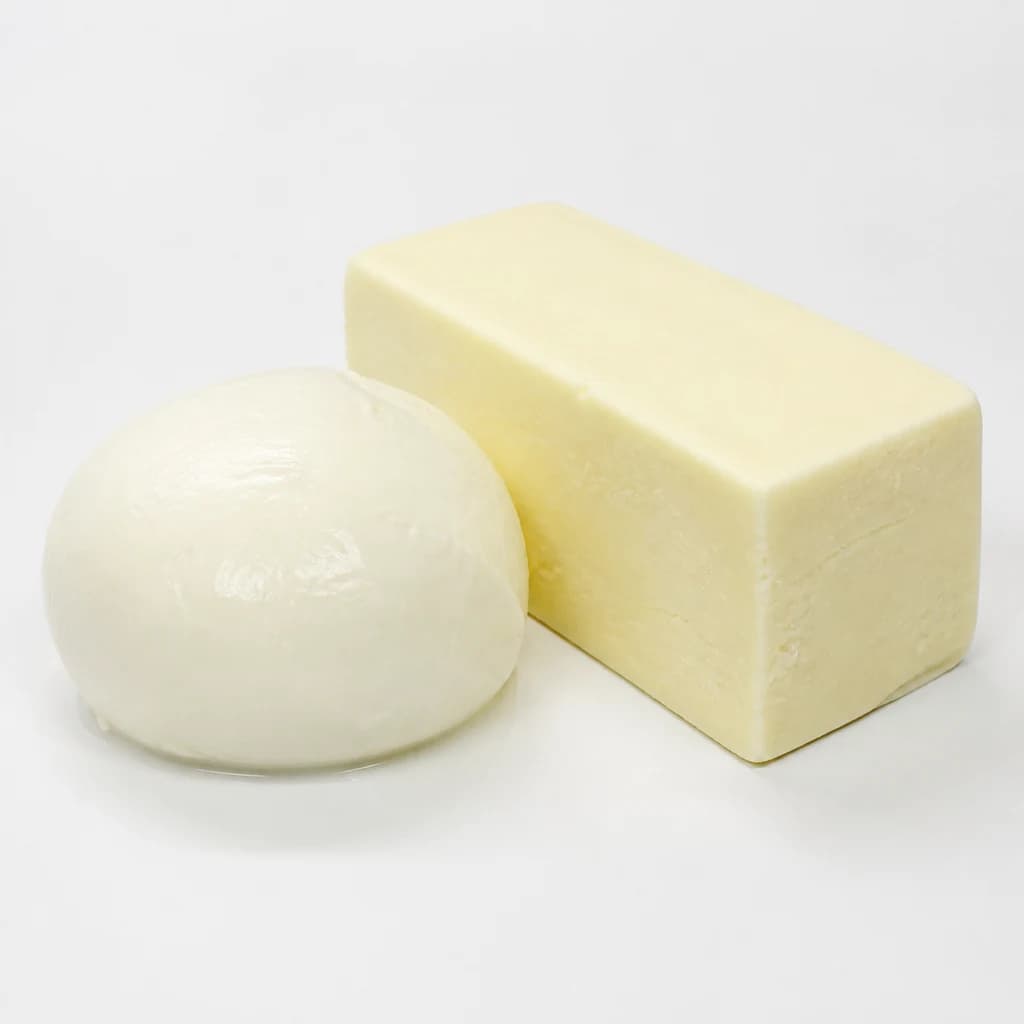
Mozzarella
Soft, milky cheese that melts into stretchy pizza pulls