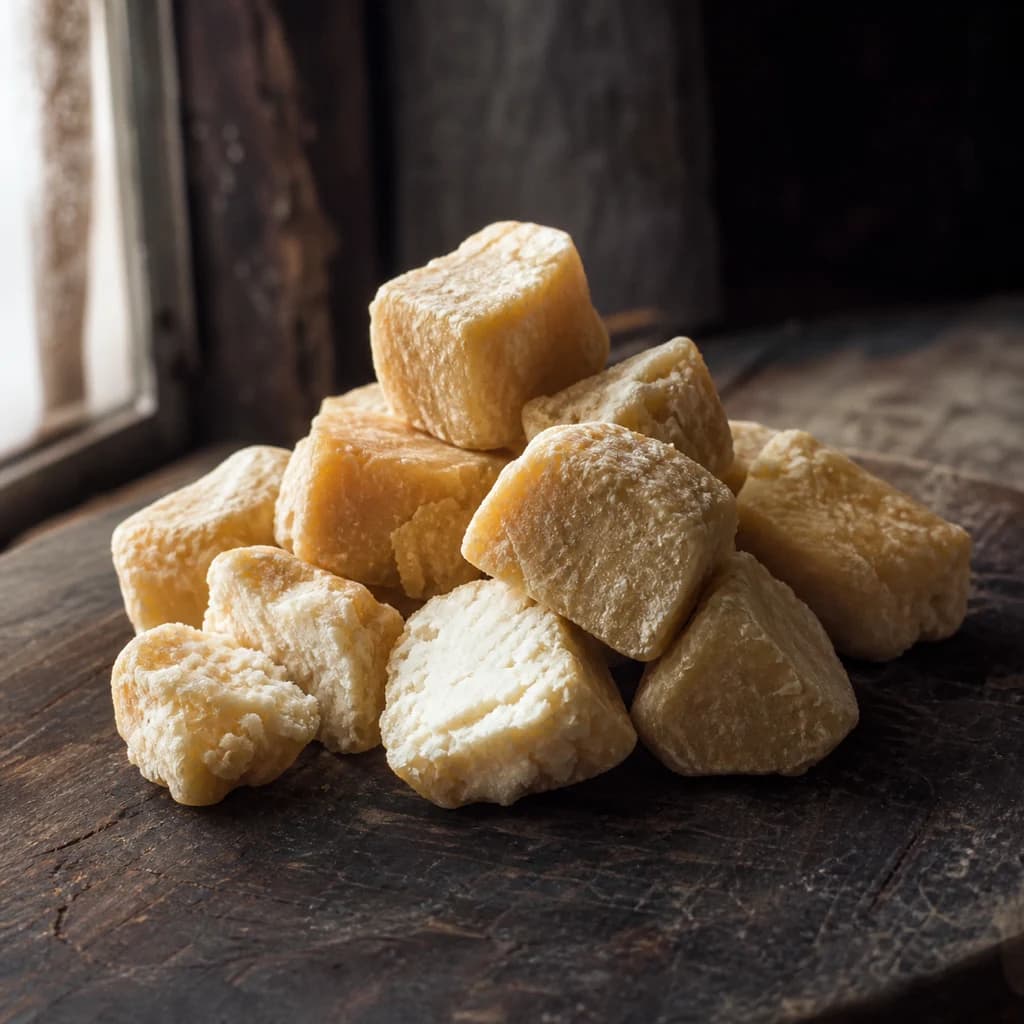
Natural form
Hard chura kampo cubes: ivory-yellow, dense, and rough-surfaced yak cheese chews.
Shows the iconic rock-hard dried form that most readers encounter first, making the subject unmistakable.
Dairy & Eggs
Chura (Dried Yak Cheese)
Tibetan dried yak-milk cheese, made into hard chews or sweet soft versions.
Chura is a Tibetan dried cheese made from yak milk, produced in both a rock-hard chewing form (chura kampo) and a softer, sweeter version (chura loenpa). The hard cubes are slowly softened in the mouth as a long-lasting snack, while soft chura is sweetened and eaten as a treat or added to dishes. It is a key way Himalayan herders preserve surplus milk.
Chura is a traditional Tibetan yak-milk cheese that has been dried for long-term storage, producing a remarkably stable, nutrient-dense food suited to high-altitude herding life. The hard, aged variety—Chura Pag—concentrates yak milk's rich fats and proteins into dense, chewy bricks that can be carried for weeks and rehydrated as needed. The softer Chura Loen is a fresher, lightly pressed version meant for quicker consumption. Unlike Western aged cheeses, Chura's fermentation relies on naturally present microbes rather than defined starter cultures, giving it a distinctive funky, mineral quality that separates it from any familiar cheese in your local grocery. Its intensity demands respect: a little goes an enormous way, and improper preparation—skipping the soak, oversoaking, using too much—will either break your teeth or obliterate your dish.
- Measured in
- g
- Storage
- Pantry
Allergens
Types & varieties
Hard, dry, aged variety; typically sliced thin or broken into pieces; must be soaked before cooking, chewed as a snack, or pounded into powders for finishing
Fresh, softer, slightly pressed variety; milder and more pliable; eaten plain, crumbled into soups and stews, or used as a spread
Why Chura Survives Where Fresh Dairy Cannot
At altitudes above 4,000 meters, fresh dairy spoils within hours. Tibetan herders solved this centuries ago by developing Chura: the drying process removes nearly all moisture, creating a stable food that resists bacterial growth and requires no refrigeration. The concentration effect is dramatic—yak milk is already richer in fat and protein than cow milk, and after months of drying, a small chunk delivers serious calories and nutrition. This is survival food elevated to culinary tradition.
- The high-altitude drying environment provides naturally low humidity, ideal for controlled dehydration
- Traditional production peaks in late summer when yak milk yield is highest
- Some commercial versions produced outside the region differ in texture and flavor from traditional Tibetan product
Common uses
Tips & pitfalls
- Hard Chura requires soaking in hot liquid for 15–30 minutes before adding to soups, otherwise it stays rock-hard and chewy
- Do not oversoak — it should regain some firmness and pleasant chew, not dissolve into mush
- Store hard dried Chura in an airtight container in a cool, dry place; humidity will cause mold or spoilage
- When buying, select evenly colored pieces without dark spots or cracks that indicate age or improper drying
- For the soft variety, smell before using: it should smell tangy but clean, never sour-rotten
- Small amounts go far — Chura is highly concentrated, so start with less than you think you need
- If the hard type is too intense, brief soaking and discarding the first soaking water reduces bitterness
- Authentic traditional Chura is difficult to source outside the Himalayan region; specialty import shops and Tibetan markets are the most reliable sources
Nutrition
Energy
1506 kJ · per 100 g
Where the calories come from
Protein
7.1g
14% DV
Carbs
43.7g
16% DV
Fat
18.3g
23% DV
Fiber
1.2g
4% DV
Sodium
357mg
16% DV
Source · USDA FoodData Central · approx. Sweet rolls, cheese
View on FDC →In the shops
Matched grocery products
No matched grocery products for Chura (Dried Yak Cheese) yet.
Good to know
- Origin
- Tibet and Himalayan regions (Nepal, Bhutan, northern India)
- Primary milk
- Yak milk; occasionally blended with cow or goat milk
- Form
- Hard dried bricks, chunks, or curls (Chura Pag); soft pressed rounds (Chura Loen)
- Flavor
- Hard: intensely savory, funky, mineral, concentrated umami; Soft: mildly tangy, slightly sweet
- Shelf life
- Hard dried: months to years when kept dry; soft fresh: days to weeks refrigerated
- Protein content
- Approximately 20–25% (higher than most fresh cheeses due to moisture loss)
- Typical preparation
- Hard variety is soaked in hot water or broth before use to rehydrate; soft variety is eaten fresh or lightly pressed
Substitutes
- Hard aged feta — Provides salty, tangy, crumbly texture; soak and crumble similarly; less mineral funk but the closest common substitute
- Pecorino Romano — Hard, salty, intense; grate or crumble; not as funky but comparable umami punch for savory applications
- Aged kefir cheese (dried) — Fermented dairy flavor similar in funk and texture; rehydrate before use
- Queso añejo — Hard, dry Mexican cheese; crumbly and savory; works for garnish and textural applications
Pairs with
Also called
Dried Cheese Sweet (Tibetan) · Chhurpi
Related

Whole Milk
Rich, full-fat milk for drinking, coffee, sauces, and baking
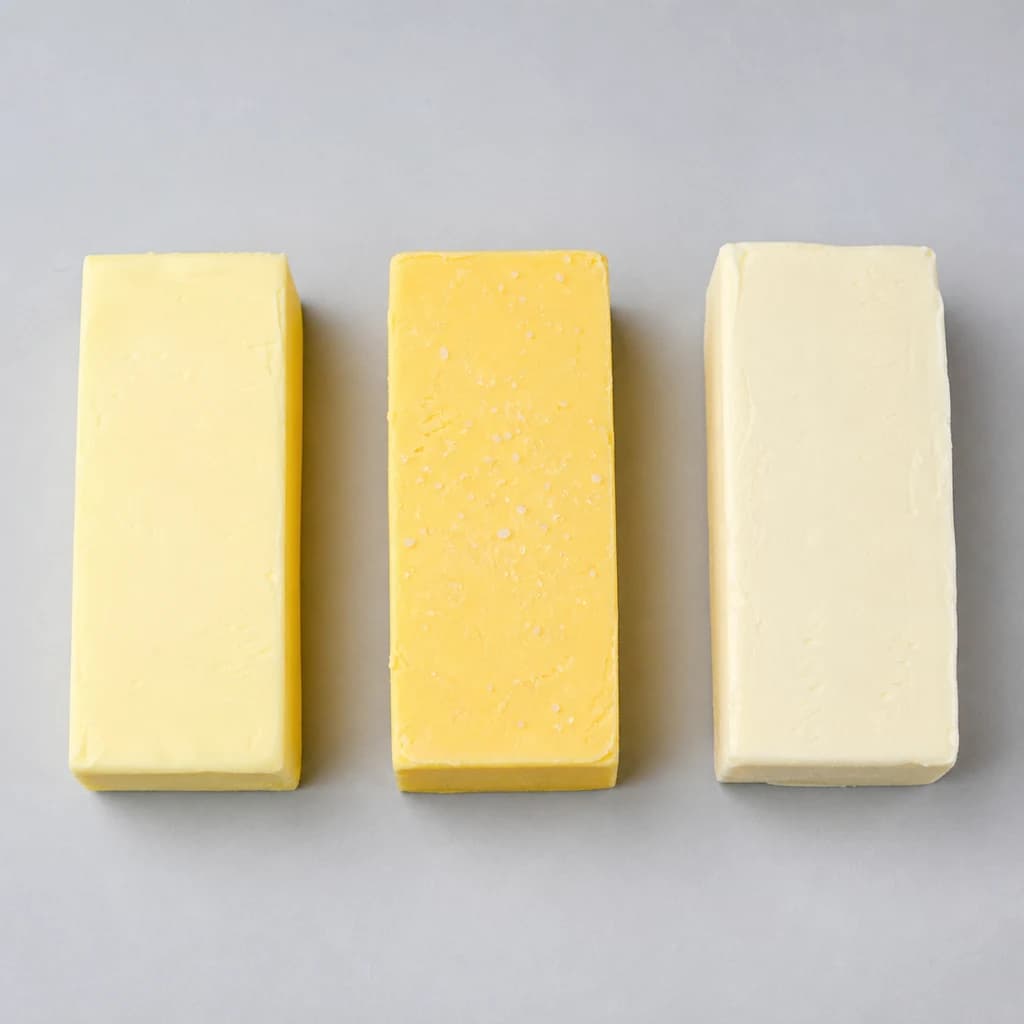
Butter
Golden fat for searing, baking, and finishing a sauce
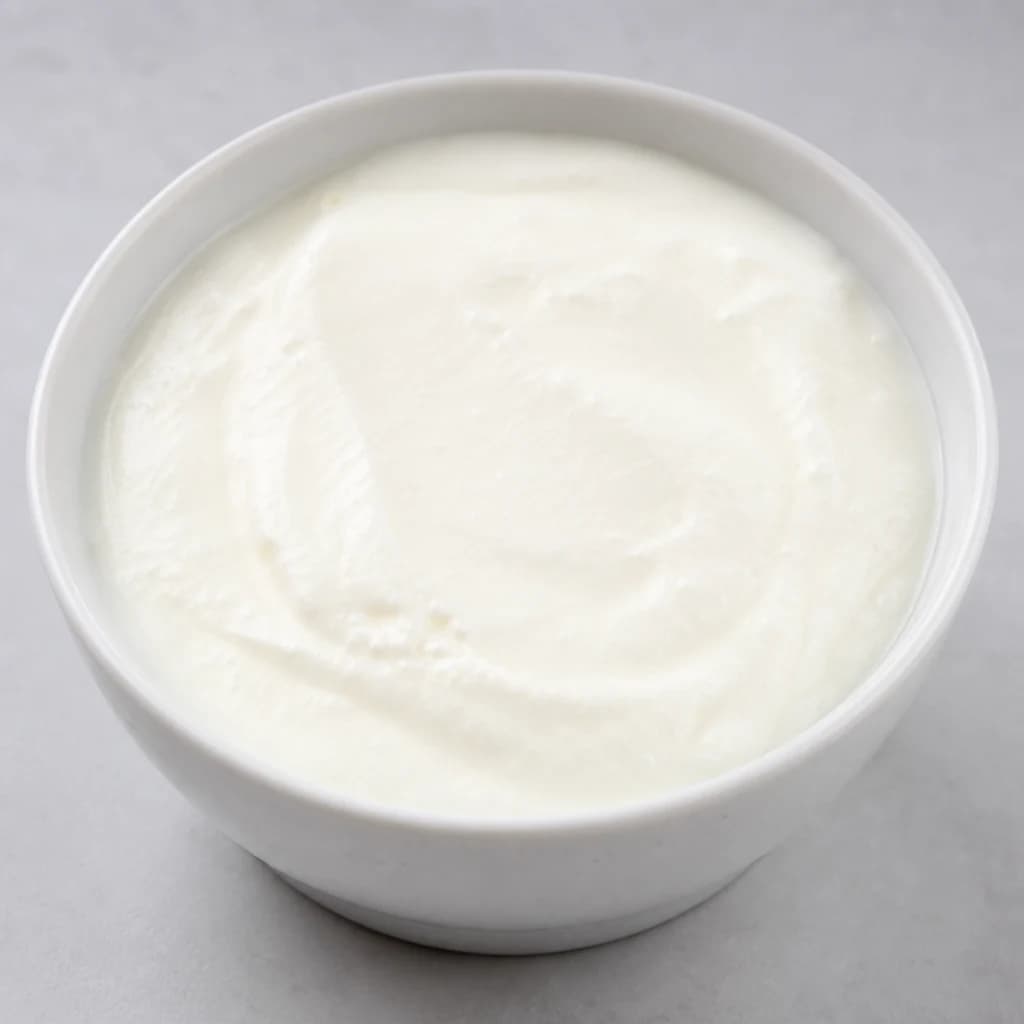
Yogurt
Tangy, creamy culture for breakfast, sauces, and marinades
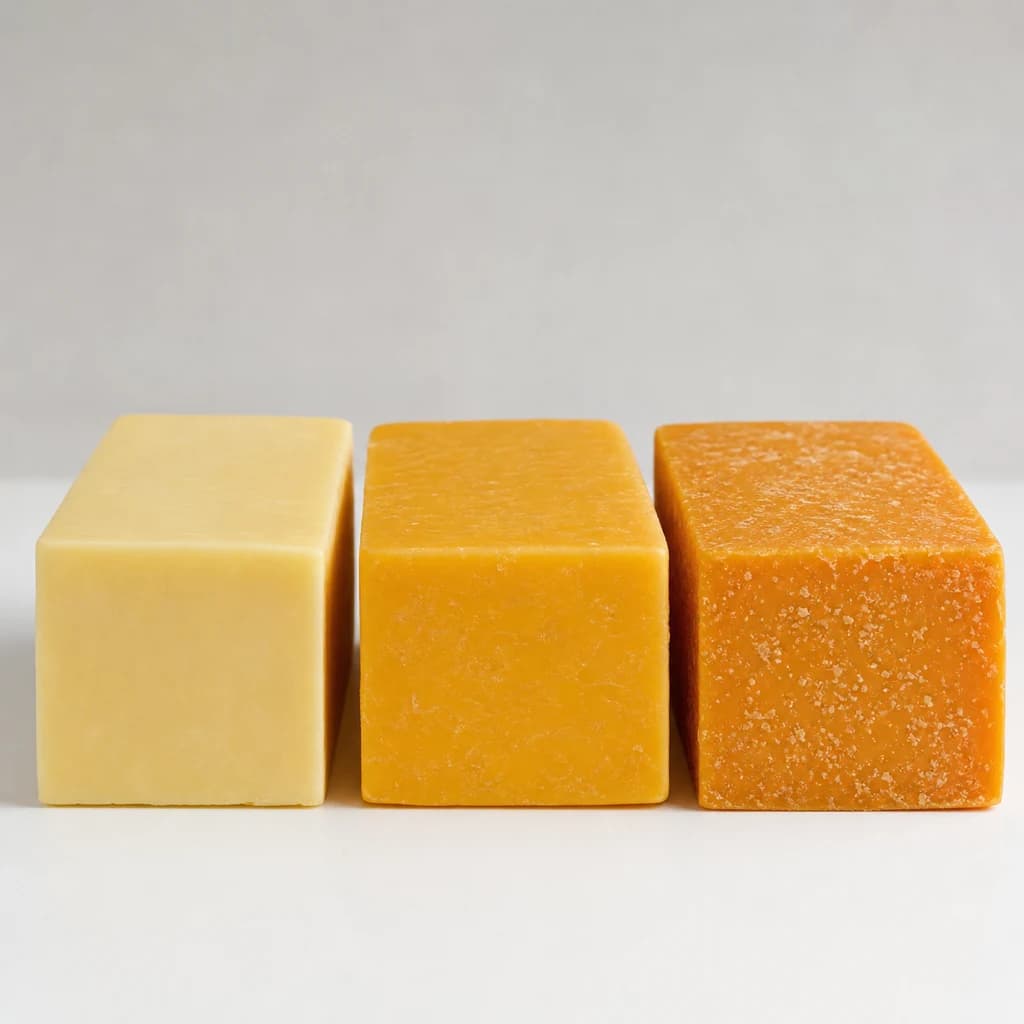
Cheddar Cheese
Sharp, melty cheese for sandwiches, gratins, and grating
Skim Milk
Fat-free milk for lighter drinking, coffee, and cooking
Heavy Cream
Rich cream that whips, enriches sauces, and sets ganache

Sour Cream
Tangy, thick cream for dolloping, baking, and dips
Mozzarella
Soft, milky cheese that melts into stretchy pizza pulls