
Natural form
A wrapped block of cultured butter shows its pale gold color and dense form.
Shows the recognizable shape, color, and wrapped presentation of cultured butter as purchased.
Dairy & Eggs
Cultured Butter
Butter churned from fermented cream for a tangy, deeply buttery flavor; great on bread.
Cultured butter is made by fermenting cream with live cultures before churning, which develops a tangy, complex, more pronounced buttery flavor than sweet-cream butter. It is prized spread on bread, finishing sauces, and baking where its richer taste shines. The fermentation also gives it a slightly higher fat feel and a faint cheese-like aroma.
Cultured butter is made by fermenting cream with specific lactic acid bacteria—primarily Lactococcus lactis and Lactobacillus species—before churning. This controlled fermentation develops diacetyl, acetoin, and short-chain fatty acids that give cultured butter its characteristic tang and complex, buttery depth that sweet cream butter simply cannot match. The process typically takes 12 to 48 hours, during which the cream develops acidity that also slightly lowers the pH of the finished product. This acidity does more than add flavor: it influences how the butter behaves in doughs, helps it brown differently in cooking, and contributes to a creamier, more spreadable texture at cool temperatures compared to sweet cream butter.
The fat content sits at 82–84%, just above the US legal minimum of 80% for butter. This higher fat-to-water ratio means cultured butter carries more fat-soluble flavor compounds and produces crispier baked goods and better browning in pan work. In sauces, the fermented compounds integrate differently, adding a subtle backdrop of acidity that balances richness without requiring lemon juice or vinegar. The color ranges from pale yellow in winter or from grass-fed cows to deep golden in summer, though color has no bearing on flavor quality. Traditionally produced in wooden churns in artisan settings, modern production uses industrial churns, but the fermentation step remains the defining process.
Cultured butter is not merely a fancy version of "European-style" butter, though the terms are often confused. European-style refers primarily to fat content, while cultured specifically indicates the bacterial fermentation of the cream. Many American producers now culture their cream using local dairy, making high-quality cultured butter increasingly accessible. The tanginess is intentional and controlled—it is not age, spoilage, or defect but the deliberate product of selected bacterial cultures working on milk sugars in the cream.
- Measured in
- g
- Storage
- Fridge
Allergens
Types & varieties
From Poitou-Charentes region of France; made from raw or pasteurized cow's milk; tangy, creamy, with hints of hazelnut and grass
Traditional French term for batch-churned butter; indicates method rather than exclusively cultured, but most artisanal Baratte butters are cultured
Widely used in Denmark, Sweden, Norway; pronounced tanginess from extended fermentation; often lightly salted
Produced in Ireland from grass-fed cow cream; cultured; widely available internationally; consistent quality and flavor
American artisan producers culturing local cream; seasonal variations based on pasture; smaller batches, regional availability
Traditional bilona method in regions like Kerala and Tamil Nadu; cultured from fermented cream; traditional base for ghee production
Most common in professional kitchens; same flavor complexity without salt interference, allowing precise control in recipes
Finishing salt often added post-churn; common in Scandinavia and Brittany; salt accelerates flavor degradation so use more quickly than unsalted
Cultured Butter vs. Sweet Cream Butter
The difference lies entirely in the pre-churning fermentation. Sweet cream butter is churned directly from fresh cream with no fermentation step, yielding a neutral, mild dairy flavor. Cultured butter's bacterial fermentation creates organic acids that transform the flavor profile fundamentally. In baking, the two are largely interchangeable at a 1:1 ratio, though cultured butter's tang will integrate into the final product's flavor. In cooking, cultured butter's slightly lower moisture and higher acidity affect browning speed and sauce behavior. For high-heat applications like searing, both perform similarly, but cultured butter's compounds make it particularly exceptional for brown butter, where the fermentation notes concentrate and deepen.
- Cultured butter contains lactic acid; sweet cream butter does not
- Cultured butter browns faster when making beurre noisette—watch carefully
- In laminated doughs (croissants, puff pastry), cultured butter softens more quickly; work cold and fast
- For a quick cultured effect in baking, add 1–2 teaspoons buttermilk per stick of sweet cream butter
Making Cultured Butter at Home
Homemade cultured butter gives you control over fermentation time, salt content, and cream source. The process is straightforward but requires attention to temperature and timing.
- Combine 1 quart heavy cream with 2 tablespoons cultured buttermilk (this provides the bacterial culture)
- Cover loosely and ferment at room temperature (68–72°F) for 12–24 hours until visibly thickened and tangy
- Churn in a stand mixer with the whisk attachment, or in a hand churn, until butter grains separate from buttermilk (about 15–20 minutes in a stand mixer)
- Strain through cheesecloth, reserving buttermilk for baking or drinking
- Work the butter with cold water, squeezing and pouring repeatedly until water runs clear (removes remaining buttermilk, extends shelf life)
- Season with salt to taste (1–2% by weight for salted butter) or leave plain
- Form into desired shape, wrap in parchment or beeswax wrap, refrigerate
Common uses
Tips & pitfalls
- Bring cultured butter to room temperature 30–45 minutes before serving or baking; cold butter loses aromatic compounds and feels waxy on bread
- For baking, cultured butter substitutes 1:1 for sweet cream butter; the tang integrates into the final flavor profile without adjustment
- When making brown butter (beurre noisette), watch carefully—cultured butter's lower moisture means it can go from perfectly browned to burnt faster than sweet cream butter
- For laminated doughs like croissants and puff pastry, keep cultured butter cold and work quickly; the bacterial culture softens it more rapidly than sweet cream butter
- To make compound butter, fold finely chopped herbs, citrus zest, shallot, or garlic into room-temperature cultured butter before refrigerating
- Freeze portions wrapped in parchment paper logs for convenient single-serving slices that thaw in minutes on the counter
- When clarifying for ghee, cultured butter produces a more aromatic finished product—the fermentation compounds concentrate beautifully during clarification
- For the best creaming performance in cookies and cakes, bring cultured butter to the plastic stage—soft enough to yield when pressed but still cool enough to hold its shape firmly
Nutrition
Energy
3766 kJ · per 100 g
Where the calories come from
Protein
0g
0% DV
Carbs
0g
0% DV
Fat
100g
128% DV
Fiber
0g
0% DV
Sugars
0g
of which
Sodium
0mg
0% DV
Source · USDA FoodData Central · approx. Butter, Clarified butter (ghee)
View on FDC →In the shops
Matched grocery products
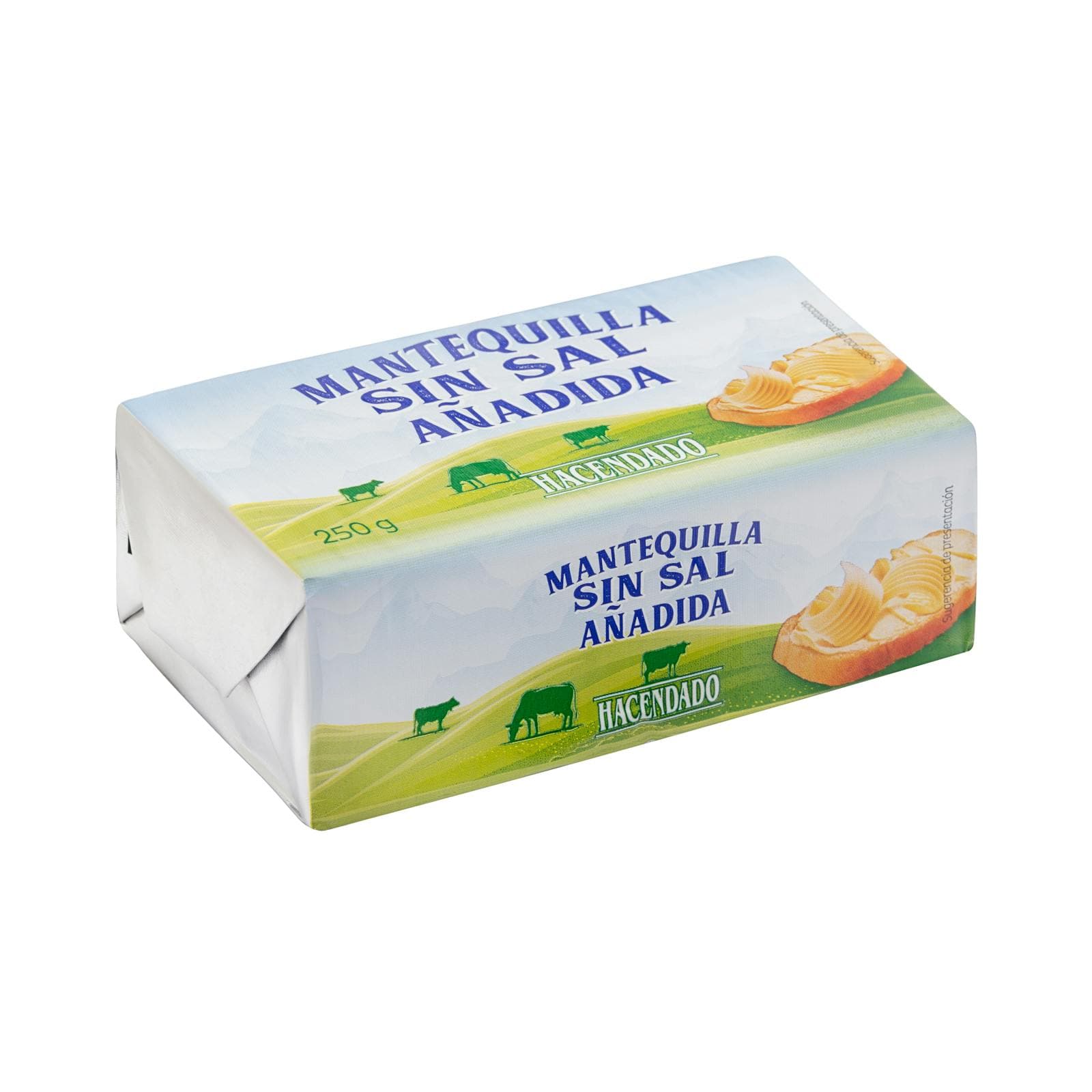 €2.10
€2.10Unsalted Butter
Hacendado · 250 g · Mercadona
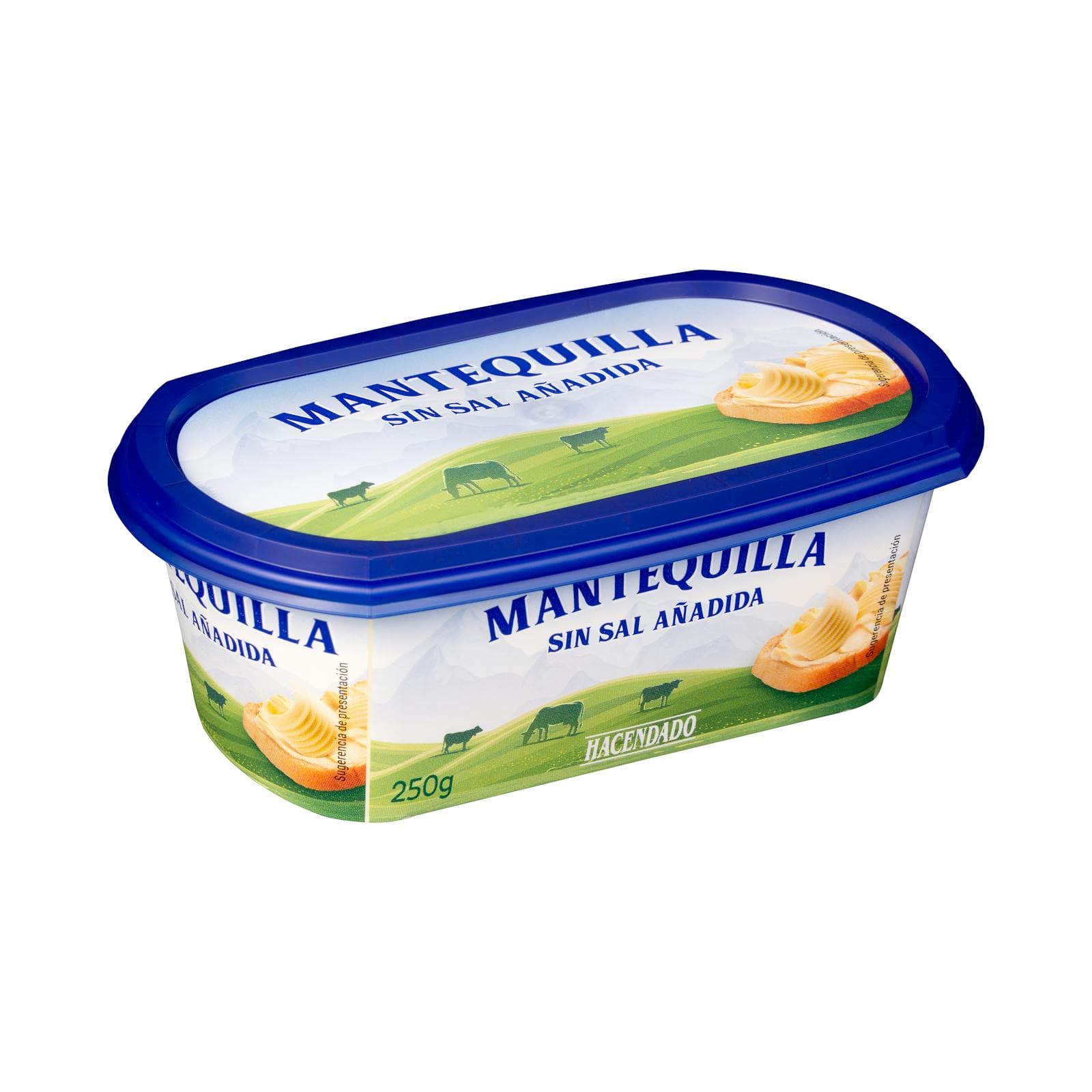 €2.45
€2.45Unsalted Butter
Hacendado · 250 g · Mercadona
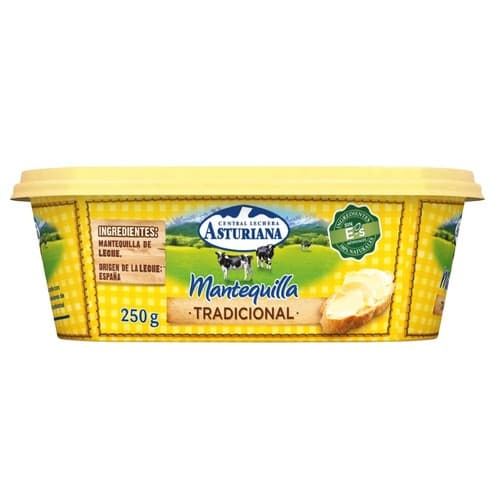 €3.69
€3.69Unsalted Butter
ASTURIANA · kg · Bonpreu
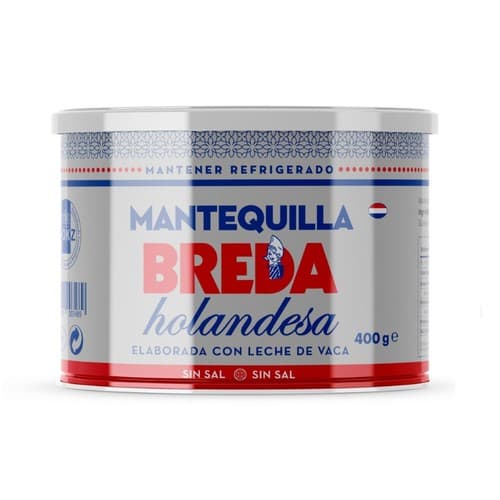 €8.90
€8.90BREDA Unsalted Butter
BREDA · kg · Bonpreu
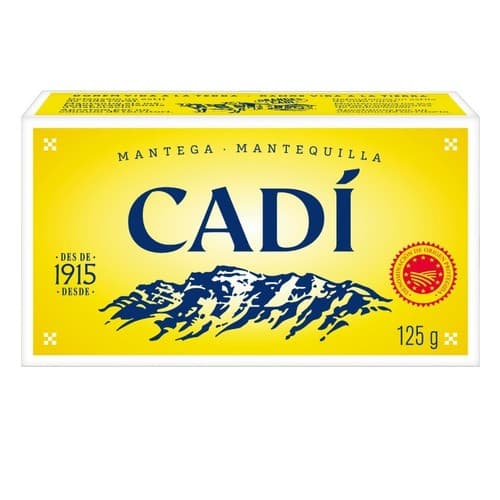 €2.39
€2.39Cadí Butter
CADÍ · kg · Bonpreu
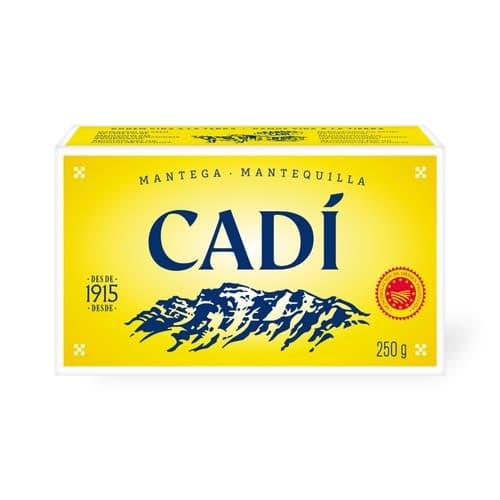 €3.99
€3.99Cadí Butter
CADÍ · kg · Bonpreu
Good to know
- Base ingredient
- Sweet cream inoculated with lactic acid bacterial cultures (Lactococcus lactis, Lactobacillus species)
- Fat content
- 82–84% (US legal minimum for butter is 80%)
- Fermentation time
- 12–48 hours before churning
- Key flavor compounds
- Diacetyl, acetoin, and short-chain fatty acids from bacterial metabolism
- Shelf life
- Refrigerated: 2–4 weeks; frozen: up to 6 months (quality declines after 3 months)
- Color
- Pale yellow (winter or conventional feed) to deep golden (summer or grass-fed)
- Origin
- Northern Europe (France, Scandinavia); traditional also in Indian dairy regions like Kerala and Tamil Nadu
- Regional protections
- French AOC/PDO cultured butters (Beurre de Charentes, Beurre de Maine) tied to specific regional milk sources
Substitutes
- Sweet cream unsalted butter — Most direct substitute; lacks tang but performs identically in cooking and baking. Add 1–2 teaspoons buttermilk per stick if seeking slight acidity.
- European-style butter (unsalted) — Many European-style butters are cultured but milder; interchangeable in most applications at 1:1 ratio.
- Homemade cultured butter — Whip 1 quart heavy cream with 2 tablespoons cultured buttermilk; ferment 12–24 hours at room temperature, then churn in a stand mixer until butter separates from buttermilk. Salt to taste before storing.
- High-fat cream cheese — For spreading and baking where tang is desired; lacks butter's fat profile and mouthfeel; not suitable for sauces or high-heat applications.
Pairs with
Also called
European-Style Butter
Related

Whole Milk
Rich, full-fat milk for drinking, coffee, sauces, and baking
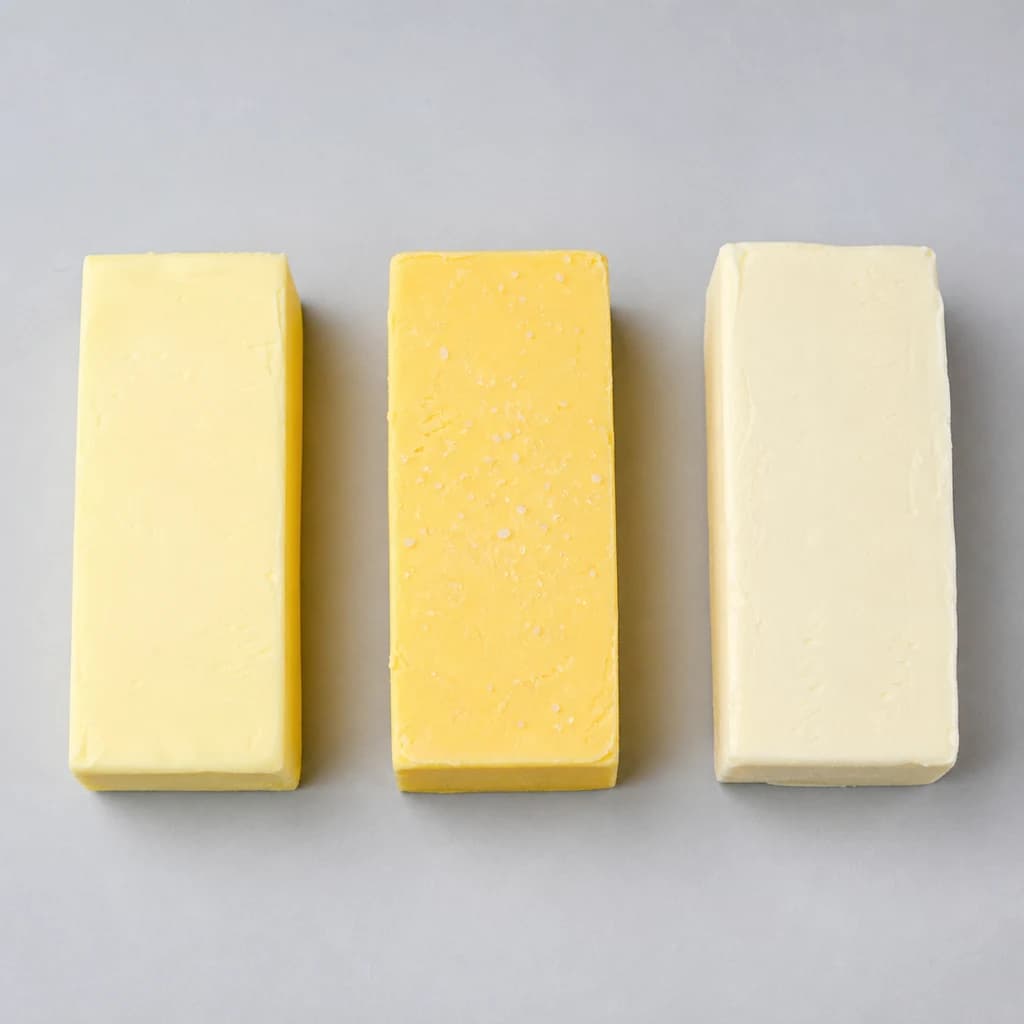
Butter
Golden fat for searing, baking, and finishing a sauce
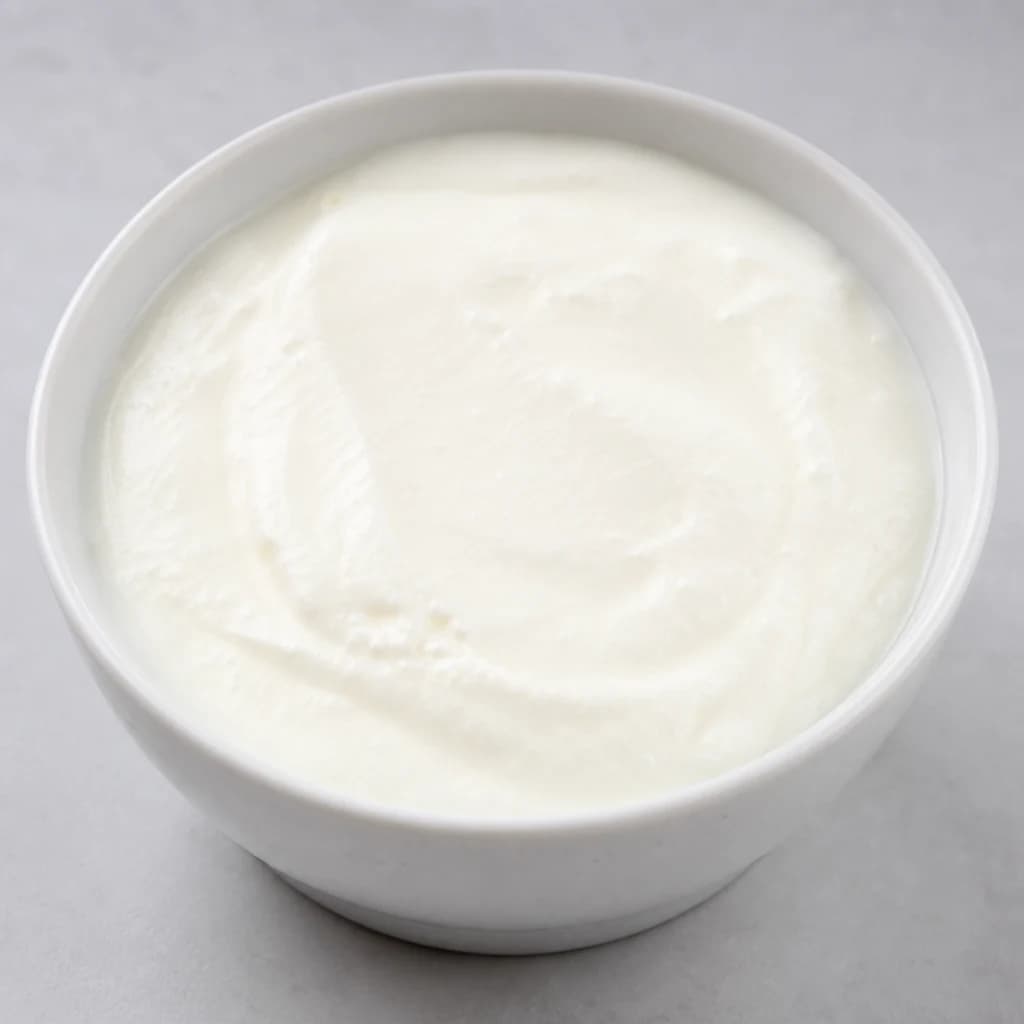
Yogurt
Tangy, creamy culture for breakfast, sauces, and marinades
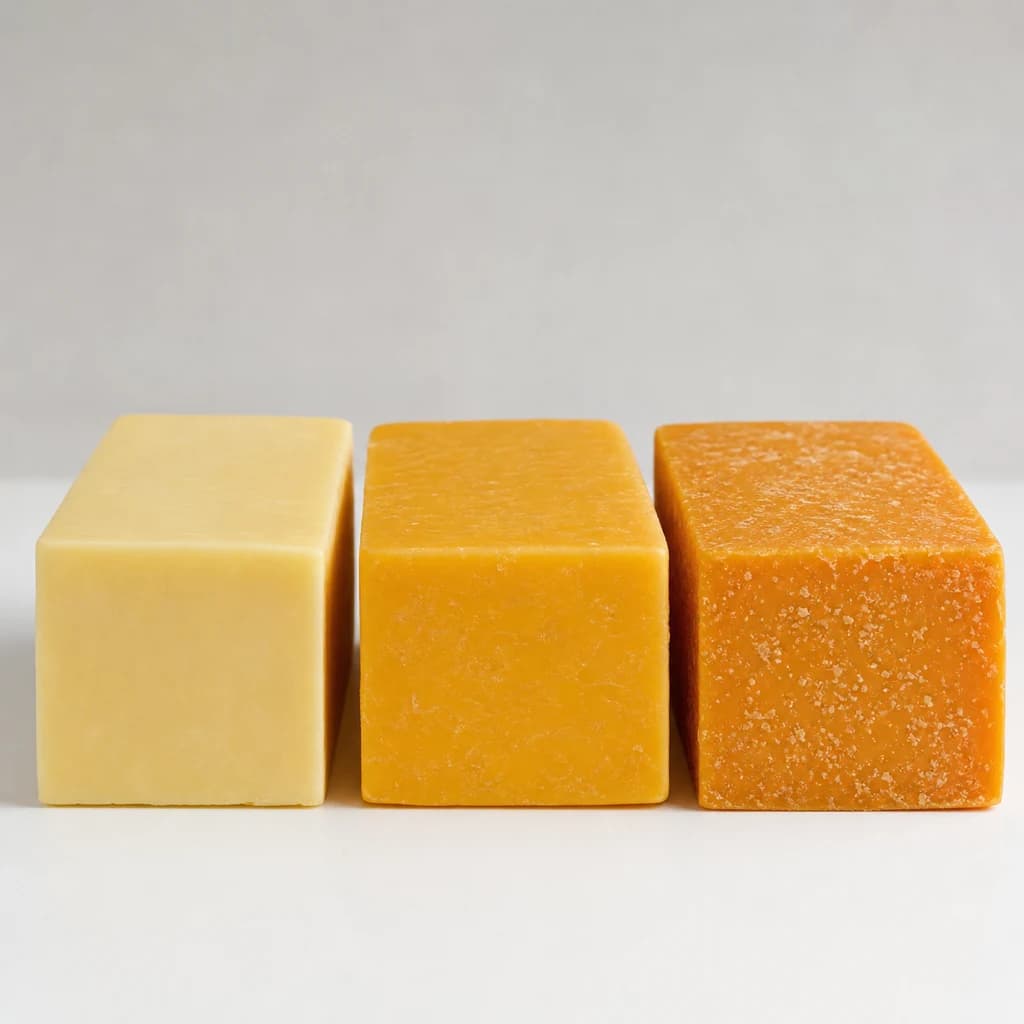
Cheddar Cheese
Sharp, melty cheese for sandwiches, gratins, and grating
Skim Milk
Fat-free milk for lighter drinking, coffee, and cooking
Heavy Cream
Rich cream that whips, enriches sauces, and sets ganache

Sour Cream
Tangy, thick cream for dolloping, baking, and dips
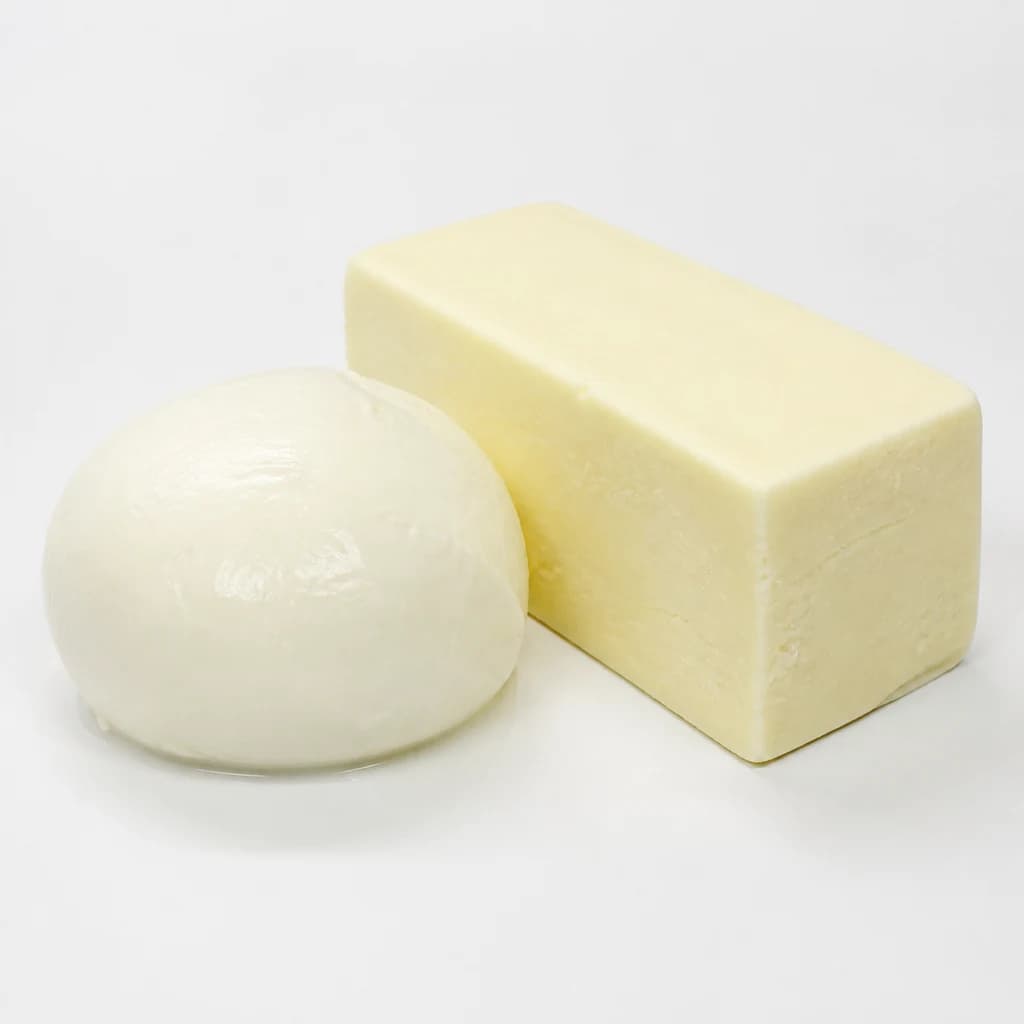
Mozzarella
Soft, milky cheese that melts into stretchy pizza pulls