Dairy & Eggs
Half-and-Half
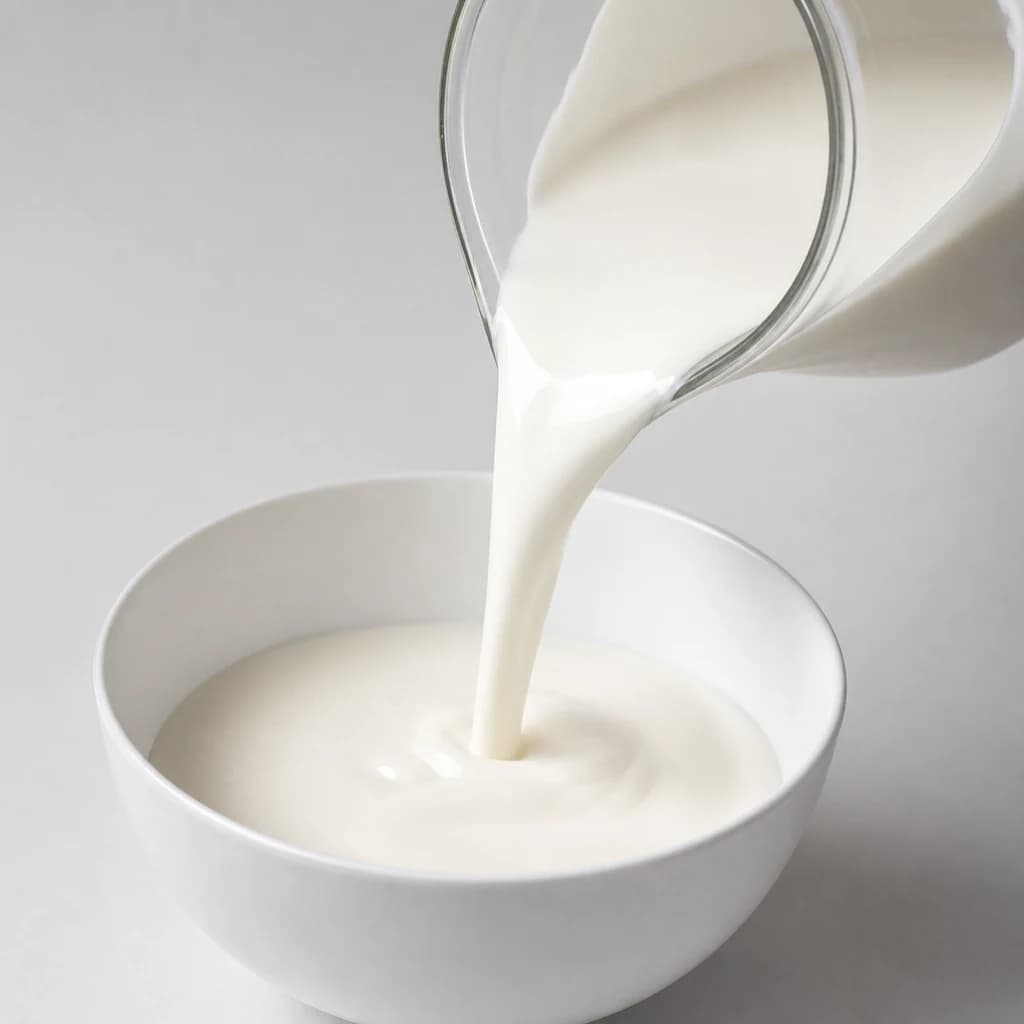
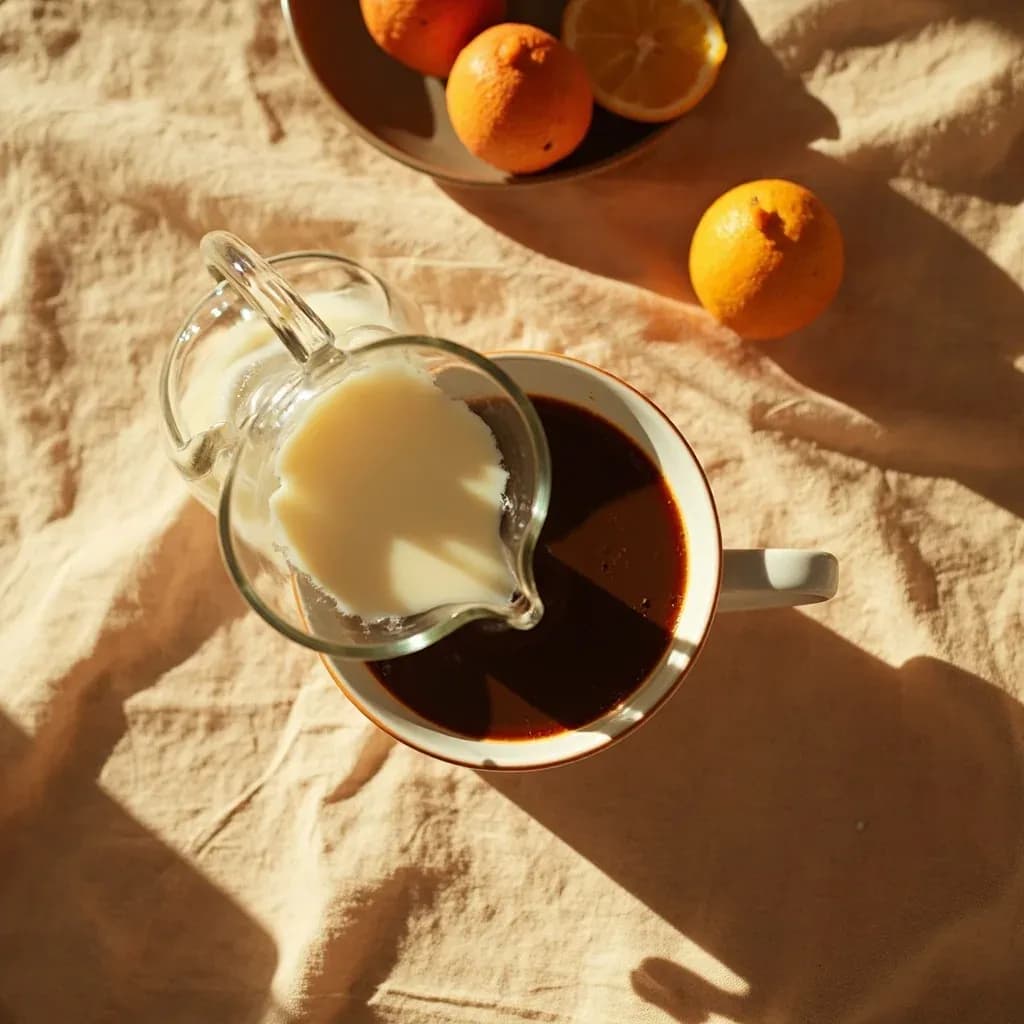
An equal blend of whole milk and cream (~10–12% fat); enriches coffee and sauces but won't whip — too lean to hold air like heavy cream.
Half-and-half is the everyday American compromise between whole milk and heavy cream — a pasteurized blend of milk and cream standardized by U.S. FDA rule (21 CFR 131.200) to land between 10.5% and 18% milkfat, with most commercial cartons sitting comfortably at 10.5–12%. It pours like milk but reads richer on the tongue, opaque and faintly sweet, with the body to thicken a pan sauce and the lightness to disappear into coffee without burying the bean. Outside the United States it barely exists; British, European, and Australian cooks reach for single cream, double cream, or whole milk instead, which is why most American recipes that call for it confuse international readers.
The single most useful thing to know about half-and-half is what it cannot do: at roughly 11% fat there are simply not enough milkfat globules to wrap around air bubbles and stabilize a foam, so it will never whip, no matter how long you beat it or what you add. It is also too lean to survive a hard boil — push it past a bare simmer or add it to a furiously bubbling acid (wine, tomato, lemon) and the proteins will curdle and the emulsion will break, leaving you with grainy flecks floating in a watery pool. Compared with heavy cream, it is more finicky, not less: the lower fat means less protection for the proteins, so it demands gentler heat and later addition.
Reach for half-and-half when you want a sauce to coat a spoon rather than blanket the plate, or when heavy cream would push a dish into richness overload. It is the right choice for weeknight pan sauces, creamy tomato pasta, lightened soups, and any dessert where you want dairy flavor without the cloying weight of full cream.
- Measured in
- ml
- Storage
- Refrigerate
Allergens
Find it in
Suits
Types & varieties
The standard 10.5–12% product — the everyday coffee and cooking cream of the United States.
Nonfat milk thickened with corn syrup and stabilizers such as carrageenan and guar gum; designed for coffee, not cooking — breaks under heat almost immediately.
Same fat range as the regular product, made from certified-organic milk and cream.
Standard formulation with added lactase enzyme; cooks and pours identically to the regular product.
Heat-treated at higher temperature for a longer refrigerated shelf life; carries a faintly cooked or caramel note compared to vat-pasteurized, which tastes fresher and is the better choice for cooking.
How Half-and-Half Behaves in the Pan
Dairy products are emulsions of milkfat suspended in water with milk proteins (mainly casein) acting as the stabilizer. Fat is what keeps the emulsion together under heat — at 36% or higher, heavy cream tolerates a brisk boil; at 11%, half-and-half does not. Once the proteins denature and the fat melts and runs, the emulsion breaks and you get the familiar curdled-and-watery look.
- Acidic ingredients (tomato, wine, lemon, mustard) curdle dairy faster than neutral ones. Bloom acids first, reduce them by half, then temper in the cream off the heat.
- If a sauce breaks, an immersion blender pulsed for a few seconds will often re-emulsify it without further cooking — a useful rescue in last-minute pan sauces.
Outside the United States
Half-and-half is an American product, and the standard U.S. carton sits in a fat gap most international dairies don't bother to fill. British single cream starts at 18% and climbs; Australian and many European 'pouring' or 'light' creams run 18–25%; most European shelves jump from whole milk (3.5%) to crème entière or double cream (35%+) with nothing in between. The gap is easy to bridge once you understand what a recipe is really asking for — roughly 10–12% milkfat with a clean, fresh dairy flavor.
- In the UK, single cream (about 18% fat) is the closest off-the-shelf option; thin it with whole milk to land near 12%.
- Australian and European 'light' or 'pouring' creams at 18–25% work as-is for richer sauces, or diluted with milk for coffee.
- Coconut cream thinned with coconut milk is a workable dairy-free swap for curries, soups, and Asian dishes, but the coconut flavor dominates anything neutral.
Common uses
Tips & pitfalls
- Temper it into hot liquids: whisk a ladle of the hot base into the cream first, then return the mixture to the pan — this prevents curdling in acidic or boiling sauces.
- Never bring it to a rolling boil; hold finished sauces at a bare simmer so the proteins stay emulsified and the bottom of the pan does not scorch.
- It will not whip, no matter how long you beat it — if you need volume, use heavy cream (36%+ fat).
- Add it at the end of cooking. Long simmering causes separation and a grainy texture that an immersion blender can sometimes rescue but usually cannot hide.
- For richer pan sauces, mount with a cold pat of butter off-heat rather than reducing the half-and-half further — it reduces poorly and scorches easily.
- Choose ultrapasteurized cartons for the back-of-the-fridge if you use it rarely; vat-pasteurized tastes noticeably fresher and is the better choice when the cream is the dish.
- Smell before using; even unopened cartons can sour near the sell-by date, especially if the cold chain was broken in transit. A clean, faintly sweet dairy smell is the only acceptable baseline.
- Watch seasoning: half-and-half is unsalted and lower in fat than heavy cream, so savory sauces need a more assertive hand with salt than you might expect.
Nutrition
Energy
816 kJ · per 100 g
Where the calories come from
Protein
3g
6% DV
Carbs
3.7g
1% DV
Fat
19.1g
24% DV
Fiber
0g
0% DV
Sugars
3.7g
of which
Sodium
72mg
3% DV
Source · USDA FoodData Central · Cream, fluid, light (coffee cream or table cream)
View on FDC →In the shops
Matched grocery products
No matched grocery products for Half-and-Half yet.
Good to know
- Definition
- U.S. FDA Standard of Identity (21 CFR 131.200): a pasteurized blend of milk and cream at 10.5–18% milkfat; most cartons are 10.5–12%.
- Typical Fat
- 10–12% — about one-third the fat of heavy cream, roughly three times that of whole milk.
- Will It Whip?
- No. Fat content is too low to stabilize air into a foam; use heavy cream (36%+) for whipping.
- Heat Behavior
- Scorches and breaks if boiled hard or added to very hot acidic liquids; holds best at a bare simmer.
- Storage
- Refrigerate at 40°F / 4°C or below; 5–7 days past sell-by unopened, 3–5 days opened.
- Freezing
- Freezes but separates and turns grainy on thawing; acceptable in cooked sauces, poor in coffee.
- Calories
- Approximately 315–330 kcal per cup (240 ml).
- Origin
- American product; not a standard SKU in the UK, most of Europe, or Australia.
Substitutes
- Whole milk + heavy cream (3:1) — Three parts whole milk to one part heavy cream yields roughly 12% fat — the closest match in coffee and cooked sauces.
- Whole milk + heavy cream (1:1) — A 50/50 blend lands around 20% fat, slightly richer than real half-and-half; better for sauces than for coffee.
- Whole milk alone — Works in coffee and most cooked dishes, but noticeably thinner and less rich; reduce any added butter by half.
- Evaporated milk — A common pantry substitute; slightly caramelized flavor, holds up well in cooking but tastes cooked in coffee.
- Light cream (18–30% fat) — The closest dairy analogue in countries without U.S.-style half-and-half; thin with whole milk to reach ~12% fat.
- Coconut cream + milk — Dairy-free option for sweet and Asian-inspired dishes; coconut flavor will dominate neutral preparations.
Also called
half and half · single cream · light cream · cereal cream