Produce
Key Lime
Small, thin-skinned and more aromatic than common limes, with a sharper, floral tartness; the defining juice for key lime pie and many tropical cocktails.
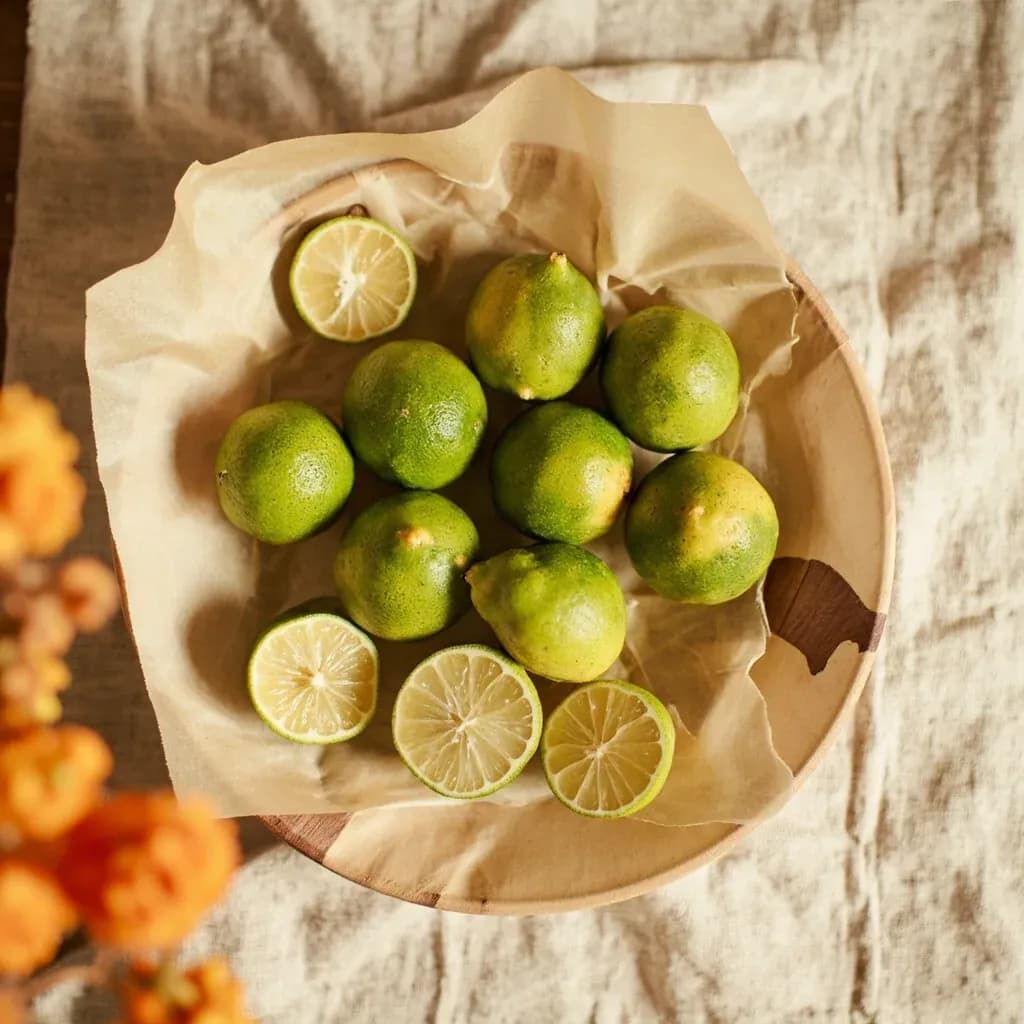
The key lime (Citrus × aurantiifolia) is the small, seedy, thin-skinned citrus behind key lime pie, Caribbean cocktails, and a long stretch of tropical cookery. A hybrid native to Southeast Asia, it spread through North Africa and into the Caribbean and Florida Keys with Spanish trade, and it remains a defining ingredient of regional baking and bartending. Unlike the seedless Persian (Tahitian) lime that fills most produce aisles, true key limes are golf-ball sized, pale green ripening to yellow, and loaded with intensely aromatic juice running about 6–8% citric acid — meaningfully sharper and more perfumed than the common lime.
In the kitchen, key lime behaves differently from its larger cousin in three ways worth knowing. First, the juice carries noticeably more natural pectin than Persian, which is why a key lime marmalade sets cleanly with little commercial pectin and why curds thicken quickly under the acid. Second, the thin, fragrant peel is a genuine asset — it microplanes finely into sugar for cocktail rims or steeps into cream for curd, where a Persian lime zest would taste coarse and waxy. Third, prolonged heat is the enemy: a custard or sauce boiled too long with key lime juice turns dull and bitter, so the juice is almost always stirred in off heat or used in an uncooked preparation, as in the classic sweetened condensed milk pie.
Sourcing is the practical reality most cooks face. Mexico is the dominant supplier, with fruit available in Latin markets and through mail order for much of the year; the Florida Keys crop is now a tiny cottage operation after Hurricane Andrew and citrus canker outbreaks in the 1990s. Because fresh key limes are seedy, lower-juiced than Persian, and oxidize quickly, plan to juice them the day you bake. Bottled juice is widely available and useful as a backup, but most of it is pasteurized and noticeably flatter than fresh.
- Measured in
- piece
- Storage
- Fridge
Find it in
Suits
Types & varieties
Small, seedy, thin-skinned, intensely aromatic; the original Florida Keys/Mexican type used in pies and tropical cooking.
Hybrid with kumquat; cold-hardier, less acidic, edible skin; a workable substitute in cooler climates but not a true key lime.
Different species, prized for its double-lobed leaf rather than juice; do not substitute its juice for key lime.
Low-acid and sweet; sometimes mislabeled as a 'key' lime but a completely different flavor profile.
Buying and Storing
Fresh key limes are seasonal in most U.S. markets, with peak availability from late spring through early fall when Mexican imports dominate. Choose by weight rather than color — a heavy fruit for its size is a juicier fruit — and don't shy away from fruit that has shifted from green to pale yellow; it is ripe, not past peak, though the aroma will be slightly softer. Plan to juice within a day of purchase for the brightest result; the juice oxidizes quickly and the floral top notes flatten within 24–48 hours in the fridge.
- Refrigerate in a sealed bag for 2–3 weeks; room temperature for about 1 week
- Freeze juice in 1-tbsp ice cube trays, then bag, for year-round use
- Zest freezes well on its own — dry on a sheet pan, then store airtight
- Avoid fruit with hard brown spots or spongy skin; softness usually means the inside has dried out
- Heavier fruit is juicier; don't judge by color alone
Heat and the Flavor Window
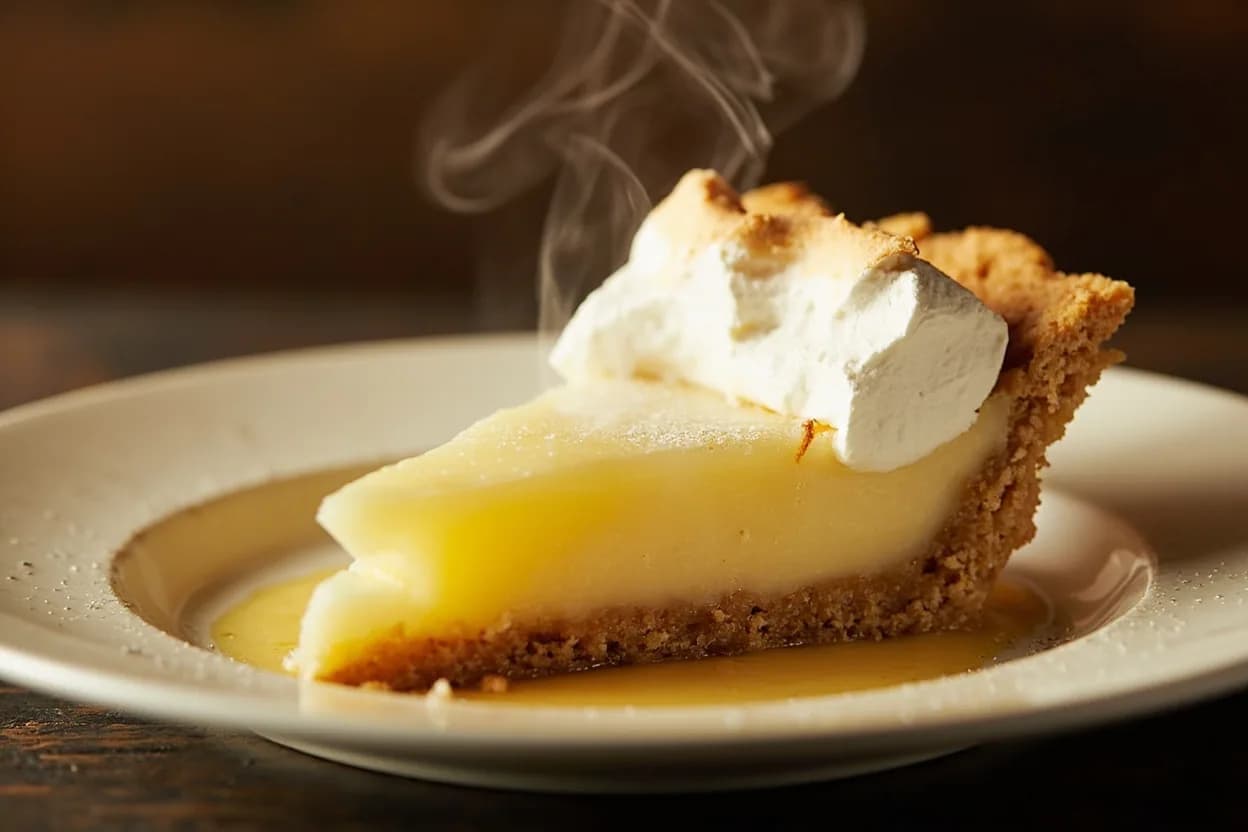
Key lime juice is more thermally fragile than Persian lime. Brief heat — a squeeze into a hot broth or a brief simmer in a sauce — brightens the flavor with little loss, but anything more than a minute or two of boiling dulls the floral top notes and pulls a bitter, almost medicinal edge from the peel compounds. In custards, curds, and pie fillings, the safest rule is to add the juice at the very end, off heat, and to cook the dairy and eggs first. This is exactly why the filling of a classic key lime pie is essentially uncooked: sweetened condensed milk and egg yolks thicken under the acidity of the juice without ever seeing the stove, leaving the floral top notes intact.
- For ceviche and aguachile, the acid 'cooks' the seafood cold — no heat required
- In a hot sauce or glaze, stir the juice in during the final minute
- Sorbets and granitas take the juice raw; cooking would strip the perfume
- If a sauce has turned bitter from overcooked lime, soften it with cream or coconut milk rather than more sugar, which masks the floral notes
- Brief citrus zest infusions in warm cream (then strained) capture the peel's aroma without the bitterness of prolonged boiling
Common uses
Tips & pitfalls
- Always zest before juicing — the thin, fragrant peel is one of the biggest flavor assets and is wasted if you juice first.
- Roll the fruit firmly on the counter under your palm before juicing; key limes have thick pulp and need extra pressure to yield their juice.
- Use a fork or a Mexican-style wooden lime squeezer (el limero) — the wooden tool cracks the skin and crushes pulp efficiently while catching seeds.
- Taste bottled juice against fresh before baking; bottled is often diluted and heat-pasteurized, so it lacks the floral top notes of fresh juice.
- Add key lime juice off the heat in custards and curds; prolonged boiling turns it bitter and dulls the perfume.
- If a recipe is too sharp, balance with a touch of cream or coconut milk rather than extra sugar, which masks the floral notes.
- For key lime pie, use freshly squeezed juice — the filling is essentially raw, so any 'cooked' or metallic taste in bottled juice will dominate the dish.
- Freeze juice in ice cube trays (about 1 tbsp per cube) to have bright, fresh-tasting portions off-season; transfer frozen cubes to a sealed bag.
- Choose fruit by weight, not color — heavier key limes are juicier, and a fully yellow one is ripe but slightly past peak for aroma.
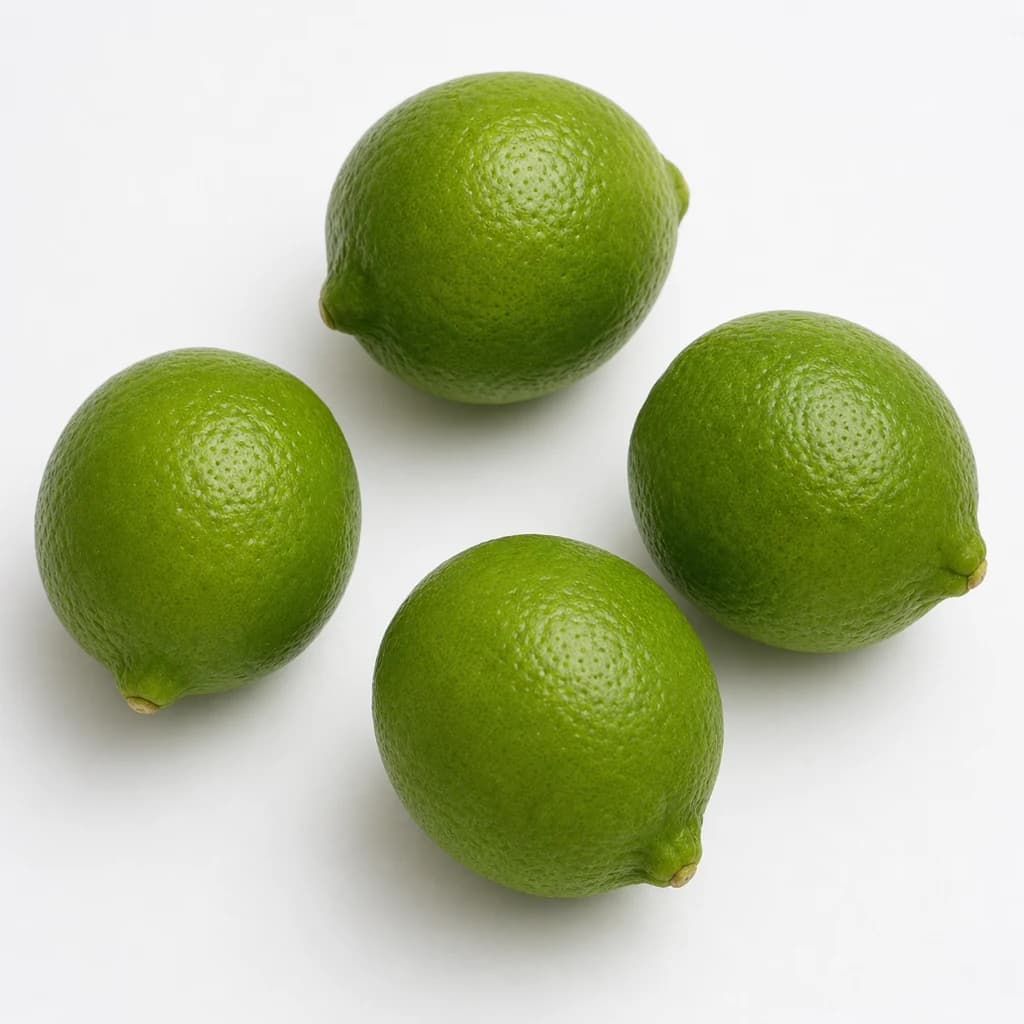
- Don't confuse key limes with Persian/Tahitian limes (C. × latifolia) — Persian limes are 2–3× larger, mostly seedless, and milder; they work as a substitute but lack the floral edge.
Nutrition
Energy
473 kJ · per 100 g
Where the calories come from
Protein
6.8g
14% DV
Carbs
20.2g
7% DV
Fat
0.9g
1% DV
Fiber
4.9g
18% DV
Sugars
1.5g
of which
Sodium
8mg
0% DV
Source · USDA FoodData Central · Lima beans, immature seeds, raw
View on FDC →In the shops
Matched grocery products
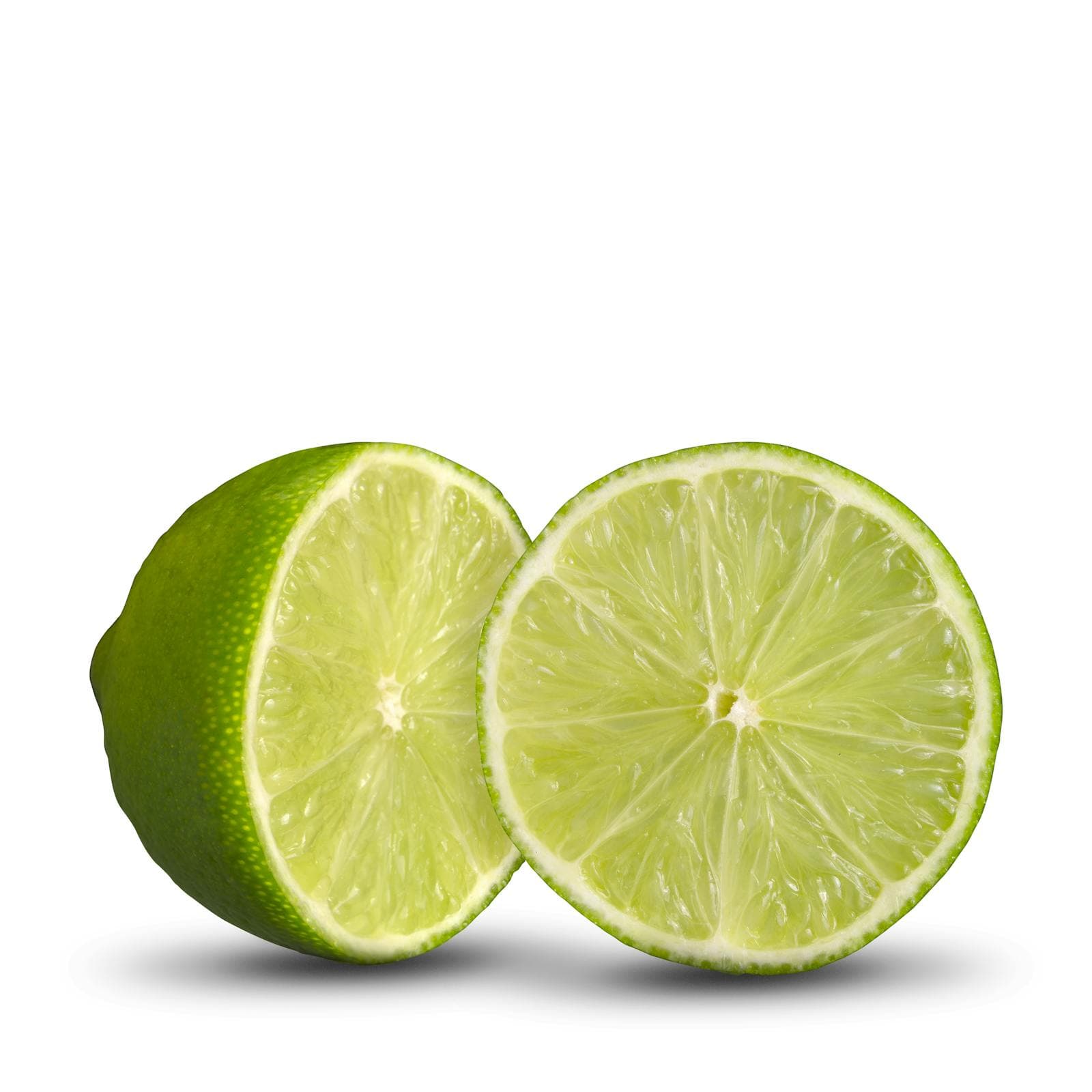 €0.40
€0.40Lime
90 g · Mercadona
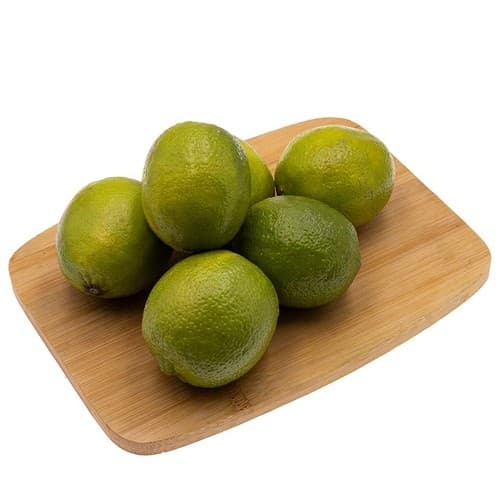 €1.49
€1.49Lime in tray of 350 g
LA COLLITA · kg · Bonpreu
Good to know
- Scientific name
- Citrus × aurantiifolia (hybrid of C. micrantha × C. medica)
- Other names
- Mexican lime, West Indian lime, bartender's lime, dayap, limón ceutí
- Typical size
- 2–5 cm (¾–2 in) diameter, roughly the size of a small golf ball
- Acidity
- Citric acid around 6–8%, higher than Persian limes at roughly 5–6%
- Pectin
- Naturally higher than Persian limes; useful for set marmalades and curds
- Juice yield
- About 1–2 tsp (5–10 ml) per fruit; lower than seedless Persian limes
- Heat behavior
- Top floral notes fade and the juice turns bitter with prolonged boiling
- Storage
- About 1 week at room temperature; 2–3 weeks refrigerated in a sealed bag; juice freezes well
- Main commercial source
- Mexico (Colima, Michoacán); tiny Florida Keys cottage industry; Caribbean and Central America
Substitutes
- Persian (Tahitian) lime — The most widely available substitute; use roughly 1.25× the juice and add a few drops of lemon zest to mimic floral notes. Works in cocktails and savory dishes but reads flatter in pie.
- Bottled key lime juice — Substitute 1:1 by volume; choose 100% juice from a refrigerated brand (Nellie & Joe's is the standard). Avoid reconstituted from concentrate for baking.
- Persian lime juice + a strip of lemon zest — Steep a thin lemon-zest strip in the juice for 10 minutes, then remove; brightens the flavor for pies, curd, and meringue toppings.
- Limequat juice — A close flavor match, slightly sweeter and less tart; use a little less and finish with a small squeeze of lemon to recover true key lime acidity.
Pairs with
Also called
Mexican lime · West Indian lime · lima · llima petita