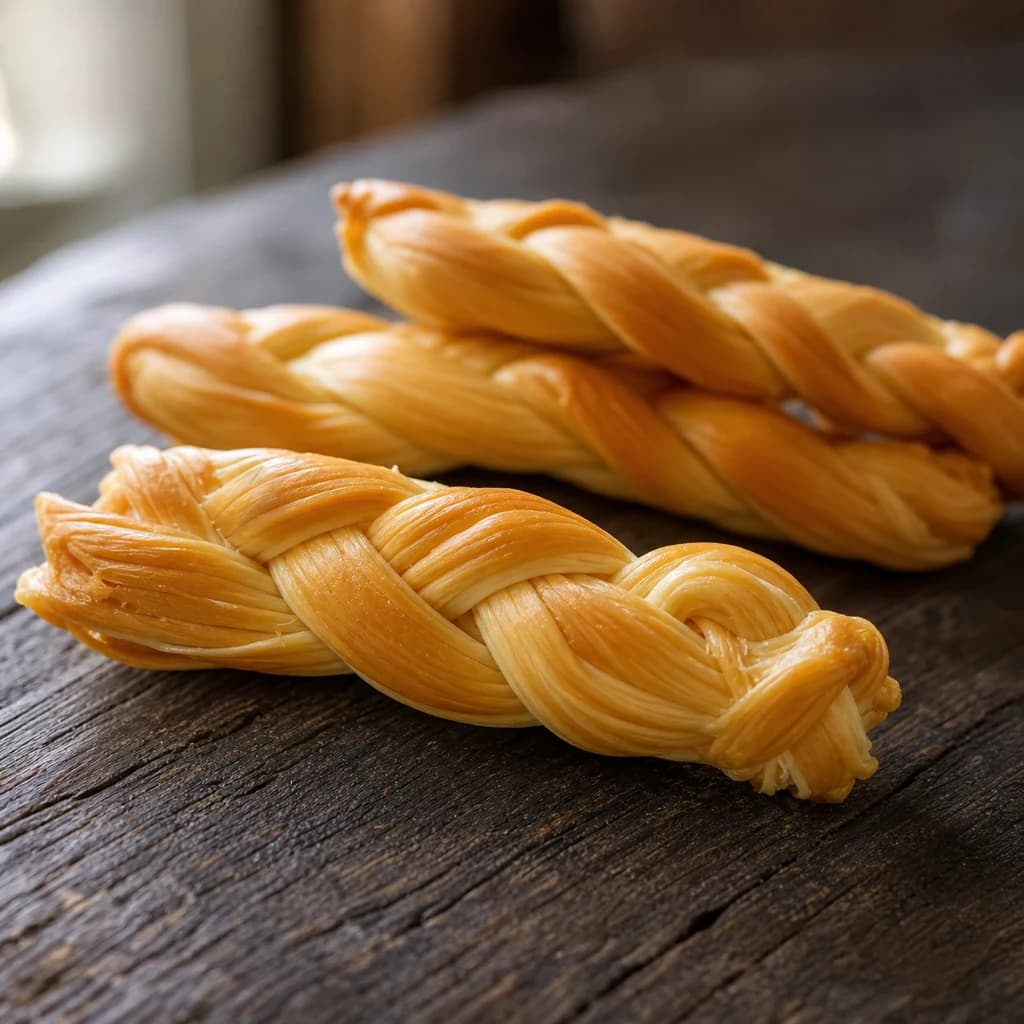
Natural form
Korbáčik: a small braided whip of smoked string cheese from Slovakia.
Shows the distinctive braided shape and golden smoked color that define the product at a glance.
Dairy & Eggs
Korbáčik (Braided Smoked Cheese)
Slovak braided string cheese, often lightly smoked, eaten as a salty snack.
Korbáčik is a Slovak cheese made from steamed, stretched curd pulled into thin strings and braided into a small whip shape. It is frequently smoked, giving it a golden color and salty, savory flavor. It is eaten as a snack, served with beer, or added to salads, and peels apart in fibrous strands.
Korbáčik is a traditional Slovak braided string cheese, technically an unaged or briefly aged cheese that is hand-pulled or extruded into thin ropes and then twisted into a distinctive whip-like braid. The name derives from "korbáč," meaning whip or braided cord, and the shape is both functional—allowing the cheese to hang during smoking—and deeply characteristic of Slovak cheesemaking identity. The smoking process, traditionally conducted over beech or alder wood in village smokehouses, gives the cheese its signature amber-gold color and subtle woodsmoke flavor that sets it apart from the milder unsmoked Slovak cheeses parenica and oštiepok. Production clusters in the Liptov and Orava regions of northern Slovakia, though industrial versions are now widespread throughout the country.
The cheese is most commonly made from sheep's milk alone or blended with cow's milk, which contributes to its slightly higher fat content and more complex, tangy flavor compared to purely cow's milk string cheeses. Its texture is semi-hard and notably elastic when raw, but the defining characteristic is how it behaves under heat: when fried or grilled, the exterior crisps to a golden crust within two to three minutes while the interior becomes molten and pulls apart in satisfying strings. This combination of chew, smoke, and salt makes it exceptional as both a table cheese and a cooking ingredient. The braided shape is not merely decorative—it allows the smoke to penetrate evenly and lets the cheese drain during aging, concentrating flavor.
Korbáčik occupies a specific niche in Slovak cuisine distinct from smoked block cheese (oštiepok) and the steamed, unsmoked parenica. It is eaten at every level of Slovak society, from mountain village taverns serving it fried as bar food to sophisticated Bratislava restaurants featuring it on cheese boards alongside regional accompaniments like radishes and rye. Understanding how to select, store, and cook it properly unlocks its full potential, because like all traditional cheeses, it is unforgiving of poor quality and improper handling.
- Measured in
- g
- Storage
- Fridge
Allergens
Types & varieties
The standard smoked version; most widely available domestically and internationally. Beechwood smoke delivers the characteristic amber color and savory depth.
Made primarily or entirely from sheep's milk; richer, more complex flavor with noticeably higher fat content and a more pronounced tang.
Unsmoked white variety; milder and cleaner-tasting, often sliced into salads or served on lighter open-faced sandwiches.
Paprika-infused version; adds gentle spice and a deeper orange-red color.
Common uses
Tips & pitfalls
- Select braids with uniform golden coloring and tight, intact twisting—loose or unraveled sections indicate aging or rough handling that compromises both texture and flavor.
- Test freshness by pressing gently with a finger: it should spring back within a second or two. A permanently dimpled surface signals over-aged or poorly stored cheese.
- Slice cold cheese with a serrated knife to avoid crushing the braid; or warm your knife blade under hot water, wipe dry, and slice in one firm motion for clean cuts.
- When frying, use medium-high heat and resist the urge to move the cheese—let a crust form for 2–3 minutes before flipping once. Moving it early causes sticking and prevents the crust from developing.
- For the best flavor, remove the cheese from the refrigerator 15 minutes before serving cold; aromas and flavors are significantly muted straight from the cold.
- After opening, wrap in parchment or beeswax wrap rather than plastic film; plastic traps moisture and causes the surface to become slick and the interior to turn mealy.
- Check the ingredient label carefully—quality korbáčik lists only milk, salt, cultures, and rennet. Avoid products with added vegetable oils, starches, or flavor enhancers.
- If the exterior over-browns before the interior melts, reduce heat slightly and cover the pan for the last minute; this finishes the center without burning the crust.
Nutrition
Energy
1628 kJ · per 100 g
Where the calories come from
Protein
25.6g
51% DV
Carbs
1.6g
1% DV
Fat
31.1g
40% DV
Fiber
0g
0% DV
Sugars
1.6g
of which
Sodium
800mg
35% DV
Source · USDA FoodData Central · approx. Cheese, fontina
View on FDC →In the shops
Matched grocery products
No matched grocery products for Korbáčik (Braided Smoked Cheese) yet.
Good to know
- Origin
- Liptov and Orava regions, Slovakia (Central Europe)
- Primary Milk
- Sheep's milk, often blended with cow's milk; higher fat content than most string cheeses
- Texture
- Semi-hard, elastic; becomes stringy and molten when heated; firm when cold
- Color
- Golden to amber when smoked; pale yellow when unsmoked (biele)
- Flavor
- Smoky, salty, slightly tangy; savory depth from beech or alder wood smoke
- Shape
- Braided ropes or twisted cords, typically 150–500 g per braid
- Shelf Life
- 4–6 weeks vacuum-sealed; 1–2 weeks once opened; 15–20 days if purchased pre-sliced
- Storage
- Refrigerate at 4–8°C; tightly wrapped in parchment or beeswax wrap (not plastic) to prevent sweating and preserve texture
Substitutes
- Oštiepok — Slovak smoked block cheese; different braided shape but shares the same smoky flavor profile and similar cooking behavior, making it the closest substitute.
- Grilled Halloumi — Shares the high melting point and stringy texture when cooked; lacks smoke but excellent for frying and grilling applications where texture is primary.
- Scamorza — Italian smoked mozzarella with a comparable smoky-sweet flavor and good melting properties; widely available in specialty and Italian grocery stores.
- Suissu (Swiss Raclette) — Mildly smoked Swiss cheese with acceptable smoky flavor; less intensely smoky than korbáčik but a reasonable substitute in cooked preparations.
Pairs with
Also called
Chechil String Cheese · String Cheese
Appears in these dishes
Related

Whole Milk
Rich, full-fat milk for drinking, coffee, sauces, and baking
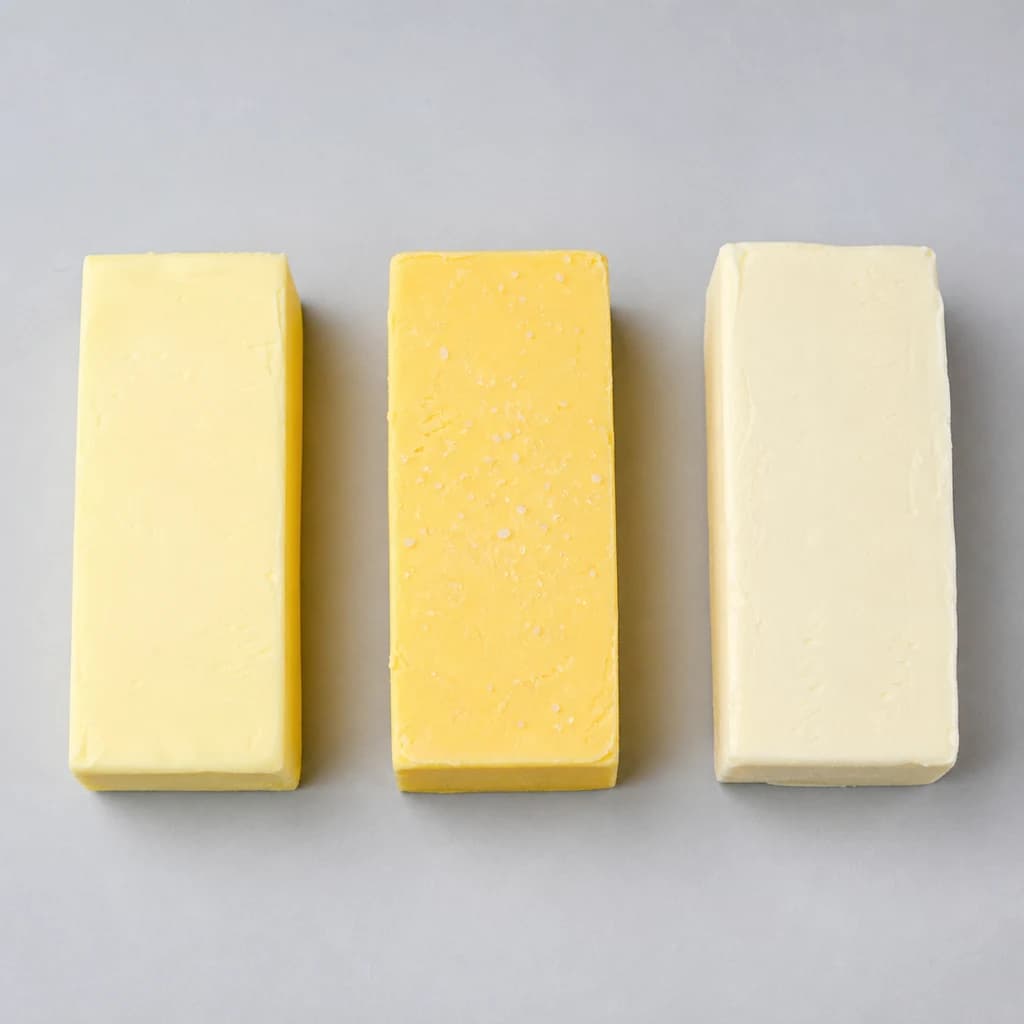
Butter
Golden fat for searing, baking, and finishing a sauce
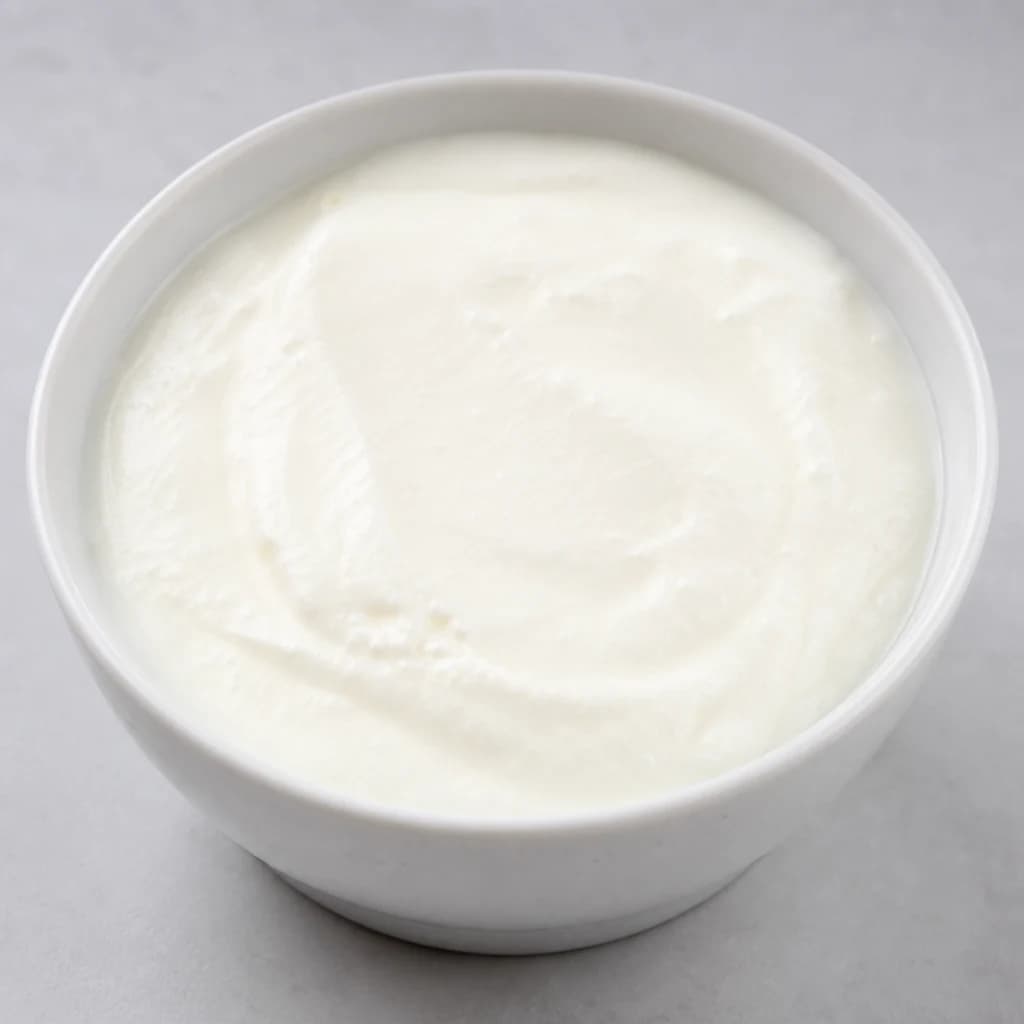
Yogurt
Tangy, creamy culture for breakfast, sauces, and marinades
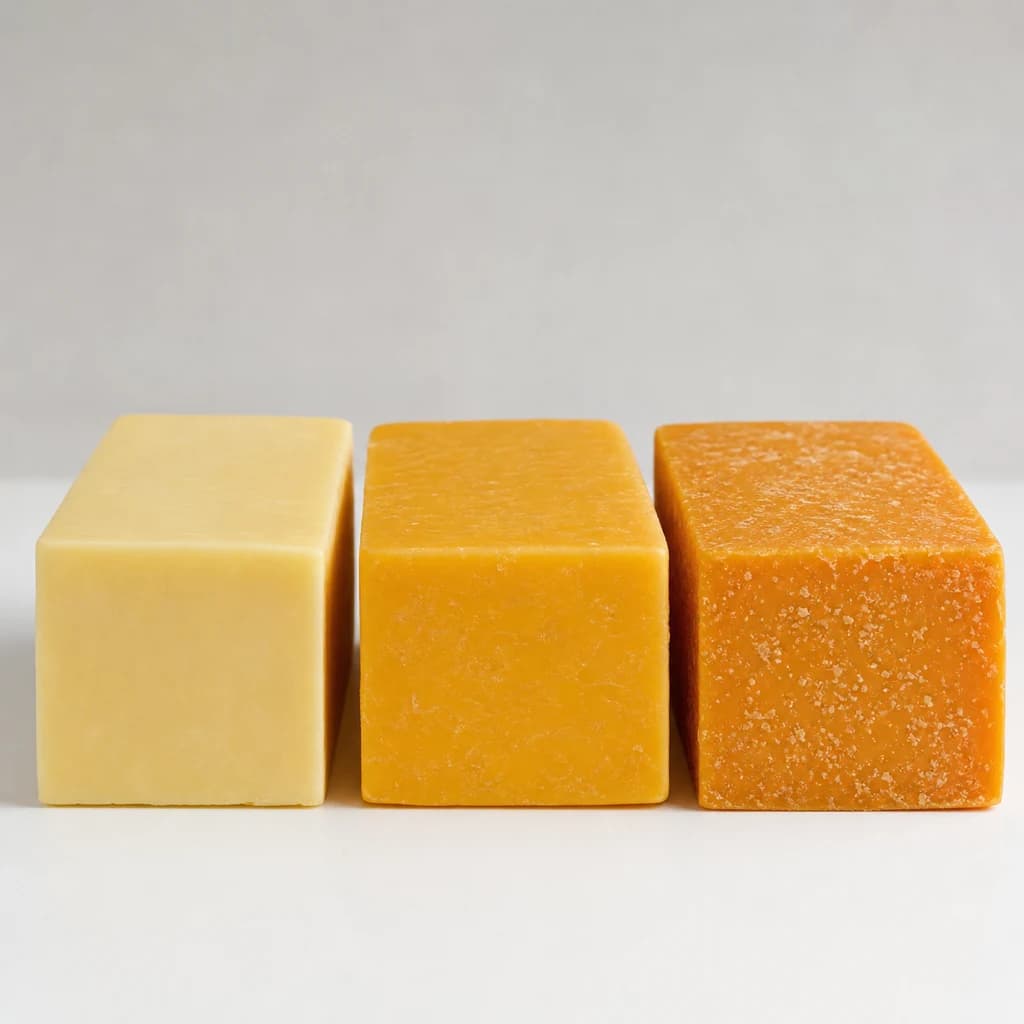
Cheddar Cheese
Sharp, melty cheese for sandwiches, gratins, and grating

Skim Milk
Fat-free milk for lighter drinking, coffee, and cooking

Heavy Cream
Rich cream that whips, enriches sauces, and sets ganache

Sour Cream
Tangy, thick cream for dolloping, baking, and dips
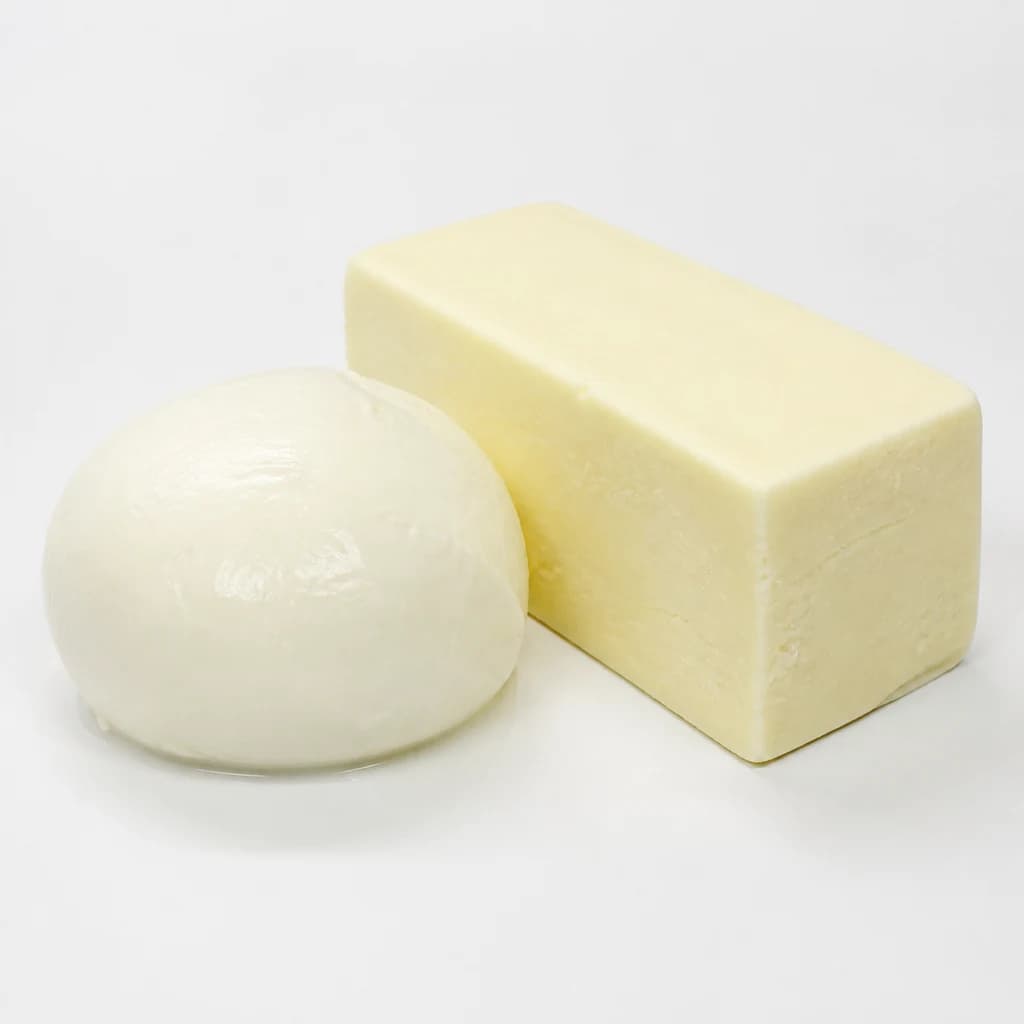
Mozzarella
Soft, milky cheese that melts into stretchy pizza pulls