Heat & Fire
Grilling Cheese (Halloumi/Saganaki)
Searing firm, high-melting-point cheeses like halloumi until golden and crisp without losing their shape.
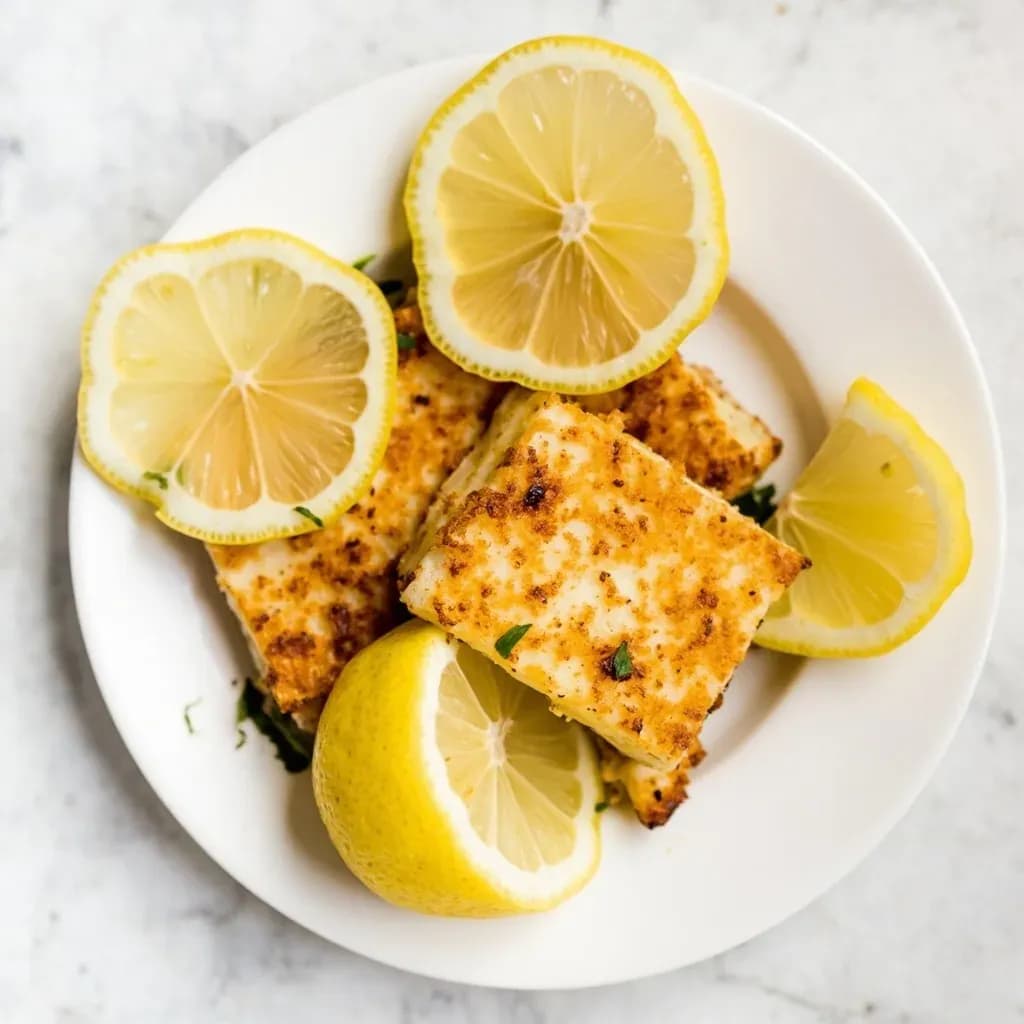
Grilling cheese sears firm cheeses with a high melting point — such as halloumi or saganaki — on a hot grill or pan so the surface browns and crisps while the interior softens but holds its shape. Only certain cheeses (acid-set or rennet-firm) tolerate this without melting into a puddle. The result is a salty, golden-crusted, squeaky-textured treat, often finished with lemon.
Grilling cheese is a dry-heat technique built around a particular class of cheeses that brown and crisp on the outside without losing their shape. Halloumi is the most familiar example, and saganaki is the most familiar preparation, but the underlying logic is the same: select a cheese with a tight protein network and low moisture, get the cooking surface genuinely hot, and let a crust form before you try to move the slice. Done well, the result is a hot, squeaky-soft interior with a deep golden, almost griddled exterior.
What separates a grillable cheese from an ordinary one is melting point. Cheddar, mozzarella, and feta have protein structures that stretch and flow easily under heat; their curd networks collapse into a soft puddle long before the surface can form a real crust. Halloumi, kefalotyri, kasseri, and their cousins hold their body because the curds are pressed firmly and the protein matrix is dense enough to brown before it breaks. The reward is a textural contrast — crisp and caramelized outside, warm and chewy inside — that you cannot get any other way.
The technique is forgiving once the basics are right. A screaming-hot surface, dry cheese, and a patient hand are essentially the whole method. From there, the variations are regional: Cypriot halloumi seared plain or marinated, Greek saganaki floured and sometimes flambéed, Finnish juustoleipä grilled on its own wooden plank, Polish oscypek smoked and warmed over coals. Each one is a regional answer to the same question — how do you make cheese behave like meat on a fire?
- Difficulty
- Easy
Types & varieties
Cypriot semi-hard cheese traditionally made from sheep and goat milk (sometimes blended with cow's milk); the canonical grill cheese, squeaky when warm.
Hard Greek sheep's-milk cheeses typically dredged in flour and pan-fried in a small two-handled pan; often flambéed with ouzo, Metaxa, or lemon juice.
Latin American fresh cheeses specifically made for frying; mild, soft, and pale, holding their shape in hot oil.
Indian fresh curd cheese that follows the same non-melting logic; pan-sears better than it grills, but responds to the same high-heat treatment.
Squeaky whey cheese traditionally grilled on a wooden plank; browns and softens without losing form.
Smoked Polish sheep's-milk cheese from the Tatra mountains, traditionally grilled and served with cranberry jam.
Aged, firm Italian cow's-milk cheese that can be sliced thick and grilled; the younger provolone dolce will slump on the heat.
Occasional substitutes for halloumi in Greek grilling contexts; behavior is similar though flavor and salt levels vary.
How to do it
- 1
Select and prepare the cheese
Choose a firm, high-melting-point cheese: halloumi, kefalotyri, kasseri, queso para freír, juustoleipä, or oscypek. Slice into even pieces 1–1.5 cm (about ½ inch) thick. Pat dry thoroughly with paper towels — surface moisture is the main cause of sticking. If the cheese is very salty, soak in cold water or milk for 20–30 minutes, then pat dry. For a more aromatic result, brush with olive oil or marinate briefly in olive oil, lemon, oregano, and mint.
- 2
Preheat the cooking surface
Heat a grill, grill pan, or cast-iron skillet over high heat until very hot, around 200–230°C (400–450°F). A drop of water should skitter and evaporate almost instantly. For charcoal, wait until coals are ashed over and the grate is searing. Avoid non-stick pans for flour-dredged versions, since steel or cast iron develops a better crust.
- 3
Coat the cheese, not the pan
For a Greek saganaki-style crust, dredge dry slices in seasoned flour and shake off the excess. For plain grilled halloumi, brush the cheese itself with olive oil rather than oiling the pan. Oil on a slick non-stick surface burns and smokes before the cheese browns.
- 4
Lay the cheese on the heat
Place slices flat on the grill or pan, leaving space between them. Do not move them. Cook 1–3 minutes until deep golden, with dark grill marks or a continuous crust that releases easily when nudged. Premature flipping is the most common cause of torn, stuck cheese.
- 5
Flip once
Slide a thin metal spatula (a slotted fish spatula is ideal) cleanly under each piece and turn in a single motion. Cook the second side 1–2 minutes until equally golden and the interior is soft and warm through.
- 6
Finish and serve immediately
Transfer to a warm plate and finish with a squeeze of lemon, a drizzle of olive oil, fresh herbs, honey, or fig jam as appropriate. For tableside saganaki, flambé briefly in ouzo, Metaxa, or brandy before the lemon. Grilled cheese waits poorly: its signature squeak and soft interior fade within minutes.
- 7
Clean the cooking surface
If grilling on a grate, scrub while still hot with a wire brush. If pan-frying, deglaze with a splash of water or stock to lift the fond, then wash normally.
Halloumi vs. Saganaki: clearing up the confusion
The two terms get used as if they mean the same thing, but they live on different sides of the kitchen. Halloumi is a specific Cypriot cheese with its own PDO and centuries of tradition. Saganaki is a Greek preparation, and the word refers to the small, heavy, two-handled pan in which the cheese is fried — not the cheese itself. In a taverna, 'saganaki' on the menu almost always means a slice of kefalotyri, kasseri, or kefalograviera dredged in flour, seared in olive oil, and frequently flambéed tableside. The Cypriot method with halloumi is usually plainer: oil the cheese (often a marinated version), grill or pan-fry it, and finish with lemon.
The technical principle is identical, which is why the conflation sticks. Both rely on a cheese whose dense curd and low moisture allow it to brown before it breaks, and both demand a very hot, dry surface. If you are cooking at home, treat the cheese selection as the main decision: halloumi for the squeaky, milky character, kefalotyri or kasseri for a sharper, more savory bite and a floured crust.
The science of non-melting cheese
Cheese melts when its casein proteins unfold and the fat and water separate, a process that begins around 55–65°C (130–150°F) for most cheeses. Grilling cheeses resist this for two reasons. First, their curds are pressed firmly, leaving little free water for the protein network to release. Second, the proteins are densely packed and stabilized by salt, which keeps the melting point high enough that the surface can brown and crisp before the curd collapses. Paneer follows a related but different logic: its casein is acid-set with lemon juice or vinegar, so it never fully solubilizes in the first place and simply dehydrates and browns under high heat. The result is a true crust — the same chemistry you want on a steak or a slice of bread — formed over a soft, warm interior.
Common uses
Tips & pitfalls
- Choose firm, high-melting-point cheeses only — halloumi, kefalotyri, kasseri, queso para freír, juustoleipä, oscypek. Mozzarella, cheddar, feta, and brie will melt into a puddle no matter how careful you are.
- Pat the cheese thoroughly dry before cooking. Surface moisture causes sticking and turns the sear into a steam.
- Get the surface genuinely hot — about 200°C (400°F) — before the cheese goes on. A lukewarm pan is the single most common reason cheese tears and sticks.
- Oil the cheese, not the pan. Brushing the slices with olive oil lets the crust form and the cheese slide cleanly; oil pooled in a cool pan simply burns.
- Resist flipping early. The cheese tells you it is ready when it moves freely on its own. Forcing it before then is what rips the crust.
- Use a thin metal or slotted fish spatula; a wide stiff blade is your best tool for clean release and turnover.
- For saganaki-style crust, dredge in seasoned flour and shake off excess. For plain grilled halloumi, skip the flour — it dulls the grill marks and the squeak.
- Serve within minutes. The squeak, the soft interior, and the crisp crust are all time-limited; once the cheese cools, it turns rubbery and flat.
Good to know
- Technique type
- Dry-heat high-temperature cooking applied to firm, high-melting-point cheeses
- Cheese property required
- High melting point with a stable protein/fat structure that lets the cheese brown rather than run
- Surface temperature
- 200–230°C (400–450°F) on grill or griddle; a dry pan just smoking on the stovetop
- Cook time per side
- 1–3 minutes depending on thickness; do not move the cheese until the crust releases naturally
- Active time
- 5–10 minutes, including slicing and searing
- Portion size
- 100–125 g (3.5–4.5 oz) per person as a main feature; 25–40 g per person as a mezze component
- Best served
- Immediately, while still warm — the signature squeak fades and the texture turns rubbery as it cools
- Origin notes
- Halloumi is a Cypriot cheese referenced as early as 1554; 'saganaki' is the name of the small two-handled Greek pan used to fry the cheese, not a cheese itself
Also called
grilled halloumi · saganaki · fried cheese
Related

Sear
Blast the surface hot for a deep-browned, savory crust

Sauté
Cook quickly in a little fat over lively heat, tossing as you go

Stir-Fry
Toss bite-sized pieces over roaring heat for fast, smoky cooking

Pan-Fry
Crisp food in a shallow layer of hot fat, turning once or twice

Deep-Fry
Submerge in hot oil for an all-over crackling crust

Roast
Cook uncovered in dry oven heat for browned edges and tender centers

Bake
Cook with steady, surrounding oven heat — the soul of bread and pastry

Broil
Hit food from directly above with fierce overhead heat