Proteins
Lox
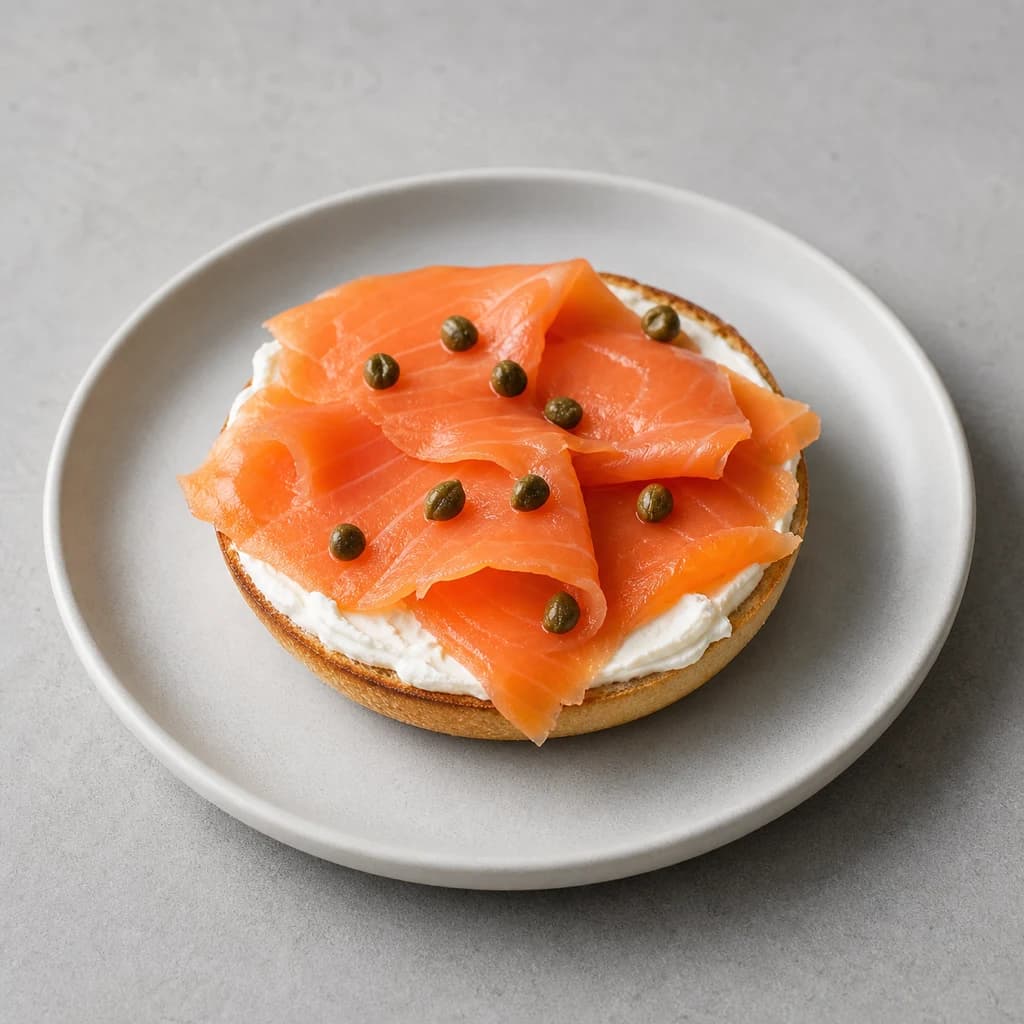
Salmon belly cured in salt brine but never smoked; silky, deeply salty and fully raw. Sliced thin for bagels with cream cheese; rinse if too briny.
Lox is salmon cured in a saltwater brine and left raw and unsmoked. The fish never sees heat, so the flesh stays translucent, silky, and supple, with a pure salt-and-salmon flavor that carries none of the smoke or spice of its Nova and gravlax cousins. The word traces to the Yiddish laks, and the preparation belongs to the Ashkenazi Jewish tradition that fed Sabbath tables from Eastern Europe to New York's Lower East Side, where cold, ready-to-eat cured fish paired with bread and cream cheese made practical, halachic sense on a day without cooking.
Because lox is uncooked, the cure does the preserving work. Salt, often with a little sugar, draws moisture from the flesh, firms the proteins, and protects the fish during the 24–48 hour brining period. Most "lox" sold at retail deli counters is actually cold-smoked Nova; genuinely unsmoked lox is usually labeled belly lox or sold by specialty producers. The cut matters as much as the cure: the fatty belly delivers the silkiest, richest eating, while whole fillets are leaner and slice a bit firmer.
How lox behaves at the table comes down to slicing and temperature. Pulled straight from the refrigerator, the flesh is too stiff to cut cleanly; warmed slightly to about 38–45°F, it yields to a long, sharp blade and falls into translucent ribbons. A dull knife crushes the proteins and leaves ragged, rubbery edges, which is why most complaints about lox are really complaints about the knife.
- Measured in
- g
- Storage
- Refrigerate
Allergens
Find it in
Types & varieties
The fattiest, most marbled cut; richest flavor and silkiest mouthfeel; the classic deli choice.
Pacific salmon, often king or sockeye, brine-cured; deeper red color and slightly firmer flesh.
Made from farmed Scottish Atlantic salmon; widely exported to the U.S. market.
Technically cold-smoked, not true lox, but commonly sold alongside it; milder and lightly smoky.
Scandinavian dry-cure cousin, made with salt, sugar, and dill; no brine bath and no smoke.
Slicing and Service
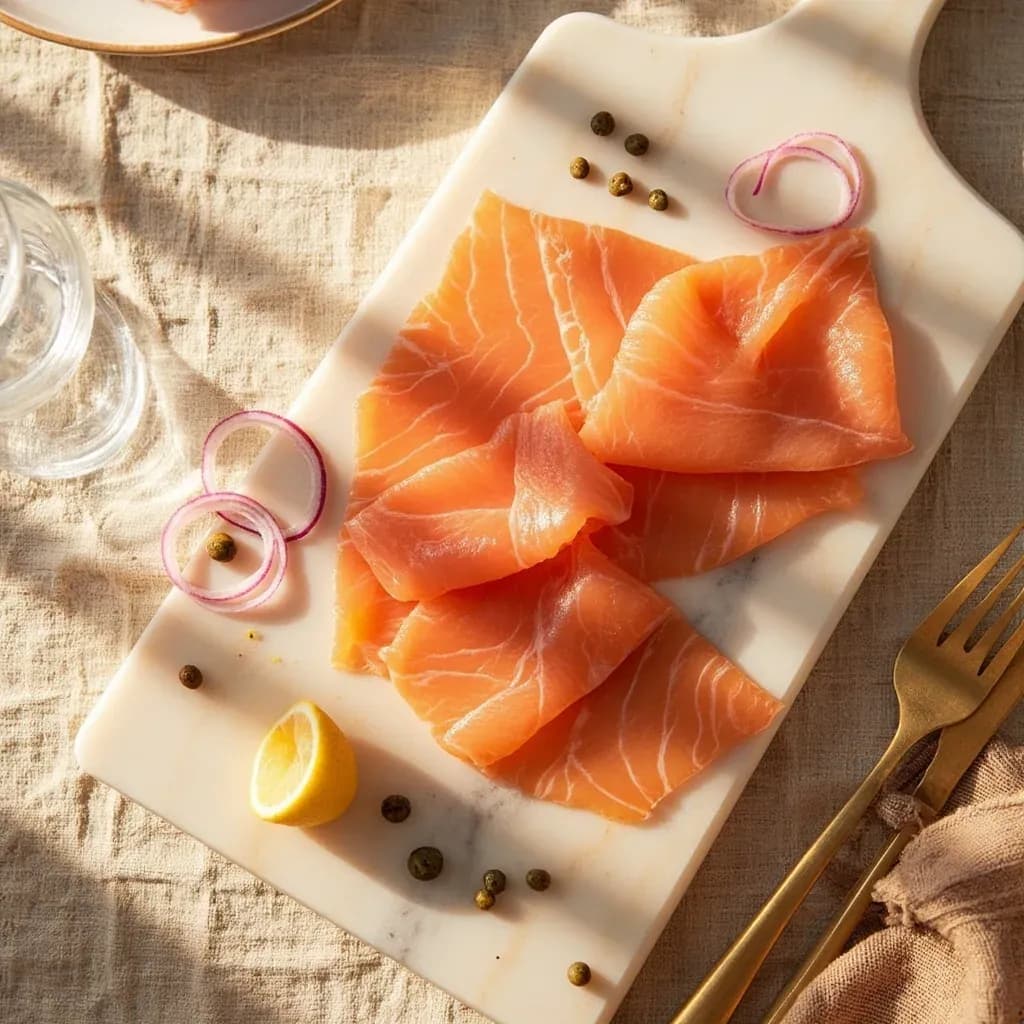
The single biggest variable in how lox eats is how it is cut. Paper-thin slices on a long bias melt on the tongue; thick, ragged slices chew like rubber. The fish should rest just above refrigerator temperature, about 38–45°F, so the proteins relax enough to yield to the blade without tearing or weeping.
- Use a long, very sharp slicer, ideally a sashimi knife (yanagiba) or a granton-edge ham slicer; a dull blade crushes the flesh and drags out moisture.
- Hold the knife at roughly 15–30° to the grain and draw through in one smooth stroke; never saw back and forth.
- For a platter fan, lay slices overlapping on chilled plates lined with a damp paper towel so they do not slide.
- Slice only what will be served in the next 20 minutes; exposed slices oxidize and dry at the edges quickly.
Common uses
Tips & pitfalls
- Slice at a 15–30° bias with a long, very sharp blade; a dull knife tears the flesh and crushes the silky texture.
- If the cure is more briny than you'd like, rinse slices briefly under cold water and pat dry with paper towels before plating.
- Always serve cold; lox turns greasy and smells fishy when warm. Pull from the fridge 10 minutes before slicing, no more.
- Look for translucent, glossy slices that hold together; opaque or weeping flesh means the fish is past prime.
- Lay slices on chilled plates lined with a damp paper towel so they do not slide and the plate stays cold longer.
- Do not freeze-then-thaw finished lox for service; the texture goes mushy. Buy fresh portions frequently instead.
- Keep a separate, dedicated slicing board and knife; salmon oils linger and can transfer to other foods.
- Do not confuse lox with smoked salmon: lox is raw and unscented, Nova is cold-smoked, kippered is hot-smoked.
Nutrition
Nutrition
No USDA FoodData Central match for Lox yet. We surface a per-100 g profile once a generic whole-food entry is matched and verified.
In the shops
Matched grocery products
No matched grocery products for Lox yet.
Good to know
- Origin
- Ashkenazi Jewish tradition in Eastern Europe and New York; the word 'lox' comes from the Yiddish laks (salmon).
- Definition
- Salmon cured in a saltwater brine; uncooked and never smoked, unlike Nova or cold-smoked salmon.
- Species
- Most often farmed Atlantic salmon; wild Pacific (king, sockeye, coho) is used for Western U.S. lox.
- Cure
- Wet brine of salt, sometimes with sugar; no nitrites required since the fish is not cooked or smoked, though some producers add them.
- Texture
- Silky, supple, translucent; holds its shape when sliced thinly on the bias.
- Slice
- Served paper-thin, usually at a 15–30° angle to the grain.
- Shelf life
- About 2 weeks vacuum-sealed and refrigerated; 2–3 days once opened; do not freeze for service-quality texture.
- Yield
- Cure loses roughly 10–15% of raw weight; about 1 lb raw salmon yields ~13–14 oz finished lox.
- Serving temp
- Just above refrigerator cold, around 38–45°F / 3–7°C; pull from fridge about 10 minutes before slicing.
Substitutes
- Nova lox / cold-smoked salmon — Closest stand-in; brings a light smoke note and slightly drier texture. Slice thin.
- Gravlax — Dry-cured with dill and sugar; sweeter and herbed, but identical in texture and service role.
- Cured trout — Brined or dry-cured rainbow trout; lighter flavor and slightly softer flesh than salmon.
- Cured Arctic char — Mild, buttery alternative; works on the same bagel-and-cream-cheese stage.
- Smoked sable (black cod) — Luxurious and silky; richer than salmon, so use sparingly as a high-end swap.
Pairs with
Also called
belly lox · salt-cured salmon · Nova lox