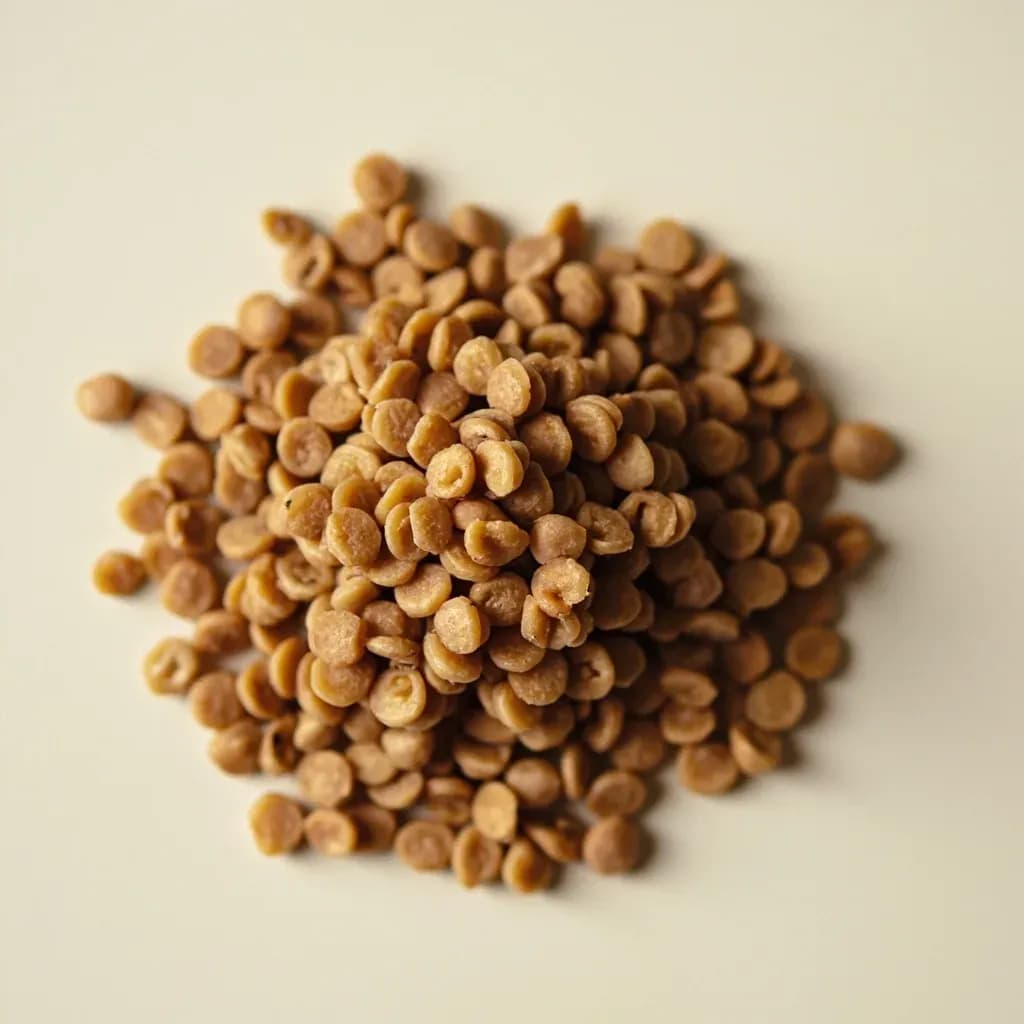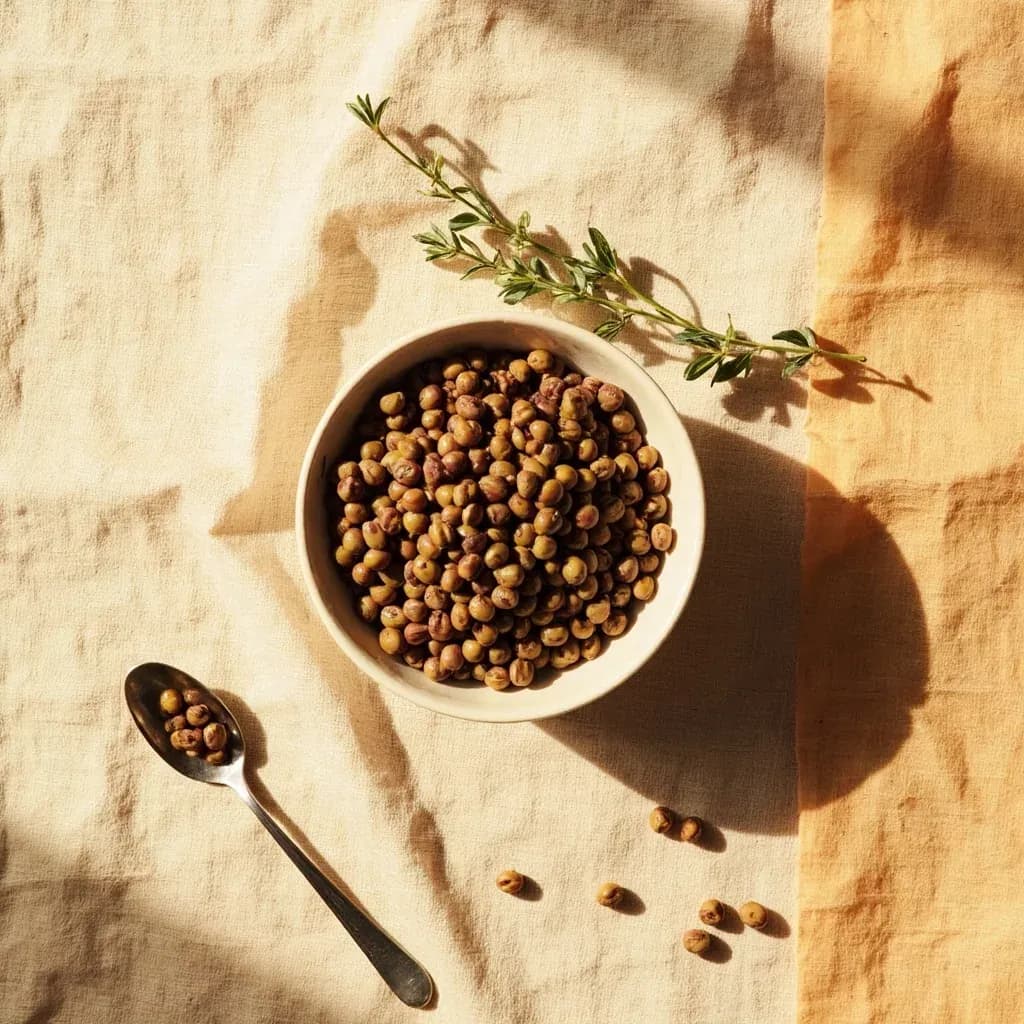
Legumes & Beans
Puy (French Green) Lentil
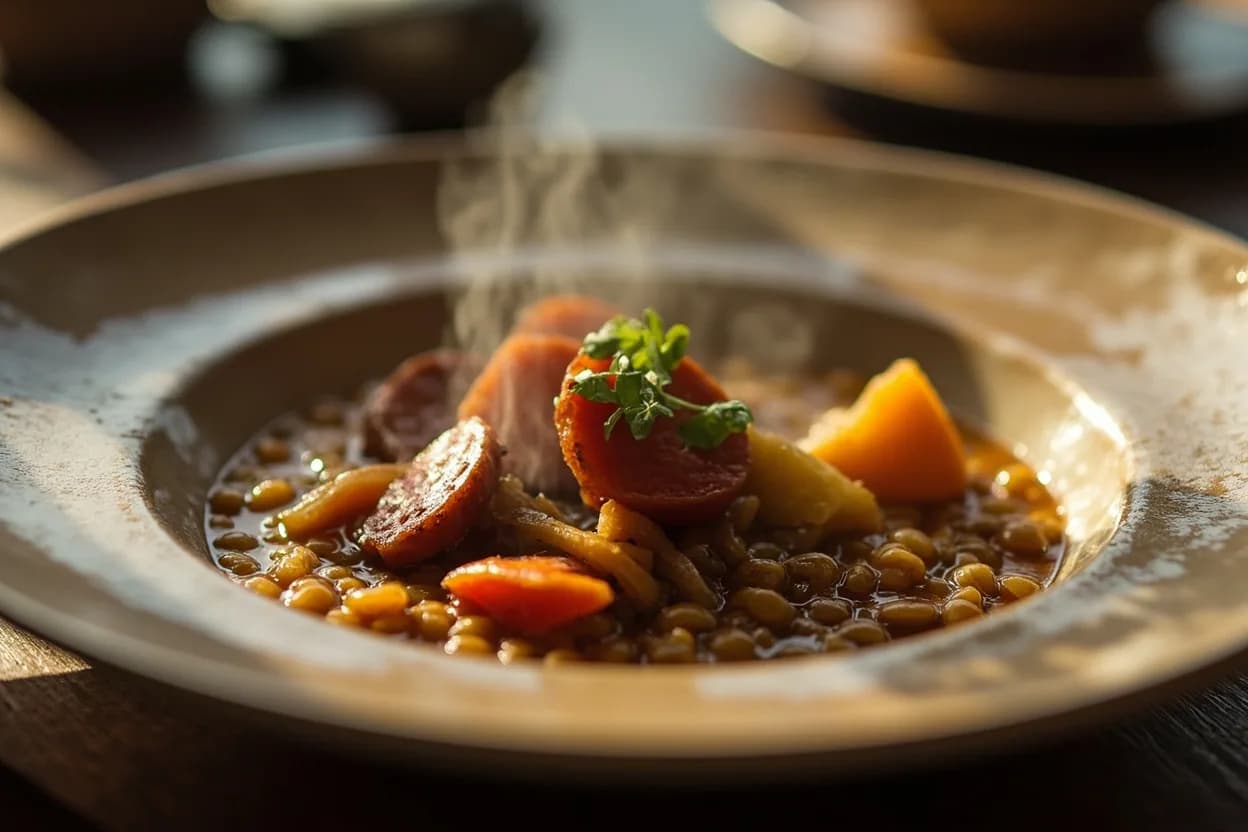
Small slate-green lentil that stays firm and distinct after cooking; no pre-soak needed, holds up in warm salads, braises, and as a bed for fish or sausage.
Puy lentils — properly Lentilles Vertes du Puy — are small slate-green legumes grown in a handful of communes around Le Puy-en-Velay in the Haute-Loire, on the volcanic slopes of the Massif Central. Since 1996 they have carried a French AOC, upgraded to AOP under EU law in 2008, making them the only lentil in France with full protected-origin status. That legal shield is not bureaucratic fuss: the mineral-rich volcanic soil, the altitude, and the cool nights give these lentils a thin skin, a deep blue-green marbled color, and a clean, faintly peppery, mineral flavor that no plain 'green lentil' reproduces. When you read the green AOC seal on the bag, you are buying a specific place as much as a specific bean.
In the kitchen, Puy lentils behave better than almost any other dried legume. They need no soaking, cook in 20–25 minutes from cold water, and — this is the real point — they hold their shape. A properly cooked Puy should be tender through the middle yet still distinct on the fork, never dissolving into a starchy purée the way most brown or supermarket green lentils will. That structural integrity is why they appear on bistro menus beside seared tuna, duck breast, and sausage, and why a warm lentil salad dressed with shallot and Dijon remains a textural pleasure rather than a stodge. About 1 cup dried yields roughly 2–2¼ cups cooked, and they keep for a year or more in a sealed jar in a cool, dark cupboard.
Markets in North America routinely label generic green lentils 'Puy-style' or 'French green.' Those are not the same bean. Genuine Puy have a noticeably bluer, more mottled skin and a tighter, almost waxy feel between the fingers. The difference shows up plainly in the pot: the impostors cook faster, break down sooner, and taste flat. When a recipe specifically calls for Puy — and the dish leans on the lentils holding their shape — it is worth seeking out the labeled product.
- Measured in
- g
- Storage
- Pantry
Find it in
Suits
Types & varieties
The only authentic variety; grown in designated communes of Haute-Loire on volcanic soil and sold with the green AOC/AOP seal.
A loose marketing term for Puy-area production; there is no separate 'Auvergne' AOC, so confirm the Lentilles Vertes du Puy seal to be sure of origin.
Pre-modern cultivar referenced by some growers; thinner skin and a more delicate texture.
Separate IGP from the Berry region; smaller, slightly sweeter, similarly firm — the closest legally distinct relative.
Why Salt and Acid Wait
Puy lentils, like most legumes, are unforgiving about seasoning timing. Salt and any acidic ingredient — vinegar, wine, tomatoes, lemon — added at the start of cooking draw moisture out of the skin and toughen it, lengthening cook time and producing a wrinkled, sometimes mealy bean. The professional habit is to cook the lentils in plain water or unsalted broth with aromatics only, then finish them: salt the cooking liquid in the last 5 minutes, and add any acid (vinegar, mustard, lemon) after the lentils are drained or off the heat. For warm salads this is doubly useful, because the lentils are slightly underdone and still porous, so a mustard-and-shallot vinaigrette tossed in while they're hot will be absorbed into the surface, carrying flavor into the bean rather than sliding off it.
Reading the Bag
Visual and tactile cues to tell a real Puy from a generic green lentil on the shelf:
- Color: true Puy is dark, blue-tinged slate-green with visible marbling; ordinary green lentils are flatter, more olive or khaki.
- Surface: the AOC beans have a slightly waxy, almost polished look; cheaper greens look duller and chalkier.
- Feel: a real Puy feels dense and a little slippery; a generic green lentil feels drier and lighter in the hand.
- Packaging: look for 'Lentilles Vertes du Puy' plus the green AOC or red-and-yellow AOP seal, and a named commune in Haute-Loire.
- Price: a genuine AOC bag is meaningfully more expensive — typically two to three times the price of commodity green lentils — and that gap is a useful proxy for authenticity.
Common uses
Tips & pitfalls
- Sort and rinse thoroughly before cooking; small stones and field debris can hide in the bag.
- Start in cold water, bring to a boil, then drop to a bare simmer — a hard boil splits the skins and turns the pot cloudy.
- Hold the salt (and any vinegar, wine, or tomatoes) until the lentils are nearly tender; salt and acid in the first half toughen the skins.
- Skim the gray foam that rises in the first few minutes for a cleaner-tasting pot and clearer cooking liquid.
- Build flavor early with aromatics — a bay leaf, a peeled garlic clove, a thyme sprig, or a small strip of kombu — and fish them out before dressing.
- For a deeper, nuttier flavor, toast the dry lentils in a little butter or oil for 1–2 minutes before adding any liquid; listen for the first faint pops, then add water.
- Test doneness by biting, not by clock: the bean should be tender through the center with a faint, pleasant resistance; it will soften another 5–10% off the heat.
- For salads, drain a minute or two early and spread on a sheet pan to halt cooking; this is what preserves the characteristic shape.
- Common mistake: substituting generic supermarket 'green lentils' — they cook faster, break down, and lack the mineral snap.
- Common mistake: cooking too long or in too much water, which turns the lentils waterlogged and dull and erases the texture that defines the bean.
Nutrition
Energy
1473 kJ · per 100 g
Where the calories come from
Protein
24.6g
49% DV
Carbs
63.4g
23% DV
Fat
1.1g
1% DV
Fiber
10.7g
38% DV
Sugars
2g
of which
Sodium
6mg
0% DV
Source · USDA FoodData Central · Lentils, raw
View on FDC →In the shops
Matched grocery products
No matched grocery products for Puy (French Green) Lentil yet.
Good to know
- Origin
- Le Puy-en-Velay, Haute-Loire, Auvergne, France — volcanic soils of the Massif Central
- Protected status
- French AOC since 1996; EU AOP since 2008 — the only lentil in France with full AOP status
- Botanical name
- Lens culinaris (Puy cultivar)
- Color & appearance
- Dark slate-green to blue-grey with fine marbling; pale yellow interior; 4–5 mm
- Flavor
- Earthy, mineral, faintly peppery with a clean vegetal finish
- Texture when cooked
- Firm and distinct; holds shape without turning to purée
- Soaking
- Not required
- Cook time
- 20–25 minutes at a gentle simmer
- Water ratio
- 1 cup dried lentils to 2–2.5 cups water or unsalted broth
- Yield
- 1 cup dried yields about 2–2.25 cups cooked
- Storage
- Airtight container, cool/dark/dry; 1 year, often longer
Substitutes
- Lentille Verte du Berry — Closest French IGP substitute; smaller and slightly sweeter, similarly firm.
- Spanish Castellana or Pardina lentil — Holds shape well; smaller, thinner-skinned, nuttier, and cooks a touch faster.
- Beluga (black) lentil — Same small size and firm texture; swap visually and texturally, though flavor runs more earthy-mushroomy.
- Italian Castelluccio lentil — Firm and shape-retaining; nuttier and more delicate than Puy.
- Plain green or brown lentil — Acceptable in long-cooked, saucy preparations but breaks down into a softer, creamier texture — not a true stand-in for salads or as a fish bed.
Pairs with
Also called
French green lentil · lentilles du Puy · green lentil