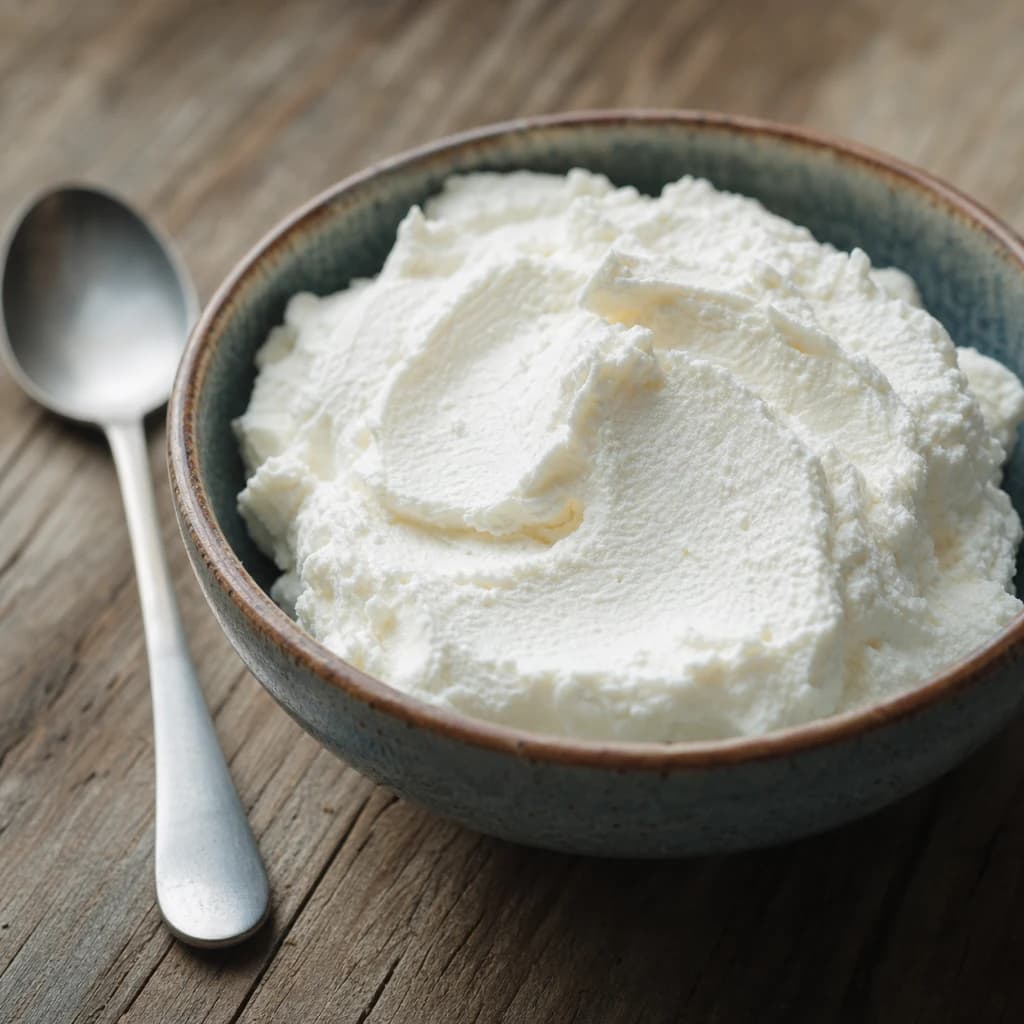
Natural form
Fresh quark straight from its container — white, thick, and softly mounded.
Shows the ingredient's defining texture, color, and consistency as a cook first encounters it.
Dairy & Eggs
Quark (Topfen)
Soft, fresh, slightly tangy curd cheese central to Central European cakes, dumplings, and spreads.
Quark, known as Topfen in Austria, is a soft fresh cheese with a smooth texture and mild, gently sour flavor. It is a baking staple in Central and Eastern Europe, going into cheesecakes, dumplings, strudel fillings, and savory spreads. Lower in fat than cream cheese, it is also eaten plain with fruit or herbs.
Quark is a fresh, unripened acid-coagulated cheese with deep roots in Germany, Austria, Poland, and the Baltic states, where it is known as Topfen, Twaróg, and other regional names. Unlike cream cheese, which uses rennet for coagulation, quark is made by acidifying warm milk until it curdles, then straining off the whey. The result is a smooth, spoonable cheese with a clean, mildly tangy flavor and noticeably less fat than many Western cream cheeses. Its high moisture content and fresh character make it uniquely suited to both sweet and savory preparations across Central and Eastern European cuisines. Austrian Topfen and German Quark are essentially identical products; in Poland, twaróg tends to be drier and more crumbly due to different production methods. For German cheesecake, fat content matters: 20% Vollfettquark produces the most authentic result, though the 10–20% range is acceptable for most home bakers.
- Measured in
- g
- Storage
- Fridge
Allergens
Types & varieties
Virtually fat-free; firmer texture, more tang; common in diet cooking
Mid-range fat; most popular for general kitchen use in Germany
Full-fat version; richer, creamier mouthfeel
Table quark meant for eating fresh with fruit or honey
Cooking-grade quark with slightly different moisture content for baking stability
Quark in Baking: Avoiding the Weeping Problem
The most common failure when baking with quark is a filling that weeps or becomes grainy. This happens because quark contains more water than cream cheese and is prone to releasing that moisture under high heat. The solution is twofold: moderate baking temperatures (160–175°C) and the addition of a stabilizer.
- Mix 1 tablespoon of cornstarch or 2 tablespoons of flour into 500g of quark before adding other filling ingredients
- Bake at 160–175°C (320–345°F) rather than higher temperatures—low and slow prevents moisture release
- For smoother fillings, blend quark briefly before mixing to eliminate any inherent graininess
Substitutions and Their Limits
While several dairy products can approximate quark's texture, none replicate its unique balance of low fat, high moisture, and clean tang exactly. This matters most in traditional recipes where the specific character of quark defines the dish.
- Greek yogurt (strained overnight): closest texture match; slightly more tart; good for dips and spreads
- Fresh farmer's cheese: slight curd texture; drain thoroughly; acceptable for baked fillings
- Cream cheese: too thick and rich; will significantly alter German cheesecake; only for experimentation
- Ricotta: made from whey rather than milk; grainier; acceptable in pasta fillings but not cheesecake
Common uses
Tips & pitfalls
- Commercial quark is ready to use; homemade quark should be well-drained or it will be too wet for most baked applications
- Line your cheesecloth or strainer with a clean cotton cloth for a drier result, or use a fine-mesh sieve with good drainage time (2–4 hours refrigerated)
- Do not use high heat when baking with quark—it can cause the filling to weep or become grainy; bake at moderate temperatures (160–175°C)
- If the recipe splits during baking, a tablespoon of cornstarch or flour mixed into the quark filling helps stabilize it
- For a smoother filling in cheesecakes, blend quark briefly before mixing with other ingredients to eliminate any graininess
- Common mistake: substituting cream cheese for quark in traditional German cheesecake—the flavor and texture will be wrong; Greek yogurt with drained whey is a closer match
- For homemade quark: heat 1 liter of buttermilk or cultured milk to 40°C, add 2 tbsp lemon juice or white vinegar, stir gently, strain 2–4 hours
Nutrition
Energy
410 kJ · per 100 g
Where the calories come from
Protein
11.1g
22% DV
Carbs
3.4g
1% DV
Fat
4.3g
6% DV
Fiber
0g
0% DV
Sugars
2.7g
of which
Sodium
315mg
14% DV
Source · USDA FoodData Central · Cheese, cottage, creamed, large or small curd
View on FDC →In the shops
Matched grocery products
No matched grocery products for Quark (Topfen) yet.
Good to know
- Origin
- Germany, Austria, Poland, Czech Republic, Baltic states
- Type
- Fresh, unripened acid-coagulated cheese
- Milk
- Cow's milk (typically 2% or 3.5% fat in production)
- Texture
- Smooth, creamy, spoonable; no visible curds
- Flavor
- Mildly tangy, fresh, clean; less acidic than cottage cheese
- Fat content
- 0% (Magerquark) to around 20% (Vollfettquark)
- Production
- Acidified milk is heated to 40–45°C until coagulation, then strained
- Perishability
- Refrigerate; consume within 1–2 weeks of opening
- Austrian name
- Topfen
- Polish name
- Twaróg
- Czech name
- Tvaroh
Substitutes
- Greek yogurt (strained) — Closest texture; slightly more tart; works for dips, spreads, and some baking
- Fresh farmer's cheese (Hüttenkäse) — Slight curd texture but workable; drain thoroughly; acceptable for baked fillings
- Cream cheese — Too thick and rich; will alter traditional recipes significantly; only for experimentation
- Ricotta — Made from whey, not milk; grainier texture; acceptable in pasta fillings but not for cheesecake
- Homemade quark — Heat 1 liter of buttermilk or cultured milk to 40°C, add 2 tbsp lemon juice or white vinegar, stir gently, strain 2–4 hours
Pairs with
Also called
Topfen · Tvaroh · Kohupiim · Curd Cheese
Appears in these dishes
Related

Whole Milk
Rich, full-fat milk for drinking, coffee, sauces, and baking
Butter
Golden fat for searing, baking, and finishing a sauce
Yogurt
Tangy, creamy culture for breakfast, sauces, and marinades
Cheddar Cheese
Sharp, melty cheese for sandwiches, gratins, and grating
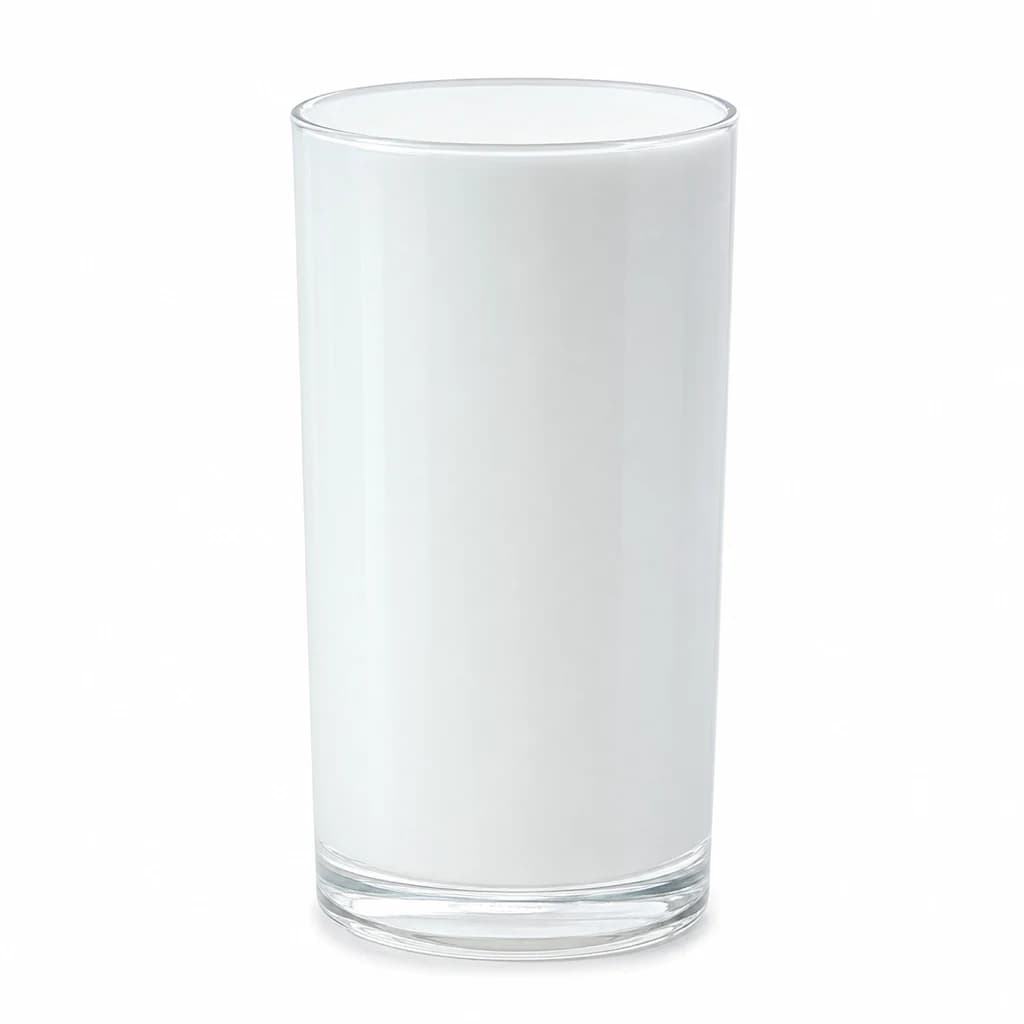
Skim Milk
Fat-free milk for lighter drinking, coffee, and cooking
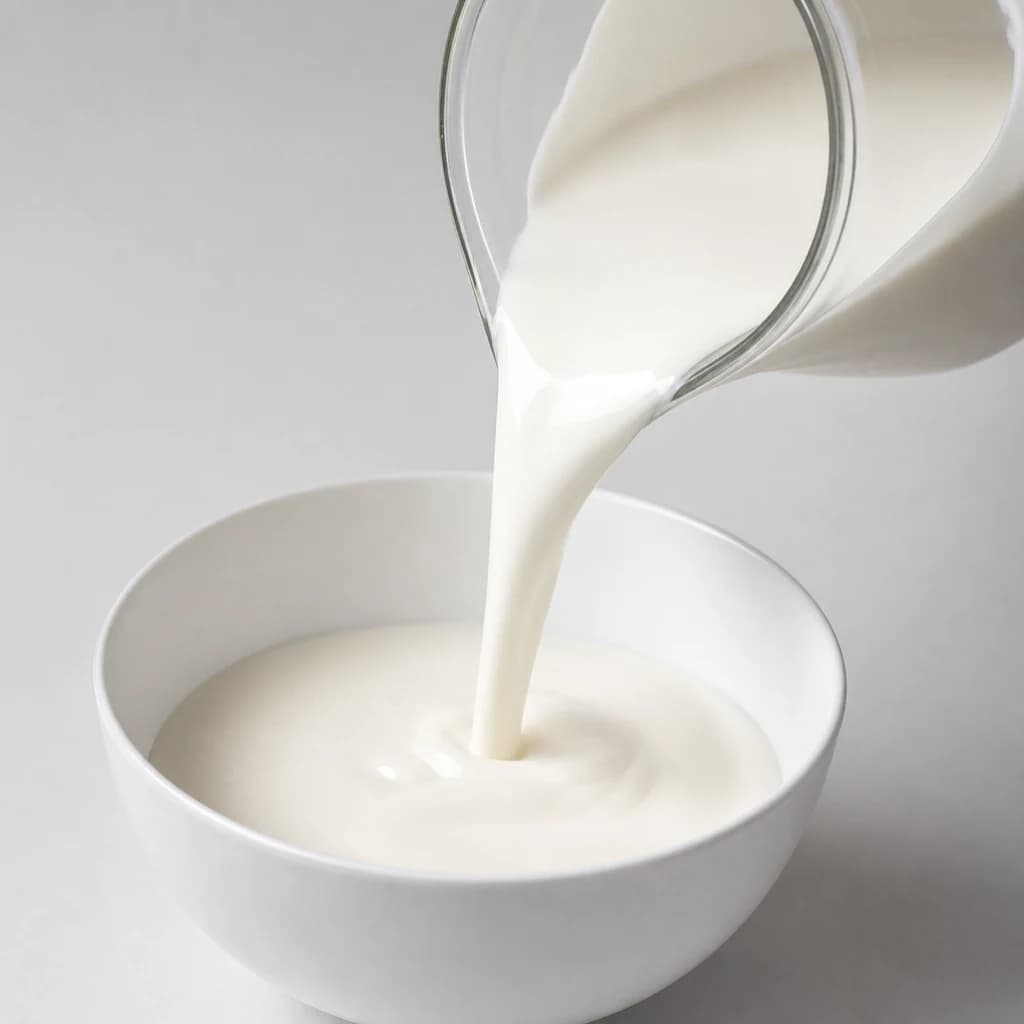
Heavy Cream
Rich cream that whips, enriches sauces, and sets ganache

Sour Cream
Tangy, thick cream for dolloping, baking, and dips
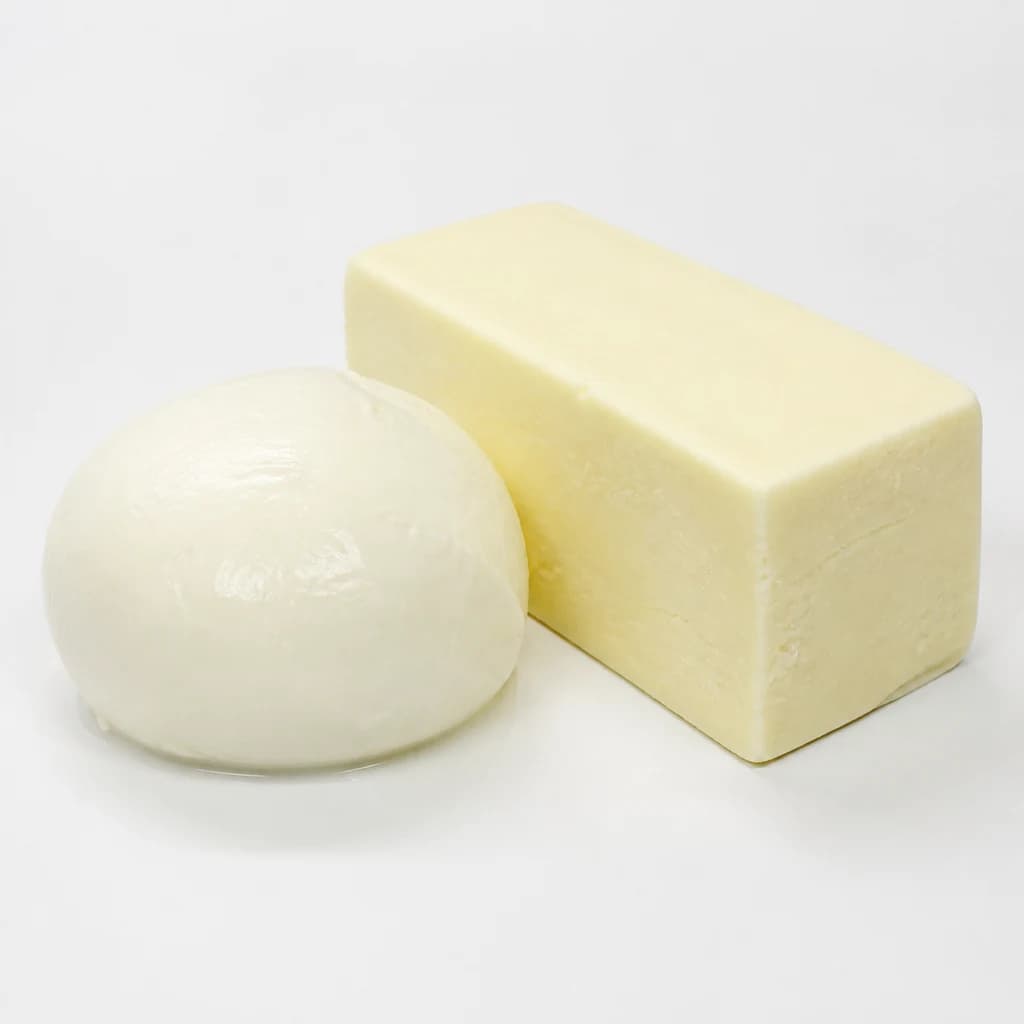
Mozzarella
Soft, milky cheese that melts into stretchy pizza pulls