Spices
Table Salt (Iodized)
Fine, dense, fortified-with-iodine salt that dissolves fast; precise for baking by weight, though its sharp saltiness means lighter measures than flaky salts.
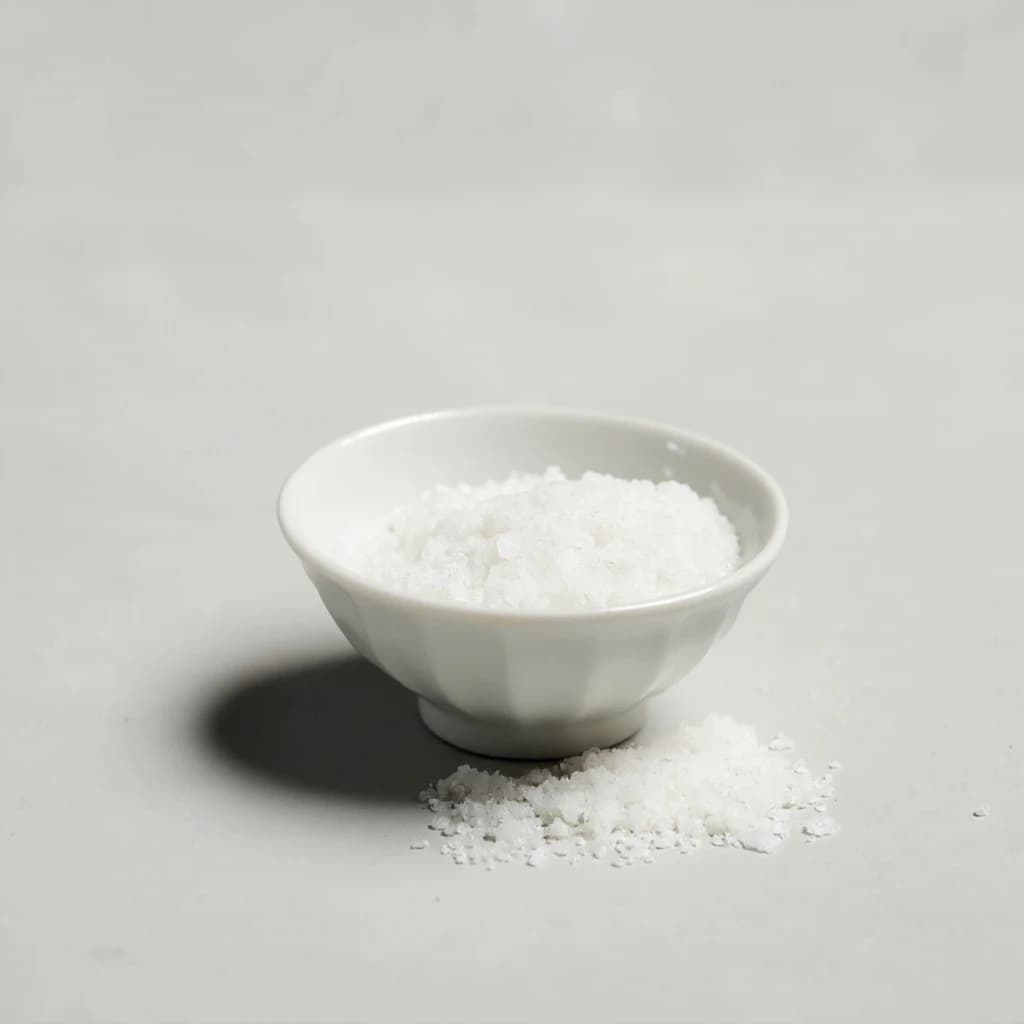
Table salt is the workhorse of American kitchens: refined sodium chloride ground to a fine, uniform crystal of roughly 0.3–0.5 mm, fortified with iodine, and treated with an anti-caking agent so it flows freely from a shaker. It is the salt against which most American recipes — particularly older baking references — were calibrated, and that historical default is still baked into how cookbooks phrase a "teaspoon of salt" or a "pinch." Salt in unmarked recipes almost always means table salt, a useful piece of context whenever you reach for a different crystal.
The iodine, added as potassium iodide in the US or potassium iodate in the EU and most tropical markets (where heat and humidity degrade iodide faster), is there for public health rather than flavor. The 1924 US iodization program, championed by Michigan physician David Murray Cowie and adopted by refiners like Morton, virtually eliminated endemic goiter in the Great Lakes region within a generation. The trade-off for the cook is twofold: iodine can lend a faint metallic edge to raw, minimalist dishes (think salted butter on bread or a finished tomato salad), and the anti-caking agent — usually sodium aluminosilicate or calcium silicate at 1–2% — turns brines cloudy and complicates curing chemistry.
What makes table salt genuinely useful is its predictability. The fine, dense crystals dissolve almost instantly in cold and hot liquids, distribute evenly through doughs and batters, and measure consistently by weight. That density is also the source of its most common kitchen error: cooks who swap it 1:1 by volume with kosher or flake salts oversalt without realizing it, because a teaspoon of table salt weighs substantially more than a teaspoon of any coarser crystal.
- Measured in
- g
- Storage
- Pantry
Find it in
Suits
Types & varieties
The default American kitchen salt: fine grain, iodine added, anti-caking agent included.
Same fine grain and anti-caking agents, but no iodine added — the choice for pickling, brining, cured meats, and fermented foods.
Finer than standard table salt, ground to cling to popcorn, nuts, and other dry snacks.
Same fine grain as table salt but with no iodine and no anti-caking agent, so brines stay clear and pure.
The Public-Health Story Behind Iodization
Iodized table salt exists because of goiter, not cuisine. In the early twentieth century, surveys revealed alarmingly high rates of thyroid enlargement across the Great Lakes and inland Northwest, regions whose soil — and therefore food supply — was notoriously iodine-poor. David Murray Cowie of the University of Michigan and the Michigan State Medical Society pushed refiners to add iodine to their product; Morton began selling iodized salt nationally in 1924. Within a decade, goiter rates in iodized-salt regions had dropped dramatically. The decision shaped the American salt aisle permanently: iodized table salt is the default, and non-iodized is the specialty purchase. For most cooks, the public-health benefit is invisible; for those who can taste the faint metallic edge of iodine in raw, minimalist preparations (a pinch on a ripe tomato, salt stirred into softened butter), the non-iodized alternative is worth keeping on hand.
The Volume Trap: Why Table Salt Salts More
The single most common seasoning mistake in American kitchens is a 1:1 volumetric swap between table salt and a coarser salt. Table salt's fine, uniform crystals pack tightly into a measuring spoon; a flaky or coarse salt leaves air between crystals and weighs far less per spoonful. The numbers are dramatic: a teaspoon of table salt weighs around 6 g, a teaspoon of Diamond Crystal kosher salt weighs about 3 g, and a teaspoon of Maldon flake salt can weigh under 3 g. Substituting the other direction — replacing a recipe's teaspoon of table salt with a teaspoon of kosher — cuts the salt in half and produces a dish that tastes flat. The reliable fix in baking is to ignore volume and weigh the salt in grams; in cooking, learn the brand-specific volume ratio for the salt you keep on hand.
When Non-Iodized Is the Right Choice
Three situations argue for reaching past the iodized shaker. First, fermented pickles and sauerkraut: the anti-caking agent stays suspended in the brine and turns it cloudy, which obscures clarity and can affect texture. Second, charcuterie and cured meats: dextrose (added as an iodine stabilizer) and iodine compounds can interact with curing salts like Prague powder #1 and #2 in ways the home-curer doesn't want to troubleshoot; standard practice is non-iodized pickling salt or kosher salt. Third, any dish where the salt is tasted raw and unadorned — a pinch on a perfectly ripe tomato, salt for finishing a caramel, a few grains on a buttered baguette. The flavor difference is small but real, and once you notice it, you can't unnotice it.
Common uses
Tips & pitfalls
- Weigh salt in grams in baking rather than trusting volumetric measures; table salt's density differs sharply from flaky and kosher salts.
- Do not substitute kosher salt 1:1 by volume — Diamond Crystal kosher is roughly 1.5× by volume, Morton kosher is closer to 1:1 by volume, and all salts are equivalent by weight.
- Skip iodized table salt for fermented pickles and sauerkraut: the anti-caking agents turn the brine cloudy and can interfere with texture and clarity.
- Use non-iodized table salt (or pickling salt) for cured meats, charcuterie, and any recipe calling for curing salts like Prague powder #1 or #2 — dextrose and iodine compounds can complicate curing chemistry.
- Store the box or shaker away from the stovetop and direct sun; both heat and light accelerate iodine loss, so a cabinet at room temperature is ideal.
- If a recipe calls for 'salt' without qualifier and you are cooking by volume, assume the author meant table salt — many older baking references were written with table salt as the default.
- The faint metallic edge some tasters report is the iodine itself, not contamination; switching to non-iodized resolves it for raw applications.
- When seasoning to taste during cooking, add table salt in smaller increments than you would with kosher or flake salt; its higher density means each pinch carries more actual salt.
Nutrition
Energy
0 kJ · per 100 g
Protein
0g
0% DV
Carbs
0g
0% DV
Fat
0g
0% DV
Fiber
0g
0% DV
Sugars
0g
of which
Sodium
38758mg
1685% DV
Source · USDA FoodData Central · Salt, table
View on FDC →In the shops
Matched grocery products
 €0.75
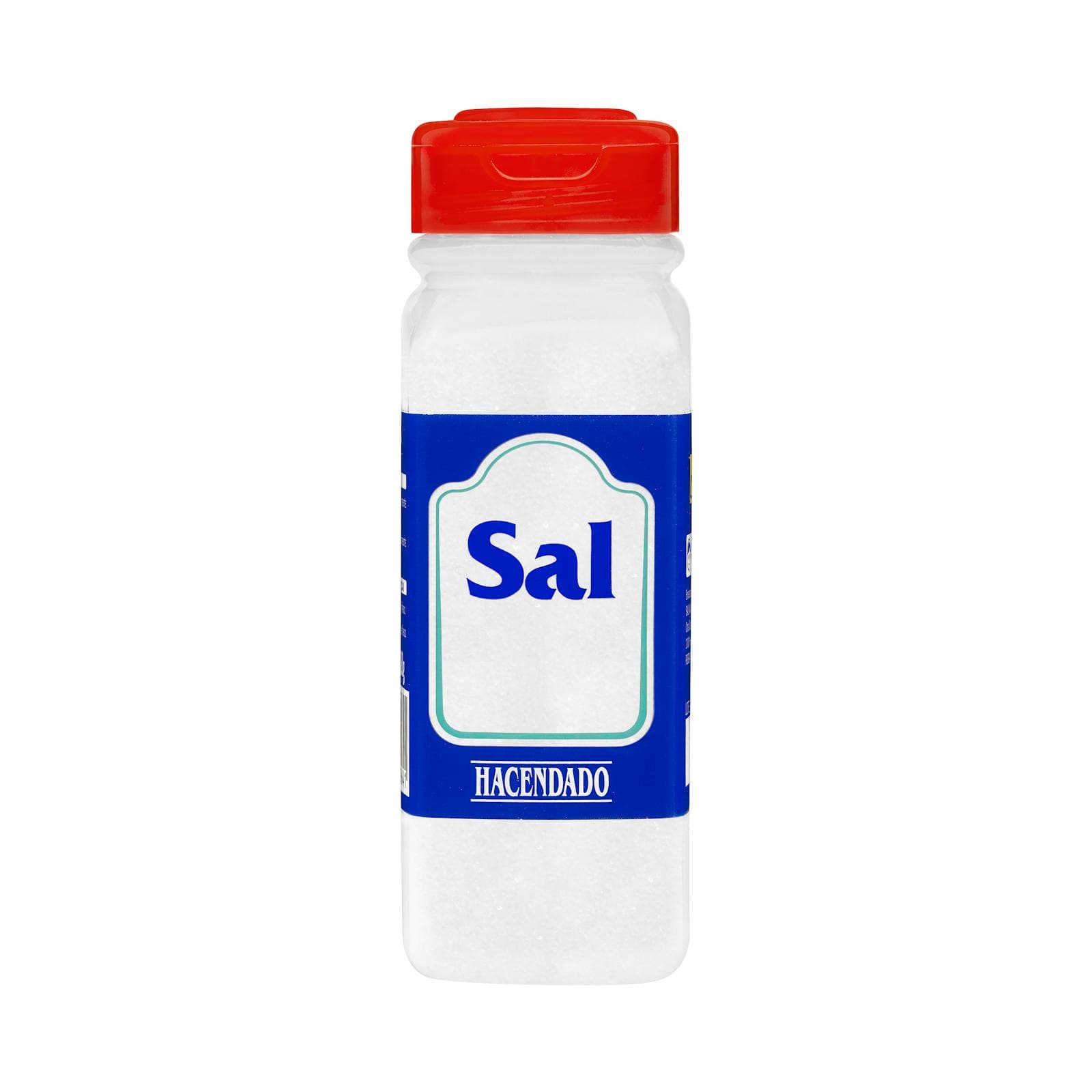
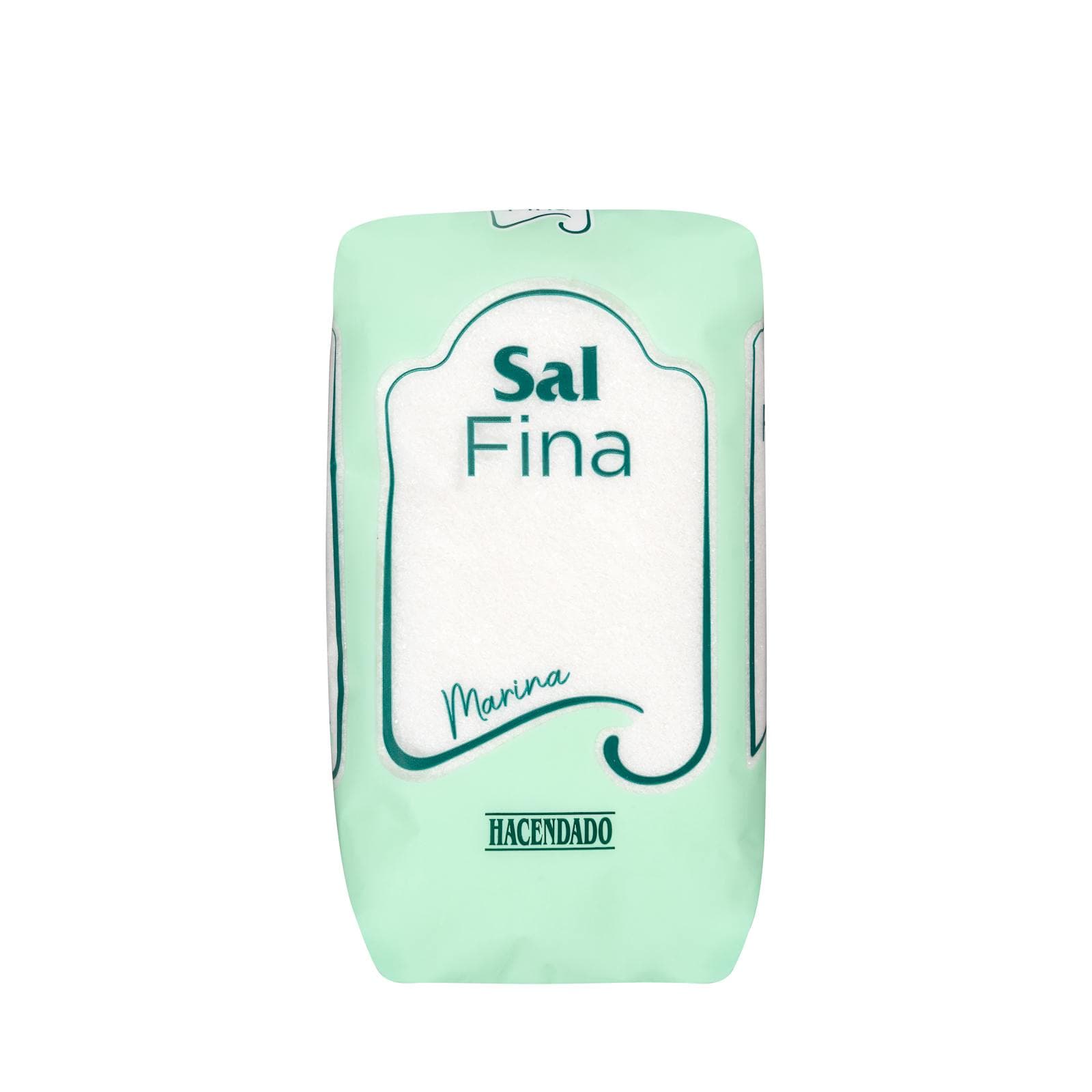
€0.75Fine Table Salt
Hacendado · 300 g · Mercadona
 €0.40
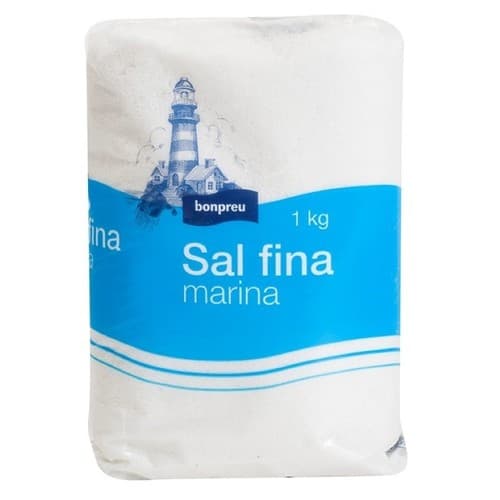
€0.40Fine Salt
Hacendado · 1 kg · Mercadona
 €0.40
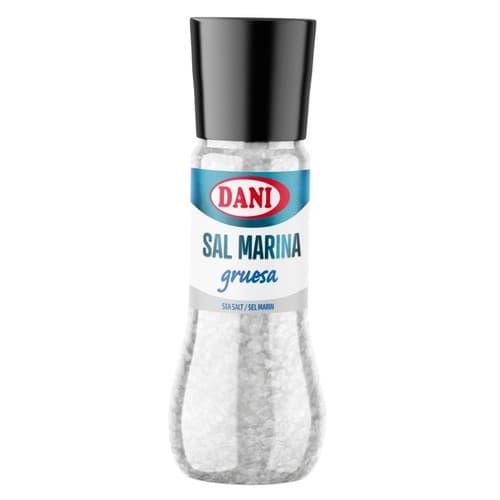
€0.40Fine Sea Salt
BONPREU · kg · Bonpreu
 €2.99
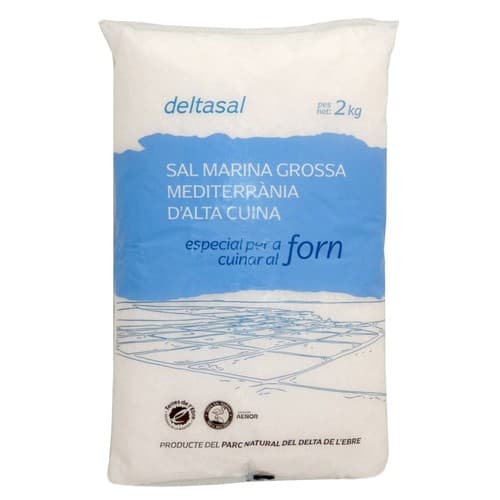
€2.99Coarse Sea Salt
DANI · kg · Bonpreu
 €1.40
€1.40Deltasal Coarse Sea Salt
DELTASAL · kg · Bonpreu
 €5.89
€5.89Maldon Chili Sea Salt
MALDON · kg · Bonpreu
Good to know
- Composition
- Refined sodium chloride (typically ≥97% NaCl) with added iodine source and anti-caking agent.
- Iodine source (US)
- Potassium iodide, often stabilized with a small amount of dextrose to prevent oxidation.
- Iodine source (EU and tropics)
- Potassium iodate — more stable under heat, humidity, and long storage.
- Iodine level (US)
- FDA-codified minimum of 45 mcg iodine per gram of salt; typical commercial product runs 45–80 mcg/g.
- Anti-caking agents
- Sodium aluminosilicate, calcium silicate, tricalcium phosphate, or magnesium carbonate, generally at 1–2%.
- Granulation
- Fine, uniform crystals, roughly 0.3–0.5 mm; flows and dissolves readily.
- Density
- Roughly 1.2 g/mL; about 5–6 g per teaspoon and ~18 g per tablespoon (varies slightly by brand).
- Flavor
- Clean, sharp saltiness; reads slightly more pungent than coarser salts because the fine crystals put more salt surface area on the tongue.
Substitutes
- Kosher salt (Diamond Crystal) — Use about 1.5× by volume, or 1:1 by weight.
- Kosher salt (Morton) — Use 1:1 by volume (denser than Diamond Crystal), or 1:1 by weight.
- Fine sea salt — Use 1:1 by volume; check that it is free of large flakes that throw off measurement.
- Pickling or canning salt — Use 1:1 by volume; preferred for ferments and clear brines since it lacks iodine and anti-caking agents.
- Flake salt (Maldon, fleur de sel) — Use roughly 1.5–2× by volume; better reserved for finishing rather than baking.
Pairs with
Also called
iodized salt · common salt · refined salt