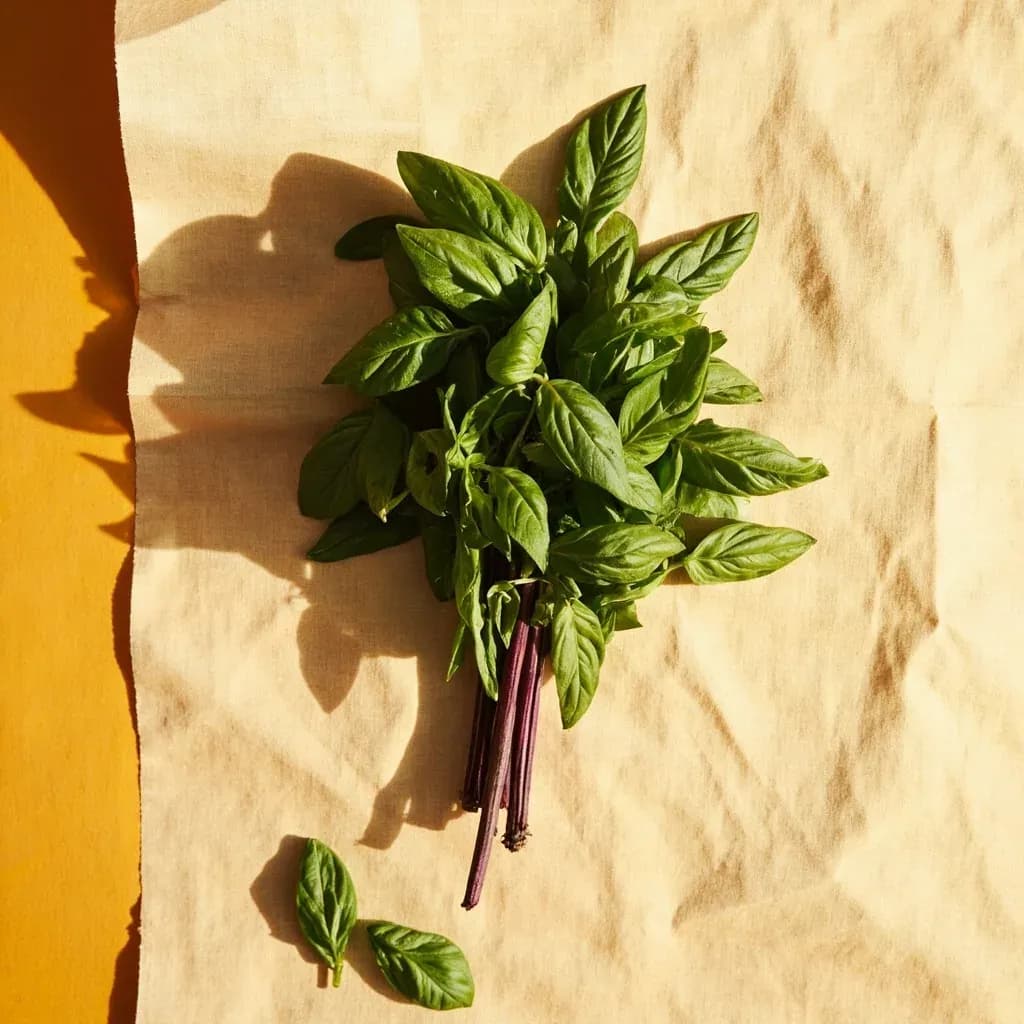
Herbs
Thai Basil
Anise-and-licorice basil with purple stems that holds up to heat; stirred into curries, pho, and stir-fries at the finish rather than used raw like sweet basil.
Thai basil (horapha) is a cultivar of sweet basil long cultivated in Southeast Asia for a sharper, more savory character than the Genovese type most Western cooks know. Its narrow, slightly serrated leaves and purple-red stems carry a pronounced anise and clove note, driven by high concentrations of methyl chavicol (estragole) and eugenol, the same clove-like phenol that gives holy basil its peppery bite. The purple coloration on the stems and unopened flower bracts is the quickest field identifier; if the stems are uniformly green, you are looking at sweet or lemon basil, not horapha.
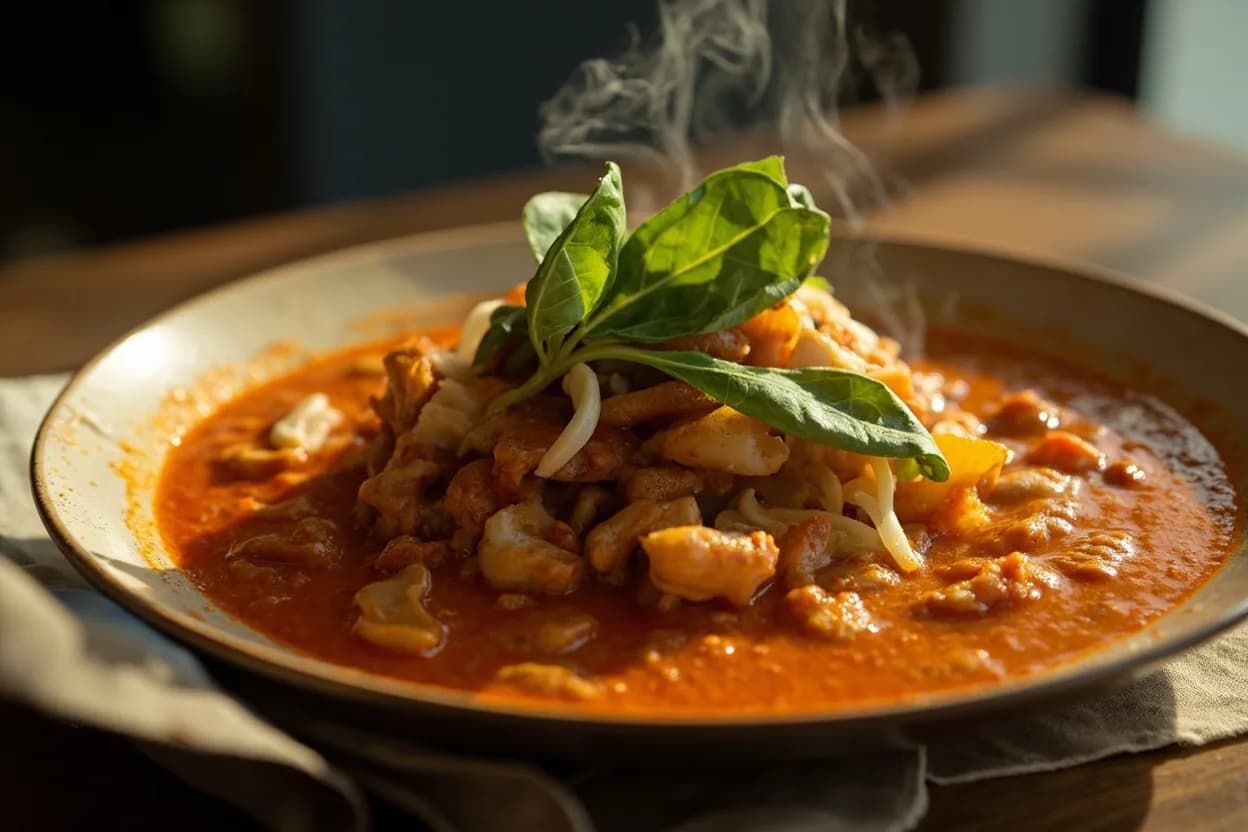
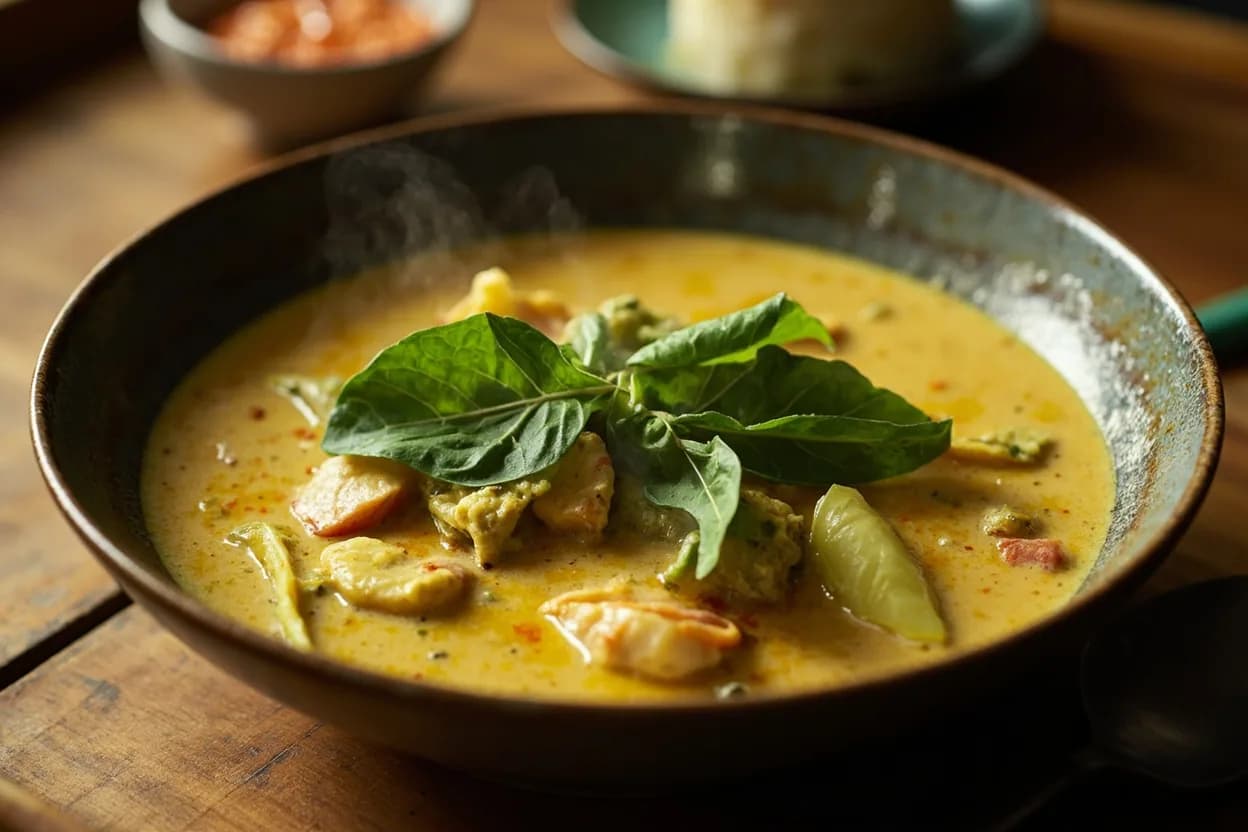
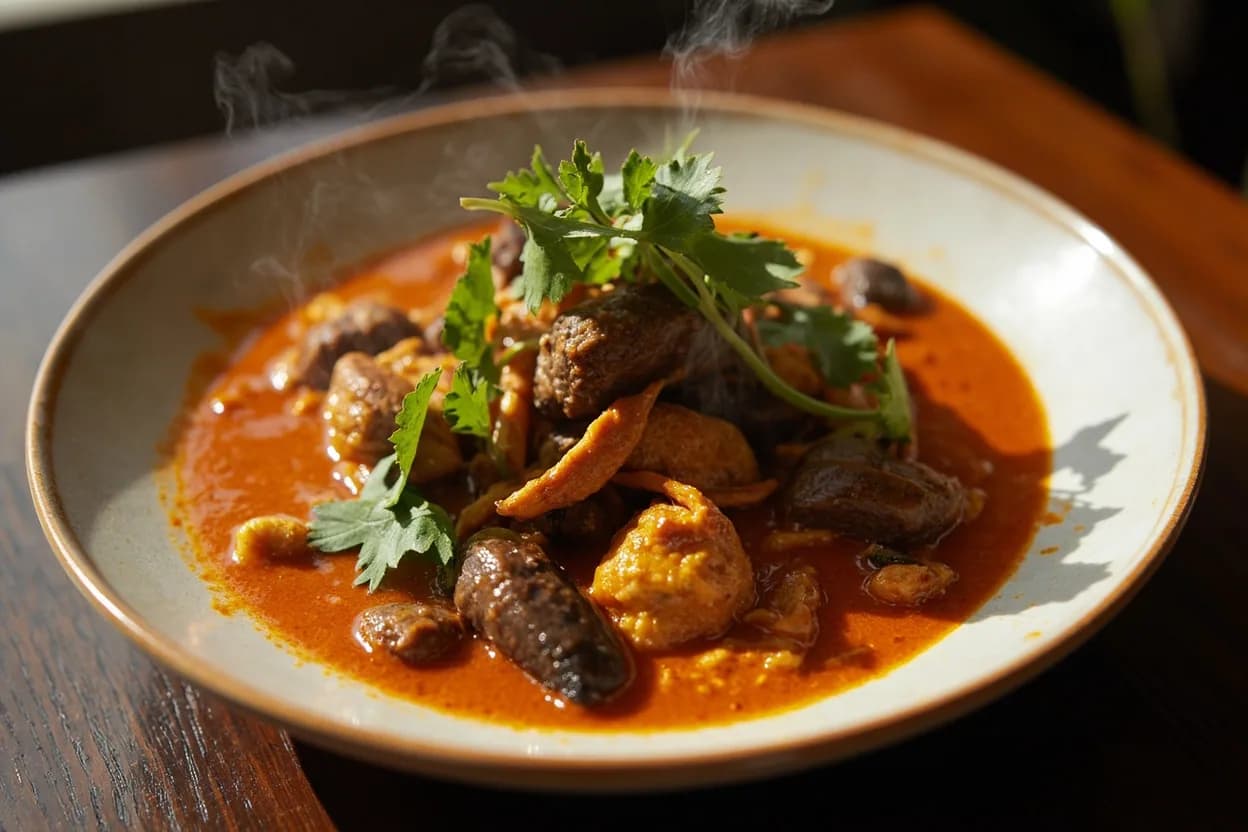
In the kitchen, Thai basil is prized for two reasons: it keeps its flavor through a quick blast of heat that would wilt sweet basil into green nothing, and it stands up to bold partners like fish sauce, chili, and coconut milk without disappearing. Add it at the very end of cooking — even a minute or two over high heat will fade the volatile oils — and use the stems as a second ingredient. Bruised stems steeped in broth or curry paste yield more anise than the leaves alone.
- Measured in
- g
- Storage
- Refrigerate
Find it in
Suits
Types & varieties
The standard cooking type: purple stems, purple flower spikes, strong anise-clove flavor.
Ocimum × citriodorum, lighter green leaves with a lemon-citrus note; more delicate to heat.
Ocimum tenuiflorum, a separate species with peppery, slightly bitter, clove-heavy flavor; the correct herb for pad krapow.
Not a true basil; peppery-menthol character used similarly in pho and Vietnamese salads.
Ornamental Thai-basil type with showier purple bracts; flavor similar but milder.
Smaller-leaved, intensely aromatic landrace foraged in northern Thailand and Laos.
Horapha, Kaprao, and Manglak: The Three Thai Basils
Thai cooking distinguishes three herbs that English speakers often collapse into 'Thai basil,' and they are not interchangeable. Knowing which one a recipe actually wants is the difference between an authentic green curry and a dish that tastes subtly off.
- Horapha (Ocimum basilicum var. thyrsiflora) is the anise-forward basil of green and red curries and the typical pho garnish; purple stems, purple flowers.
- Kaprao, or holy basil (Ocimum tenuiflorum), is a different species — pepperier, more clove-like, with a slightly bitter edge. It is the herb pad krapow is named after, and substituting horapha makes the dish taste sweeter and more licorice-y than intended.
- Manglak (Ocimum × citriodorum) is Thai lemon basil, with a clear lemon note and no licorice; it works in some curries but reads wrong where you want a clean anise character.
Storage and Revival
Thai basil is more perishable than it looks; the leaves blacken and the stems wilt within a day if treated like Italian basil. A few minutes of setup on the day you buy it buys you a full week of usable leaves.
- On arrival, trim the stem ends, stand the bunch in an inch of water in a glass, and tent loosely with a plastic bag; refrigerate.
- Change the water every two days and you will get a full 5–7 days of life — the purple stems stay crisp much longer than sweet basil would.
- For long storage, blend the leaves with a neutral oil and freeze in ice-cube trays — better than drying, which kills the anise notes. Alternatively, blanch for a few seconds, shock in ice water, squeeze dry, and freeze flat in a zip-top bag.
Common uses
Tips & pitfalls
- Add leaves at the very end of cooking — even though Thai basil tolerates heat better than sweet basil, the volatile oils fade after a minute or two over high heat.
- Tear leaves rather than chop with a knife; a clean tear damages fewer cells and releases less of the enzymes that turn cut basil brown or black.
- Pull flower spikes off as they form; flowering turns leaves bitter and woody within days.
- Buy bunches with crisp, upright purple stems and unopened flower buds — wilted, yellowed, or fully flowering bunches have already lost most of their aroma.
- Don't confuse Thai basil with holy basil (kaprao). If a recipe calls for kaprao and you only have horapha, the dish will taste sweeter and more licorice-y, less peppery.
- Skip it raw in delicate cold salads; the anise can read soapy against mild ingredients like cucumber or plain rice noodles.
Nutrition
Energy
96 kJ · per 100 g
Where the calories come from
Protein
3.2g
6% DV
Carbs
2.7g
1% DV
Fat
0.6g
1% DV
Fiber
1.6g
6% DV
Sugars
0.3g
of which
Sodium
4mg
0% DV
Source · USDA FoodData Central · approx. Basil, fresh
View on FDC →In the shops
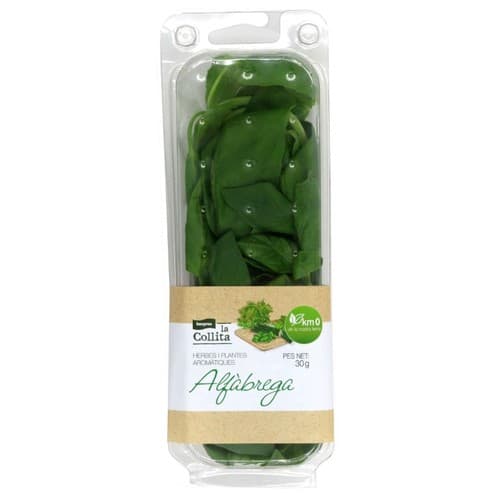
Matched grocery products
 €1.49
€1.49Km0 Basil
kg · Bonpreu
Good to know
- Scientific name
- Ocimum basilicum var. thyrsiflora
- Thai name
- Horapha (โหระพา)
- Plant family
- Lamiaceae (mint family)
- Native range
- Southeast Asia; long cultivated in Thailand and Vietnam
- Plant type
- Tender annual herb, 30–45 cm (12–18 in) tall
- Key aroma compounds
- Methyl chavicol (estragole), eugenol, and linalool
- Flavor profile
- Anise/licorice forward with clove and a hint of black pepper
- Heat tolerance
- Far more stable than sweet basil; holds through brief stir-fries but fades after 1–2 minutes over high heat
- Visual tell
- Purple-tinged stems and flower bracts; sweet basil has uniformly green stems
- Days to harvest
- 60–90 days from seed; pinch tops at 6 weeks to bush out
- Storage
- Stems in water, loosely bagged, refrigerated 5–7 days; also freezes well in oil or briefly blanched
Substitutes
- Holy basil (kaprao) — Closest in heat tolerance but pepperier and less anise-forward; acceptable in pad krapow, wrong for pho.
- Sweet (Italian) basil + a pinch of fennel seed or star anise — Best emergency swap when only Italian basil is on hand; the fennel echoes the licorice note.
- Vietnamese mint (Persicaria odorata) — Works in pho and Vietnamese dishes; flavor is more peppery-menthol than anise.
- Thai lemon basil (manglak) — Sub in curries when you want the anise plus citrus; do not use where a clean licorice note is required.
- Star anise infusion — A few drops of star anise oil, or a brief steep of one whole pod in the dish, can stand in when no fresh substitute exists.
Pairs with
Also called
horapha · Asian basil