Heat & Safety
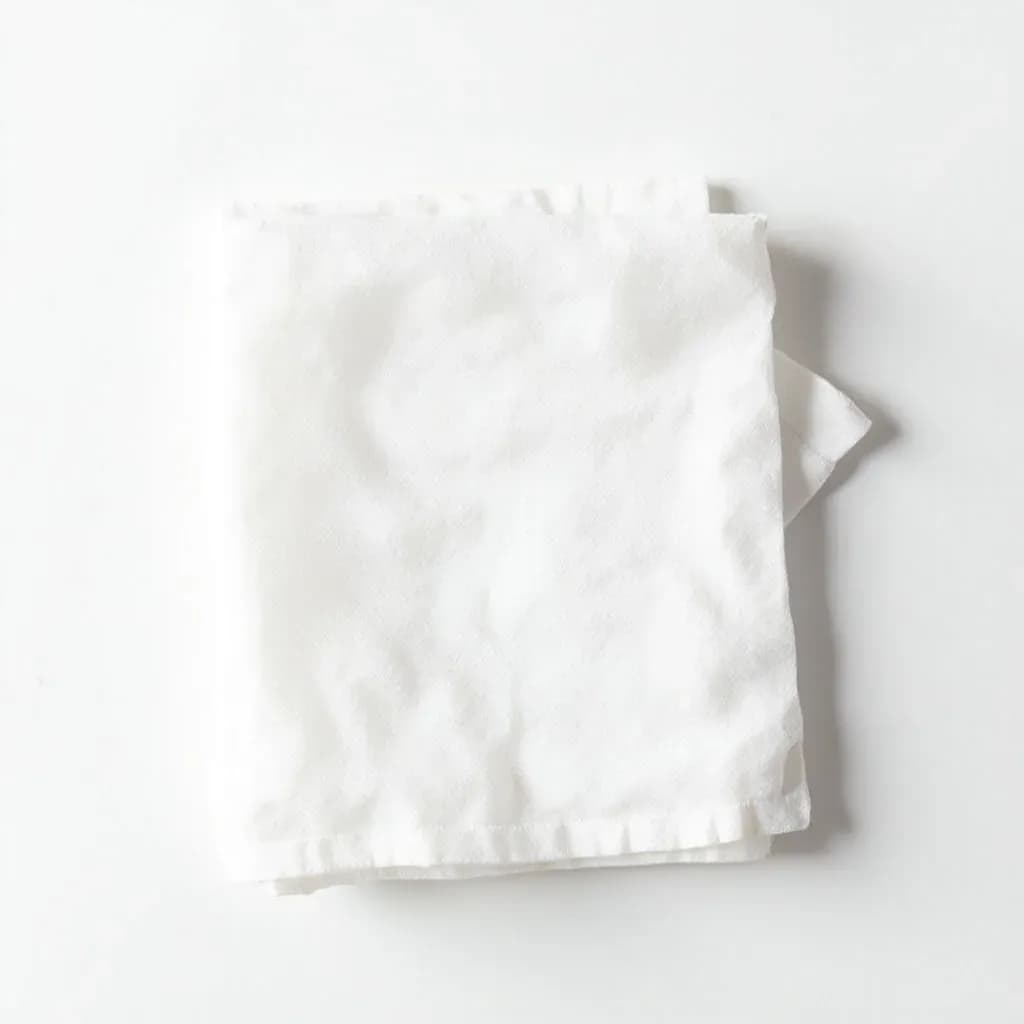
Absorbent Towel
A highly absorbent cloth or paper towel for drying food, hands, and surfaces.
An absorbent towel quickly soaks up moisture, making it essential for patting dry meat and produce, blotting fried foods, and wiping spills. Cooks use lint-free cloth or sturdy paper versions throughout prep and cleanup. Drying food well before searing or frying is key to good browning and crisp results.
An absorbent towel is any cloth or disposable sheet whose job is to lift liquid away from food, hands, or surfaces — and in a working kitchen it is touched more often than almost any other tool. The category splits cleanly into two families: reusable cloth (cotton, linen, and microfiber) and single-use paper (cellulose). Which one you reach for is driven by the task: lint-free linen or glass cloth for polishing crystal and stainless, plain-weave cotton for drying greens and handling dough, terry for hands and big spills, paper for anything that has touched raw poultry or fish, and microfiber for streak-free finishes on cool surfaces.
The towel is also a quiet player in cooking technique. Patting a steak, fish fillet, or chicken thigh dry before it hits the pan is one of the most controllable variables in getting a deep, even Maillard crust; even a thin film of water holds back browning and steams the surface instead. Spreading washed greens across a clean cloth, lining a banneton, covering proofing dough, or pressing water from grated zucchini all depend on the same property — capillary action in a fiber that holds several times its own weight in moisture.
Food safety makes the choice matter beyond convenience. In a home or professional kitchen, towel hygiene (frequent hot washes, color-coding by task, never reusing a raw-meat cloth) is as important as the fiber itself. A damp, reused kitchen towel can carry bacterial loads high enough to contaminate ready-to-eat food, which is why the professional standard pairs dedicated hand towels with separate dish towels and uses paper exclusively for raw-protein spills.
Alternatives
Types & varieties
Lightweight, quick-drying cloth; the home-kitchen workhorse for drying, covering, and general handling.
Plain-weave cotton with a smooth, low-lint surface; favored for drying washed greens and bundling herbs.
Naturally lint-free and gets softer and more absorbent with each wash; the traditional choice for polishing glassware and silver.
Tightly woven cotton with a flat, nearly lint-free weave; dries glass and chrome without streaking.
Cotton with looped pile — very absorbent for hands and large spills but sheds lint and dries slowly.
Puckered texture increases surface area; absorbs well and dries relatively quickly.
Ultra-fine synthetic fibers (typically 80% polyester / 20% polyamide) with exceptional absorbency; lint-free but must be kept away from heat.
Disposable, single-use absorbent; the only variety suited to raw-meat, poultry, and fish juices.
Generic term for cotton or linen drying cloths, kept separate from hand towels in well-run kitchens to avoid cross-contamination.
Choosing the Right Towel for the Job
Match the fiber to the task rather than reaching for whatever is closest.
- Glassware, mirrors of stainless steel, and silver: linen or a glass/huck cloth — both are lint-free and leave a streak-free shine.
- Washed greens, herbs, and dough handling: a plain-weave cotton (tea towel or flour-sack) — low lint, gentle on leaves, and breathable for covering proofing dough.
- Hands, big spills, and drying produce in bulk: terry or waffle-weave cotton — high absorbency, accepted texture for skin.
- Raw meat, poultry, fish, and egg spills: paper only — reusable cloth is not sanitary for these juices.
- Cool-surface polishing (stainless panels, appliance fronts): microfiber — exceptional at lifting grease without streaks, but never used near heat.
- Hot-pan handling or improvised trivet: cotton or linen only — microfiber will melt and fuse to the pan.
Care and Food Safety
A kitchen towel can be one of the dirtiest objects in the room if it is not laundered and rotated deliberately.
- Wash cotton and linen in the hottest water the fabric tolerates (60 °C / 140 °F or above) and dry fully between uses to prevent bacterial odor.
- Avoid fabric softener and dryer sheets — they leave a silicone film that destroys absorbency over time.
- Color-code by task in a busy kitchen: hands, dishes, produce, and raw-meat cleanup each get a dedicated color, and the raw-meat towel is never reused for anything else.
- Replace cloth towels at least every one to two days in active use; switch to paper for raw poultry, fish, or egg spills without exception.
- Store dry towels folded in a breathable bin rather than sealed airtight — trapped dampness breeds mildew and sour smell.
Common uses
Tips & pitfalls
- Always pat proteins bone-dry before searing — even a thin water film holds back browning and steams the crust instead.
- Skip fabric softener and dryer sheets on kitchen towels; the silicone coating destroys absorbency within a few cycles.
- Wash cotton and linen towels at 60 °C / 140 °F or hotter and dry completely between uses to keep bacteria and odor in check.
- Color-code towels by task and never reuse a raw-meat towel for ready-to-eat food; paper is mandatory for raw poultry, fish, and egg spills.
- Use linen or a glass/huck cloth for stemware and crystal; terry and standard paper shed fibers onto rims.
- Keep microfiber well away from hot cookware, ovens, and open flame — synthetic fibers can scorch, melt, or fuse to surfaces.
- For very wet greens, pair a salad spinner with a clean cotton or linen towel and a gentle 'snap' rather than a wringing twist that bruises the leaves.
- Mount paper towels on a horizontal holder rather than stacking loose — one-handed tear reduces waste and keeps the roll cleaner.
Good to know
- Primary materials
- Cotton, linen (flax), microfiber (polyester/polyamide blend), and cellulose paper
- Paper towel invented
- 1931 by Arthur Scott of Scott Paper Company in Philadelphia, repurposing an over-thickened toilet paper batch sold as 'Sani-Towels' to schools and restaurants
- Tea towel origin
- 18th-century England, originally used to wrap tea caddies and dry bone china
- Microfiber origin
- Developed in Japan by Toray Industries in the 1970s; cleaning and kitchen adoption followed in the 1980s–90s
- Absorbency measure
- GSM (grams per square meter); cotton kitchen cloths typically 200–500 GSM — higher values mean greater absorbency
- Typical tea-towel size
- Approximately 50 × 70 cm (20 × 28 in)
- Standard paper-towel sheet (US)
- Roughly 25 × 25 cm (about 11 × 11 in), 1- or 2-ply
- Heat tolerance
- Cotton and linen handle high heat; microfiber is made of synthetic fibers that can scorch, melt, or fuse to surfaces when exposed to direct high heat (hot pans, ovens, or open flame)
- Lint level
- Glass cloths and linen are low-lint; terry and economy paper towels shed fibers heavily
Also called
Absorbent Towels · Kitchen Towel · Paper Towel
Related

Paper Towels
Disposable sheets for spills, drying, and patting dry

Kitchen Towels
Reusable cloths for drying, gripping, and wiping

Oven Mitts
Heatproof gloves to handle hot pans and trays safely

Disposable Gloves
Single-use gloves for safe, mess-free handling

Cleaning Cloths
Reusable cloths for wiping counters and spills

Tortilla Warmer
Insulated holder that keeps tortillas warm and soft

Trivet
Heatproof stand that shields surfaces from hot pots

Ice Bath Setup
Bowl of ice water that halts cooking and sets color