 French
Medium · Hot
Plain and Perfect Butter-Basted Egg
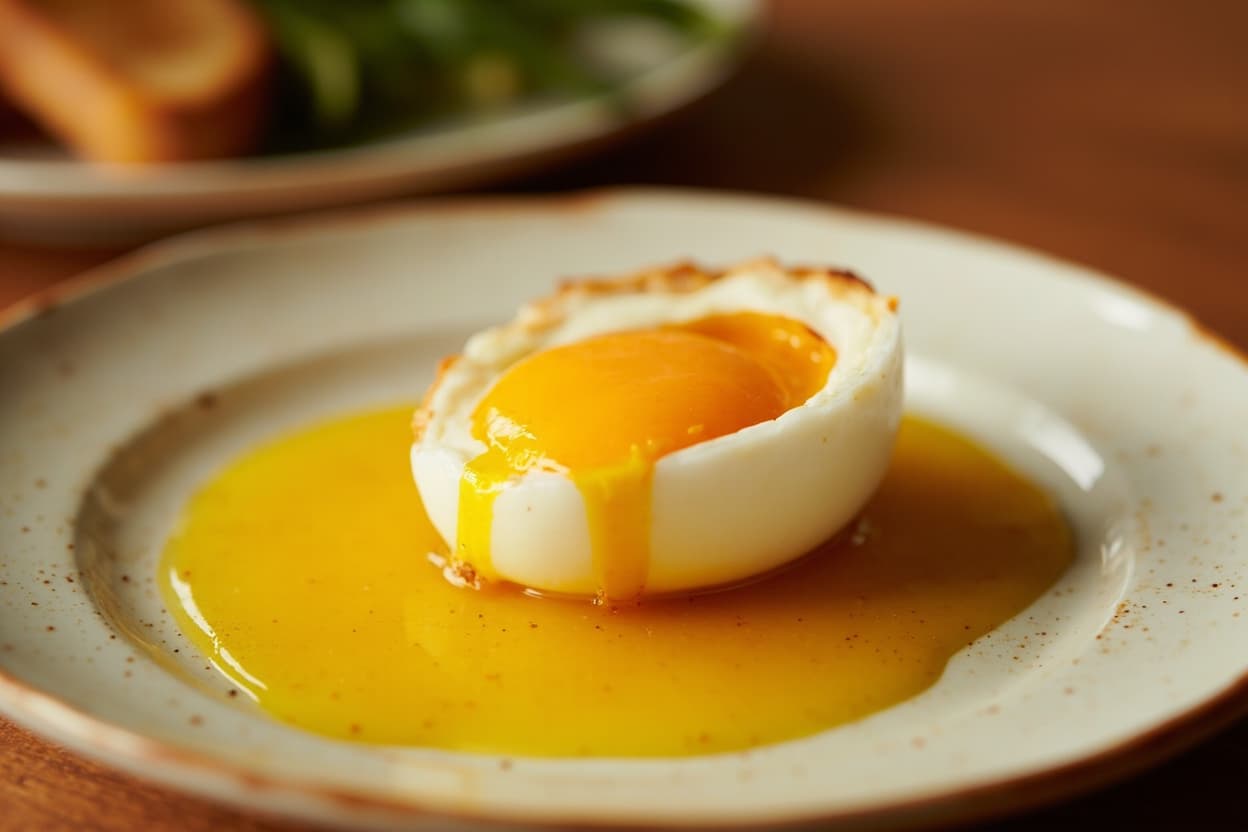
The butter-basted egg is the quiet alternative to poached and infinitely more forgiving than any hollandaise. A runny yolk, touched by nutty brown butter, served on toast without ceremony or a thirty-minute wait.

Prep
10 min
Cook
7 min
Total
17 min
Method
Set Up
1
The Pan
3
Place a cold non-stick or well-seasoned cast iron skillet over medium-low heat. Add the salted butter. Let it melt slowly, swirling occasionally, until the foam subsides and the butter turns a pale golden amber with that distinctive nutty aroma. This takes about 3 minutes. Do not walk away.
The Basting
4
Crack each egg directly into the pan, spacing them evenly. Cook undisturbed until the whites are set around the edges but still translucent near the yolk, about 2 minutes.
5
6
The egg is done when the whites are fully opaque and the yolk surface has turned from glossy to matte white, while the interior remains liquid. Test by nudging the pan gently — the egg should release cleanly.
D
Nutri-Score
Needs balance
A–E · lower is better · score 16
Calories
179
per serving
High in saturated fat · 10gCalorie-dense · 179 kcalSource of protein · 7gLow sugar · 0g
Protein
7g
Carbs
1g
Fat
17g
Sat. fat
10g
Fiber
0g
Sugar
0g
Sodium
220mg
KetoLow CarbGluten FreeLacto OvoDiabetes FriendlyHeart HealthyLow Carb LivingWeight ManagementHigh ProteinFat Focused
Nutri-Score is a general nutritional-balance guide, not medical or dietary advice.
D
Environmental impact
High impact
A–E · lower is better · complete match
kg CO2e
0.4
per serving
DCarbonAEU all-round· carbon sets the grade
Water
0.05m³
Land
14Pt
Runoff
0.03g P
Large eggs drives 64% of this recipe’s estimated footprint.
Carbon from Poore & Nemecek 2018; water, land & runoff from Agribalyse — modelled averages for comparing recipes, not a measurement of your groceries.
Flavor Profile
6
Umami
4
Sweet
5
Salty
2
Sour
2
Bitter
0
Spicy
Textures
SilkyTenderCrispy
Aromas
ButteryNuttyMaillard
Kitchen Equipment
Techniques
Safety & Storage
Handling
Hot butter can cause severe burns. Use a heat-resistant spatula when basting and tilt the pan carefully to avoid splashing. Never leave the pan unattended once butter begins to melt.
Cooking Temperature
Monitor butter closely as it melts. Remove from heat when it reaches pale golden amber with nutty aroma, approximately 300-350°F. Do not allow butter to smoke or turn black, as this produces acrolein and bitter compounds.
Cross Contamination
Use a clean spatula for each egg when serving. If serving on toast, ensure the toast surface has not contacted any allergen-containing items without cleaning between.
Storage
Butter-basted eggs are best consumed immediately. If storing leftover eggs, refrigerate within 2 hours and consume within 2 days. Reheat gently to avoid overcooking the yolk.
Equipment Safety
Use a well-seasoned cast iron or quality non-stick skillet. Non-stick coatings can release toxic fumes if heated above 500°F. Keep heat at medium-low as directed.
Allergen Warning
This dish contains eggs and milk. Persons with allergies or intolerances to these ingredients should avoid this recipe.
Pro Tips
Technique
Keep that butter golden amber, not smoking. The moment it turns brown and fragrant, you've hit the nutty sweet spot—drop your eggs in immediately. If you hear it sizzling aggressively, you've gone too far and the butter will taste bitter instead of round.
Substitution
No unsalted butter? Add a pinch of fleur de sel to salted butter instead—it's a reasonable trade and your seasoning math stays honest. The salt goes into the butter before it melts because once your eggs hit the pan, you won't have a free hand to season anything.
From the chef
The butter-basted egg is what happens when you stop performing breakfast and start eating it. No water bath, no vinegar negotiation, no white-linen anxiety—just butter, heat, and the patience to tilt a pan. I've watched brunch menus swell into architectural monstrosities while the egg, this humble little miracle, gets buried under foam and flowers and seventeen-dollar price tags. This is the antidote. Four tablespoons of butter, a quiet pan, and a yolk that runs when you break it. That's the whole menu. That's dinner.
TagsButterQuickTechniqueOne PanRunny Yolk
AllergensEggsMilk
Source: generated · June 9, 2026