 Filipino
Medium · Hot
Adobo White Beans (Kamayan Style)
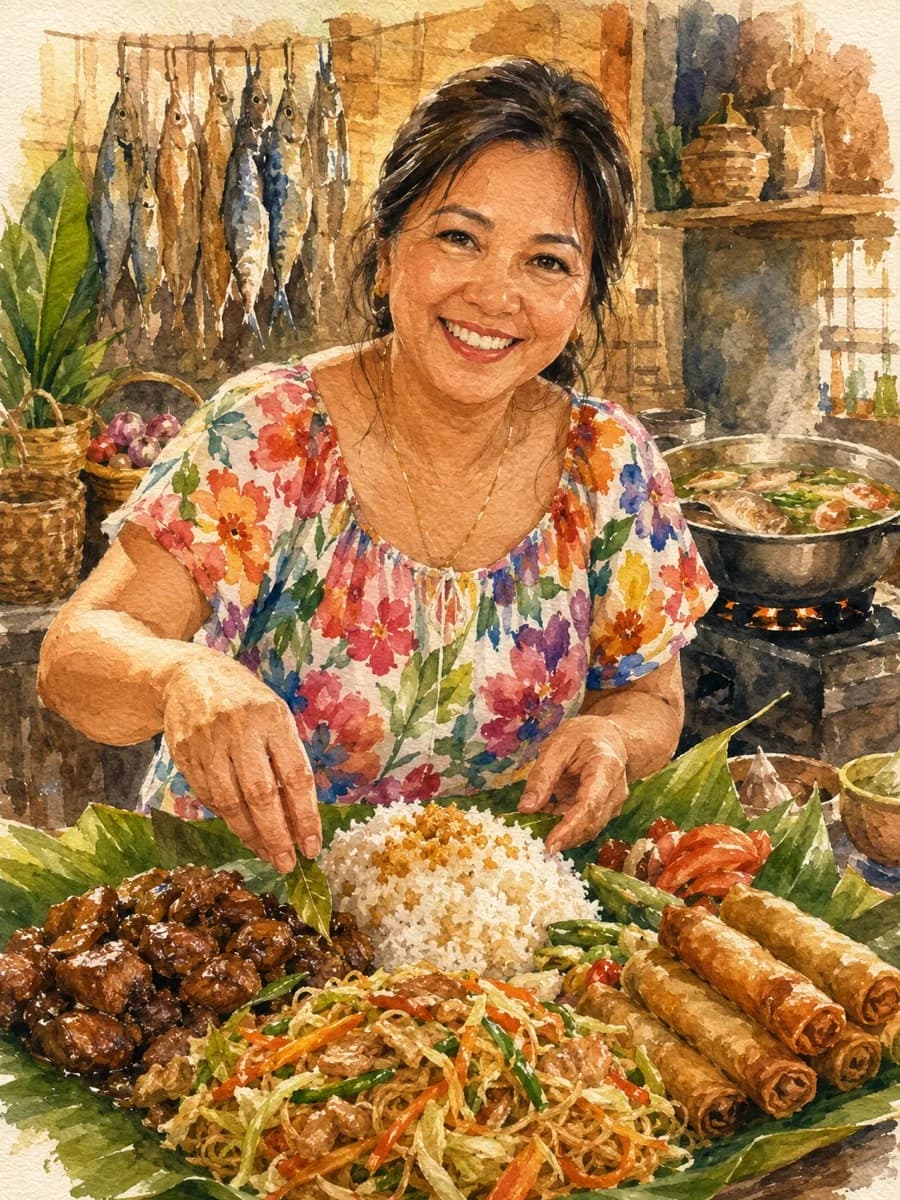
Big-batch Filipino-style white beans braised in adobo sauce with pork belly. This is ulam and pulutan rolled into one, served the kamayan way — eat with your hands, share from the communal plate.
Prep
15 min
Cook
55 min
Rest
10 min
Total
1h 20m
Method
Prepare the Adobo Marinade
1
Crush 6 cloves garlic with the flat of your knife. Combine white vinegar, soy sauce, crushed garlic, and 1 teaspoon black pepper in a bowl. This is your adobo sauce — the soul of the dish.
Brown the Pork Belly
2
Cut pork belly into 1-inch cubes. In a large Dutch oven over medium-high heat, cook pork belly pieces until golden brown on all sides, about 8 minutes. No need for oil — the fat renders beautifully.
Build the Stew
3
Add sliced yellow onion and 4 cloves minced garlic to the pot. Stir until fragrant and onions turn translucent, about 3 minutes.
Braise the Beans
4
Pour in the adobo marinade, additional soy sauce, chicken broth, and water. Stir everything together. Drain and add the white beans. Bring to a gentle boil.
Slow Cook to Perfection
5
Reduce heat to low, cover the pot, and let everything braise for 45 minutes. Stir occasionally. The pork should be fork-tender and the beans soaked in that beautiful adobo flavor. Season with salt and remaining black pepper.
Serve Kamayan Style
6
Ladle onto a big platter or directly onto banana leaves if you have them. This is meant to be shared — scoop with your hands, eat with steamed rice, and enjoy every sour-savory bite. Walang hiya — no shame, just food!
D
Nutri-Score
Needs balance
A–E · lower is better · score 11
Calories
534
per serving
High in saturated fat · 12gCalorie-dense · 534 kcalLow sugar · 2g
Protein
15g
Carbs
26g
Fat
40g
Sat. fat
12g
Fiber
3g
Sugar
2g
Sodium
632mg
Gluten FreeDairy FreeHigh Sodium WarningHigh ProteinLow Carb
Nutri-Score is a general nutritional-balance guide, not medical or dietary advice.
C
Environmental impact
Moderate impact
A–E · lower is better · includes estimates
kg CO2e
1.1
per serving
CCarbonAEU all-round· carbon sets the grade
Water
0.2m³
Runoff
0.08g P
Pork Belly drives 89% of this recipe’s estimated footprint.
Carbon from Poore & Nemecek 2018; water, land & runoff from Agribalyse — modelled averages for comparing recipes, not a measurement of your groceries.
Flavor Profile
8
Umami
3
Sweet
7
Salty
7
Sour
2
Bitter
3
Spicy
Textures
TenderSilkyCreamyRich
Aromas
GarlickyVinegarySavoryMeatyHerbaceous
Kitchen Equipment
Primary Tool
Dutch OvenCounter FootprintMedium
Safety & Storage
Cooking Temperature
Pork belly must reach minimum internal temperature of 145°F (63°C) for food safety. Use a meat thermometer to verify doneness during the braising process.
Cross Contamination
Use separate cutting boards and utensils for raw pork. Never place cooked pork on surfaces that held raw meat without proper sanitization.
Storage
Refrigerate leftovers within 2 hours of cooking. Store in airtight containers at 40°F (4°C) or below. Consume within 3-4 days for best quality.
High Risk Population
Pregnant individuals, elderly, and immunocompromised persons should ensure pork is fully cooked to 145°F before consumption to prevent foodborne illness.
Handling
When serving kamayan-style, ensure hands are thoroughly washed with soap for 20+ seconds before eating. Use clean serving utensils if participants have food allergies.
Shelf Life
Cooked adobo beans can be frozen for up to 2-3 months in freezer-safe containers. Thaw overnight in refrigerator before reheating.
Allergen Warning
This dish contains soy and wheat from soy sauce. For soy allergy, use tamari or coconut aminos as a substitute. For gluten-free, use certified gluten-free soy sauce.
Pro Tips
Technique
The secret to great adobo is patience during braising. Let everything simmer low and slow until the pork practically falls apart — that's when the flavors truly marry and the beans soak up all that beautiful sour-savory magic.
Substitution
No pork belly? No problem — chicken thighs work wonderfully here and stay juicy through the braise. You can also swap white beans for chickpeas if you want something different, though the traditional canary beans absorb the adobo sauce best.
Batch Cooking
This recipe doubles (or triples!) like a dream. Make a big pot on Sunday and you've got soulful leftovers for days — the adobo actually tastes even better the next day once the flavors have settled.
From the chef
My lola used to say adobo was the dish that kept on giving — the more you made, the more people showed up. These white beans are a beautiful twist on the classic, soaking up all that tangy soy-vinegar magic while the pork belly gets melt-in-your-mouth tender. This is comfort food the way it's meant to be: shared from one big platter, fingers and all. Walang hiya — no shame at the table, only love on the plate.
TagsFilipinoAdoboKamayanBraisedPorkBeansCommunalComfort FoodOne PotWeeknight Dinner
AllergensSoyWheatSulfites
Source: generated · June 10, 2026