 American
Easy · Hot
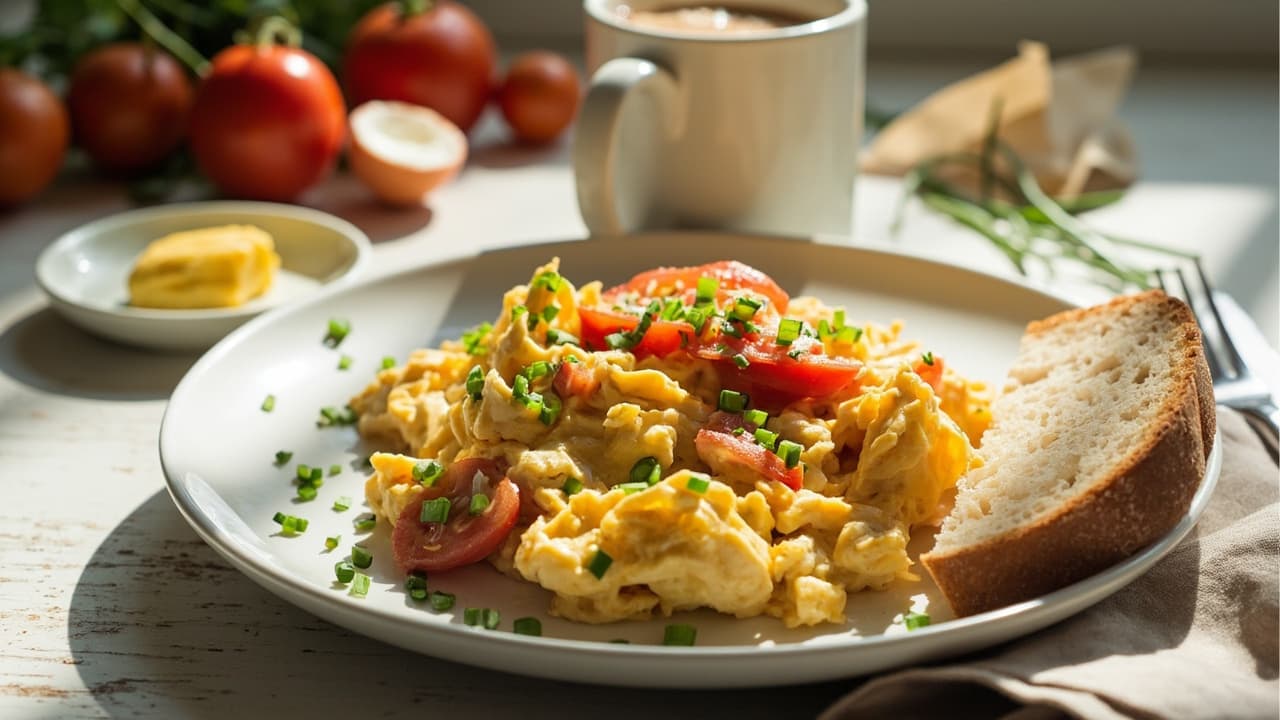
Scrambled Eggs with Tomato and Chives
Soft curds of gently scrambled eggs folded with bright, slow-cooked tomato and a shower of fresh chives. Breakfast, not a performance.

Prep
10 min
Cook
12 min
Total
22 min
Method
Prep
1
Halve the tomatoes crosswise. Hold each half over a bowl and gently squeeze to release the seeds and excess juice. Roughly chop the flesh and set aside in a collector bowl.
2
Finely snip chives with scissors directly into a small bowl. Set aside for finishing.
3
Crack eggs into a wide mixing bowl. Season with salt and pepper. Beat with a fork just until the yolks and whites are combined—stop there. Overbeaten eggs get temperamental.
Cook
4
Heat a 12-inch non-stick pan over medium-low heat. Add 2 tablespoons of butter and let it melt and foam for 30 seconds. This is your cooking medium and it deserves attention.
5
6
Reduce heat to low. Pour in the egg mixture and let it sit undisturbed for 20 seconds to begin setting on the bottom.
7
Using a wide spatula, gently push the eggs from the edges toward the center in slow, deliberate sweeps. Tilt the pan to let the uncooked eggs flow to the open surface. Repeat every 15 seconds, creating large, soft curds.
Plate
9
Toast the bread until golden on both sides. Stack two slices per plate or lay them alongside—do not arrange them as a raft or a fan. Nobody needs architecture at breakfast.
10
Spoon the eggs directly onto or beside the toast. Scatter remaining chives over the top. Serve immediately, because scrambled eggs wait for no one, and neither should you.
C
Nutri-Score
Fair balance
A–E · lower is better · score 3
Calories
323
per serving
Source of protein · 16gLow sugar · 4g
Protein
16g
Carbs
15g
Fat
23g
Sat. fat
11g
Fiber
2g
Sugar
4g
Sodium
827mg
Low CarbKeto FriendlyBalancedHeart HealthyDiabetes FriendlyWeight ManagementHigh Blood PressureHigh ProteinLow SugarBalanced Macros
Nutri-Score is a general nutritional-balance guide, not medical or dietary advice.
B
Environmental impact
Low impact
A–E · lower is better · includes estimates
kg CO2e
0.8
per serving
BCarbonAEU all-round· carbon sets the grade
Water
0.2m³
Land
25Pt
Runoff
0.08g P
egg drives 56% of this recipe’s estimated footprint.
Carbon from Poore & Nemecek 2018; water, land & runoff from Agribalyse — modelled averages for comparing recipes, not a measurement of your groceries.
Flavor Profile
7
Umami
4
Sweet
5
Salty
3
Sour
1
Bitter
2
Spicy
Textures
CreamyCrispyTenderSoft
Aromas
ButteryHerbalFruityToasted
Kitchen Equipment
Primary Tool
12 Inch Nonstick PanCounter FootprintSmall
Techniques
Safety & Storage
Cross Contamination
Raw eggs present salmonella risk. Use separate utensils for cracking eggs and avoid contact with other foods. Clean all surfaces, hands, and equipment thoroughly after handling raw eggs.
High Risk Population
Pregnant women, young children, elderly, and immunocompromised individuals should ensure eggs are cooked to at least 160°F (71°C) throughout. The recipe removes eggs from heat while still glossy - ensure residual heat completes cooking for vulnerable populations.
Cooking Temperature
Butter burns easily at medium heat. Maintain low heat throughout cooking to prevent scalding and preserve butter's integrity as cooking medium. Monitor pan temperature to ensure proper egg setting without browning.
Storage
Refrigerate eggs at 40°F (4°C) or below. If recipe will be stored, cool to 70°F within 2 hours, then refrigerate. Consume refrigerated leftovers within 3-4 days. Reheat to 165°F before consuming leftovers.
Handling
When squeezing tomatoes to release seeds, use a clean bowl and wash hands afterward. Ensure chives are washed thoroughly before snipping to remove soil or contaminants. Avoid cross-contact between raw egg mixing bowl and other ingredients.
Pro Tips
Technique
The secret to soft curds is low heat and a light touch. Push the eggs from the edges to the center in slow sweeps, then let them rest. Overexcitement is for brunch queues, not scrambled eggs.
Substitution
No white bread? Use what you have. A sturdy sourdough or even good rye won't apologize for existing the way those oversized brioche buns do.
From the chef
The tomatoes go in first, slow-cooked until jammy and concentrated, most of the water gone, the flavor left behind. Then the eggs fold in over low heat, swept into large soft curds that hold the butter and catch the tomato in every pocket. The chives are not a garnish — they are the brightness that cuts through all that richness. Pull the pan off the heat while the eggs still look wet. The butter you fold in at the end finishes the cooking, and what you get is something silky and immediate, eaten before it has a chance to reconsider.
TagsBreakfastEggsQuickEasyClassicBrunchTomato
AllergensEggsMilkWheat
Source: generated · June 10, 2026