 Basque
Medium · Hot
Atun Encebollado: Tuna Seared Under Sweet Onions
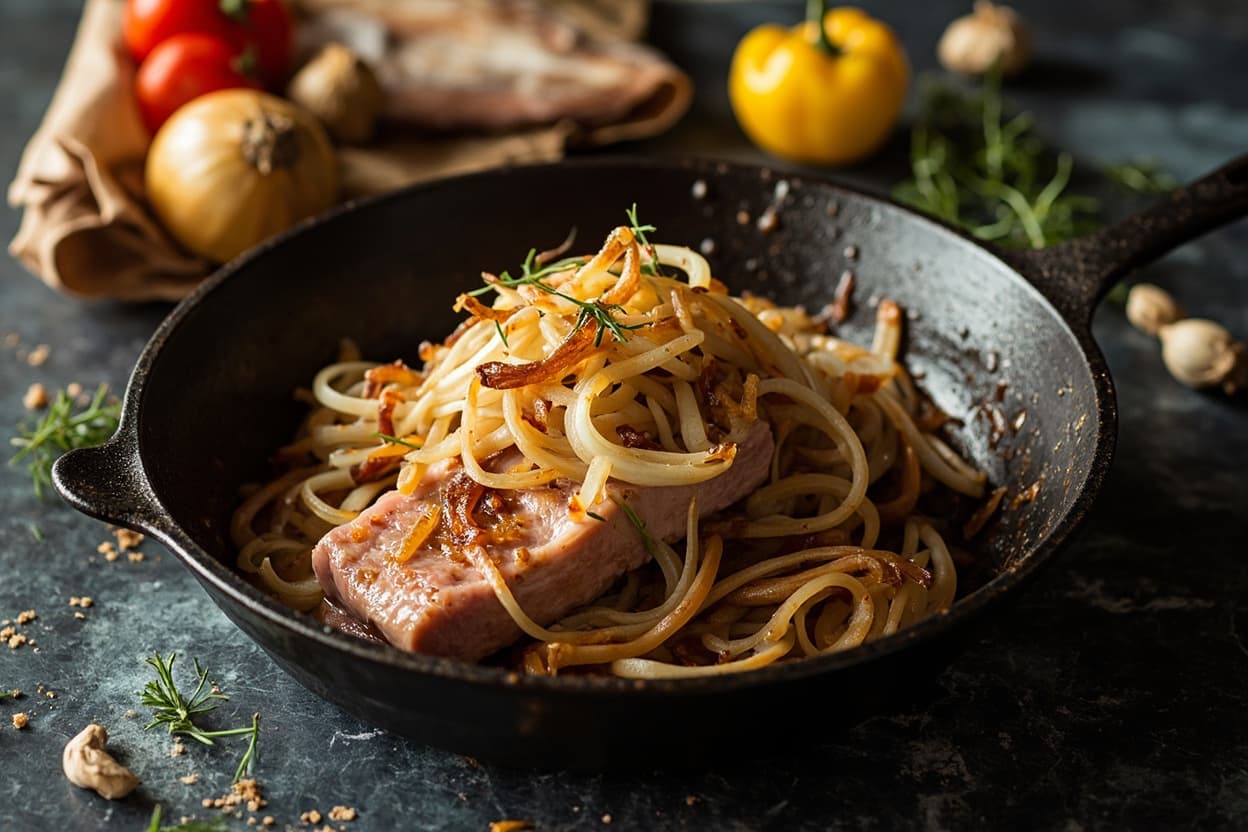
The onion and bell pepper are cooked long before the tuna appears, collapsing into a golden, yielding bed that smells of olive oil and something almost sweet. A quick sear brings the tuna to the edge of cooked, a splash of white vinegar cuts the richness clean, and then it all rests together in the pan. The onion does the work; the tuna just has to not be overcooked.

Prep
10 min
Cook
35 min
Rest
5 min
Total
50 min
Method
Caramelize the Onions
1
2
Cook slowly, stirring occasionally, for 25–30 minutes until the onions are deeply golden, jammy, and sweet. Reduce heat if they color too fast — this is not a race. Remove from heat and keep warm.
Sear the Tuna
3
Season the tuna steaks generously with salt and white pepper on both sides. Let them rest at room temperature for 5 minutes.
Plate and Serve
5
A
Nutri-Score
Excellent balance
A–E · lower is better · score -1
Calories
348
per serving
High in protein · 29gLow sugar · 6g
Protein
29g
Carbs
12g
Fat
20g
Sat. fat
5g
Fiber
3g
Sugar
6g
Sodium
1055mg
Gluten FreeDairy FreePescatarianLow CarbMediterraneanWhole30PaleoHeart HealthyAnti InflammatoryDiabetes FriendlyLow Sodium AdaptableThyroid SupportHigh ProteinWeight ManagementMuscle RecoveryBalanced MealOmega3 Rich
Nutri-Score is a general nutritional-balance guide, not medical or dietary advice.
Flavor Profile
7
Umami
5
Sweet
4
Salty
1
Sour
2
Bitter
3
Spicy
Textures
CrispyTenderSilky
Aromas
HerbalSmokyFattyCaramelized
Kitchen Equipment
Techniques
Safety & Storage
Cooking Temperature
Tuna is intentionally seared to rare (90 seconds per side with rosy center). This does not reach safe internal temperature for high-risk populations.
High Risk Population
Pregnant women, young children, elderly, and immunocompromised individuals should consume fully cooked fish. Consider searing 2-3 minutes per side for these individuals.
Cross Contamination
Use separate cutting boards and utensils for raw tuna. Never place cooked fish on plates or surfaces that touched raw tuna without sanitizing first.
Storage
Refrigerate fresh tuna at 40°F or below. If purchasing day-of, cook immediately. Leftover seared tuna must be consumed within 1-2 days or frozen.
Handling
Bring tuna to room temperature only after patting dry. Excess moisture prevents proper sear and crust formation. Rest at room temperature for maximum 10 minutes before cooking.
Equipment Safety
{"classification":"equipment-safety","text":{"text":"Cast iron skillet heated until oil shimmers and begins to smoke presents serious burn risk. Use long-handled tongs and keep skin clear of splashing oil."}}
Allergen Warning
This dish contains fish. For catering or restaurants, declare fish as an allergen to customers per food safety regulations.
Pro Tips
Technique
Do not touch the tuna during those 90 seconds. I have watched amateurs nudge the steaks like they are checking on a sleeping child — the crust will break and all that beautiful sear is lost. Let the cast iron do its work, then flip with confidence.
If your onions start to color before 20 minutes, your heat is too high. I do not care if you are impatient. Turn it down. The difference between jammy onions and burnt onions is the difference between a sidrería and a sad plate.
Substitution
Fresh tuna can be hard to find outside the coast — if using frozen, thaw slowly in the refrigerator overnight and pat completely dry before searing, or the exterior will steam instead of crust.
From the chef
In the sidrerías of Errenteria, this is what the workers ate after the cider had been poured and the txuleta carved — simple, honest, and better than anything on a menu with white tablecloths. My father would say the onions must weep their sweetness before the tuna speaks, and after thirty years in the kitchen, I still agree. This is Atlantic cooking at its most loyal: the fish stays rare because it earned the right to stay rare, and the onions take their time because patience is the one ingredient nobody can fake.
TagsTunaSearedCaramelized OnionsOlive OilGarlicBasqueSeafoodGluten Free
AllergensFish
Source: generated · May 30, 2026