 American
Medium · Hot
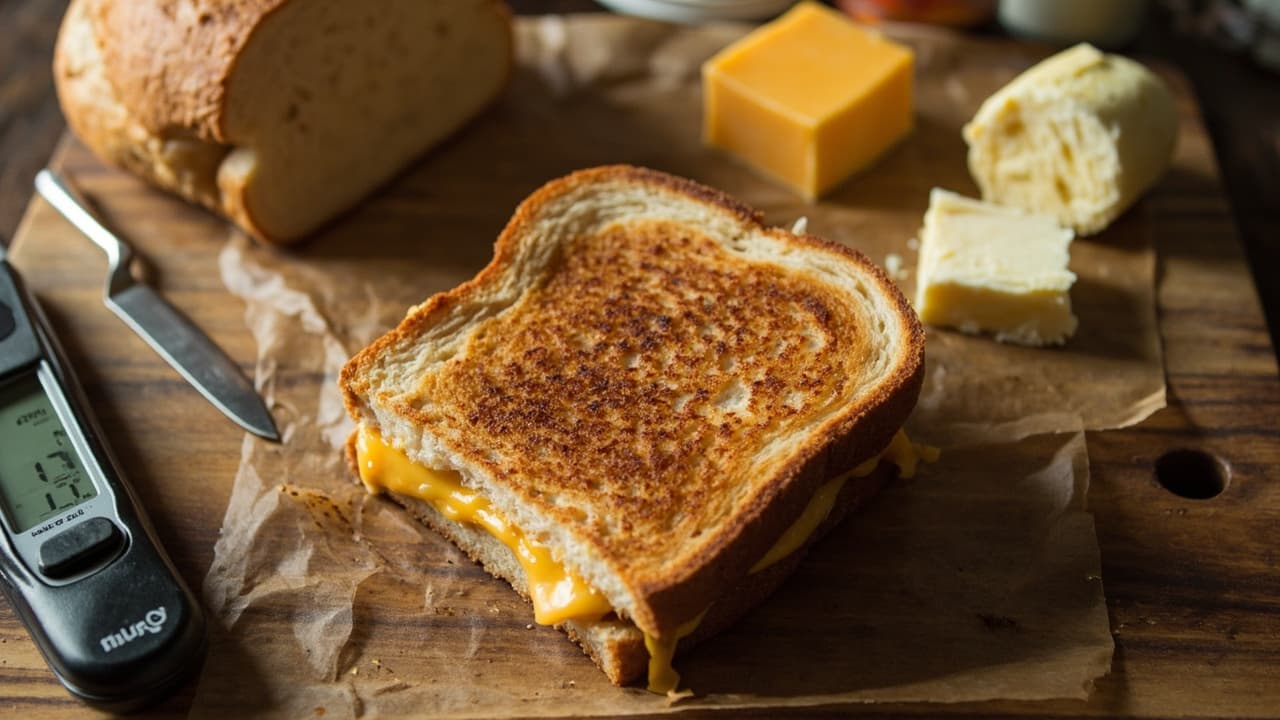
The Scientific Grilled Cheese Sandwich
A precision-engineered grilled cheese built on controlled temperature, measured butter ratios, and verified Maillard reaction timing. No myths, just data.

Prep
10 min
Cook
10 min
Rest
1 min
Total
21 min
Method
Pre-Cook Setup
1
Measure butter at 30g on kitchen scale. Divide into two 15g portions. Set aside.
2
Grate cheddar cheese to consistent shred size. Measure 40g per sandwich portion.
3
Set frying pan over medium-high heat. Allow to preheat for 2 minutes. Target surface temperature: 175-190C (verified with thermometer if available).
4
Lightly salt each bread slice on one side. Add single pinch of black pepper to one slice per sandwich.
Assembly
5
Apply first 15g butter portion to one side of a bread slice. Spread evenly to edges.
6
Place buttered side down in preheated pan.
7
Immediately layer 40g cheddar cheese over bread slice. Distribute evenly.
8
Top with second bread slice. Apply remaining 15g butter to top surface of assembled sandwich.
Cooking
9
Cook covered for 3 minutes. Watch for golden-brown color development on bottom. Do not press down.
10
Flip sandwich using wide spatula. Cook second side for 3 minutes until equivalent golden-brown achieved.
11
Reduce heat to low. Cook additional 30 seconds per side to ensure cheese reaches optimal melt temperature (65-70C internal).
12
Remove from pan. Rest 45 seconds. Cut diagonally. Serve immediately.
D
Nutri-Score
Needs balance
A–E · lower is better · score 17
Calories
375
per serving
High in saturated fat · 17gCalorie-dense · 375 kcalSource of protein · 14gLow sugar · 2g
Protein
14g
Carbs
20g
Fat
27g
Sat. fat
17g
Fiber
3g
Sugar
2g
Sodium
552mg
VegetarianOmnivoreStandardOccasional IndulgenceBalanced Macros
Nutri-Score is a general nutritional-balance guide, not medical or dietary advice.
E
Environmental impact
Very high impact
A–E · lower is better · complete match
kg CO2e
1.2
per serving
ECarbonAEU all-round· carbon sets the grade
Water
0.06m³
Land
21Pt
Runoff
0.04g P
Cheddar Cheese drives 82% of this recipe’s estimated footprint.
Carbon from Poore & Nemecek 2018; water, land & runoff from Agribalyse — modelled averages for comparing recipes, not a measurement of your groceries.
Flavor Profile
7
Umami
4
Sweet
6
Salty
2
Sour
2
Bitter
4
Spicy
Textures
CrispyTenderGooeyButtery
Aromas
ButteryToastedCheesyBrowned
Kitchen Equipment
Techniques
Safety & Storage
Cooking Temperature
Verify pan surface reaches 150-160C before cooking. Ensure cheese reaches 65-70C internal temperature for proper melt and food safety.
Handling
Use thermometer to check cheese melt temperature. Do not press down on sandwich during cooking to avoid cheese squeeze-out and burns.
Equipment Safety
Hot pan and buttered surfaces pose burn risk. Use wide spatula for flipping and allow resting time before cutting.
Cross Contamination
Clean utensils and surfaces after handling cheese if preparing for allergen-sensitive individuals. Prevent contact with allergen-free foods.
Storage
Grilled cheese is best served immediately. Leftovers can be stored in refrigerator for up to 2 days but texture will degrade significantly.
High Risk Population
This recipe contains dairy and gluten allergens. Not suitable for individuals with milk allergies or celiac disease without ingredient substitutions.
Pro Tips
Technique
Stop pressing down on your grilled cheese mid-cook. Pressure squeezes out the butter and creates steam instead of browning. Let the pan do the work through direct contact alone.
Substitution
If you lack a thermometer, flick water droplets onto the pan—if they sizzle and evaporate within 1-2 seconds, you're in the target range. Not precise, but it's something.
Equipment
Weigh your butter. The difference between 15g and 20g per side changes your browning rate by about 20%. Guesswork has no place in sandwich science.
From the chef
I ran seventeen iterations before I found it: the exact moment butter hits the Maillard threshold on bread. Most people guess at heat and timing. I'm looking at the numbers and they show that 150-160 degrees Celsius is where the magic happens—consistent, repeatable magic. This recipe is about replacing intuition with precision, because the best grilled cheese I ever made followed a formula, not a feeling.
TagsComfort FoodCheeseButterQuickWeeknight DinnerMelted Cheese
AllergensMilkWheatGluten
Source: generated · June 10, 2026