Transform & Preserve
Acetous Fermentation
Letting bacteria convert alcohol into vinegar's tangy acetic acid.
Acetous fermentation is the process by which acetobacter bacteria oxidize the alcohol in wine, cider, or beer into acetic acid, turning it into vinegar. It can run slowly at the surface using the traditional Orleans method or faster with submerged aeration. The technique underpins all naturally brewed vinegars and depends on oxygen exposure and a living mother culture.
Acetous fermentation is the aerobic, bacterial conversion of ethanol into acetic acid — the chemistry behind every vinegar on the shelf. The work is done by acetic-acid bacteria of the genus Acetobacter (with Gluconobacter contributing in some fruit systems), which use dissolved oxygen to strip hydrogen from alcohol and produce acetic acid and water. Unlike yeast-driven alcoholic fermentation, this step is strictly aerobic: without oxygen, the bacteria simply cannot oxidize ethanol, and the liquid stays alcoholic or spoils. The result is a stable, tangy, microbially safe acid that doubles as a preservative and a flavoring agent.
In the kitchen and the cellar, acetous fermentation matters for two reasons: it produces the backbone acid of pickles, mustards, ketchup, and a thousand sauces, and it generates the secondary esters, aldehydes, and dissolved polymers that give aged vinegars their depth. The 'mother of vinegar' — a rubbery cellulose mat the bacteria build at the air–liquid interface — is not a contaminant but a living, reusable starter and a visual signature of a healthy slow ferment. Industrial processes drive huge volumes of air through the liquid and finish a batch in a day or two, while the traditional French Orléans method takes months and, by most palates, yields the most aromatic result.
For a working cook, the practical behavior is this: give the bacteria alcohol in the 5–12% range, keep them warm and oxygenated, and they will quietly turn wine or cider into vinegar while you do other things. Push the alcohol higher, starve them of air, drown them in chlorine, or chill them below 15 °C and the reaction stalls. Once acidity climbs past 7–8%, the bacteria begin to over-oxidize the very acid they made, so a successful batch is also a batch you know when to stop.
- Difficulty
- Hard
Types & varieties
Traditional French method in upright oak barrels; wine or cider is topped up as vinegar is drawn off. The benchmark for aromatic complexity, taking 2–6 months per batch.
Tall column packed with beechwood shavings coated in Acetobacter; liquid is recirculated and aerated, finishing in days. Common for wine and cider vinegars at mid-scale.
Bacteria suspended in a vigorously aerated tank at 1–2 volumes of air per volume of liquid per minute. Fastest (1–3 days) and dominant in commercial food-grade vinegar production.
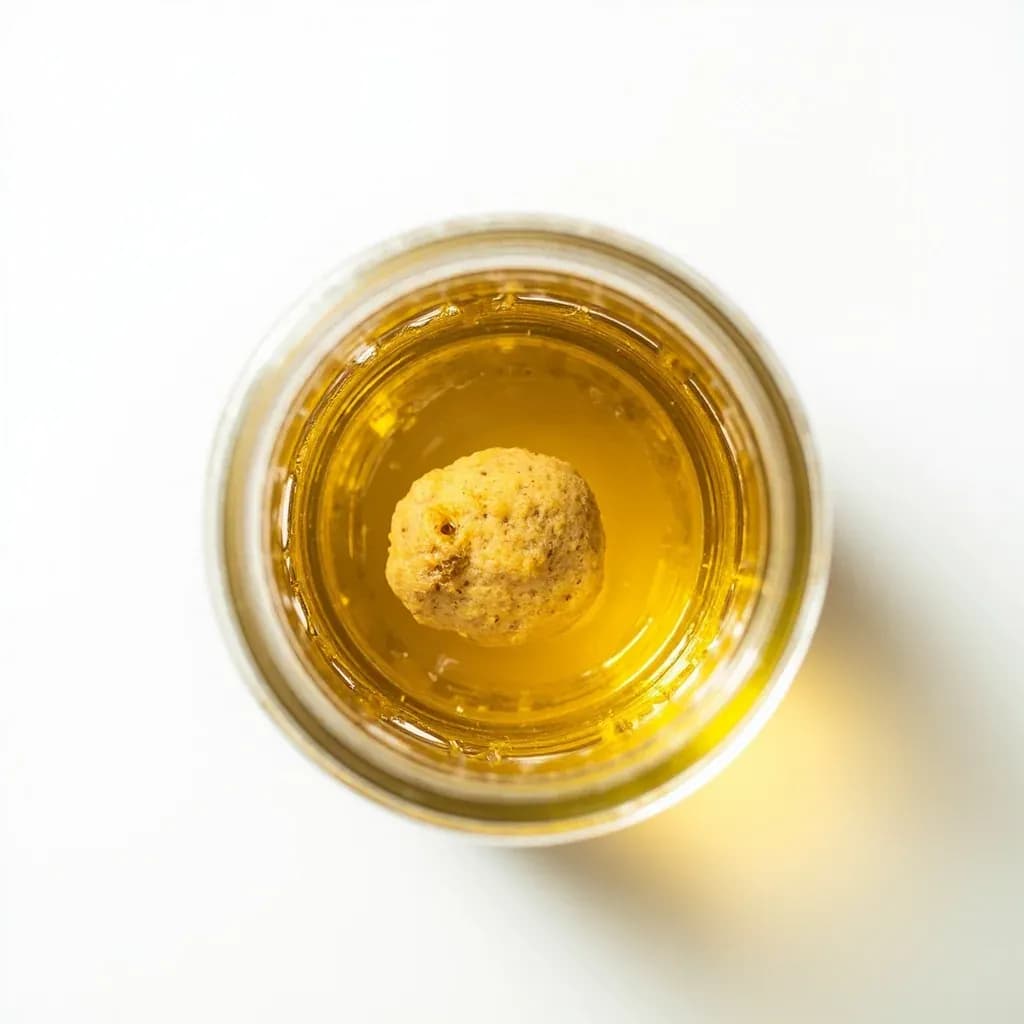
A cellulose mat of Acetobacter and yeasts that forms spontaneously on unpasteurized vinegar; doubles as a starter culture and, in some traditions, as a culinary ingredient.
A sugar source is first converted to alcohol by yeast, then to vinegar by Acetobacter — the standard path for fruit, malt, and rice vinegars.
How to do it
- 1
Prepare the alcoholic substrate
Start with a finished alcoholic liquid at 5–12% ABV — wine, hard cider, malt beer, sake, or a sugar wash fermented to that range. If you must dilute, use filtered, spring, or dechlorinated water; never tap water straight from the tap, as chlorine will kill the bacteria. If the alcohol is above 12%, dilute before proceeding; above 14% the Acetobacter will not survive.
- 2
Sanitize the vessel
Choose a glass carboy, food-grade HDPE bucket, stainless-steel pot, or oak barrel. Wash with hot water and rinse thoroughly so no soap residue remains. Avoid aluminum, copper, iron, and galvanized metal — all of which react with the developing acid and ruin the vinegar.
- 3
Inoculate with live bacteria
Add about 10–20% by volume of raw, unpasteurized vinegar containing a live mother, or submerge a piece of mother of vinegar. Stir gently to distribute. Commercial pasteurized vinegar will not start a ferment — the bacteria have been killed.
- 4
Provide controlled oxygen access
Cover with a breathable cloth secured with a rubber band, or a loose lid with a small air gap. Never seal airtight. In the Orléans method, fill the barrel only to about two-thirds so the surface area exposed to air is large.
- 5
Hold at 25–30 °C
Place the vessel in a dark, draft-free spot at steady room temperature. Keep it out of direct sunlight, which degrades acetic acid and can produce off-flavors. Avoid swings above 35 °C or below 15 °C.
- 6
Wait and monitor
A thin, gelatinous mother of vinegar will form on the surface within 1–3 weeks. Acidity rises roughly 1% per week under good conditions. Sample weekly, taste, and titrate or test pH; the process usually completes in 2–6 months.
- 7
Maintain the mother (Orléans method)
Once a batch reaches 4–6% acidity, draw off up to one-third of the vinegar through a spigot set above the mother. Top up with fresh wine or cider of the same style. The mother remains active for years when cared for this way.
- 8
Stop the fermentation at target acidity
When acidity reaches your target (typically 5–7%), filter the vinegar through cheesecloth or a coffee filter to remove the mother, then bottle in sealed glass. Pasteurizing at 60 °C for 10 minutes is optional for shelf stability.
- 9
Age and store
Age in glass or oak away from light for additional complexity if desired. Sealed, finished vinegar keeps indefinitely; once opened, use within 1–2 years for best flavor.
Why the mother of vinegar matters
The gelatinous disc that forms on the surface of a slow vinegar is not mold and not a fungus — it is a cellulose mat produced by the Acetobacter themselves, with associated yeasts, bound in the bacterial cellulose they secrete. It is safe to eat, edible in the same way kombucha SCOBYs are, and most importantly it carries the live Acetobacter needed to start a new batch. In the Orléans method, the mother is the entire engine: it sits at the air–liquid interface where oxygen is highest, and it is preserved across decades in some working barrels.
- A healthy mother is pale to amber, smooth, and slightly gelatinous — never fuzzy, pink, or black.
- Lift it out with clean hands or a wooden ladle when you draw off vinegar; it returns to the surface when you top up with fresh wine.
- Reserve a small jar of finished, unpasteurized vinegar with mother as insurance against a lost batch.
Choosing a method for the kitchen
Home cooks almost always run a slow Orléans-style ferment because it needs no pump, no column, and no aeration system — only a vessel, a breathable cover, a warm corner, and patience. The trade-off is time: two to six months from wine to finished vinegar. Industrial submerged fermentation is far faster but requires equipment most cooks will not own. The trickling generator sits in between and is how many premium commercial vinegars are made.
When to stop the fermentation
Unlike most fermentations, acetous fermentation does not simply 'finish' on its own. Acetobacter will continue to over-oxidize acetic acid into carbon dioxide and water, gradually weakening the vinegar once it climbs past roughly 7–8% acidity. Taste and titrate (or use pH strips as a rough guide, aiming for pH 2.4–3.0); when the acidity reaches your target, filter off the mother and bottle. Pasteurizing at 60 °C for 10 minutes is optional but stabilizes the vinegar for long storage.
Common uses
Tips & pitfalls
- Use only raw, unpasteurized vinegar or a live mother to inoculate — commercial pasteurized vinegar has no live Acetobacter and will not start the fermentation.
- Keep the starting alcohol between 5% and 12% ABV; higher concentrations poison the bacteria, and lower concentrations stall the reaction.
- Always provide oxygen: cover vessels with breathable cloth or loose lids, never airtight seals — lack of oxygen is the single most common reason a batch fails to convert.
- Maintain 25–30 °C; cooler temperatures slow the bacteria dramatically, and temperatures above 35 °C can kill them or favor contamination.
- Do not dilute must with chlorinated tap water — chlorine kills Acetobacter. Use filtered, spring, or dechlorinated water.
- Avoid reactive metals (aluminum, copper, iron, zinc). Use glass, food-grade HDPE, stainless steel, or wooden barrels.
- Stop the fermentation once you reach the desired acidity — beyond ~7–8% the bacteria over-oxidize acetic acid into CO₂ and water, weakening the vinegar.
- Common mistake: sealing the vessel. Without oxygen, Acetobacter cannot oxidize ethanol and the liquid will simply stay alcoholic or spoil.
Good to know
- Process type
- Aerobic bacterial oxidation (requires dissolved oxygen)
- Key microbes
- Acetobacter aceti, Acetobacter pasteurianus, Gluconobacter oxydans
- Core reaction
- Ethanol + oxygen → acetic acid + water
- Optimal alcohol range
- 5–12% ABV; above ~14% the bacteria are killed
- Optimal temperature
- 25–30 °C (77–86 °F); viable 15–35 °C
- Optimal pH for bacteria
- 4.0–6.0
- Target acidity
- 4–8% acetic acid (typical table vinegar ~5%)
- Orléans method time
- 2–6 months per batch; ~1% acid gain per week
- Industrial submerged time
- 24–72 hours
- Container material
- Glass, food-grade plastic, stainless steel, or oak — avoid reactive metals
- Primary product
- Vinegar and the mother of vinegar (bacterial cellulose SCOBY)
- By-products
- Water, heat, and trace esters that contribute to aroma
- Origin (process)
- Used since antiquity; microbial cause identified by Louis Pasteur in the 1860s
- Origin (Orléans method)
- Standardized in Orléans, France, in the 17th century
Also called
Submerged Acetification · Surface (Orleans) Method · Surface Culture Method · vinegar fermentation
Related

Confit
Cook slowly submerged in fat for silky tenderness and keeping

Cure
Draw out moisture with salt and time to preserve and concentrate

Pickle
Steep in acidic brine for bright, tangy, crunchy preservation

Ferment
Let friendly microbes transform food into tangy, complex flavor

Marinate
Soak in a seasoned mix to flavor and tenderize before cooking

Brine
Soak in salt water so meat stays juicy and seasoned throughout

Dehydrate
Slowly dry out moisture to concentrate flavor and extend shelf life

Cold-Smoke
Perfume cured food with smoke without cooking it through