Knife Skills
Battuto
Finely chopping fat and aromatics into a paste-like base for Italian cooking.
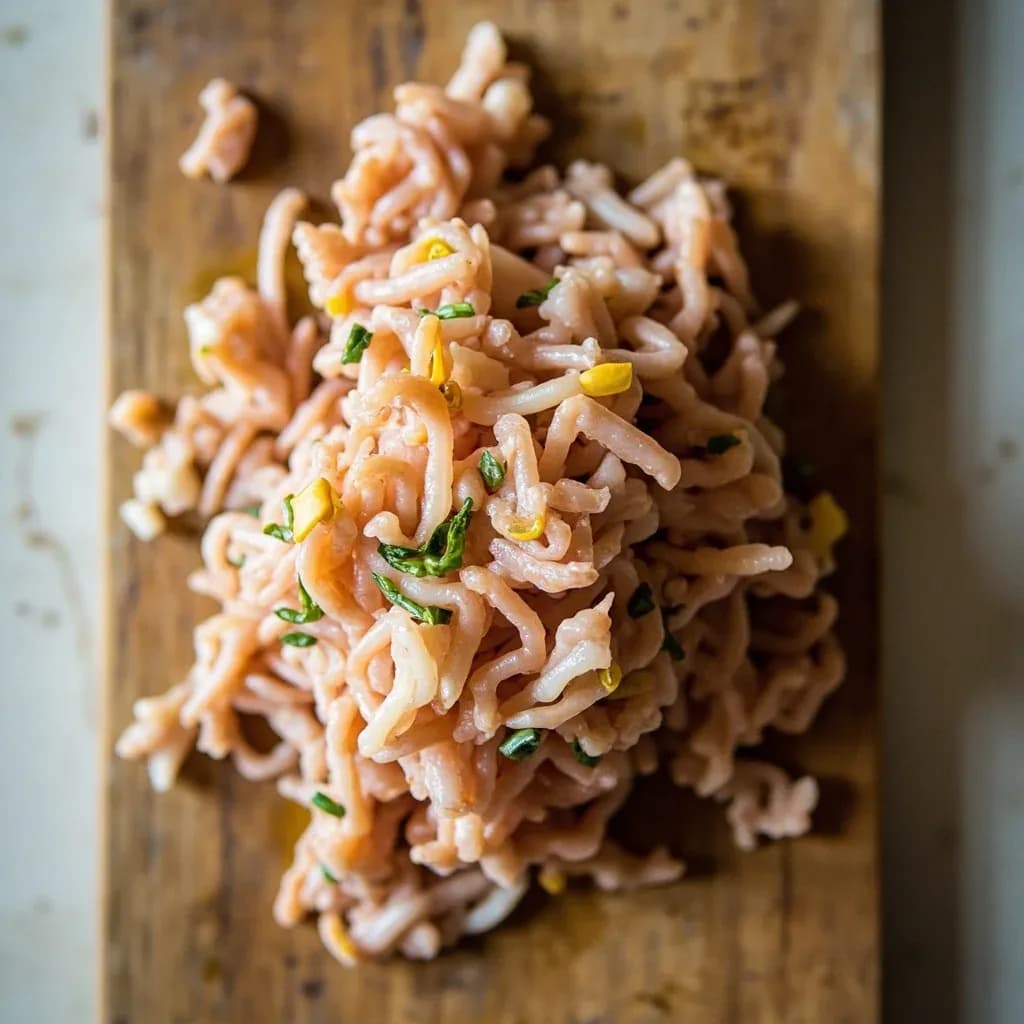
Battuto is the Italian foundation of very finely chopped fat (such as lardo or pancetta) with aromatics like onion, carrot, celery, garlic, and herbs. Chopped together until almost a paste, it is then slowly cooked down into soffritto, the flavor base for sauces, soups, and braises. The fineness of the chop is what lets it melt evenly into the dish.
Battuto is the raw, finely chopped aromatic base that underpins much of Italian cooking — a uniform dice of onion, carrot, and celery, often extended with garlic, parsley, or cured pork, that is sweated in fat until soft and translucent, becoming a soffritto and providing the aromatic foundation of the dish. The word comes from battere, to beat or chop, and the technique is less about the ingredients themselves than about the discipline of the cut: every piece must be roughly the same size so the mixture melts evenly into the sauce or braise, releasing its flavor in a single, integrated wave rather than in ragged bursts of half-raw onion and overcooked carrot.
In practice, the battuto behaves like a flavor ledger. Once it hits hot olive oil, butter, or rendered pancetta, the finely diced vegetables lose roughly half their volume and become soft, sweet, and translucent within 8–12 minutes, handing off their sugars to the fat and providing the savory spine of everything from a quick pan sauce to a six-hour ragù. Unlike a French mirepoix, which is typically cut closer to 1 cm and is often sautéed over higher heat, a battuto is chopped finer (3–5 mm) and cooked more gently, so the aromatics dissolve into the dish rather than remaining identifiable bites.
A well-executed battuto is the single biggest determinant of depth in Italian sauces and braises. The work is in uniformity of cut, not in exotic ingredients — a knife that travels through even matchsticks of onion, carrot, and celery will produce a base that tastes rounder, sweeter, and more coherent than one assembled from carelessly chopped vegetables, no matter how good the produce.
- Difficulty
- Medium
Types & varieties
Onion, carrot, and celery in equal parts; the all-purpose base for soups, braises, sauces, and risotto.
Onion, carrot, and celery plus diced cured pork; foundation for amatriciana, gricia, and many ragùs.
Often omits carrot, leaning on shallot, fennel, garlic, and parsley; used for seafood stews, brodetti, and fish soups.
Includes lemon zest and sometimes parsley; suited to lighter sauces and seafood.
Onion, carrot, and celery plus garlic and sometimes sage or rosemary; base for Tuscan ragù and ribollita.
Adds fennel bulb or fronds; typical in southern Italian fish cookery and pork dishes.
How to do it
- 1
Select and weigh the vegetables
Use onion, carrot, and celery in roughly equal parts by volume. Peel the onion and garlic, trim the carrot, and wash the celery ribs. Pat everything dry — water on the surface makes the knife slip and turns the dice wet and ragged.
- 2
Make stable bases
Slice a flat side onto rounded vegetables (carrot, onion halves) so they sit flat on the board without rolling. This single move is the biggest safety and consistency win in any fine dice.
- 3
Slice into even planks
Cut the carrot and celery lengthwise into 3–5 mm planks. Halve the onion pole-to-pole and lay the cut side down, then slice into similar-thickness strips. Match the plank thickness across all three vegetables so the final dice will cook at the same rate.
- 4
Julienne the planks
Stack 2–3 planks at a time and cut lengthwise into 3–5 mm matchsticks. Keep the stacks thin so the knife can travel cleanly through without crushing the back of the stack.
- 5
Cross-cut into a fine dice
Rotate the matchsticks 90° and cut across them at the same 3–5 mm width. Curl the fingertips of your guiding hand so the knuckles ride along the blade — the claw grip — and let the knife do the work with a smooth forward-and-down stroke rather than a hammering chop.
- 6
Handle the onion last
Chop the onion slightly coarser than the carrot, since onion softens and shrinks faster when it hits the pan. If including garlic, finely mince it separately and fold it in at the end so its sharp flavor survives the sauté rather than burning into bitterness.
- 7
Combine and chop together
Pile all the chopped vegetables in a small mound. Run the knife through the pile 2–3 times in a rocking motion so the pieces integrate and any oversized bits are caught and reduced. Herbs like parsley should be chopped and folded in at this point if they will be cooked.
- 8
Use or store
Cook immediately by sweating in olive oil or butter over medium-low heat for 8–12 minutes until soft and translucent, or refrigerate in an airtight container for up to 2–3 days. For longer keeping, freeze in flat portions or ice-cube trays and use directly from frozen into soups and sauces.
Battuto vs. soffritto vs. mirepoix
The three terms are often used interchangeably in home kitchens, but they describe different stages and traditions. A battuto is the raw, finely chopped aromatic mixture. Once it is sweated gently in olive oil, butter, or rendered pork fat until soft and translucent, it becomes a soffritto — and it is the soffritto, not the battuto, that actually flavors the dish. A mirepoix is the French cousin: the same onion-carrot-celery trinity, but typically cut larger (around 1 cm) and sautéed over slightly higher heat, so the pieces retain some texture and identity. In Italian cooking, the finer cut of the battuto is deliberate: it lets the aromatics dissolve completely into long-simmered sauces and braises, contributing body and sweetness without ever announcing themselves in a spoonful.
Regional character
Italian cooks adjust the battuto to suit the local pantry and the dish. Northern versions tend to be heavier on carrot and often include pancetta or lardo, both as an ingredient in the dice and as the cooking fat. Central Italian battuti — Tuscan and Roman especially — lean on garlic, sometimes sage or rosemary, and frequently onion as the dominant note. In the south, garlic, parsley, and occasionally chili take precedence, and the mixture is more often cooked in olive oil than in animal fat. These shifts are not arbitrary: they track the fats, preserved meats, and herbs that each region produces in abundance.
Common uses
Tips & pitfalls
- Keep the chef's knife razor-sharp — a dull blade crushes onion cells and smears carrot, releasing moisture and turning the dice into a wet pulp.
- Cut each vegetable separately; carrot, onion, and celery have different densities and water contents, and a uniform dice on each is what produces even cooking in the pan.
- Do not salt the raw battuto — salt draws moisture out of the vegetables and leaves you with a soggy, half-dissolved mixture before it ever reaches the heat.
- Use a heavy wooden or composite board; a wobbly or thin board makes fine knife work both harder and more dangerous.
- A mezzaluna and a tight rocking motion is the traditional Italian approach — it gives excellent control on a mound of vegetables and prevents pieces from flying across the kitchen.
- Do not use a food processor; the blade bruises rather than cuts, producing a wet puree that cooks unevenly and lacks the clean edges that hold flavor in the pan.
- Cook the soffritto over medium-low heat; high heat browns the finely diced vegetables before they soften, which gives a bitter, scorched base instead of a sweet, mellow one.
- Chop herbs such as parsley and basil separately and add them at the end of chopping, so they stay green and bright if used raw, or are protected from the heat if they will be sautéed.
Good to know
- Origin
- Italy, fundamental to most regional cuisines
- Etymology
- From Italian "battere" — to beat or chop
- Pronunciation
- bat-TOO-toh
- Component ratio (classic)
- Onion, carrot, and celery in roughly equal parts by volume
- Typical dice size
- 3–5 mm, finer than a French mirepoix
- State
- Raw — uncooked aromatic mixture
- Time to prepare (classic trinity)
- 5–10 minutes for a small batch
- Related term
- Becomes a soffritto once sweated in fat
Also called
Battuto (Finely Chopped Fat & Aromatics)
Dishes that rely on it

Related

Chop
Cut into rough, irregular pieces — the everyday workhorse cut

Dice
Cut into uniform cubes for even cooking and a tidy look

Mince
Cut as fine as possible so flavor melts evenly into the dish

Slice
Cut into even, flat pieces for consistent cooking and presentation

Julienne
Cut into thin matchsticks for fast cooking and elegant garnish

Brunoise
Cut into tiny, precise cubes — the finest dice in the kitchen

Chiffonade
Roll and slice leafy greens into delicate ribbons

Batonnet
Cut into tidy sticks, thicker than julienne — think classic fries