Prep & Assembly
Bruising Aromatics
Lightly crushing lemongrass, garlic, or herbs to release their oils without mincing them.
Bruising aromatics lightly crushes ingredients like lemongrass, garlic, ginger, or galangal with the flat of a knife or a pestle to rupture cells and release aromatic oils. It is used when you want flavor to infuse a dish but plan to leave the aromatic whole or fish it out later, as in Thai thup-style prep. Bruising delivers fragrance without the sharp bite of fully minced aromatics. The pieces stay intact enough to remove before serving.
Bruising is the deliberate, controlled cracking of an aromatic so that it releases its essential oils into a surrounding liquid or fat while keeping the piece itself whole enough to remove later. It sits at a precise point on a spectrum of cell-wall disruption — gentler than crushing (which flattens and tears) and far less destructive than pounding or grinding (which reduce an ingredient to a paste). The cook's purpose is twofold: to multiply the surface area through which volatile compounds can escape, and to do so without sacrificing the structural integrity that makes the aromatic easy to fish out of a stock, syrup, or braise.
In practice, the technique is just a single firm press with the flat of a blade, the side of a cleaver, or a wooden pestle. The result is audible and visible — a faint crack, a slight split, a thin sheen of released oil. This is the move that makes a lemongrass stalk surrender its perfume to coconut milk, that coaxes a green-cardamom pod open in a chai infusion, and that turns a few sprigs of thyme into the spine of a stock. It is also the gentlest way to coax flavor from delicate herbs in a cocktail or vinaigrette without tearing them into bitter, chlorophyll-laden shreds.
Reach for bruising whenever you want deep, slow, removable flavor: long simmers, infusions, braises, flavored syrups, brines, and rice-pot aromatics. Reach past it — toward chopping or pounding — when you want the aromatic to dissolve into the dish itself, as in a curry paste or a stir-fry where minced garlic is meant to be eaten.
- Difficulty
- Easy
Types & varieties
Lay the blade flat on the item, heel of the hand on the blade, press straight down; the standard move for garlic cloves, small ginger slices, cardamom pods, and clustered peppercorns.
Strike with the broad side or back of a Chinese cleaver; preferred for lemongrass stalks, galangal, cinnamon sticks, and other large, fibrous aromatics.
Useful for thick, fibrous items like lemongrass or whole star anise piled on a kitchen towel for even force and tidy cleanup.
Light downward press and twist in a mortar or directly in the pot; used in the opening of Thai curry pastes and in cocktail muddling.
Press aromatics into hot oil or over items already in the pan to flatten slightly; common for lemongrass in stir-fry and for tempering curry leaves in hot oil.
How to do it
- 1
Select and trim the aromatic
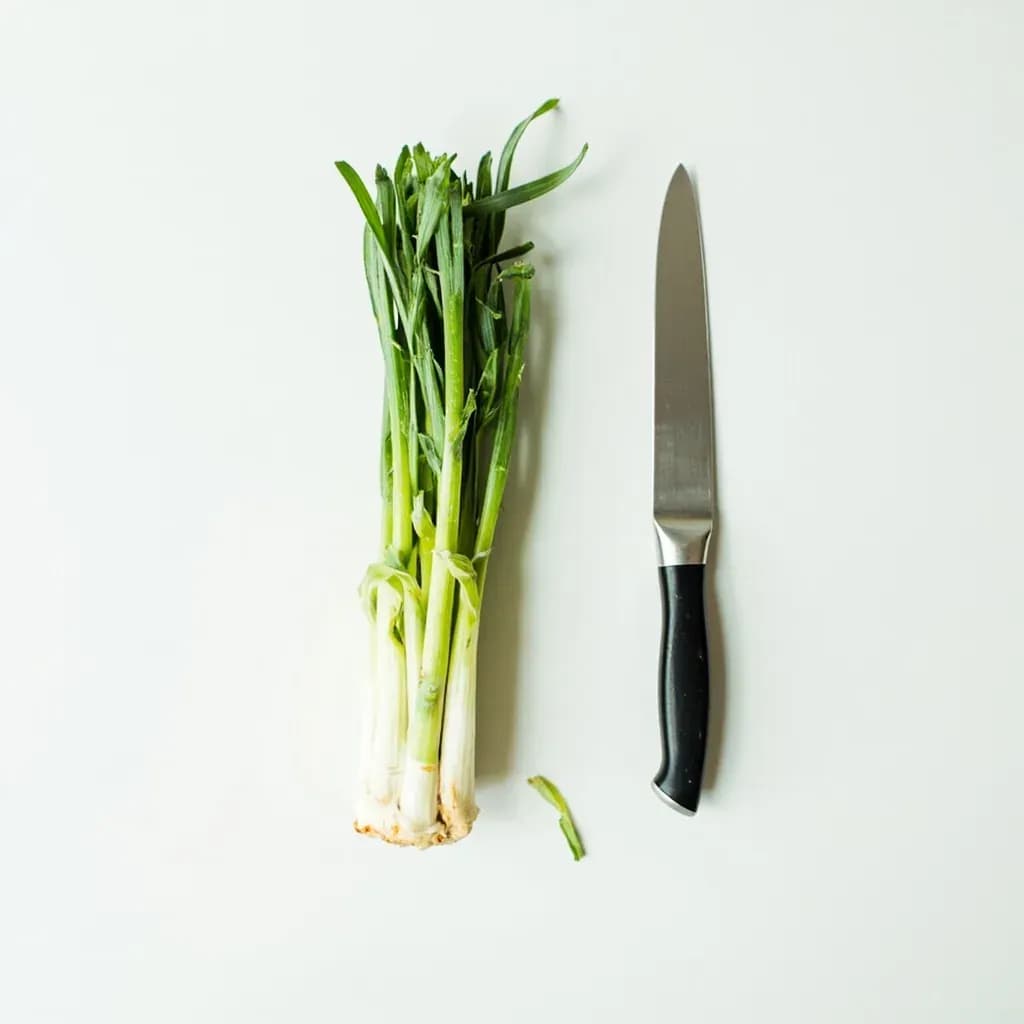
Choose whole, fresh aromatics — lemongrass stalks, garlic cloves, ginger slices, herb sprigs, spice pods. Peel, wash, or cut off inedible parts. For lemongrass, strip the tough outer leaves and trim the root; for ginger and galangal, slice into coins about 1/4-inch thick so the press hits evenly across the surface.
- 2
Position on a stable board
Place the item flat on a hardwood or composite cutting board with a damp paper towel underneath to keep it from slipping. Cluster very small items (peppercorns, cardamom seeds) in a single layer inside a folded kitchen towel so they don't scatter and you get even force.
- 3
Choose the right tool
Use the flat side of a chef's knife for small items (garlic, cardamom, peppercorns, bay leaves). Use the broad side or back of a cleaver for thicker, fibrous items (lemongrass, galangal, cinnamon sticks, star anise). Reach for a meat mallet or rolling pin when you're working in bulk or want extra control on a stubborn stalk.
- 4
Apply one firm, even press
Hold the tool flat, square your wrist, and press straight down in a single motion using body weight rather than a stabbing jab. You should feel the structure give and hear a faint crack. The temptation is to press twice — resist it; one clean press is the goal.
- 5
Check the result
The piece should still hold its shape but show visible cracks, splits, or a slight gloss of released oil on the surface. If it has flattened into a disc or splintered into shards, you've gone past bruise into crush — start over with a fresh piece and less force.
- 6
Add immediately to fat or liquid
Transfer the bruised aromatic directly into the cooking medium — oil in a hot pan, simmering stock, milk for chai, syrup, or pickling brine. Volatile compounds begin to dissipate within minutes if the bruised piece is left sitting dry on the board.
- 7
Strain or remove when applicable
For stocks, infusions, and braises where the aromatic is only a flavor vehicle, fish it out with a slotted spoon or pour through a fine-mesh sieve once the desired aroma is reached. For dishes meant to be eaten (curries, stir-fries), leave the pieces in place and chop or bite around them as the recipe calls for.
The Bruising Spectrum
Bruising is best understood as one step on a continuum of cell-wall disruption. Each stage trades a little structure for a little more flavor, and choosing where to land is a real cooking decision — not just a habit. Whole aromatics release the slowest and are the easiest to remove; pounded pastes release fastest and become part of the dish. Bruising is the sweet spot when you want depth without residue.
- Whole — left intact, slow infusion, no risk of grit or bitterness; good for delicate long simmers and easily strained stocks.
- Bruised — cracked open, oil-sheen visible, structure intact; the choice for stocks, syrups, braises, and infusions where the piece will be removed.
- Crushed / smashed — flattened and fully ruptured (a smashed garlic clove, a split bird's-eye chili); faster release, will tint a dish with color and body.
- Chopped / minced — small fragments; the move for sautés, stir-fries, and anything where the aromatic is meant to be eaten.
- Pounded to a paste — total cell breakdown, dense and immediate flavor; the foundation of curry pastes, pestos, and spice blends.
Choosing by Aromatic
Some aromatics respond better to one bruising tool than another, and a few have small rules worth knowing. A quick reference for the items cooks bruise most often:
- Lemongrass: peel the tough outer layers, then bruise only the lower 4–5 inches with the flat of a cleaver; the upper greens can simply be folded and lightly bruised for scent alone.
- Garlic in skin: a single press with the flat of a knife cracks the skin and softens the clove — ideal for a gentle, sweet garlic note in a braise where you will remove the skin later.
- Ginger and galangal: slice into 1/4-inch coins first so the press hits evenly; a cleaver side-smack is the usual tool.
- Cardamom pods: press just hard enough to split the pod; do not crush to a powder, or the seeds will grit the dish and turn slightly bitter.
- Makrut lime leaves: fold along the central spine, then press once; this releases the citrus oils without shredding the leaf into the bitter green that long cooking draws out.
- Cinnamon sticks and star anise: a single cleaver tap or mallet strike is plenty — they fracture easily and are easy to overdo.
- Woody herb stems (thyme, rosemary): leave them tied in a kitchen-twine bundle and press the whole bundle for easy removal later.
Common uses
Tips & pitfalls
- Aim for one clean press rather than repeated strikes — a single firm blow opens the cell matrix and releases oils without tearing the tissue to a pulp.
- For lemongrass, peel away the tough outer layers first and bruise only the lower 4–5 inches; the upper greens can be folded and lightly bruised for scent alone.
- Wrap small or jumpy items (peppercorns, cardamom seeds) in a folded kitchen towel before pressing — they won't scatter, and you'll get even force across all of them at once.
- Listen for the telltale crack and watch for a faint sheen of moisture or oil on the surface; if the item splinters or squashes flat, you've gone past bruise into crush.
- Bruise makrut lime leaves by folding them along the central spine and pressing once — this releases the citrus oils without shredding the leaf into the bitter green that long cooking draws out.
- For whole cardamom pods, press just hard enough to split the pod; do not pulverize, or the seeds will turn the dish gritty and slightly bitter.
- When bruising woody herb stems (thyme, rosemary) for stocks, leave them tied in a bundle with kitchen twine so you can press the whole bundle and lift it out cleanly later.
- Always bruise directly into the cooking fat or liquid you'll be using; aromatics left sitting dry on a board lose their volatile oils within minutes and end up under-contributing to the dish.
Good to know
- Technique type
- Mechanical cell-wall disruption, lighter than crushing or pounding
- Primary goal
- Rupture plant cells to release essential oils while keeping the item structurally whole
- Most common targets
- Lemongrass, garlic, ginger, galangal, cardamom pods, cinnamon sticks, star anise, peppercorns, makrut lime leaves, curry leaves, woody herb stems, cilantro stems
- Typical tools
- Flat side of a chef's knife, broad side of a cleaver, meat mallet, rolling pin, heavy skillet, wooden pestle
- Force applied
- One firm press or 1–2 controlled taps — outcome is a felt crack and visible oil sheen, not pulverization
- Effect on flavor
- Increases volatile-oil release roughly an order of magnitude compared with leaving the item whole
- Distinction from crushing
- Crushing flattens and fully ruptures (e.g., smashed garlic); bruising only opens the structure and releases oils
- Almost-always next step
- Sautéing in fat, simmering in liquid, or muddling into a cocktail or syrup
Also called
Bruising Aromatics (Thup)
Dishes that rely on it
Related

Whisk
Beat ingredients smooth and aerated with a looping wire motion

Sift
Pass dry ingredients through mesh to aerate and remove lumps

Strain
Pour through mesh to separate solids from liquid for a smooth result

Filter
Pass liquid through fine material to clarify out the smallest particles

Rice
Press cooked potatoes through small holes for fluffy, lump-free texture

Mash
Crush soft cooked food into a rustic, creamy purée

Grind
Crush food into a coarse to fine texture, from spices to meat

Grate
Shred food into fine bits against a sharp-toothed surface