Heat & Fire
Butter Basting
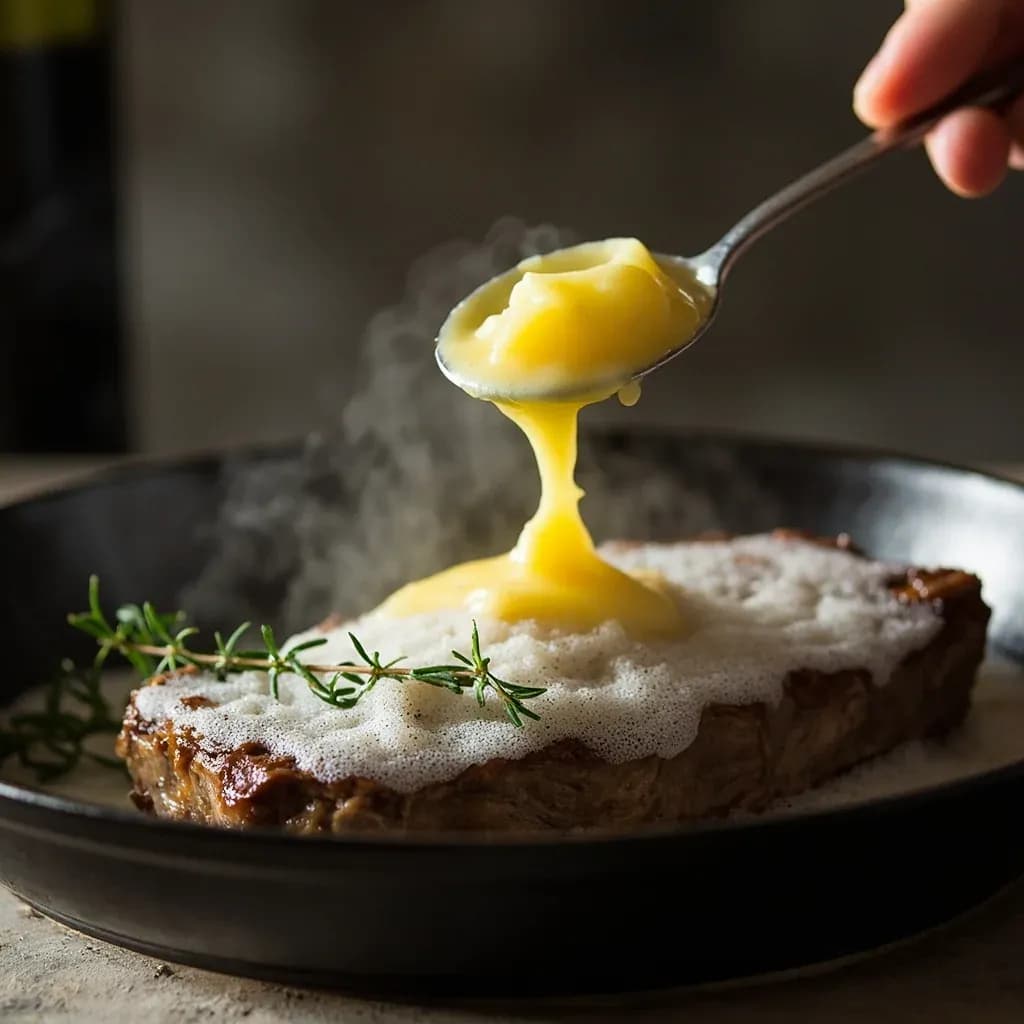
Spooning hot foaming butter over food as it sears to baste and flavor it.
Butter basting tilts the pan and uses a spoon to repeatedly pour foaming butter over a searing steak, fish, or scallop. The fat conducts heat to the top surface for even cooking and carries aromatics like garlic and thyme into the food. It builds a richly browned, glossy exterior and is a hallmark of restaurant searing.
Arroser au beurre — to baste with butter — is the classical French finishing move in which a cook repeatedly scoops hot, foaming butter from the pan and pours it over a seared protein or vegetable. The technique does two jobs at once: it carries gentle conductive heat around the sides and top of whatever is cooking, so a thick cut finishes evenly without drying out, and it lays a glossy layer of milk fat and lightly toasted milk solids across the surface, which is where most of the perceived richness comes from.
What is actually happening in the pan is straightforward chemistry. Whole butter is roughly 80% milk fat, 16–18% water, and a few percent milk solids. The moment it hits a hot skillet, that water flashes to steam and inflates the fat into a pale, rolling foam. As the water evaporates, the temperature of the butter climbs and the milk solids begin to toast — pale foam turns gold, gold turns hazelnut-brown, and then, if you ignore the pan, the whole thing goes black and acrid (beurre noir). The cook's only real job is to read those color cues and pull the pan before the last one happens.
Arroser is a finishing technique, not a searing technique. Whole butter burns well below the 230 °C / 450 °F a hard sear demands, so a properly butter-basted steak or fish fillet is built in two stages: a hard crust laid down in a neutral oil or clarified butter, then a drop to medium heat before the dairy enters. Done this way, butter basting is one of the most forgiving techniques in the kitchen — beginner-friendly once the sear is in hand, and almost impossible to ruin as long as the cook watches the foam.
- Difficulty
- Medium
Types & varieties
The standard method: a few tablespoons of unsalted butter added whole and basted in the foam. Maximum dairy flavor, lowest smoke point, must be done at moderate heat.
Milk solids removed, so the smoke point rises to roughly 200–250 °C / 400–485 °F and the pan can run hotter. Less dairy flavor, glossier finish.
The milk solids are allowed to brown to a deep hazelnut color before spooning. Distinctly nutty and toasty; the classic finish for sole meunière, skate, and trout.
Butter is infused during the baste with garlic, shallot, lemon, or woody herbs. Common additions: smashed garlic, thyme, rosemary, sage, lemon zest or juice.
Butter is foamed and browned in a separate pan, then spooned over a protein or vegetable that was cooked dry or in oil. The baste is a sauce, not a cooking medium.
A compound butter of parsley, lemon, and shallot slid into the pan at the end to melt into a sauce. Related but technically a sauce finish, not a basting.
How to do it
- 1
Sear the protein dry
Pat the protein very dry, season generously, and sear in a stainless or enameled pan with a thin film of high-smoke-point oil or clarified butter. Don't crowd the pan. Build the crust you want before any dairy enters the pan.
- 2
Reduce the heat and add butter
Once the crust is set, lower the burner to medium or medium-low. Add 2–4 tablespoons (30–60 g) of unsalted butter, whole for maximum flavor or clarified if you need more heat under the baste.
- 3
Add sturdy aromatics
As soon as the butter foams, drop in smashed garlic, thyme sprigs, rosemary, sage leaves, or sliced shallot. They should sizzle gently — if they scorch on contact, the pan is still too hot.
- 4
Tilt the pan and start spooning
Angle the skillet so the foaming butter pools on the far side, away from your hand. With a large stainless spoon, scoop and pour the butter over the top of the food in a steady, even stream, every 2–3 seconds.
- 5
Watch the color
Keep basting until the milk solids turn pale gold (mild, dairy-rich) or deep hazelnut-brown (noisette, more intense and nutty). Pull the pan off the heat the moment it smells toasted, before it goes dark.
- 6
Finish with delicate aromatics and citrus
Off the heat, stir in a squeeze of lemon, a pinch of flaky salt, and any soft herbs (parsley, chives, chervil). The residual heat will bloom them without wilting them to rags.
- 7
Baste one last time and rest
Spoon the pan butter over the protein as you transfer it to a warm plate or board. Rest 3–5 minutes, spooning the butter over the surface once or twice more so the crust stays glossy and warm.
- 8
Deglaze the pan (optional)
The fond left in the skillet is loaded with browned milk solids and aromatics; a splash of wine, stock, or lemon juice whisked in makes an instant pan sauce to spoon alongside.
Reading the foam
The foam is the only reliable thermometer the cook has. Clock-watching and guessing at heat will produce a burnt-butter smell long before a check of the burner's dial. Use the color of the milk solids as the gauge, and pull the pan the moment the butter smells toasted rather than buttery.
- Pale white, heavy foam — water is still leaving the butter; flavor is mild and dairy-forward. Good for delicate fish and chicken breast.
- Golden foam — water mostly gone, milk solids just starting to toast. The sweet spot for most steaks, chops, and duck breast.
- Hazelnut-brown foam and clear golden fat — beurre noisette. Peak nuttiness; classic on Dover sole, skate, and trout.
- Quiet pan with dark brown or black specks — beurre noir. Acrid and bitter; wipe the pan and start the baste again.
Common uses
Tips & pitfalls
- Sear first in a high-smoke-point fat (neutral oil, clarified butter, or ghee) before introducing whole butter — the single biggest mistake is adding dairy to a pan still at searing temperature, which burns the milk solids long before the food is cooked.
- Drop the burner to medium or medium-low the moment the butter goes in; residual pan heat plus a gentler flame is plenty.
- Tilt the pan away from you so the butter pools on the far side — safer than tilting toward your supporting hand.
- Use a generous stainless tablespoon, not a small spoon; more butter per scoop means more even coating and less fiddling.
- Add aromatics in order of toughness: smashed garlic, woody herbs (thyme, rosemary, sage), and shallot go in with the butter; parsley, chives, chervil, and citrus go in off the heat at the very end.
- Don't drown the food — the baste should run over the surface in a thin, even sheet, not pool and steam the crust you've worked to build.
- If the butter stops foaming and goes quiet, the water is gone and it is about to scorch — pull the pan off the burner immediately.
- Spoon over the sides, the bone, and any exposed skin, not just the top, so the whole piece picks up the butter's flavor.
Good to know
- French term
- Arroser au beurre — to baste with butter
- Origin
- Classical French; codified in the Escoffier-era repertoire of the 19th and 20th centuries
- Smoke point of whole butter
- Roughly 150 °C / 300 °F — well below the 230 °C+ of a typical sear, so heat must drop before the butter goes in
- What the foam is
- Water from the butter flashing to steam, mixed with milk proteins and fat
- Color stages
- Pale foam → golden foam → beurre noisette (hazelnut-brown milk solids) → beurre noir (black, acrid). Most basting finishes between golden and noisette.
- Best pan
- Light-colored stainless steel or enameled cast iron so the cook can see the butter changing color; dark cast iron hides the signals
- Tool
- A large stainless tablespoon (or a small ladle). Plastic or wood will melt or scorch.
- Difficulty
- Beginner-friendly once the sear is set; the real skill is heat control and reading the foam, not speed.
Also called
arroser · spoon basting
Dishes that rely on it
Related

Sear
Blast the surface hot for a deep-browned, savory crust

Sauté
Cook quickly in a little fat over lively heat, tossing as you go

Stir-Fry
Toss bite-sized pieces over roaring heat for fast, smoky cooking

Pan-Fry
Crisp food in a shallow layer of hot fat, turning once or twice

Deep-Fry
Submerge in hot oil for an all-over crackling crust

Roast
Cook uncovered in dry oven heat for browned edges and tender centers

Bake
Cook with steady, surrounding oven heat — the soul of bread and pastry

Broil
Hit food from directly above with fierce overhead heat