Water & Steam
Chai Decoction Simmering
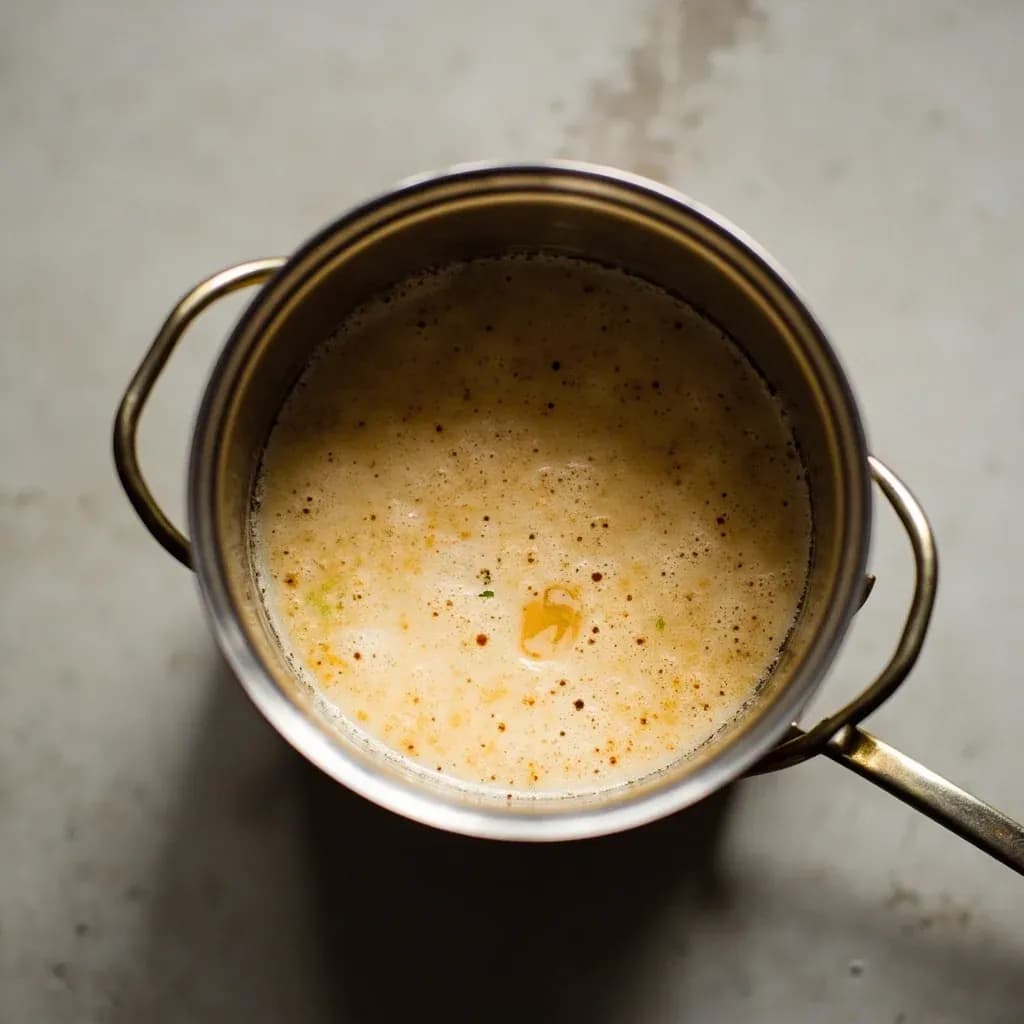
Simmering tea, milk, spices, and sugar together to extract a strong masala chai.
Masala chai is made by simmering black tea, crushed spices, milk, and sugar together so the heat extracts tannins and spice oils into a robust, aromatic brew. The decoction method, rather than steeping, draws out deeper color and stronger flavor. Cooks often bring it to a rolling boil and lower it repeatedly to build body before straining.
Chai decoction simmering is the foundational technique behind Indian masala chai: a long, vigorous boil of water, whole spices, black tea, and milk that coaxes a deep, malty, spiced liquor far beyond what a simple infusion can deliver. Unlike Western tea-making, where milk is added to the cup and the leaves are steeped briefly, here the milk goes into the pot and is boiled alongside the tea and aromatics. That rolling boil is doing real work — it emulsifies milk fats with tea tannins, drives off water to concentrate flavour, and lifts a pale, bubbly layer called malai to the surface.
The method's power comes from sequencing: spices go in first with water so their essential oils have time to dissolve, tea leaves follow for a short extraction, and milk and sugar enter last so the proteins don't scorch and the tea doesn't go harsh. Every regional style of chai in the subcontinent — from Hyderabadi Irani chai to Kashmiri noon chai to Mumbai's cutting chai — is a variation on this same simmer-and-boil backbone, adjusted by water-to-milk ratio, tea type, and finishing flourish.
- Difficulty
- Easy
Types & varieties
Highly reduced, intensely strong North Indian version with extra tea and minimal milk; almost syrupy in concentration.
Cardamom-led chai with green cardamom as the dominant or sole spice; clean, aromatic, and lightly sweet.
Ginger-led chai with a sharp, warming bite; often brewed as a remedy for colds or sluggish mornings.
Hyderabadi style with a higher milk-to-water ratio, pale-pink in colour, served in small cups alongside Osmania biscuits.
Finished by pouring the chai in a long stream between two vessels, with one kept hot in a tandoor clay oven, giving a smoky edge and dense, lingering froth.
Pink-hued chai brewed with gunpowder or Kashmiri green tea, a pinch of baking soda, and milk, often garnished with crushed pistachios or almonds.
Malabar black-tea brew spiced with lemon, ginger, and whole spices, traditionally served clear, without milk.
Mumbai street-style half-cup serving made from a strong decoction of tea and water, topped with a splash of hot milk at pouring time.
How to do it
- 1
Crush and measure the spices
Lightly crush 4–5 green cardamom pods, a 1-inch piece of cinnamon stick, 2–3 cloves, 2–3 black peppercorns, and a 1-inch knob of fresh ginger (smashed with the side of a knife). Measure 1.5–2 cups (350–475 ml) of water, 1–1.5 cups (240–350 ml) of full-fat milk, 2 teaspoons of CTC black tea leaves, and sugar to taste.
- 2
Simmer the spices in water
Combine the crushed spices with the water in a heavy-bottomed saucepan. Bring to a boil over medium-high heat, then drop to a gentle simmer for 3–5 minutes so the spice oils fully infuse the water.
- 3
Add the tea leaves
Stir in the black tea leaves and continue to simmer for 1–2 minutes. The liquid will darken quickly and develop a tannic edge — keep this short to avoid bitterness.
- 4
Pour in the milk and sugar
Add the milk and sugar, then raise the heat. Bring the chai back up to a full rolling boil, watching carefully as it foams and rises in the pot. This vigorous boil is what creates the signature frothy top.
- 5
Reduce and finish
Lower the heat and simmer for another 2–3 minutes until the chai reaches a pale caramel or terracotta colour and a rich, malty aroma. Pull off the heat the moment it tastes balanced — overcooking dulls the spices and toughens the tea.
- 6
Strain and serve
Strain through a fine-mesh sieve or brass chai strainer into cups or a pre-warmed serving pot. Serve immediately, ideally in small clay kulhars or thick ceramic cups.
Why the rolling boil matters
The vigorous boil that looks like it's about to escape the pot is not theatre — it's the mechanism that gives masala chai its signature texture. As the milk hits the hot spiced water, milk proteins (casein) bind with tea tannins (theaflavins and thearubigins) to soften what would otherwise be a sharp, astringent brew. The boil also drives off water, concentrating the sugars and spice oils, and physically whips air into the surface, creating the pale malai froth. Skipping the boil in favour of a gentle simmer produces a thinner, flatter chai; overdoing it scorches the milk solids and turns the drink muddy and harsh.
The role of CTC tea
Most Western teas are whole-leaf orthodox grades, which brew slowly and yield a light, nuanced cup. Indian chai almost always uses CTC (Crush-Tear-Curl) tea, where leaves are mechanically crushed into small, hard pellets. The shredded cells expose a huge surface area, so colour, body, and tannin extract in a minute or two — exactly the window a rolling-boil chai needs. Assam is the classic source for its maltiness; Darjeeling CTC is used for lighter-bodied styles; and Nilgiri or Ceylon CTC appear in South Indian blends. If you can't find CTC, a robust broken-leaf Assam will work, but expect a slightly thinner body.
Building the malai froth
The pale, slightly oily foam that floats on a well-made chai is called malai (or sometimes 'cream'). It is created by raising the pot to a full rolling boil and, if you're feeling traditional, lifting the chai in a high stream from one vessel into another from a height. The mechanical action folds air into the milk fat and stabilises it with tea tannins. Tandoori chai and street-side cutting chai both lean on this aeration step for their distinctive thick, lingering top layer.
Common uses
Tips & pitfalls
- Crack whole spices (cardamom pods, cloves, cinnamon, peppercorns) with the back of a heavy knife or in a mortar before simmering — bruised spices release far more aroma than intact ones.
- Use a heavy-bottomed stainless-steel or aluminium chai patila; thin pans scorch the milk and dull the flavour.
- CTC (Crush-Tear-Curl) black tea is the traditional choice for body, colour, and fast extraction — whole-leaf teas brew lighter and slower.
- Add the tea leaves only after the spices have simmered in water for several minutes, so the spice oils infuse without the tannins over-extracting.
- The vigorous rolling boil after the milk is added is what creates the characteristic frothy top — don't skip it, but watch the pot so it doesn't boil over.
- For a more rounded sweetness, add sugar with the milk rather than at the very start, so the spices retain their brightness.
- Common mistake: simmering too long once the milk is in — the milk scorches, the tea turns harsh, and the colour goes muddy. Pull the pot off the heat the moment the chai tastes balanced.
- Common mistake: using pre-ground spice powder in place of freshly cracked whole spices; the finished chai tastes dusty and lacks the layered aroma of a whole-spice brew.
- Reheat gently — never boil leftover chai a second time, as it dulls both the spices and the milk's sweetness.
Good to know
- Origin
- Indian subcontinent, with regional traditions across India, Pakistan, Bangladesh, and Nepal
- Key tea type
- Strong CTC (Crush-Tear-Curl) black tea, traditionally from Assam
- Target temperature
- Rolling boil at roughly 95–100°C (203–212°F), especially after milk is added
- Total time
- 10–15 minutes from cold water to finished chai
- Standard ratio
- Roughly 1 part water to 1 part milk, adjusted to regional taste
- Yield per batch
- About 2–4 cups (500–1000 ml)
- Common equipment
- Heavy-bottomed saucepan (chai patila) and a fine-mesh or brass chai strainer
- Difficulty
- Easy to moderate
Also called
masala chai brewing · chai boiling
Related

Boil
Cook in vigorously bubbling liquid at full rolling heat

Simmer
Hold liquid at a gentle shimmer for tender, unhurried cooking

Poach
Cook gently in barely-trembling liquid for silky, tender results

Steam
Cook in rising vapor to keep color, nutrients, and shape intact

Blanch
Plunge briefly in boiling water, then shock cold to lock color

Braise
Sear, then cook slow in a little liquid until fall-apart tender

Stew
Simmer bite-sized pieces fully submerged into a rich, unified pot

Sous-Vide
Seal and cook in precise warm water for edge-to-edge doneness