Heat & Fire
Chestnut Roasting (Caldarroste)
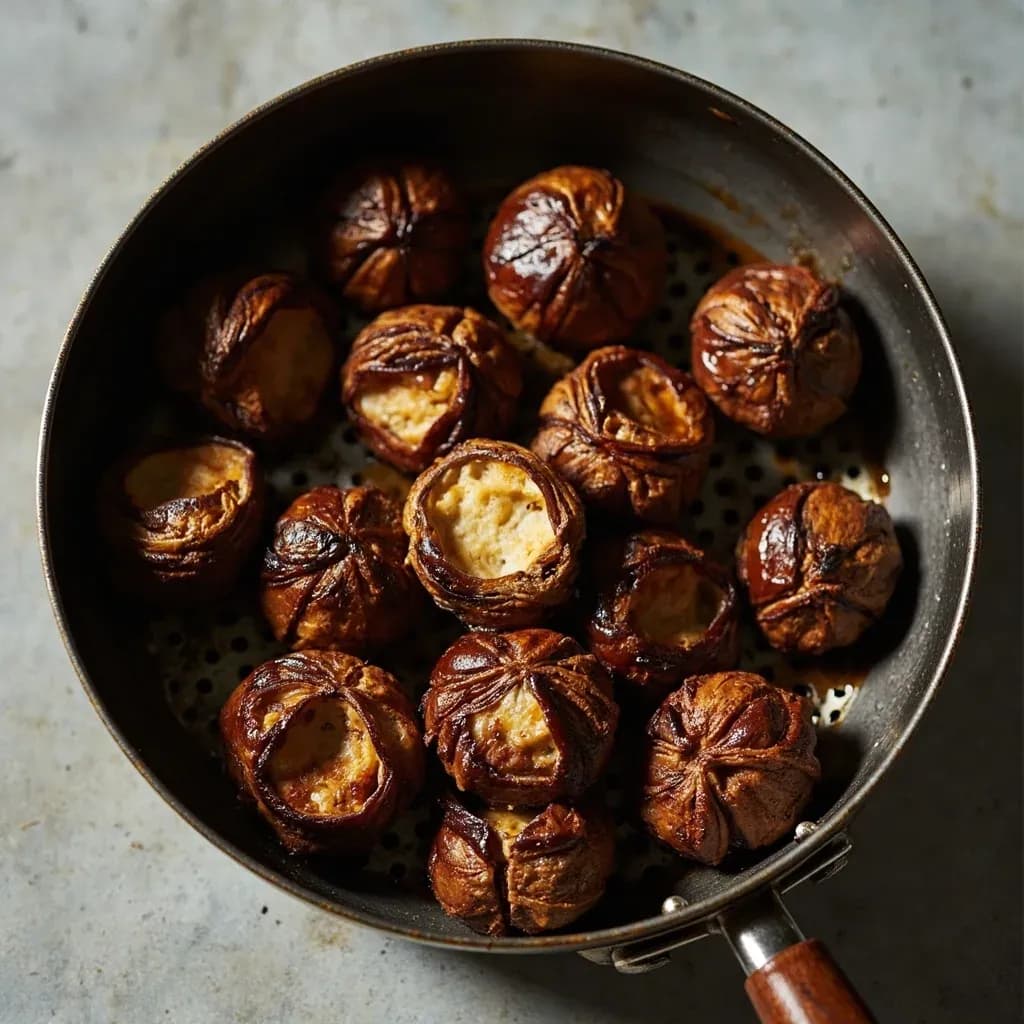
Scoring and roasting chestnuts over fire until the shells split and char.
Chestnuts are scored with an X, then roasted in a perforated pan or over coals until the shells crack open and the flesh turns sweet and tender. The scoring vents steam so the nuts don't burst, while the dry heat caramelizes their sugars. Caldarroste are a classic Italian winter street food, peeled warm.
Caldarroste is the Italian art of roasting chestnuts over open embers, a tradition tied to the autumn harvest and the cool months that follow. The technique is older than memory: Roman street roasters have been hawking the hot nuts from carts since at least the mid-19th century, and in hill towns across the peninsula the smell of scorched shells and smoldering chestnut wood is the signature of November. Mechanically, the method is simple — score the shell, expose the nut to steady radiant heat, and let trapped steam loosen flesh from skin — but the choices that determine success are not. Pick the right nut, cut it the right way, and peel it at the right moment, and you have a sweet, smoky, tender morsel that needs nothing more than a glass of new wine.
- Difficulty
- Easy
Types & varieties
Made from large marroni (one nut per burr) — the premium choice; sweeter, less astringent, and peels cleanly when scored.
Made from smaller castagne (2–3 nuts per burr) — the traditional working-class version; slightly more bitter and demands careful peeling.
Stovetop adaptation in a heavy cast-iron skillet with a splash of water and a lid; mimics the steaming effect of embers.
Oven method at 220°C / 425°F on a single layer, turned once; a faithful indoor backup that lacks the smoky char of the real thing.
How to do it
- 1
Select and sort
Pick chestnuts that feel heavy for their size with tight, glossy shells. Discard any with cracks, mold spots, or a rattling sound when shaken — a hollow rattle means the nut has dried out and will roast to a floury, bitter texture.
- 2
Rinse and dry
Rinse under cold water to remove dust, then pat dry with a towel. Wet shells char unevenly and steam rather than roast.
- 3
Score the shells
Lay each chestnut flat-side up on a cutting board. With a sharp paring knife or a chestnut knife (cavatappi), make a single straight cut 5–8 mm long across the flat curve — deep enough to slice through the hard shell and the thin tan pellicle beneath, but not into the flesh. A shallow X works too.
- 4
Optional soak
Submerge the scored nuts in cool water for 30–60 minutes, then drain. The added internal moisture helps the flesh steam gently from within and reduces the risk of bursting over a fierce fire.
- 5
Build the fire
Light charcoal or hardwood and let it burn down to a steady bed of medium embers — no active flames. The heat should be hot enough to sizzle a drop of water flicked onto the pan.
- 6
Roast in the perforated pan
Fill the padella forata with a single layer of scored chestnuts. Hold the pan a few centimeters above the embers, shaking it gently every 4–5 minutes so the nuts turn and the cut opens up. Roast 20–30 minutes total, depending on size.
- 7
Test for doneness
The shell should be blackened and curled back along the cut, exposing pale yellow-cream flesh. Squeeze one through the shell — it should give softly. Cut one open: the flesh should be fully tender, not floury or chalky in the center.
- 8
Serve and peel hot
Tip the roasted chestnuts into a paper-lined basket or cone. Peel while still very hot, pulling the shell and inner skin together. If the inner skin sticks, slip it off with a small paring knife or rub the nut briskly between two cloths.
- 9
Oven method (alternative)
Heat the oven to 220°C / 425°F. Spread scored nuts on a baking sheet in a single layer. Roast 20–25 minutes, turning once at the halfway mark, until the shells split and char lightly. Peel immediately — the oven version is forgiving but loses the smoky depth of chestnut-wood embers.
The Marrone vs. Castagna Choice
Italian chestnut tradition draws a sharp line between two nuts that English speakers tend to lump together. The marrone is the aristocrat: one large, rounded nut inside each spiny burr, with a pale, single-layer inner skin that slips off easily after roasting. The castagna is the workhorse: two or three smaller nuts per burr, deeper tan, more bitter, and with a stubborn inner skin that fragments if you try to peel it cold. Roman caldarrostari use marroni almost exclusively for this reason — the customer eats the nut five minutes after buying it, and a clean peel is the difference between a sale and a complaint. When buying chestnuts for roasting, ask specifically for marroni, or pick through the bin for the largest, most uniformly sized nuts. The rule of thumb: bigger and flatter is usually marrone; smaller and more numerous is usually castagna.
Why a Perforated Pan Over Embers
The padella forata looks unglamorous, but its hole pattern does three things at once. The holes let radiant heat reach the nuts from below as well as from the smoke above, so they cook evenly without sitting on a hot metal surface that would scorch the flesh. The holes let the roaster shake the pan continuously, tumbling the nuts so each one spends time cut-side up, cut-side down, and on its rounded back. And the long handle keeps the hands a safe distance from the embers while still allowing the cook to hover the pan at exactly the right height — close enough to char, far enough to steam. Chestnut wood is the traditional fuel because it is abundant in the same hills where the nuts grow, but any hardwood charcoal burned down to a steady bed of medium embers will do the same job.
Common uses
Tips & pitfalls
- Choose fresh, heavy nuts with no visible mold or shriveling; tap them — a hollow rattle means old and dried out, and the flesh will be floury and bitter no matter how you cook them.
- Score on the flatter side, not the rounded back. The inner curve of the shell forces the cut to open cleanly as the nut expands, and a back-side cut often seals shut and traps steam.
- Cut deep enough to pierce the inner pellicle but not so deep that you slice into the flesh — about 2–3 mm. A cut that only breaks the outer shell will still fight you at peeling time.
- Soak scored nuts in cold water for 30–60 minutes before roasting if your fire runs very hot; they steam from inside, peel more easily, and are far less likely to burst.
- Pull them off the heat while still slightly underdone. Residual heat finishes the cooking in the pan and prevents the dry, bitter texture that comes from over-roasting.
- Peel while hot — within 5–10 minutes. Once a roasted chestnut cools, the inner skin bonds to the flesh and turns a one-minute task into a ten-minute chore.
- Never microwave unscored chestnuts. Steam builds inside the intact shell and the nut explodes, leaving you scrubbing your oven interior.
- Wear an apron; the cut shells spurt small amounts of steam and can pop flecks of char.
Good to know
- Italian name
- Caldarroste (singular: caldarrosta); the pan is called a padella forata or buca
- Traditional fuel
- Charcoal or hardwood embers; chestnut wood itself is often used and adds a faintly sweet smoke
- Pan
- Long-handled perforated steel pan with holes the size of a chestnut, shaken over the heat
- Scoring
- Single straight cut (or shallow X) on the flat side, through both shell and inner pellicle, about 2–3 mm deep
- Roasting time
- Roughly 20–30 minutes over medium embers; larger marroni take longer
- Done signal
- Shell blackens and curls back at the cut; flesh yields to a squeeze and smells nutty-sweet
- Peeling window
- Best within 5–10 minutes of leaving the pan; the inner skin bonds to the flesh as it cools
- Best nut
- Marrone (one large nut per spiny burr) — sweeter, easier to peel, and less astringent than the smaller castagna
Also called
caldarroste · roasted chestnuts
Related

Sear
Blast the surface hot for a deep-browned, savory crust

Sauté
Cook quickly in a little fat over lively heat, tossing as you go

Stir-Fry
Toss bite-sized pieces over roaring heat for fast, smoky cooking

Pan-Fry
Crisp food in a shallow layer of hot fat, turning once or twice

Deep-Fry
Submerge in hot oil for an all-over crackling crust

Roast
Cook uncovered in dry oven heat for browned edges and tender centers

Bake
Cook with steady, surrounding oven heat — the soul of bread and pastry

Broil
Hit food from directly above with fierce overhead heat