Water & Steam
Chopped-Chili Steaming (剁椒蒸)
Hunan technique steaming fish or vegetables under a layer of fermented chopped chili.
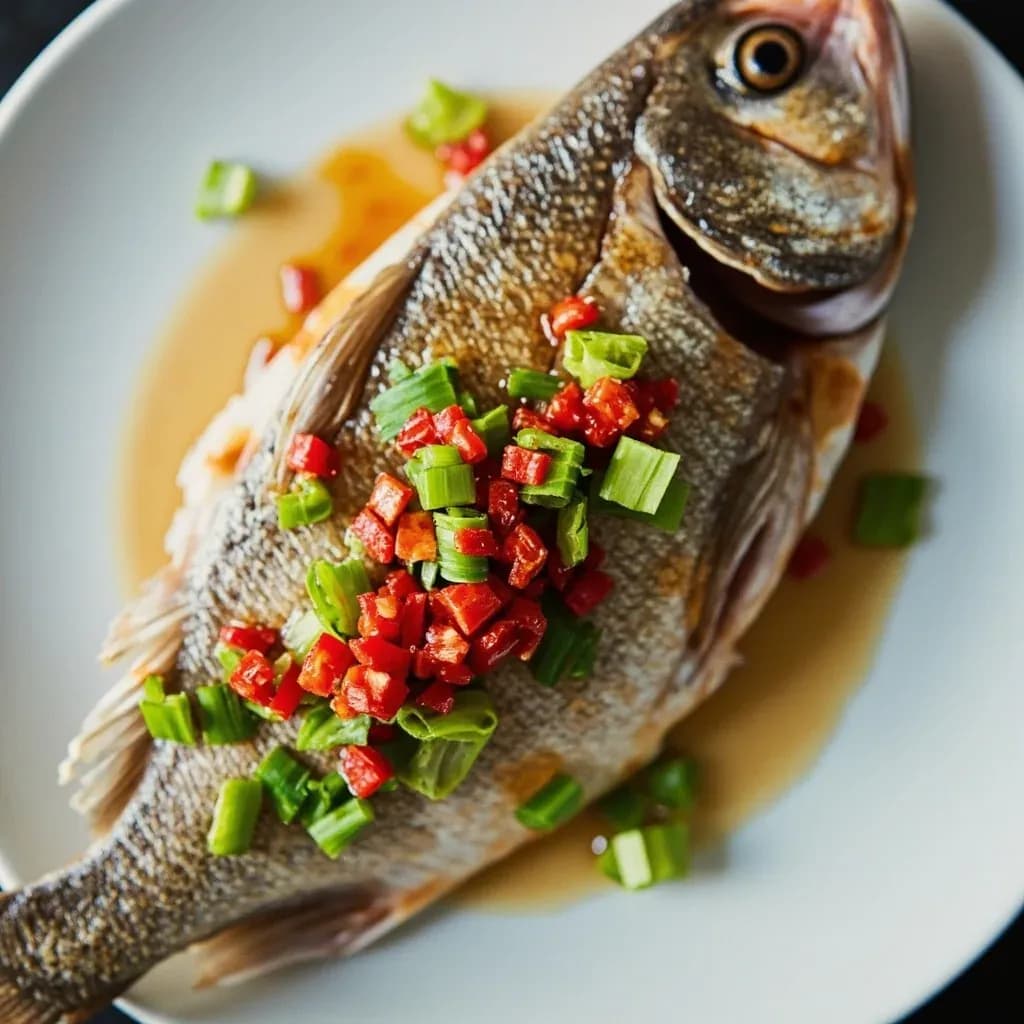
Duo jiao zheng tops fish, taro, or other ingredients with fermented chopped chili (duo jiao) and steams them until just cooked. The steam carries the chili's salty, sour, spicy flavor into the delicate flesh without drying it out. It's a hallmark Hunan method, often finished with hot oil poured over scallions.
剁椒蒸 is less a single dish than a Hunan family of techniques built around one defining move: sealing a main ingredient under fermented chopped chili and letting steam carry the capsaicin and savory depth down into the flesh. The 剁椒 itself — red chilies finely chopped and fermented for days or weeks with salt, ginger, garlic, and often a splash of baijiu — is what sets the method apart from Cantonese steamed fish (which leans on fresh ginger and scallion) and Sichuan steamed dishes (which reach for chili oil and Sichuan peppercorn). Fermentation tames the raw burn of fresh chili and replaces it with a tangy, almost wine-like heat that clings to the protein rather than scorching the palate.
What makes the technique work is how steam behaves under a thick, even cap of chili. The chili acts as both seasoning and a loose lid, trapping the main ingredient's juices against its own surface, where they mingle with capsaicin and fermented aromatics; at the end, a smoking-hot pour of oil blooms scallion and garlic on top, releasing the dish's signature fragrance. The most iconic expression is 剁椒鱼头, a split bighead carp head blanketed in red, but the same logic applies cleanly to pork ribs, tofu, eggplant, clams, taro, and chicken. The technique demands little skill — its success rests almost entirely on ingredient quality, salt balance, steam timing, and not skipping the final oil sizzle.
- Difficulty
- Medium
Types & varieties
The defining dish; bighead carp (大头鱼) head split open, scored, blanketed in chili
Same method applied to grass carp, perch, or sea bass
Pre-marinated ribs topped with chili; longer steam; commonly served over rice
Soft silken tofu given a brief steam; eaten as a light main or cold side
Halved or sliced eggplant steamed until silky, finished with soy and oil
Taro slices under chili, steamed until tender; popular in southern Hunan
Clams open in the steam, their brine mingling with chili oil
Bone-in chicken pieces; similar method, longer cook than fish
How to do it
- 1
Prepare the 剁椒
If using store-bought 剁椒, drain it briefly. If it looks dry, loosen it with 1–2 tablespoons of neutral oil or lard and a small pinch of sugar; set aside to let the flavors meld while you prep the main ingredient.
- 2
Prepare the main ingredient
Clean and pat dry. For a fish head, split it open along the underside, lay it flat like an open book, and score the thick flesh at roughly 2 cm intervals down to the bone. Rub lightly with salt, shaoxing wine, and sliced ginger, then rest 10 minutes. For pork ribs, marinate 20–30 minutes in shaoxing wine, light soy, cornstarch, and a pinch of sugar.
- 3
Layer the chili
Discard the marinade ginger. Spread an even 1–1.5 cm layer of 剁椒 over the exposed flesh, covering completely. Tuck a few smashed garlic cloves and a small splash of light soy around — not under — the chili cap.
- 4
Steam over rolling water
Bring a wok or steamer of water to a vigorous boil. Place the plate on a rack above the water, cover, and steam over high heat: 8–12 minutes for a 1–1.2 kg fish head, 5–7 minutes for fillets, 4–6 minutes for clams until their shells just open, 10–12 minutes for tofu or eggplant, 25–35 minutes for marinated pork ribs. The fish is done when the flesh is just opaque at the bone and flakes still feel moist.
- 5
Drain and garnish
Lift the plate from the steamer and carefully pour off the thin watery liquid that has collected in the well of the plate — it dilutes the chili oil and makes the dish taste washed out. Scatter a generous handful of thinly sliced scallions and minced fresh garlic over the chili cap.
- 6
The hot-oil sizzle
Heat neutral oil (or a blend of oil and a small knob of lard) in a small pan to about 200 °C until just smoking, then pour it evenly over the scallions and garlic — it should hiss loudly and release a visible plume of fragrance. Drizzle a thin stream of light soy around the rim of the plate and serve immediately, with rice and a simple stir-fried green vegetable.
Why fermented chili is non-negotiable
Substituting fresh chili for 剁椒 is the single most common shortcut, and it changes the dish fundamentally. Fresh chili brings bright, sharp heat that evaporates into the steam and leaves the protein tasting one-dimensional. Fermented chili carries glutamates and organic acids developed during the brine stage, which means every bite lands with savory, slightly funky depth alongside the burn. The chili should look wet and glossy when it goes on, not dry and dusty; if it does look dry, loosen it with a tablespoon or two of neutral oil or rendered pork fat before spreading.
- Fermentation tames raw capsaicin and replaces it with a winey, tangy heat.
- Aged 剁椒 develops glutamates that boost savoriness far beyond what fresh chili offers.
- Dry, dusty 剁椒 will not bloom properly under steam — loosen it with oil or lard first.
The hot-oil finish
The final sizzle is the dish's signature sound and aroma, and it is not optional. Pouring cool or merely warm oil does almost nothing; the oil must be hot enough (around 200 °C) to flash-fry the raw scallion and garlic on contact, releasing their volatile aromatics into a visible cloud of fragrance. The hiss also briefly re-crisps the top of the chili cap and re-emulsifies the oil into the juices pooled on the plate, which is what gives the finished dish its glossy red sheen. Use a neutral oil with a high smoke point, or blend it with a small knob of lard for body.
- Oil must be just smoking (≈200 °C) — cooler oil will not bloom the aromatics.
- Pour evenly over a generous scatter of fresh scallion and garlic, not under the chili.
- A thin stream of light soy around the rim at the end sharpens the salt balance.
Choosing the main ingredient
Steaming is an unforgiving medium: there is no sauce to mask staleness, no long braise to tenderize a tough cut, no Maillard crust to hide a pale surface. The fresher the fish, the cleaner the steam, the better the dish. For 剁椒鱼头, look for a bighead carp head with clear eyes, bright red gills, and flesh that springs back when pressed; pre-scored supermarket fish heads save time but never taste as clean. Pork ribs need a brief marination in shaoxing wine, soy, and cornstarch to keep them tender through the longer steam. Tofu, eggplant, and taro are forgiving — even mediocre specimens will turn silky under chili.
- Freshness is non-negotiable for fish and seafood; steam amplifies staleness.
- Score thick cuts of fish so steam and chili juices penetrate evenly.
- Use a plate slightly larger than the ingredient so the chili cap does not slide during cooking.
Common uses
Tips & pitfalls
- Drain off the watery liquid that pools in the plate after steaming; it dilutes the chili oil and leaves the dish tasting washed out.
- Salt the main ingredient lightly before topping with chili — 剁椒 is already salty, and double-salting is the most common seasoning error.
- Use a thick, even 1–1.5 cm layer of 剁椒 so juices flow down through steam rather than the chili drying out into a crust.
- Always finish with smoking-hot oil (≈200 °C) poured over fresh scallions and garlic; this blooms the aromatics and is the dish's signature fragrance — a warm or cool pour will not work.
- Do not over-steam: fish should be just opaque and the flakes still moist; overcooking dries the flesh and mutes the chili aroma.
- Choose fish or seafood as fresh as possible; steaming amplifies staleness rather than hiding it.
- Use a plate slightly larger than the ingredient so the chili cap does not slide off into the water during steaming.
Good to know
- Origin
- Hunan (Xiang) cuisine; the defining steamed technique of the region, with 剁椒鱼头 popularized in Changsha in the mid-20th century
- Chili used
- 剁椒 (duòjiāo) — finely chopped red chilies fermented with salt, ginger, garlic, and often baijiu
- Fermentation time
- Typically 5–30 days in a sealed jar at cool room temperature before use
- Heat profile
- Medium-hot; fermentation softens raw capsaicin and adds tangy, savory depth
- Typical cook time
- 8–12 min for a 1–1.2 kg fish head; 5–7 min for fillets; 25–35 min for pork ribs
- Chili-to-main ratio
- Roughly 150–200 g of 剁椒 per 1 kg of main ingredient for balanced coverage
- Finishing step
- Pour smoking-hot neutral oil (≈200 °C) over fresh scallions and garlic to bloom aromatics
- Difficulty
- Low — relies on ingredient quality and timing rather than complex technique
Also called
duo jiao zheng · fermented chili steaming
Related

Boil
Cook in vigorously bubbling liquid at full rolling heat

Simmer
Hold liquid at a gentle shimmer for tender, unhurried cooking

Poach
Cook gently in barely-trembling liquid for silky, tender results

Steam
Cook in rising vapor to keep color, nutrients, and shape intact

Blanch
Plunge briefly in boiling water, then shock cold to lock color

Braise
Sear, then cook slow in a little liquid until fall-apart tender

Stew
Simmer bite-sized pieces fully submerged into a rich, unified pot

Sous-Vide
Seal and cook in precise warm water for edge-to-edge doneness