Knife Skills
Coring
Removing the seedy or fibrous center from fruits and vegetables before cooking.
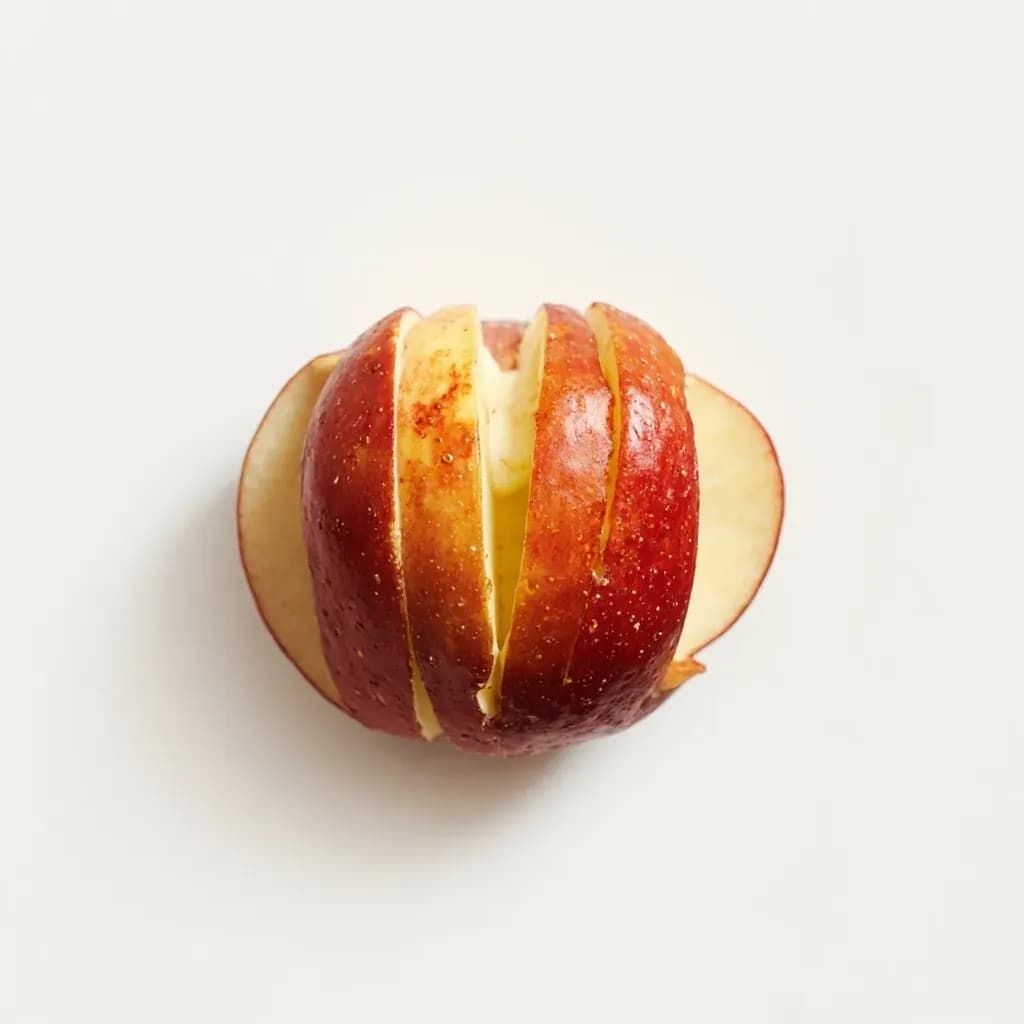
Coring cuts out the inedible or tough center of produce, such as the seed core of an apple, the stem of a tomato, or the bitter pith and seeds of bitter melon. It is done with a corer, a paring knife, or a spoon for scooping. Removing the core leaves clean, even pieces and discards bitter or unpleasant parts. The method varies with the fruit, from a twist of a corer to halving and scooping.
Coring is the prep step of removing the dense, seedy, or fibrous center of a fruit or vegetable before it is peeled, sliced, stuffed, or cooked. The word "core" means different things depending on the food: in apples, pears, and quinces it is a fibrous, seed-bearing cylinder; in pineapples it is a woody column running top to bottom (with the "eyes" also removed by angled cuts); in cabbage and iceberg lettuce it is a tough basal stem; in bell peppers it is a white seed mass clinging to the stem. The goal is always the same — to remove the inedible or unwanted tissue so the rest of the ingredient can be eaten, sliced evenly, or stuffed cleanly.
Although coring, seeding, and hulling are often used interchangeably, they describe different operations. Coring targets a central column of tissue; seeding removes loose seeds from an already-exposed cavity; hulling pulls the green calyx from berries like strawberries. Knowing which term applies keeps recipes unambiguous and helps you choose the right tool — a melon baller for seeding a tomato, a paring knife for coring a pepper, a paring knife or corer for an apple.
Done well, coring is fast — a practiced cook removes an apple's core in two or three seconds with a plunger tool — but the method shifts with the food's shape and density. A one-pound apple, a five-pound pineapple, and a three-pound cabbage each call for a different approach, and choosing the wrong one is the most common cause of wasted flesh, split fruit, or torn leaves.
- Difficulty
- Easy
Types & varieties
Plunger-style apple corer pushed straight down through the center; fastest method, suited to firm round fruit like apples and pears.
Knife angled in a cone shape around the core, removing it as a single wedge; used for pineapples and sometimes cabbage.
Fruit quartered first, then the seedy triangle cut from each wedge; offers more control and is standard for apples, pears, and quinces.
Knife circled around the stem to lift it and the attached seed mass out in one piece; used for bell peppers and chilies.
Teaspoon, melon baller, or small knife used to scrape out seeds; typical for halved tomatoes, cucumbers, and melons.
Cone cut from the bottom of the head; used for cabbage, iceberg lettuce, and cauliflower to release the leaves or florets.
How to do it
- 1
Stabilize the fruit or vegetable
Set it on a stable board. For round items like apples or pears, rest the fruit on its side so it doesn't roll, or cut a thin slice off the bottom to create a flat base before coring.
- 2
Choose your method: corer tool, quarter, or cone
Pick a plunger corer for quick, uniform results on firm fruit; quartering for more control and less waste; or a cone cut for pineapples and cabbage. Match the method to the food's size and shape.
- 3
Plunger corer method (apples, pears)
Center the corer over the stem end. Press straight down in one firm motion until the tool passes through the base. Lift the corer and push the cylindrical core out. Twisting the corer can split the fruit — go straight down.
- 4
Quarter coring method (apples, pears, quinces)
Stand the fruit on the board and slice it in half pole to pole, then rotate 90° and halve again to make four quarters. Lay each quarter flat and slice off the seedy triangle in one or two diagonal cuts, following the curve of the core.
- 5
Cone coring method (pineapple, cabbage)
For pineapple: trim the top and bottom, stand the fruit upright, and slice off the skin in downward strokes. Then angle a paring or chef's knife to remove the diagonal rows of eyes in shallow wedges, following their natural line. For cabbage: place the head cut-side down and cut a wide cone from the base just deep enough to release the leaves without losing them.
- 6
Stem-and-seed method (bell peppers, chilies)
Stand the pepper upright. Look at the top and identify where the stem meets the shoulder. Slide a paring knife around the stem in a circle, angling inward, then pull the stem and seed mass out as one unit. Shake out any loose seeds and rinse if desired.
- 7
Scoop method (tomatoes, melons, cucumbers)
Halve or quarter the fruit. Use a teaspoon, melon baller, or the tip of a paring knife to scrape out the seedy pulp in short, shallow strokes, taking as little flesh with it as possible. A gentle squeeze of a halved tomato will push the gel out cleanly without dragging flesh.
- 8
Inspect and finish
Check the cavity for remaining seeds or tough fibers. If slicing, lay the cored piece flat for even, stable cuts. If prepping for stuffing, leave a clean hollow without piercing the base or sides so fillings stay contained.
Coring vs. Seeding vs. Hulling
These three terms show up interchangeably in casual recipes, but in knife-skill terminology they describe distinct actions. Understanding the difference matters because each calls for a different tool and produces a different result.
- Coring removes a central column of seedy, fibrous, or stem tissue — apples, pears, pineapples, peppers, cabbage, lettuce.
- Seeding removes loose seeds from an existing cavity — halved tomatoes, melons, cucumbers, peppers after the stem is lifted.
- Hulling pulls the green calyx from soft fruit — most commonly strawberries, whose leafy green top is removed with the tip of a paring knife or a huller.
Common uses
Tips & pitfalls
- Always use a sharp, dry knife; a dull blade crushes flesh and pushes seeds deeper into the fruit.
- For apples and pears, quartering first lets you see exactly where the core sits and reduces waste compared to a single big scoop.
- Push an apple corer straight down from the stem end in one firm motion; twisting the corer can split the fruit.
- Angle the knife toward the center when cutting cone cores; following the natural curve uses less edible flesh.
- For tomatoes, halve crosswise and squeeze or scoop the seedy gel out with a fingertip or spoon — a knife drags the flesh.
- When coring a whole head of cabbage, cut a wide cone at the base so the outer leaves detach cleanly without tearing.
- For pineapple, remove the skin first, then slice diagonally in a shallow zigzag to follow the line of the eyes.
- Save trimmings (apple peels, pineapple cores) for stocks, vinegars, or infusions rather than discarding them.
- A melon baller is gentler than a knife for scooping seeds from delicate fruits like tomatoes and ripe melons.
- Don't try to drive a chef's knife through a whole apple to core it; use a paring knife or a proper corer for safety and control.
Good to know
- Technique type
- Knife skill / prep technique
- Primary tools
- Paring knife, chef's knife, apple corer, melon baller
- Difficulty
- Beginner; easiest with an apple corer, more controlled with a paring knife
- Most common applications
- Apples, pears, pineapples, cabbage, bell peppers, chili peppers, tomatoes
- Time required
- Seconds per piece with practice; under a minute per item
- Related skills
- Peeling, quartering, seeding, hulling
Also called
Vegetable Coring · Seeding and Scooping Bitter Melon · Scooping/Deseeding
Dishes that rely on it
Related

Chop
Cut into rough, irregular pieces — the everyday workhorse cut

Dice
Cut into uniform cubes for even cooking and a tidy look

Mince
Cut as fine as possible so flavor melts evenly into the dish

Slice
Cut into even, flat pieces for consistent cooking and presentation

Julienne
Cut into thin matchsticks for fast cooking and elegant garnish

Brunoise
Cut into tiny, precise cubes — the finest dice in the kitchen

Chiffonade
Roll and slice leafy greens into delicate ribbons

Batonnet
Cut into tidy sticks, thicker than julienne — think classic fries