Transform & Preserve
Curd Breaking
Gently disrupting set milk curd to start releasing whey in cheesemaking.
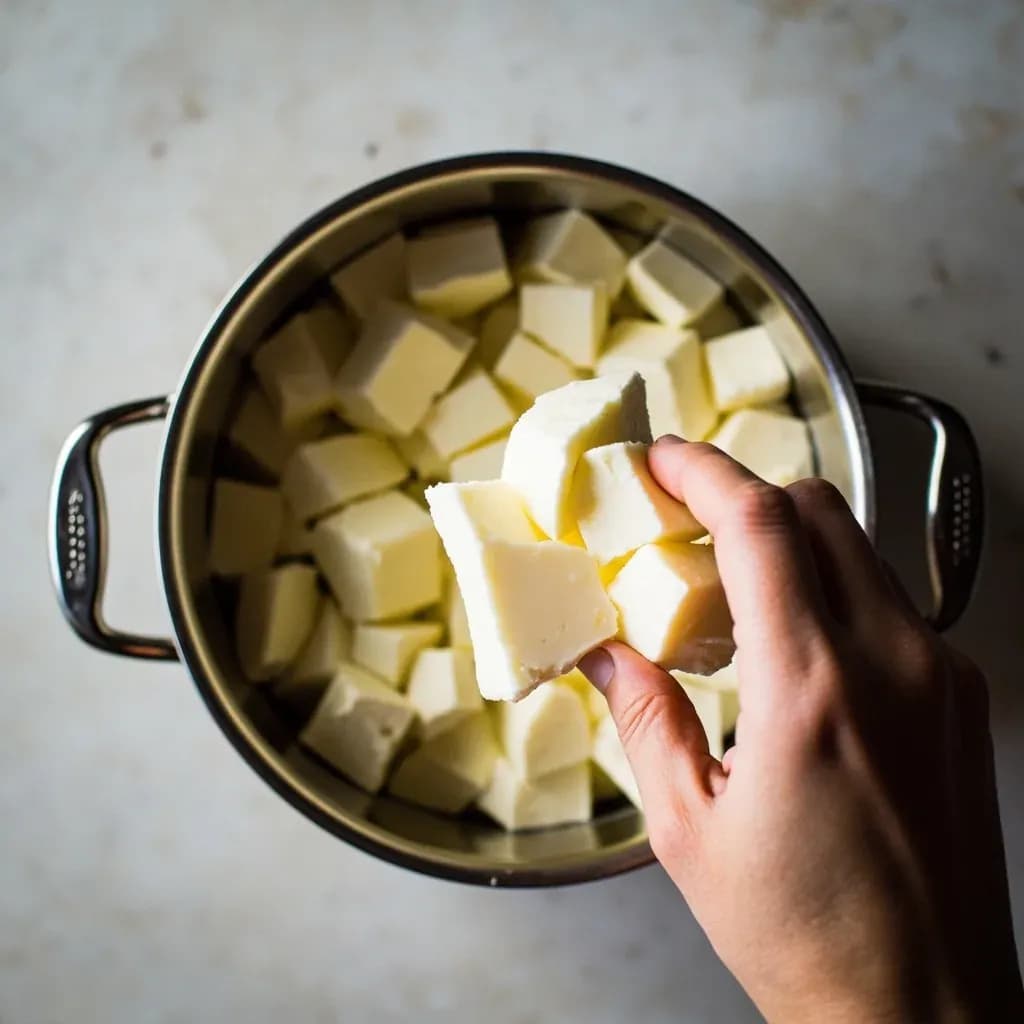
Curd breaking is the cheesemaking step of disturbing the soft, set gel after coagulation so it begins expelling whey. It is often done by hand or with a tool to fracture the surface before the curd is cut into smaller pieces. Controlling how vigorously and when the curd is broken influences moisture, texture, and the final character of the cheese.
Curd breaking is the cheesemaker's first intervention after coagulation, when the milk has set into a firm gel and the moment has come to begin separating curd from whey. Mechanically it is simple — you slice, scoop, or stir the gel into smaller pieces — but it is the single most consequential decision for a cheese's final moisture, texture, and aging potential. The underlying process is syneresis: cutting the protein matrix opens channels through which whey can drain, and the smaller the pieces, the more surface area exposed and the drier the resulting curd.
The size and gentleness of the break are what separate a creamy bloomy-rind from a rock-hard grating cheese. A 2 cm cube, gently stirred, retains enough moisture to make a supple Havarti; the same milk cut to rice-grain size and cooked will become a Parmesan-style wheel that ages for two years. Even within a single recipe, rushing the break — chopping too small, stirring too soon, or overworking the cubes — drives out fat along with whey and leaves the finished cheese dry, grainy, and low-yielding.
In practice, 'breaking' and 'cutting' are used interchangeably, though 'breaking' is the older farmhouse term and tends to imply a gentler action with ladles, whisks, or hands rather than blades. The goal is identical in every case: divide the set curd evenly, let the cut surfaces heal against the whey, and hand off a uniform, well-drained curd mass to the next stage of the make.
- Difficulty
- Medium
Types & varieties
Standard method for firm rennet curds: a stainless-steel cheese harp is drawn through the gel in parallel lines, then rotated 90° to create uniform cubes.
A long single-edge curd knife drawn through the gel in a grid; useful for smaller home batches where a harp is impractical.
A gentler method for soft, delicate curds (lactic-set cheeses like cream cheese or fresh chèvre) where sharp blades would shred the curd.
Traditional farmhouse technique: curd is lifted and broken apart by hand or a wooden paddle, common for rustic lactic and many farmhouse hard cheeses.
After initial cutting, the curds are stirred continuously, gradually reducing them from cubes down to thumbnail or rice-grain size for a much drier curd.
How to do it
- 1
Confirm the curd is ready
Insert a clean finger, thermometer, or knife into the gel at a 45° angle and lift gently. A clean break with clear, yellowish-green whey filling the crack means the curd is firm enough to cut. If the surface tears raggedly or the fissure slumps shut, wait another 5–10 minutes and retest.
- 2
Choose and prepare the cutter
Use a stainless-steel cheese harp for a full pot, a long curd knife for smaller batches, or a ladle or large whisk for soft lactic curds. Make sure wires are taut and blades are sharp — a dull tool tears the curd and creates fines that are lost to the whey.
- 3
Make the first vertical cuts
Starting at one end of the pot, draw the cutter in straight parallel lines the length of the vat, moving methodically across the surface. Keep the cutter submerged in whey between strokes to avoid dragging curds through air, which shatters them.
- 4
Make the second vertical cuts
Rotate the cutter 90° and repeat the parallel passes, crossing the first set to form a grid of vertical columns.
- 5
Cut horizontally
Lower the cutter all the way to the bottom of the pot at a slight diagonal and pass through the curd a third time, slicing the columns into even cubes.
- 6
Let the curds heal
Stop and leave the pot undisturbed for 5–10 minutes. The cut surfaces will firm up against the whey, sealing in fat and reducing curd loss during the first stir.
- 7
Begin gentle stirring and, if applicable, cooking
Start stirring slowly from the bottom up to keep cubes separated, then gradually raise the temperature (for a cooked-curd cheese) while continuing to stir. This shrinks the cubes further and expels additional whey, taking you to the moisture level the recipe requires.
Cut size and what it does to the finished cheese
The single most useful concept in curd breaking is that cut size is a dial for moisture. As a rough guide:
- 1.5–2.5 cm cubes: most semi-soft and pressed table cheeses (Gouda, Havarti, Tomme) — moist, supple, weeks to a few months of aging.
- 6–10 mm cubes: Cheddar and similar pressed cheeses — drier, sliceable, developed flavor over 3–12 months.
- Rice-grain to thumbnail size (achieved by stirring after cutting): hard grating cheeses (Parmesan, Pecorino, aged Asiago) — very dry, dense, and capable of two or more years of aging.
- Gentle, irregular breaking (ladled or hand-broken): lactic and bloomy-rind cheeses (Brie, Camembert, fresh chèvre) — highest moisture, shortest shelf life, creamiest texture.
How it fits in the larger make
Curd breaking is one step in a longer sequence, and the way it is done directly shapes every step that follows. The order of operations is:
- Set: milk is inoculated with starter and coagulated with rennet (or acid alone) until it forms a single firm gel.
- Cut/break: the gel is divided into pieces sized for the style of cheese being made.
- Heal: the cut curds rest 5–10 minutes so their surfaces seal against the whey.
- Stir and cook: the curds are gently agitated, sometimes while the temperature is raised, which shrinks them further and expels more whey.
- Drain: whey is poured off and the curds are ladled, cheddared, or hooped depending on the style.
- Press and age: the molded curd is pressed to drive out final whey, salted, and matured.
Common uses
Tips & pitfalls
- Test for a clean break before every cut: lift the back of the pot or insert a knife at an angle — the curd should split cleanly with greenish whey pooling in the fissure, not slump back into a soft, ragged tear.
- Use a sharp, thin blade or taut wire. Dull tools drag and tear the curd, producing excessive fines that float off in the whey and lower your cheese yield.
- Cut vertically first in parallel lines, rotate 90° and repeat, then angle in for the horizontal pass — this three-direction cut is what gives true cubes rather than ragged slabs.
- Let the cut curds rest 5–10 minutes before stirring so the surfaces 'heal' against the whey; skipping this step bleeds fat and moisture out of the cheese.
- Match cut size to cheese style: small cubes for hard grating cheeses, larger pieces for soft and washed-rind styles. Cube size is the single biggest lever you have over final texture.
- Stop early rather than overworking the curd. Over-stirring after cutting drives out too much fat and moisture and gives a finished cheese that is dry, grainy, and dull in flavor.
- Keep the knife or harp under the surface of the whey between passes; lifting it through air splashes and breaks curds above the liquid line.
- Make sure the pot is no more than two-thirds full so the curd mass has room to settle without packing at the bottom, which leads to uneven whey drainage.
Good to know
- Stage in cheesemaking
- Performed after coagulation (once the gel passes the clean-break test) and before cooking/scalding the curd.
- Primary purpose
- To divide the set curd into smaller pieces so whey can separate and drain from the curd mass.
- Effect on final cheese
- Smaller pieces expel more whey and produce drier, firmer, longer-aged cheeses; larger pieces retain moisture for softer, fresher styles.
- Typical cube size
- Roughly 1.5–2.5 cm (½–1 in) for most pressed cheeses; around 6 mm (¼ in) for Cheddar; hard grating cheeses are later reduced to rice-grain size by stirring.
- Key tools
- Stainless-steel cheese harp (wire cutter), long single-edge curd knife, ladle, large whisk, or bare hand, depending on curd firmness.
- Rest period after cutting
- Curds are typically left undisturbed for 5–10 minutes to 'heal' so cut surfaces firm up and stop shedding fines into the whey.
- Synonyms
- Curd cutting; breaking the curd; cutting the curd.
- Difficulty
- Low to moderate; mostly a matter of timing, sharp tools, and an even hand.
Also called
Breaking the Curd
Related

Confit
Cook slowly submerged in fat for silky tenderness and keeping

Cure
Draw out moisture with salt and time to preserve and concentrate

Pickle
Steep in acidic brine for bright, tangy, crunchy preservation

Ferment
Let friendly microbes transform food into tangy, complex flavor

Marinate
Soak in a seasoned mix to flavor and tenderize before cooking

Brine
Soak in salt water so meat stays juicy and seasoned throughout

Dehydrate
Slowly dry out moisture to concentrate flavor and extend shelf life

Cold-Smoke
Perfume cured food with smoke without cooking it through