Transform & Preserve
Cheddaring
Stacking and turning warm curd slabs to drain whey and build the dense texture of cheddar.
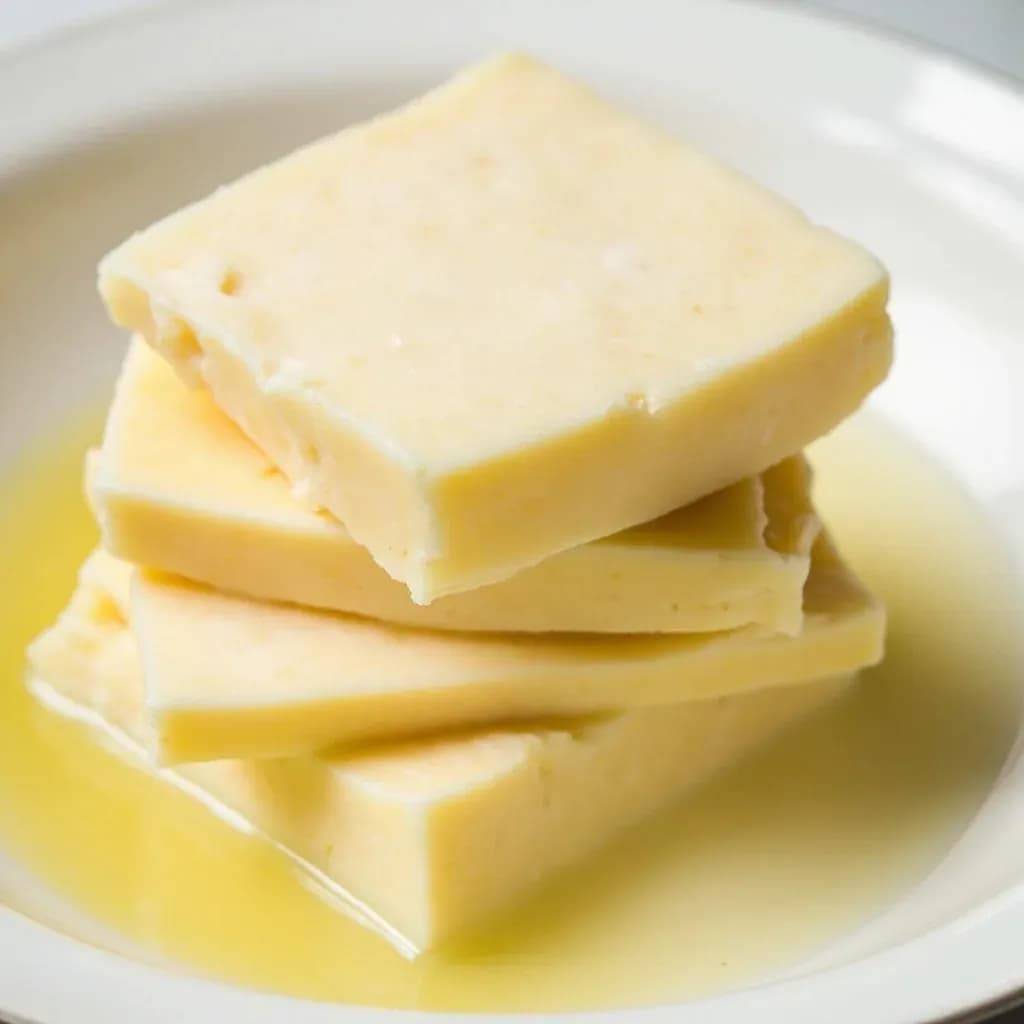
Cheddaring stacks slabs of warm, drained curd and repeatedly turns and restacks them so they knit, expel whey, and develop an acidic, layered texture. The slabs flatten and become firm and silky before being milled into pieces, salted, and pressed. This step gives cheddar and similar cheeses their characteristic dense, smooth body.
Cheddaring is the stage in traditional cheesemaking where matted curd is cut into slabs, stacked, and turned at regular intervals to press out additional whey and allow lactic acid to build. Where most cheese traditions separate curds from whey quickly and move on to hooping, the Cheddar method lingers, using the weight of piled slabs to do extra mechanical work on the curd while the starter culture steadily converts residual lactose into lactic acid. The combined effect — lower moisture, lower pH, and tightly aligned protein strands — is what gives Cheddar its dense, smooth body and the clean, lingering tang that aficionados call the "cheddar bite."
The process is best understood as a controlled conversation between physics and microbiology. Each turn inverts the bottom slab, equalizing drainage; stack height grows as the curd firms. Meanwhile, starter bacteria are driving the curd's pH from roughly 6.0 down toward 5.0–5.3, knitting the casein proteins into long, springy strands. Every decision about temperature, timing, and stack height is, in effect, a decision about how much whey to expel and how much acid to develop before milling — and that balance is what separates a mild, supple wheel from a sharp, crumbly one.
Cheddaring is sometimes treated as a flavor step, but it is really a texture and acid step; the deep, brothy complexity of a long-aged clothbound Cheddar comes from months in the aging room, not the cheddaring table. What cheddaring does lock in is the body and the clean acidic edge that other stages will build on.
- Difficulty
- Hard
Types & varieties
The classic method: slabs piled on a draining table, turned by hand every 15–20 minutes for 1.5–2.5 hours.
An industrial adaptation that agitates the matted curd in a closed vat instead of stacking and turning by hand; produces a noticeably different, slightly more open texture.
Slabs are partially pressed before milling to accelerate whey expulsion and shorten the schedule.
Extended low-temperature hold, sometimes overnight, used by artisan makers to develop a deeper 'cheddar bite' acidity before salting.
How to do it
- 1
Drain and mat the curd
After scalding the cut curds to about 38 °C (100 °F), let them settle briefly under the whey, then drain the whey off. Allow the curds to sit undisturbed for 10–15 minutes so they knit into a single cohesive mat under their own warmth and residual moisture.
- 2
Cut the mat into slabs
Slice the matted curd into blocks roughly 15–20 cm square and 8–12 cm thick using a long knife or curd harp. Keep sizes uniform; uneven slabs drain at different rates and will reach the end point at different times.
- 3
Stack the slabs in pairs
Pile two slabs on top of each other on the draining surface. The lower slab begins to take weight and expel whey; the upper slab rests on a slightly drier, warmer base. Starting at two rather than three prevents the bottom from collapsing.
- 4
Turn the slabs every 15–20 minutes
Invert each slab and restack so the previous bottom slab moves to the top. As the curd firms, gradually increase the stack height to three or four slabs. Set a timer — late turning leaves the bottom slabs wet and the top ones overdried.
- 5
Maintain temperature and monitor acid
Hold the room steadily at 30–38 °C (86–100 °F); a drop of even a few degrees stalls the starter. After 60–90 minutes the slabs should feel dense and springy. If you have a pH meter, target 5.3–5.5 just before milling.
- 6
Test the tear
Pull a small piece of curd apart. Properly cheddared curd tears into long, smooth, glossy strands reminiscent of cooked chicken breast. A wet, crumbly, or jagged tear means the slabs need more time and possibly more turns.
- 7
Mill and salt
Once the tear test passes and the target pH is reached, run the slabs through a mill or cut them by hand into small chips, dry-salt evenly, and proceed to hooping and pressing. Do not rush into milling — cutting too soon traps moisture and produces a rubbery, short-textured wheel.
The science behind the slab
Cheddaring works because it manipulates two variables at once: moisture and pH. Physically, stacking multiplies the weight pressing on each slab, forcing whey out through the draining mat. Biologically, the warmth keeps the starter culture active, so as water leaves the curd, lactic acid accumulates in what remains. The falling pH does two things at once — it tightens the casein matrix, giving the finished cheese its smooth, sliceable body, and it leaves a buffered acidic environment that, over months of aging, breaks down proteins into the savory compounds behind mature Cheddar flavor.
- A pH below 5.0 at milling yields a brittle, overly acidic cheese; above 5.5 the wheel stays soft and short-bodied.
- Curd temperature is the throttle on both whey expulsion (warmer = more expulsion) and acid development (warmer = more acid in less time).
- The fibrous 'chicken breast' tear is a visual proxy for aligned casein strands — a structural state that is hard to recover once lost.
Traditional stacked vs. industrial stirred-curd
The clearest way to understand what cheddaring contributes is to compare a traditional block Cheddar with a stirred-curd factory Cheddar of the same age. Both rely on the same pH drop, but only the traditional method aligns the curd proteins into those long strands. The result is a smoother, more cohesive body and a cleaner melt. Industrial stirred-curd Cheddars tend to be slightly more open in texture and milder on the finish — not inferior, simply a different expression of the same starting milk.
- Stirred-curd methods cut cheesemaking time by roughly an hour and are easier to scale.
- Clothbound and farmstead Cheddars typically use traditional stacked cheddaring for both textural and flavor reasons.
- Many supermarket 'mild Cheddars' are stirred-curd; aged farmstead Cheddars are nearly always traditionally cheddared.
Common cheddaring problems and what they signal
Most cheddaring failures trace back to one of three things: temperature drift, irregular turning, or misjudging the end point. Each leaves a recognizable fingerprint in the finished cheese, and learning to read those fingerprints is how experienced makers shorten the learning curve.
- Bottom slabs weeping whey long after the top ones feel firm: turning was late, or the room is too cool.
- Surface skin on the slabs: dry ambient air or a draft; cover lightly with an inverted plastic tub.
- Curd that crumbles rather than tears into strands: under-cheddared, often from cutting the mat too thin or starting too cool.
- Rubbery, tough finished texture: over-cheddared — the pH dropped below 5.0, acidifying the proteins too far.
Common uses
Tips & pitfalls
- Keep the room warm and draft-free; a drop of just a few degrees stalls starter activity and slows acid development, leaving you with a soft-bodied wheel.
- Turn slabs on a strict schedule — late turning is the single most common home-scale mistake and shows up as uneven drainage and a mottled texture after pressing.
- Watch the tear test rather than the clock: under-cheddared curd tears jaggedly and weeps whey; properly cheddared curd pulls into long, smooth, chicken-breast-like fibers.
- Avoid stacking too high at the start; two slabs early on prevents the bottom layer from collapsing under its own weight while it is still fragile.
- Track pH with a meter if possible — aim for roughly 5.3–5.5 just before milling; salting above 5.5 produces a soft-bodied cheese, while going below 5.0 yields a brittle, acidic one.
- Use food-grade draining mats rather than cloth alone to avoid sticking and uneven drainage, and replace mats that have developed a slick of trapped whey residue.
- In dry climates, lightly cover the slabs with an inverted plastic tub to prevent a surface skin from forming, which can seal in moisture unevenly.
- Do not rush into milling; cutting the curd too soon traps moisture and leads to a rubbery, short-textured wheel that no amount of aging can fully rescue.
Good to know
- Origin
- Cheddar, Somerset, England; developed in the 12th–13th centuries and traditionally performed in caves or cool stone rooms.
- Stage in cheesemaking
- After curds are cut, scalded, and whey-drained, but before milling and salting.
- Curd temperature
- Held at roughly 30–38 °C (86–100 °F) throughout.
- Duration
- Traditionally 1.5–2.5 hours, sometimes up to 3 hours depending on acid development.
- Slab dimensions
- Roughly 15–20 cm (6–8 in) square and 8–12 cm (3–5 in) thick.
- pH change
- Drops from about 6.0 to roughly 5.0–5.3 as starter bacteria produce lactic acid.
- End-point cue
- Curd tears into long, smooth, fibrous strands resembling cooked chicken breast.
- Difficulty
- Moderate; demands consistent temperature, timing, and acid monitoring — achievable at home scale but unforgiving.
Also called
Cheddaring · Curd Stacking
Related

Confit
Cook slowly submerged in fat for silky tenderness and keeping

Cure
Draw out moisture with salt and time to preserve and concentrate

Pickle
Steep in acidic brine for bright, tangy, crunchy preservation

Ferment
Let friendly microbes transform food into tangy, complex flavor

Marinate
Soak in a seasoned mix to flavor and tenderize before cooking

Brine
Soak in salt water so meat stays juicy and seasoned throughout

Dehydrate
Slowly dry out moisture to concentrate flavor and extend shelf life

Cold-Smoke
Perfume cured food with smoke without cooking it through